
In This Article
Every home gym has a pecking order. The rack gets the glory, the barbell gets the photos, and the flat weight bench quietly does the dirty work. It’s the one thing standing between a loaded bar and your sternum, so choosing a sturdy flat bench is less a style decision than an act of trust. Wobble, flex or skid mid-set and you’ll find out immediately, usually in your shoulders.
The good news is that the UK market has never been better stocked. You no longer need a commercial-gym budget to get commercial-gym rigidity. The catch is that specs vary wildly, and a flat weight bench that looks identical in a thumbnail can differ by 350kg in what it will actually hold.
So here’s how this guide works. I’ve compared real manufacturer specifications, pad dimensions and weight capacity ratings against the recurring themes in UK retailer reviews and independent tests such as T3’s. I haven’t lifted on any of these benches, so treat this as spec-and-sentiment analysis, not a lab report. Prices are ranges only, so always check current price on amazon.co.uk.
What Is a Flat Weight Bench?
A flat weight bench is a fixed, non-adjustable padded bench designed for pressing and supported training such as the bench press, dumbbell presses and rows. Because it has no moving backrest hinge, it offers maximum rigidity and weight capacity, making it the standard choice for heavy barbell work and competition-style powerlifting setups.
Quick Comparison: Seven Flat Weight Bench Options at a Glance
Capacities below are the manufacturers’ stated totals, which include the lifter as well as the bar. Brands also change sellers and listings, so confirm the exact model and seller on amazon.co.uk before you buy.
| Bench | Weight Capacity | Key Spec | Price Range | Best For |
|---|---|---|---|---|
| Mirafit M3 Flat Weight Bench | Over 500kg | 11-gauge steel, 43cm high | Upper mid-range (check current price) | Lifters who want one bench for life |
| Mirafit M3 Flat Powerlifting Bench | Over 500kg | Single front post, IPF dimensions | Upper mid-range (check current price) | Dedicated bench pressers |
| Again Faster Competition Flat Bench 2.0 | 450kg | 10cm pad, three-foot design | Under £200 (standard pad) | Comfort-focused heavy pressers |
| Strength Shop Flat Bench V2 | 600kg | 3mm steel, 20kg | Around £170-£200 | Big capacity on a sensible budget |
| Body-Solid GFB350 Flat Bench | 1,000 lb (about 454kg) | Commercial welded frame | Around £180 | Buyers who value warranty cover |
| GYM MASTER Heavy Duty Flat Weight Bench | 310kg | Thick padded cushion | Budget (check current price) | Intermediate lifters on a tight budget |
| Mirafit M1 Flat Weight Bench | 250kg | 40cm high, slimline | Budget (check current price) | Beginners and light-to-moderate loads |
Read the table as three tiers. The Strength Shop Flat Bench V2 and Again Faster Competition Flat Bench 2.0 deliver the most heavy-duty value per pound, while the two Mirafit M3 benches are the premium-leaning choices for people who bench seriously. Budget buyers should note that the Mirafit M1 Flat Weight Bench gives up the most capacity, which matters more than it sounds once you add your own bodyweight to the maths.
💬 Just one click — help others make better buying decisions too!😊
Top 7 Flat Weight Bench Options: Expert Analysis
Each bench below gets the same treatment. I look at what the specs mean in practice, who it suits, and what reviewers keep saying. Where I couldn’t verify review detail, I say so rather than guess.
1. Mirafit M3 Flat Weight Bench — over-built for anyone lifting heavy
Some benches are bought; this one is more of an investment in never thinking about benches again. The Mirafit M3 Flat Weight Bench pairs a 75mm x 75mm x 3mm (11-gauge) steel frame with a stated capacity of over 500kg. A 100kg lifter pressing 200kg is therefore left with a margin that borders on comedic. At 43cm tall with the standard Ultimate pad (30cm wide, 124cm long), it sits within IPF dimensions, though the optional 35cm wide pad does not.
On paper this is the textbook weight bench for heavy lifting. The floor-bar frame also keeps it planted for seated dumbbell work. The trade-off is foot room, because that bar can crowd a tucked, narrow leg-drive stance. At roughly 35kg, the built-in castors and handle matter more than you’d expect.
Reviewers on Mirafit’s own store, where the bench displays a 4.9 average, consistently call it solid and straightforward to assemble in around 15 to 20 minutes. Recurring gripes include a pad some find too squishy for heavy singles, one report of padding splitting on a second unit, and awkward foot positioning inside a rack.
Pros:
- ✅ Frame rated for over 500kg total load
- ✅ Handle and castors make rack positioning easy
- ✅ Grippy anti-slip pad as standard
Cons:
- ❌ Floor bar limits tucked foot positions
- ❌ Pad softness divides opinion at heavy loads
Expect upper mid-range money, so check current price. The verdict is strong value if you’ll still be lifting in a decade.
2. Mirafit M3 Flat Powerlifting Bench — single post for proper leg drive
Take the bench above, remove the floor bar, and you get the Mirafit M3 Flat Powerlifting Bench. It has the same steel and the same over-500kg capacity, but a single front post that clears the space where your feet want to live. Mirafit states it meets IPF requirements for height, width and length, with a 43cm height and a 30cm by 124cm pad. At 31kg it’s slightly lighter than its twin-post sibling.
Here’s the analytical catch. A single post is deliberately less stable when you sit upright on the end of the bench, and Mirafit says as much. This is a flat bench for powerlifting and heavy pressing, not a Swiss Army knife for seated shoulder presses. Mirafit also sells conversion kits that turn a standard M3 into this single-post design, but not the reverse. If you’re undecided, the standard bench keeps your options open.
Reviewers describe it as built like a tank, with fabric grippy enough to stop you sliding mid-set. The most common caveat is weight, since it’s quite heavy even with the wheels and handle helping.
Pros:
- ✅ Single post frees up foot placement
- ✅ Meets IPF height, width and length
- ✅ Over 500kg stated capacity
Cons:
- ❌ Less stable for upright seated exercises
- ❌ Weighty to shift around the garage
Pricing sits in the upper mid-range, so check current price. It’s the best fit here if benching is your main event.
3. Again Faster Competition Flat Bench 2.0 — plush 10cm pad, 450kg capacity
The Again Faster Competition Flat Bench 2.0 suits lifters who find most pads a bit decorative. T3’s review awarded it Platinum, praising the 10cm pad, grippy sewn-on cover and 11-gauge steel frame rated to 450kg. A three-foot design with rubber caps leaves generous room to plant your feet, and at 27kg it’s lighter than the M3.
Here’s the detail worth knowing. The standard pad is 30.5cm wide, which sits within the IPF’s 29-32cm window. The optional 35.5cm wide pad, which adds around £50, does not. T3’s reviewer also found the wide pad brushed against their triceps at the bottom of a press, so smaller frames should think twice before upgrading. If you’re after hypertrophy, T3 notes that an adjustable bench may suit better.
Sentiment is positive. T3 reported 4.9-star online reviews with no complaints about assembly, and found grip and comfort strong. Again Faster sells direct, so check whether a current amazon.co.uk listing exists.
Pros:
- ✅ Thick, supportive pad without a “sinking” feel
- ✅ Three-foot design gives leg-drive freedom
- ✅ 450kg capacity with grippy cover
Cons:
- ❌ Wide-pad option falls outside IPF width
- ❌ Heavy to move at 27kg
It comes in under £200 for the standard pad, and the value verdict is excellent for committed pressers.
4. Strength Shop Flat Bench V2 — 600kg rating without the premium fuss
The Strength Shop Flat Bench V2 posts the biggest capacity number in this guide: 600kg on a 3mm steel frame, a rating the maker says covers lifter and load together. It’s rated like a bridge, though of course it’s a ceiling, not a target. The flat front foot design improves foot positioning, and a front handle plus rear wheels make 20kg of bench easy to relocate. T3 names it a best budget flat bench in its weight bench roundup.
The pad is 120cm long, 30cm wide and 6cm thick, at a 42cm height. That’s IPF-friendly on width and height, but slightly short of the commonly quoted 122cm length minimum. So think of it as a training bench rather than an exact competition replica. The slimmer 6cm pad also feels firmer, which some lifters love for stability under heavy bars, while others may find it unforgiving over long sessions.
Feedback on the maker’s site is warm, with owners praising build quality and service. The sample is small, though, so I’d call it encouraging rather than conclusive.
Pros:
- ✅ Class-leading 600kg stated load capacity
- ✅ Flat front foot gives generous foot room
- ✅ Light at 20kg with handle and wheels
Cons:
- ❌ Thinner 6cm pad feels firm to some
- ❌ Pad length a touch under IPF minimum
It lands around the £170-£200 range. Check current price, since it’s a smart buy for lifters who prioritise capacity.
5. Body-Solid GFB350 Flat Bench — commercial frame with lifetime weld warranty
The Body-Solid GFB350 Flat Bench is the gym-industry stalwart here. It uses a 2in x 3in commercial mainframe with four-side welded construction and DuraFirm extra-thick upholstery, rated to 1,000lb (about 454kg). At 20kg it’s easy enough to move, but the headline is the warranty. Body-Solid states a lifetime on frame and welds for light and full commercial use, plus lifetime parts for home use. A warranty is simply a manufacturer’s confidence in writing.
My analytical take is that this is a sturdy flat bench built for years of general training, from barbell presses to heavy dumbbell work. Going by the levelling feet, it looks to have a conventional foot arrangement rather than a single front post, so it’s less of a flat bench for powerlifting. I also couldn’t confirm the pad dimensions from the sources I reviewed, so check them against IPF figures if competition matters to you.
On sentiment, the UK retailer page I reviewed points to customer reviews, but I couldn’t verify their content, so I won’t characterise them.
Pros:
- ✅ Commercial four-side welded frame
- ✅ Lifetime frame and weld warranty (commercial use)
- ✅ About 454kg stated capacity
Cons:
- ❌ Pad and foot dimensions not confirmed as IPF spec
- ❌ Costs more than the budget options
Expect to pay around £180 at UK specialist retailers, so check current price on Amazon too. It’s good value if longevity matters most.
6. GYM MASTER Heavy Duty Flat Weight Bench — 310kg capacity on a budget
This is the sensible-shoes option. The GYM MASTER Heavy Duty Flat Weight Bench lists a 310kg capacity and a thick padded cushion at budget money. Expert Reviews previously named a Gym Master flat bench its best flat bench for heavy lifting, at around £57 at the time. That tells you how aggressively the brand undercuts rivals.
Is 310kg enough? For a 90kg lifter pressing 140kg, the total of 230kg leaves a healthy buffer. A 100kg lifter pressing 180kg lands at 280kg, which is inside the rating but with far less headroom than the 450-600kg crowd. So it suits intermediates, not those chasing big numbers. The listing text I could access doesn’t publish pad dimensions or height, so verify those before relying on it for powerlifting-style setups.
I couldn’t verify detailed owner-review themes for this specific listing. Expert Reviews’ endorsement is the independent signal I can point to, and I’d rather say that plainly than invent a consensus.
Pros:
- ✅ 310kg stated capacity at budget pricing
- ✅ Thick padded cushion for comfort
- ✅ Independent praise for heavy-lifting value
Cons:
- ❌ Less margin for very heavy lifters
- ❌ Limited published pad and height detail
It sits in the budget bracket, so check current price. The verdict is a solid starter for moderate loads.
7. Mirafit M1 Flat Weight Bench — slimline entry point for beginners
The Mirafit M1 Flat Weight Bench is the cheapest ticket into proper barbell training. It has a black powder-coated steel frame, a thick padded cushion and a 250kg limit including the user. At 40cm high, 110cm long and 58cm deep, its slimline profile gives your chest room to open at the bottom of a press. Tools aren’t included for assembly.
The numbers deserve a hard look. A 90kg lifter has 160kg left for bar and plates, comfortable for most beginners but tight for ambitious ones. The 40cm height also sits below the IPF’s 42-45cm window, so it’s not a competition replica. Mirafit positions its M1 and M2 benches for beginner and intermediate users, which is honest marketing.
I couldn’t verify detailed review themes for this specific model, so I won’t characterise them. Check recent buyer comments on amazon.co.uk before you commit.
Pros:
- ✅ Budget-friendly entry into barbell training
- ✅ Slimline design allows full chest extension
- ✅ Sturdy powder-coated steel frame
Cons:
- ❌ 250kg limit leaves little headroom
- ❌ Below IPF height, so no competition replica
It sits in the budget range, so check current price. The verdict is great for beginners and compact spaces.
How to Choose a Flat Weight Bench
To choose a flat weight bench, match its weight capacity to your heaviest realistic load, then check frame thickness, foot design, pad size and rack compatibility. Work through these seven steps:
- Calculate your total load. Add your bodyweight, bar and plates, then leave a margin of roughly 30%. That’s a sensible rule of thumb, not a standard.
- Inspect the frame. A 75mm x 75mm x 3mm (11-gauge) steel frame is the benchmark for a genuinely sturdy flat bench.
- Pick your foot design. A single front post gives the most leg-drive room, while a floor bar adds stability for seated work.
- Match the pad to your goal. For IPF-style training, look for a 29-32cm wide pad, 42-45cm height and roughly 122cm length.
- Judge the pad’s firmness. Thick and plush feels comfortable, while firm feels more stable under heavy bars.
- Weigh up mobility. Wheels and a handle matter when a 20-35kg frame has to move in and out of a rack.
- Check rack fit and warranty. Measure your rack’s width and read the warranty terms before buying.
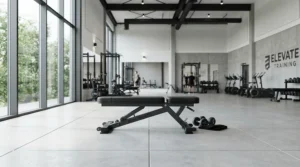
Weight Capacity Explained: The Number on the Box vs the Number in Your Garage
Weight capacity is the most misunderstood spec in this category. Manufacturers usually quote a total, meaning you plus the bar. Strength Shop spells it out, saying its 600kg figure includes both lifter and weights. Some listings split it further. One Decathlon UK listing, for instance, rates a bench at 362kg total but only 135kg for the user.
Run your own numbers. A 100kg lifter benching 180kg needs a bench rated for at least 280kg. That already exceeds the 250kg Mirafit M1 Flat Weight Bench, and it uses almost all of the GYM MASTER Heavy Duty Flat Weight Bench‘s 310kg. Weight capacity ratings are static, while real lifts involve bar drops, re-racks and bounce, which is why I’d treat the rating as a floor.
A heavier-framed bench also behaves better when you rack a loaded bar clumsily. Benches rated at 450-600kg, such as the Again Faster Competition Flat Bench 2.0 and the Strength Shop Flat Bench V2, give you margin that never feels wasted. Think of weight capacity as insurance you only notice when you need it.
Weight Bench for Heavy Lifting: What Makes a Sturdy Flat Bench Actually Sturdy?
A weight bench for heavy lifting earns its reputation in four places. These are frame steel thickness, weld quality, foot geometry and rubber contact with the floor. A sturdy flat bench resists flex because its steel is thick (3mm tube is the benchmark), its feet are rubber-capped, and nothing rocks when you drive through your heels.
Here’s the expert filtering. Features that matter are the frame gauge, a grippy pad cover, a wide rear base and floor-gripping feet. Features that don’t are branding, flashy stitching and unquantified “commercial grade” claims. The Body-Solid GFB350 Flat Bench counters hype with a lifetime weld warranty for commercial use, which is a more convincing signal than adjectives.
Reviewers also flag the pad as an under-appreciated stability factor. Some feel the Mirafit M3 Flat Weight Bench pad is soft enough to make stabilising heavy singles harder, whereas the firmer 6cm pad on the Strength Shop Flat Bench V2 trades comfort for solidity. If you’re hunting a sturdy flat bench, put the bench on a level surface and check it doesn’t wobble before your first working set.
Flat Bench for Powerlifting: IPF Dimensions, Foot Room and Leg Drive
If you’re training for competition, a flat bench for powerlifting needs to mirror IPF specifications. The commonly quoted figures are a height of 42-45cm, a width of 29-32cm and a length of at least 122cm. The Mirafit M3 Flat Powerlifting Bench (43cm high, 30cm by 124cm pad) is built to those numbers. The standard-pad Again Faster Competition Flat Bench 2.0 (30.5cm wide, 42cm high) is another close fit.
Foot room is the underrated spec. A single front post means nothing blocks your feet, so you can tuck them under for leg drive or set them wide. A floor bar can’t offer that freedom. Beware wide-pad upgrades, because both Mirafit and T3 note that the wider pads exceed IPF width.
For training only, being a few millimetres off spec won’t wreck your progress. But if you plan to compete, practise on a flat bench for powerlifting that matches the platform. The first time a lift feels different because the bench is narrower shouldn’t be at a meet.
Bench Press Technique: Setting Up on Your Flat Weight Bench
Good bench press technique starts before the bar moves. Even the best flat weight bench can’t fix a sloppy setup, but a stable one makes a good setup repeatable. Here’s the sequence that most coaches teach:
- Eyes under the bar. Lie so the bar sits above your eyes, which keeps the unrack path short and safe.
- Shoulder blades back and down. Pin them into the pad and keep them there for the whole set.
- Feet planted. Drive through the floor, which is why foot clearance on a single-post bench matters.
- Moderate arch. Enough to lift the chest, not so much that you slide on the pad.
- Bar to lower chest. Lower under control with elbows around 45-75 degrees from your torso, pause briefly, then press back over the shoulders.
Always lift inside a rack with safety arms set, or use a spotter. If your bench lets you slide, that’s a pad and cover problem. The grippy covers on the Mirafit M3 Flat Powerlifting Bench and Again Faster Competition Flat Bench 2.0 are designed to stop that. Master this bench press technique with an empty bar before adding plates.
Flat Weight Bench vs Adjustable Bench: Which Earns Your Floor Space?
A flat weight bench trades versatility for rigidity. Mirafit notes that flat benches generally offer greater stability for traditional pressing, and T3 observes that lifters chasing hypertrophy through multiple angles may prefer an adjustable bench. Adjustable models add hinge points, which can introduce flex or wobble. Mirafit’s M350 buyers, for instance, report the single front foot can feel unstable for seated work.
| Option | Stability | Versatility | Typical Cost | Best For |
|---|---|---|---|---|
| Flat weight bench | Highest, with no hinge to flex | Presses, rows, dumbbell work | Lower | Heavy pressers, e.g. Mirafit M3 Flat Weight Bench |
| Adjustable (incline/decline) bench | Good, with more moving parts | Incline, decline, seated work | Higher | All-round hypertrophy, e.g. Mirafit M350 Adjustable Weight Bench (over 450kg) |
| Floor press (no bench) | Excellent | Limited range of motion | Free | Tiny spaces and travel |
If your priority is a big bench press and a rock-steady platform, the flat weight bench wins. If you want incline work in the same footprint, adjustable earns its keep, though you’ll pay more for equal stability. Many lifters start with one adjustable bench and add a flat bench later as the garage gym grows.
Powerlifting Equipment: What to Buy Around Your Bench
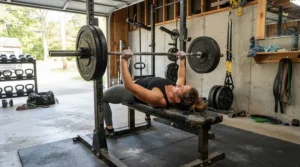
Powerlifting equipment is a system, and your bench is one link. The most important partner is a rack with adjustable safety arms, so you can fail a rep without drama. After that, a stiff barbell, calibrated plates and secure collars matter. Floor protection (stall mats work well) stops a heavy bench shifting on concrete.
Be sceptical of bundles. A great bench with a flimsy rack is a false economy, and vice versa. Check that your bench fits between the uprights of your rack in its narrowest setting. One Mirafit M350 Adjustable Weight Bench reviewer reported their bench wouldn’t fit between their squat and bench rack. Measure first, buy second.
Finally, budget for incremental upgrades. Start with a capable flat weight bench such as the Strength Shop Flat Bench V2, then add chalk, wrist wraps and a good barbell as your numbers climb. Powerlifting equipment rewards patience more than impulse buying.
Setup, Maintenance and Your First 30 Days
Assembly is mostly spanners and patience. Leave bolts finger-tight until the frame is fully assembled, then tighten everything properly. Reviewers on Mirafit’s site suggest 15-20 minutes for the M3, and an Again Faster delivery person told T3 20-30 minutes. Recheck every bolt after your first week, then monthly.
Maintenance is light. Wipe the pad after each session, inspect the rubber foot caps for wear, and check the wheels turn freely. Keep the bench on a level, non-slip surface.
For your first 30 days, aim for consistency over heroics. The NHS physical activity guidelines recommend strengthening activities on at least two days a week, working all major muscle groups. Start with two or three sessions, use an empty bar to groove your bench press technique, and note your foot and shoulder positions. Common mistakes are loading too fast, ignoring a wobble, and skipping safety arms.
Long-Term Cost: Price Tiers and Value
A bench is a one-off purchase, so the sensible metric is cost per session. Assume three sessions a week for five years, which is 780 sessions. The table shows what each tier costs per session.
| Tier | Benches | Price Range | Approx. Cost per Session | Best For |
|---|---|---|---|---|
| Budget | GYM MASTER Heavy Duty Flat Weight Bench, Mirafit M1 Flat Weight Bench | Under £100 | Around 13p or less | Beginners, moderate loads |
| Mid-range | Strength Shop Flat Bench V2, Again Faster Competition Flat Bench 2.0, Body-Solid GFB350 Flat Bench | Around £170-£200 | Around 22-26p | Serious home lifters |
| Premium | Mirafit M3 Flat Weight Bench, Mirafit M3 Flat Powerlifting Bench | Check current price | Depends on price paid | Long-term, heavy use |
Even the mid-range tier costs about the same per session as a packet of crisps, which makes the extra capacity look like a bargain. The budget benches only look expensive if you outgrow them within a year, so factor your ambitions into the price. Warranty matters too, since the Body-Solid GFB350 Flat Bench‘s lifetime frame cover could save a replacement purchase.
Real-World Scenarios: Which Bench for Which Lifter
Strength training isn’t just for the competition platform. A Public Health England evidence review found that muscle and bone strengthening activity benefits adults of all ages. Here are four profiles.
- The flat-share beginner (75kg, pressing around 60kg, tiny room). The Mirafit M1 Flat Weight Bench or GYM MASTER Heavy Duty Flat Weight Bench fits. Total load of about 135kg is well inside both ratings.
- The garage lifter (100kg, benching 140kg with a rack). Total load is around 240kg, which crowds the M1. A flat weight bench like the Strength Shop Flat Bench V2 or Again Faster Competition Flat Bench 2.0 gives proper headroom.
- The competitive lifter (85kg, benching 150kg). The Mirafit M3 Flat Powerlifting Bench matches IPF dimensions and frees up the feet.
- The heavier lifter (130kg, benching 200kg). That’s roughly 330kg, above the GYM MASTER Heavy Duty Flat Weight Bench‘s rating. The Body-Solid GFB350 Flat Bench or Mirafit M3 Flat Weight Bench is the safer pick.
FAQ
❓ Is a sturdy flat bench worth paying extra for?
❓ How much should I spend on a flat weight bench in the UK?
❓ Can I use a flat weight bench without a power rack?
❓ Which flat weight bench is best for dumbbell work at home?
❓ How do I stop a flat weight bench sliding on a garage floor?
Conclusion
The best flat weight bench is the one that matches your load, your leg drive and your ambitions. For an all-rounder you’ll never outgrow, the Mirafit M3 Flat Weight Bench is hard to beat. If bench pressing is your main event, the Mirafit M3 Flat Powerlifting Bench brings single-post freedom and IPF-friendly dimensions. Comfort seekers should look at the Again Faster Competition Flat Bench 2.0, while the Strength Shop Flat Bench V2 packs the biggest stated weight capacity into a friendly price. The Body-Solid GFB350 Flat Bench wins on warranty, and the GYM MASTER Heavy Duty Flat Weight Bench and Mirafit M1 Flat Weight Bench are sensible budget starters.
Whichever you choose, do the sums. Add your bodyweight to your bar, leave a margin, and buy the sturdiest flat bench you can reasonably afford. Pair it with a rack that has safeties, learn your bench press technique with an empty bar, and the rest is just consistent work.
✨ Ready to build your pressing station?
🏋️ Click through to check current pricing and availability on amazon.co.uk. Pick the flat weight bench that fits your lifts, and turn your garage into the place you actually want to train!
Recommended for You
- Adjustable Weight Bench For Home Gym: 7 Best UK Picks (2026)
- Weight Bench With Leg Extension Attachment: 7 Best UK Picks 2026
- Weight Bench For Beginners: 7 Proven Picks For UK Homes (2026)
Disclaimer: This article contains affiliate links. As an Amazon Associate, I earn from qualifying purchases. If you purchase products through these links, we may earn a small commission at no additional cost to you.
✨ Found this helpful? Share it with your friends! 💬🤗
