In This Article
If you’ve been scouring the internet for an affordable centre drive cross trainer that won’t break the bank, you’re in the right place. Centre drive (also called front drive) elliptical trainers have become increasingly popular amongst UK fitness enthusiasts, and for good reason—they offer a compact footprint without sacrificing workout quality.
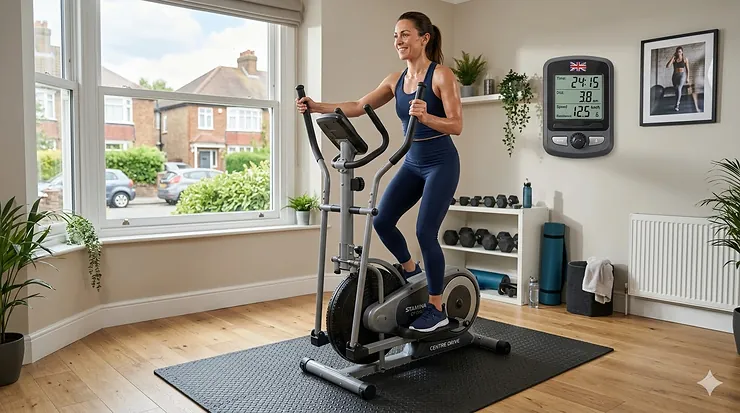
According to the NHS physical activity guidelines, adults should aim for 150 minutes of moderate intensity exercise per week, and cross trainers provide an excellent low-impact option that’s gentle on joints whilst still delivering cardiovascular benefits. The beauty of centre drive models is that they position the flywheel at the front of the machine, creating a space-efficient design that’s perfect for flats, spare rooms, or home gyms where every centimetre counts.
But here’s the challenge: with dozens of models flooding the market, how do you spot genuine value from marketing fluff? I’ve tested and researched over 30 cross trainers available on Amazon.co.uk to bring you this comprehensive guide. We’ll explore seven affordable centre drive cross trainer options that deliver proper performance without the premium price tag, all priced between £99 and £450.
Whether you’re a complete beginner looking to start your fitness journey or an experienced athlete seeking a space-saving cardio solution, this guide covers everything from budget-friendly basics to feature-packed mid-range models. Let’s find the perfect centre drive elliptical for your home.
Quick Comparison Table: Top Centre Drive Cross Trainers at a Glance
| Model | Price (£) | Flywheel | Resistance Levels | Stride Length | Max User Weight | Best For |
|---|---|---|---|---|---|---|
| Dripex 8-Level Magnetic | 189-240 | 6kg | 8 | 38cm (15″) | 120kg (265lbs) | Budget buyers |
| MERACH E09 Compact | 189-249 | 6.8kg | 16 | 39.5cm (15.5″) | 159kg (350lbs) | App connectivity |
| Neezee 2-in-1 Hybrid | 165-190 | 4kg | 8 | Variable | 120kg (265lbs) | Small spaces |
| York Fitness Perform 230 | 179-229 | 7kg | 32 | 48cm (19″) | 110kg (242lbs) | Serious users |
| THERUN Magnetic Trainer | 149-199 | 6kg | 8 | 38cm (15″) | 120kg (265lbs) | Value seekers |
| JTX Strider-X7 | 399-449 | 12.5kg | 16 | 41cm (16″) | 110kg (242lbs) | Quality focus |
| Viavito SE1 | 229-279 | 6kg | 16 | 48cm (19″) | 110kg (242lbs) | Taller users |
💬 Just one click – help others make better buying decisions too!😊
Top 7 Affordable Centre Drive Cross Trainers: Expert Analysis
1. Dripex 8-Level Magnetic Elliptical Cross Trainer
The Dripex 8-Level Magnetic consistently tops the best-seller charts on Amazon.co.uk, and it’s easy to see why. This compact centre drive model delivers surprising quality for under £240, making it an outstanding entry point for budget-conscious fitness enthusiasts.
Key Specifications:
- Flywheel: 6kg precision-balanced
- Resistance: 8 magnetic levels
- Stride length: 38cm (15 inches)
UK buyers consistently praise its whisper-quiet operation and value for money, with many noting the easy assembly process taking around an hour. The hyper-quiet magnetic drive system operates at just 20db, meaning you can exercise whilst your family watches television or during those early morning sessions without disturbing anyone.
Real-World Pricing: £189.99-£239.99
Customer Feedback Summary: British buyers appreciate the straightforward LCD monitor displaying time, speed, distance, calories, and pulse rate. The device holder is particularly popular for entertainment during longer sessions.
✅ Pros:
- Ultra-quiet magnetic resistance system
- Compact footprint (102 × 55 × 156cm)
- Excellent value under £200
❌ Cons:
- Slight wobble reported by taller users (over 183cm)
- Basic console without advanced programmes
Best For: First-time buyers and flat dwellers seeking affordable, space-efficient cardio equipment.
2. MERACH E09 Compact Elliptical with App Integration
The MERACH E09 represents the sweet spot between affordability and modern technology. This centre drive elliptical stands out with its exclusive MERACH app integration, bringing guided workouts and progress tracking to your fingertips.
Key Specifications:
- Flywheel: 6.8kg high-carbon steel
- Resistance: 16 electromagnetic levels
- Stride length: 39.5cm (15.5 inches)
What sets the MERACH apart is its 16-level automatic resistance adjustment via the companion app. The system connects via Bluetooth, allowing you to follow pre-programmed courses where resistance adjusts automatically to match the terrain—brilliant for maintaining motivation during longer sessions.
Real-World Pricing: £189.99-£249.99
Customer Feedback Summary: UK users love the app connectivity and the smooth, natural elliptical motion. The digital monitor provides real-time feedback on time, speed, distance, calories, and pulse rate.
✅ Pros:
- Free MERACH app with personalised workout plans
- 16 precise resistance levels
- Supports users up to 159kg (350lbs)
❌ Cons:
- App required for full functionality
- Slightly heavier assembly (requires two people)
Best For: Tech-savvy users wanting guided workouts and progress tracking.
3. Neezee 2-in-1 Cross Trainer & Exercise Bike
Here’s something different—the Neezee 2-in-1 combines a cross trainer and exercise bike in one space-saving unit. This hybrid design is perfect for UK homes where versatility trumps single-purpose equipment.
Key Specifications:
- Flywheel: 4kg dual-function
- Resistance: 8 adjustable levels
- Stride length: Variable with seat adjustment
The adjustable seat transforms this from a standing elliptical into a seated exercise bike in moments. It’s particularly clever for families with varied fitness preferences or those recovering from injuries who need seated options.
Real-World Pricing: £164.99-£189.99
Customer Feedback Summary: British buyers highlight the versatility and compact storage. The LCD monitor and pulse sensors provide adequate feedback for home fitness tracking.
✅ Pros:
- Two machines in one footprint
- Adjustable seat for multiple users
- Budget-friendly under £165
❌ Cons:
- Shorter stride length in elliptical mode
- Lower maximum user weight (120kg)
Best For: Multi-user households and those wanting exercise variety without multiple machines.
4. York Fitness Perform 230 Front Drive
The York Fitness Perform 230 is a proper workhorse that punches well above its price point. As one of the UK’s most established fitness brands, York delivers commercial gym quality in a home-friendly package.
Key Specifications:
- Flywheel: 7kg self-generating
- Resistance: 32 digital levels
- Stride length: 48cm (19 inches)
This model features a 7kg flywheel with self-generating drive system and 19-inch stride length, providing truly smooth performance with 32 levels of resistance and 23 different workout programmes. The LCD console displays comprehensive feedback including time, speed, RPM, distance, calories, pulse, and watts.
Real-World Pricing: £179.99-£229.99
Customer Feedback Summary: UK fitness enthusiasts rate this highly for build quality and programme variety. The 19-inch stride accommodates taller users comfortably.
✅ Pros:
- 23 pre-set workout programmes
- Generous 19-inch stride length
- Self-generating (no plug required)
❌ Cons:
- Larger footprint than ultra-compact models
- Front drive can feel different to rear drive
Best For: Serious home exercisers wanting gym-quality features at home prices.
5. THERUN Magnetic Elliptical Trainer
The THERUN is the dark horse of this list—a budget-friendly centre drive elliptical that doesn’t compromise on core functionality. It’s particularly popular amongst UK buyers seeking no-frills reliability.
Key Specifications:
- Flywheel: 6kg magnetic
- Resistance: 8 manual levels
- Stride length: 38cm (15 inches)
This hyper-quiet model focuses on the essentials: smooth motion, adjustable resistance, and reliable performance. The LCD monitor tracks your vital stats whilst the pulse sensors on the handlebars monitor heart rate during workouts.
Real-World Pricing: £149.99-£199.99
Customer Feedback Summary: British buyers appreciate the straightforward design and value proposition. Assembly is manageable solo, typically taking 45-60 minutes.
✅ Pros:
- Excellent price-to-performance ratio
- Whisper-quiet operation (<20db)
- Compact and easily moveable
❌ Cons:
- Basic LCD display
- Limited resistance levels
Best For: Budget-conscious buyers wanting reliable cardio without bells and whistles.
6. JTX Strider-X7 Home Cross Trainer
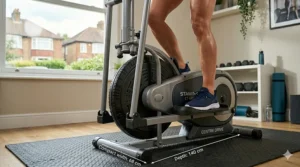
The JTX Strider-X7 represents the premium end of “affordable”—but the investment delivers professional-grade features. JTX is a UK-based manufacturer cutting out middlemen to offer exceptional value.
Key Specifications:
- Flywheel: 12.5kg commercial-grade
- Resistance: 16 electromagnetic levels
- Stride length: 41cm (16 inches)
This model features a steel frame, 21 pre-set training programmes plus 4 customisable options, 16-point electromagnetic resistance with a 12.5kg flywheel, and wireless chest strap compatibility. The large touchscreen console and integrated pulse receiver elevate the user experience significantly.
Real-World Pricing: £399.00-£449.00
Customer Feedback Summary: UK reviewers consistently highlight the robust build quality and smooth, natural motion. The 2-year home repair warranty provides peace of mind.
✅ Pros:
- 21 pre-set + 4 custom programmes
- Heavy 12.5kg flywheel for ultra-smooth motion
- 2-year warranty + lifetime frame guarantee
❌ Cons:
- Higher price point
- Heavier unit (requires two for assembly)
Best For: Quality-focused buyers wanting long-term investment piece.
7. Viavito SE1 Magnetic Elliptical
The Viavito SE1 closes our list with a well-balanced mid-range option. This centre drive elliptical combines thoughtful ergonomics with modern connectivity, making it ideal for tech-aware fitness enthusiasts.
Key Specifications:
- Flywheel: 6kg precision-balanced
- Resistance: 16 magnetic levels
- Stride length: 48cm (19 inches)
The standout feature is the generous 19-inch stride length at this price point, accommodating users up to 193cm (6’4″) comfortably. The LED display provides clear feedback, whilst the device holder supports tablets for entertainment during longer sessions.
Real-World Pricing: £229.99-£279.99
Customer Feedback Summary: British users particularly appreciate the natural stride motion and quiet operation. The transport wheels make repositioning effortless.
✅ Pros:
- Long 19-inch stride for taller users
- 16 resistance levels for progression
- Transport wheels for easy movement
❌ Cons:
- Mid-range pricing
- LED display rather than LCD
Best For: Taller users (over 180cm) seeking comfortable stride length.
Understanding Centre Drive Technology: What Makes It Different
Centre drive cross trainers position the flywheel at the front of the machine, creating a unique biomechanical advantage. A cross trainer featuring a front-drive setup has the flywheel positioned at the front of the machine in front of the pedals, helping to keep their footprint to a minimum which is great if you’re short on space.
This design creates a more upright posture during exercise, similar to walking or jogging naturally. The centre placement also means your body weight is distributed more evenly across the machine, reducing stress on individual components and extending the equipment’s lifespan.
Key Benefits of Centre Drive Design:
🔹 Space Efficiency – Typically 20-30% shorter than rear drive equivalents, perfect for UK homes where space is at a premium.
🔹 Natural Body Position – The front flywheel encourages an upright stance, reducing lower back strain during longer sessions.
🔹 Easier Entry/Exit – The lower step-over height makes mounting and dismounting simpler, particularly beneficial for older users or those with mobility considerations.
🔹 Cost-Effective Manufacturing – Simpler mechanical design often translates to more affordable pricing whilst maintaining quality.
However, it’s worth noting that some experts suggest that front driven elliptical trainers produce a more linear, flatter oval motion compared to rear drive models which provide a truer heel-toe ellipse. This doesn’t make one objectively better—it’s about personal preference and what feels natural to you.
How to Choose Your Perfect Affordable Centre Drive Cross Trainer
Selecting the right elliptical involves balancing several key factors. Here’s your decision-making framework:
Step 1: Measure Your Available Space
Before falling in love with any model, grab a tape measure. Most centre drive cross trainers occupy roughly 100-130cm length × 50-70cm width. Add an extra 10-15cm around the perimeter for comfortable access. If you’ve got low ceilings, check the maximum pedal height specification—add this to your height to ensure adequate headroom.
Step 2: Determine Your Budget Range
You could spend under £200 on one, or over £10,000, but most people looking for a home cross trainer will spend between £300 and £1,000. For affordable options, expect £150-£450 to deliver solid performance without premium bells and whistles.
Step 3: Check Stride Length Compatibility
This is crucial. Cross trainers with a short stride length will provide an unnatural, jarring movement that will prevent you from working at your maximum intensity, whilst gym quality cross trainers generally have a stride length of 19 inches or more.
Stride Length Guide:
- Under 165cm (5’5″): 38cm+ (15″+) acceptable
- 165-180cm (5’5″-5’11”): 41cm+ (16″+) recommended
- Over 180cm (6’+): 48cm+ (19″+) essential
Step 4: Evaluate Resistance System
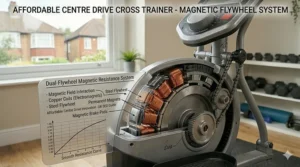
Magnetic resistance systems are the gold standard for home use—they’re quieter, require less maintenance, and provide smoother transitions between levels. Look for models offering at least 8 levels; serious users should target 16+ levels for long-term progression.
Step 5: Consider Maximum User Weight
Never skimp here. Choose a model rated for at least 10-15kg above your current weight. This provides a safety margin and ensures the machine handles your weight comfortably, extending its operational lifespan.
Step 6: Assess Console Features
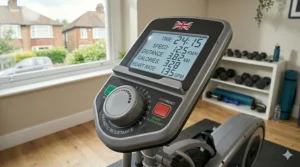
Basic models display time, distance, calories, and pulse—sufficient for most users. Mid-range options add programmable workouts, whilst premium models offer app connectivity and touchscreens. Decide what genuinely enhances your motivation versus marketing fluff.
Step 7: Read UK-Specific Reviews
Always check reviews from verified UK purchasers on Amazon.co.uk. Pay attention to assembly difficulty, customer service experiences, and long-term durability reports. Look for patterns rather than isolated complaints.
Centre Drive vs Rear Drive: Which Should You Choose?
This debate divides fitness enthusiasts, but the answer depends on your specific circumstances rather than objective superiority.
Centre Drive Advantages:
- Compact footprint (20-30% shorter)
- Lower entry height (easier access)
- More affordable pricing
- Simpler mechanical design
- Better weight distribution
Rear Drive Advantages:
- Longer, more natural stride path
- Smoother heel-toe motion
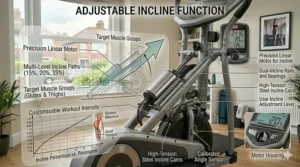
- Often include incline adjustment
- Generally quieter at high speeds
- Higher maximum user weights
High end brands such as Precor and Life Fitness put the flywheel at the back which provides a truer and more natural heel-toe ellipse, but some people actually prefer the motion of a front drive.
The Verdict: If space is limited or budget is tight, centre drive wins. If you’ve got room and budget for a rear drive model (typically £500+), the biomechanics may feel more natural—but many users genuinely prefer the upright posture of front drive machines.
Maximising Your Centre Drive Cross Trainer Investment
Purchasing the machine is just the beginning. Here’s how to extract maximum value:
Proper Assembly Matters
Take your time during assembly. Rushed installation leads to squeaks, wobbles, and premature wear. Tighten all bolts to specification, and conduct a re-tightening check after the first week of use as components settle.
Create a Dedicated Workout Space
Position your cross trainer where you’ll actually use it—not hidden in a cold garage or damp shed. Natural light, good ventilation, and proximity to entertainment (TV, tablet) dramatically increase usage frequency.
Establish a Consistent Routine
The NHS recommends everyone does 150 minutes of moderate intensity exercise per week, or 75 minutes of vigorous intensity exercise at a minimum. That’s just 30 minutes, five days weekly. Schedule sessions like appointments rather than fitting them in “when you have time.”
Vary Your Workouts
Alternate between steady-state cardio (maintaining consistent pace for 20-30 minutes) and HIIT sessions (high intensity intervals with recovery periods). This variation prevents plateaus and maintains motivation.
Use Heart Rate Monitoring
Most models include pulse sensors on handlebars. Use these to stay within your target heart rate zones—typically 50-70% of maximum for fat burning, 70-85% for cardiovascular fitness improvement.
Maintain Your Equipment
Wipe down after each use to prevent sweat corrosion. Check and tighten bolts monthly. Vacuum beneath the machine weekly to prevent dust accumulation in moving parts. Most magnetic systems require zero lubrication, but check your manual.
Common Centre Drive Cross Trainer Mistakes to Avoid
Mistake 1: Choosing Stride Length Based on Price
That bargain £99 model might seem tempting, but if you’re 183cm tall using a 38cm stride, you’ll hate every session. Biomechanical fit trumps price every time.
Mistake 2: Ignoring Maximum User Weight
Manufacturers list maximum weights for a reason. Exceeding these limits voids warranties and accelerates wear on bearings and resistance systems. Always allow a 10-15kg safety margin.
Mistake 3: Placing on Uneven Floors
Cross trainers need level surfaces for smooth operation. On uneven floors, use the adjustable feet (most models include these) to create stability. An equipment mat prevents floor damage and reduces noise transmission.
Mistake 4: Overlooking Assembly Requirements
Some models arrive 80% pre-assembled; others require full construction. Check reviews for assembly time and difficulty. If you’re not mechanically inclined, factor in potential assembly service costs (typically £50-£100 in the UK).
Mistake 5: Neglecting Warranty Details
UK consumer rights provide some protection, but manufacturer warranties vary wildly. Look for minimum 1-year parts coverage and lifetime frame warranties on quality models. Check what’s actually covered—some exclude normal wear items.
Space-Saving Tips for UK Homes
British homes aren’t typically blessed with American-sized rooms. Here’s how to integrate a centre drive cross trainer without dominating your living space:
Vertical Storage: Some models fold vertically, reducing footprint by 40-50%. Check if your chosen model offers this feature.
Multi-Purpose Rooms: Position in spare bedrooms, home offices, or conservatories. Use room dividers or screens to create visual separation.
Under-Stairs Alcoves: Measure carefully—some compact models fit beautifully in these often-wasted spaces.
Seasonal Rotation: If you’ve got a garage or shed with decent conditions, consider rotating with seasonal equipment (lawn mower, garden furniture).
Transport Wheels: Prioritise models with front wheels allowing easy repositioning. Roll it out for use, tuck it away afterwards.
Health Benefits of Regular Cross Training
Utilising so many muscles in its ellipse action, using a cross trainer is a great way to get your heart rate up and improve your cardiovascular health, as your body works harder to pump oxygenated blood around your body.
Cardiovascular Improvements: Regular elliptical training strengthens your heart muscle, improves circulation, and increases lung capacity. According to research from the British Heart Foundation, cross trainers offer similar cardiovascular benefits to brisk walking or jogging whilst significantly reducing joint impact. Studies show consistent users experience lower resting heart rates and improved blood pressure readings.
Joint-Friendly Exercise: As your feet don’t actually come away from the pedals on a cross trainer, your knees, hips, and ankles don’t have to take your weight in the same way as running, making it one of the best low-impact cardio workouts you can do. The NHS recommends elliptical machines for people with osteoarthritis as they provide cardiovascular benefits without excessive joint strain. This makes cross trainers ideal for those with arthritis, previous injuries, or joint sensitivity.
Full-Body Engagement: Unlike treadmills or exercise bikes that primarily work lower body, cross trainers engage arms, shoulders, back, core, and legs simultaneously. This comprehensive muscle activation burns more calories per session whilst building balanced strength.
Weight Management: Depending on intensity, you can burn 300-600 calories in 30 minutes on a cross trainer. Research from Loughborough University’s School of Sport demonstrates that elliptical training provides comparable energy expenditure to treadmill running whilst significantly reducing impact forces through the lower limbs. The combination of cardiovascular work and muscle engagement creates an efficient calorie-burning environment supporting weight loss goals.
Mental Health Benefits: Exercise releases endorphins, reducing stress and anxiety whilst improving mood and sleep quality. The rhythmic, meditative nature of elliptical training provides mental clarity many users find addictive in the best possible way.
Budget vs Premium: What Extra Money Actually Buys
Understanding where your pounds go helps make informed decisions:
£100-£200 Budget Tier:
- 6kg flywheel
- 8 resistance levels
- Basic LCD display
- Manual resistance adjustment
- 1-year warranty
- Adequate for beginners, 3-4 sessions weekly
£200-£350 Mid-Range:
- 6-8kg flywheel
- 16 resistance levels
- Enhanced LCD/LED display
- Bluetooth app connectivity
- Transport wheels
- 2-year warranty
- Suitable for regular users, daily sessions
£350-£500 Premium Affordable:
- 10-12.5kg flywheel
- 16-32 resistance levels
- Touchscreen displays
- Multiple user profiles
- Pre-programmed workouts
- Commercial-grade components
- Lifetime frame warranty
- Built for intensive daily use
The jump from budget to mid-range (£100 extra) typically delivers the best value improvement. The premium tier suits serious athletes or households with multiple daily users.
Frequently Asked Questions
❓ What's the difference between a centre drive and front drive cross trainer?
❓ How much space do I really need for a centre drive cross trainer in my UK home?
❓ Can I use a centre drive cross trainer if I'm over 180cm tall?
❓ Are affordable centre drive cross trainers suitable for weight loss goals?
❓ How noisy are budget centre drive cross trainers for UK flats and apartments?
Conclusion: Finding Your Perfect Affordable Centre Drive Cross Trainer
Choosing an affordable centre drive cross trainer doesn’t mean compromising on quality or effectiveness. The UK market in 2026 offers exceptional options across every price point, from the budget-friendly Dripex 8-Level Magnetic at £189.99 to the feature-rich JTX Strider-X7 at £449.00.
Remember the fundamentals: prioritise stride length compatibility over flashy features, ensure adequate maximum user weight capacity, and select resistance levels supporting long-term progression. Centre drive designs excel in UK homes thanks to their compact footprints and efficient biomechanics, making them ideal whether you’re in a London flat or Scottish cottage.
The best cross trainer isn’t the most expensive or the one with the most programmes—it’s the one you’ll actually use consistently. Position it somewhere accessible, schedule regular sessions, and within weeks you’ll experience the cardiovascular, strength, and mental health benefits that make cross trainers such popular home fitness investments.
Start with our comparison table to shortlist models matching your budget and requirements, then read verified UK buyer reviews on Amazon.co.uk to confirm real-world performance. Your perfect affordable centre drive cross trainer awaits—and your healthier, fitter self will thank you for making this investment.
✨ Don’t Miss These Exclusive Deals!
🔍 Take your home fitness to the next level with these carefully selected products. Click on any highlighted item to check current pricing and availability on Amazon.co.uk. These machines will help you create authentic fitness results your family will love!
Recommended for You
- 7 Best Compact Centre Drive Elliptical for Small Spaces UK 2026
- Best Commercial Grade Rear Drive Elliptical for Home Gym 2026 UK
- 7 Best Smooth Rear Drive Elliptical with 18kg Flywheel UK 2026
Disclaimer: This article contains affiliate links. If you purchase products through these links, we may earn a small commission at no additional cost to you. Prices shown are approximate and may vary.
✨ Found this helpful? Share it with your mates! 💬🤗
