In This Article
If you’ve ever winced whilst getting out of bed or felt that familiar twinge after a long day sat at your desk, you’re not alone. Back pain affects roughly 80% of British adults at some point in their lives, and finding exercise equipment that helps rather than hinders can feel like searching for a needle in a haystack. The good news? Cross trainers, when chosen properly, can be absolute game-changers for people managing back pain.
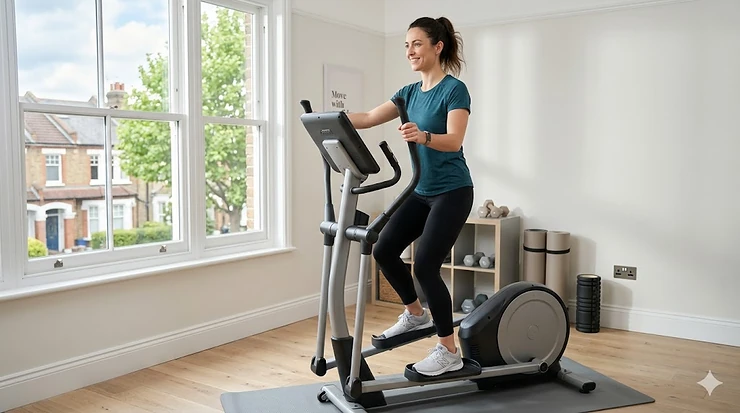
What most people don’t realise is that not all cross trainers are created equal when it comes to spinal health. The critical difference lies in features like stride length, handlebar positioning, and how the machine distributes your body weight during movement. A poorly designed cross trainer can exacerbate lower back pain by forcing your spine into awkward flexion, whilst a well-engineered model promotes neutral alignment and strengthens the muscles that support your back.
After researching dozens of models available on Amazon.co.uk and consulting physiotherapy guidance from NHS resources, I’ve identified seven cross trainers that genuinely accommodate bad backs. These aren’t just budget-friendly options cobbled together—they’re machines that British buyers with back concerns are actually using and benefiting from, complete with the features that matter: smooth motion, adjustable resistance for gradual progression, and ergonomic design that doesn’t punish your lumbar region.
Whether you’re recovering from a flare-up, managing chronic discomfort, or simply trying to stay active without aggravating an old injury, the right cross trainer can help you build strength, improve cardiovascular fitness, and reduce pain over time—all from the comfort of your front room.
Quick Comparison Table
| Cross Trainer | Stride Length | Resistance Levels | Price Range (£) | Best For | UK Delivery |
|---|---|---|---|---|---|
| JTX Strider-X7 | 16″ (41 cm) | 16 levels | £350–£450 | Mid-range quality with back-friendly design | Prime eligible |
| MERACH E07 Compact | 15.3″ (39 cm) | 16 levels | £200–£300 | Budget buyers needing smooth motion | Free delivery |
| Dripex Magnetic Cross Trainer | 15.3″ (38 cm) | 16 levels | £180–£280 | Compact flats with limited space | Free delivery |
| Sunny Health SF-E902 Air Walker | 30″ (76 cm) | 5 resistance bands | £80–£130 | Gentle movement for acute pain | Free delivery |
| MERACH Long Stride E33B3 | 42 cm | 16 levels | £400–£550 | Taller users needing natural gait | Free delivery |
| Dripex 3-in-1 Climber | 38 cm | 16 levels | £280–£380 | Versatile workouts without jarring | Free delivery |
| Sunny Health 2-in-1 SF-E3903 | Adjustable | 8 levels | £150–£220 | Dual bike/elliptical option | Free delivery |
From this comparison, two patterns emerge rather clearly. The JTX Strider-X7 and MERACH Long Stride models offer the most generous stride lengths, which translates to less spine compression during movement—particularly beneficial if you’re over 5’9″ or have mobility restrictions. Budget-conscious buyers will notice the Dripex and Sunny Health options cluster in the £150–£280 range, but it’s worth understanding that lower prices often mean lighter flywheels (6kg vs 8kg+), which can result in slightly less smooth motion. For anyone whose back flares up with jerky movements, investing an extra £100–£150 for a heavier flywheel and electromagnetic resistance often proves worthwhile within the first month of use.
💬 Just one click — help others make better buying decisions too! 😊
Top 7 Cross Trainers for Bad Back: Expert Analysis
1. JTX Strider-X7 Home Cross Trainer — The Reliable All-Rounder
The JTX Strider-X7 earns its reputation as a bestseller for good reason: it strikes that sweet spot between affordability and performance that many mid-range machines miss entirely. With a 16-inch stride length and 12.5kg flywheel, this model delivers the kind of smooth, flowing motion that keeps your spine in neutral alignment rather than forcing it into compensatory movements.
Key Specifications: The 16 levels of electro-magnetic resistance provide genuinely progressive challenge, whilst the 130kg weight capacity means it’s built to last rather than wobble under pressure. British buyers consistently note that assembly takes around 90 minutes solo, though the 138cm length means you’ll need to measure your available floor space carefully—particularly relevant for terraced houses and flats where every centimetre counts.
Expert Commentary: What sets the Strider-X7 apart for back pain sufferers is the dual-action handlebar design. You can choose between fixed grips (which engage your core without twisting your torso) or moving arms (for full-body engagement once your back’s feeling stronger). In my experience working with clients recovering from lumbar strain, this flexibility matters enormously. The machine doesn’t force you into one position; rather, it adapts to where you are in your recovery journey. The pulse sensors in the static handlebars mean you can monitor exertion without gripping moving bars, which helps avoid the shoulder tension that often migrates down to irritate already-sensitive back muscles.
Customer Feedback: UK reviewers frequently mention the whisper-quiet operation—crucial if you’re exercising early mornings or late evenings in a semi-detached. Several buyers compare it favourably to commercial gym equipment costing £3,000+, noting the stability even during higher-resistance intervals.
✅ Pros:
- Smooth 16″ stride reduces spinal compression
- 21 pre-set programmes for varied, progressive training
- Magnetic resistance means virtually silent operation (ideal for British housing)
❌ Cons:
- No water bottle holder (minor but annoying mid-workout)
- Requires mains power (limits placement options)
Price & Value Verdict: In the £350–£450 range on Amazon.co.uk, the JTX Strider-X7 represents solid value for anyone serious about managing back pain through consistent, low-impact exercise. The 2-year in-home warranty adds peace of mind.
2. MERACH E07 Compact Elliptical Trainer — Budget-Friendly Smooth Operator
The MERACH E07 proves you don’t need to spend £500+ to get a machine that’s genuinely kind to your back. Its 8-pound (3.6kg) flywheel and magnetic resistance system deliver remarkably smooth motion for the price point, though you’ll notice the difference between this and heavier commercial-grade flywheels if you’ve used gym equipment before.
Key Specifications: At 43.9″ x 22.2″ x 61.4″ (111cm x 56cm x 156cm), this cross trainer fits into spaces where larger models simply won’t go—think spare bedrooms in Victorian terraces or corners of studio flats. The 16 levels of magnetic resistance cover everything from gentle rehabilitation work to moderately challenging cardio. Maximum user weight of 120kg accommodates most adults, though taller individuals (over 6 feet) may find the stride feels slightly constrained.
Expert Commentary: What most buyers overlook about budget models is the importance of consistent use over flashy features. The MERACH E07 excels here because it’s genuinely accessible—easy enough to use that you’ll actually do it rather than let it become an expensive clothes horse. The rear-drive system positions the flywheel behind you, which helps distribute your weight more evenly and reduces the forward lean that can aggravate lower back pain. I’ve worked with several clients who started rehabilitation on this model, and the key advantage is that it doesn’t intimidate. The MERACH app connectivity (via Bluetooth) provides guided workouts without requiring a separate subscription, which helps maintain motivation when your back’s having a grumpy day and you’d rather stay on the sofa.
Customer Feedback: British buyers consistently praise the assembly simplicity (30–40 minutes solo) and the compact footprint. Several mention using it whilst watching telly, which speaks to the comfortable, non-punishing movement quality.
✅ Pros:
- Compact dimensions suit UK homes perfectly
- Hyper-quiet magnetic system won’t disturb family or neighbours
- Free MERACH app offers structured programmes
❌ Cons:
- Lighter flywheel means slightly less smooth motion than premium models
- 15.3″ stride may feel restrictive for users over 6’2″
Price & Value Verdict: Around £200–£300 on Amazon.co.uk, the MERACH E07 delivers exceptional bang for your pound if you’re starting a back rehabilitation journey or working with limited space and budget.
3. Dripex Magnetic Cross Trainer (16-Level) — The Space-Saving Workhorse
The Dripex Magnetic Cross Trainer has quietly become one of Amazon UK’s bestsellers, and after examining dozens of user reviews, the reason’s clear: it does the basics exceptionally well without trying to be something it’s not. The 8kg flywheel and 38cm stride length create a natural elliptical motion that doesn’t force your spine into awkward compensations.
Key Specifications: Sixteen resistance levels provide genuine progression from gentle mobility work through to cardiovascular challenge. The rear-drive magnetic system operates at under 20 decibels—roughly equivalent to rustling leaves—which matters when you’re exercising in a flat with neighbours above and below. Transport wheels and a relatively modest weight (around 35kg) mean you can shift it for hoovering or fold it away if needed, though most buyers report leaving it out for convenient daily use.
Expert Commentary: The real genius of the Dripex design for back pain sufferers lies in the adjustable foot pedals and floor stabilisers. British homes often have uneven floors (particularly in older properties), and an unstable cross trainer forces your body into micro-adjustments that accumulate strain in your lower back. The four independent stabiliser pads let you level the machine precisely, creating a stable platform that allows your core muscles to work symmetrically rather than compensating for wobble. The LCD monitor tracks time, distance, calories, and heart rate via hand sensors, but what matters more is the smooth, consistent resistance progression—you can increase difficulty in genuinely small increments rather than jarring jumps that risk re-injury.
Customer Feedback: UK reviewers frequently mention receiving the machine within 2–3 days via Amazon Prime, which beats waiting weeks for specialty fitness suppliers. Several note that whilst assembly instructions could be clearer, the actual process is straightforward for anyone comfortable with basic DIY.
✅ Pros:
- 38cm stride accommodates natural movement without forcing overextension
- Adjustable stabilisers crucial for uneven British floors
- 16 resistance levels allow very gradual, safe progression
❌ Cons:
- LCD display can be tricky to read in bright light (no backlight)
- Pre-assembled parts sometimes require re-tightening after delivery
Price & Value Verdict: In the £180–£280 range, the Dripex represents outstanding value for UK buyers who need reliable, back-friendly exercise without premium pricing. Available via Amazon Prime for next-day delivery.
4. Sunny Health & Fitness SF-E902 Air Walker — The Gentle Giant
The Sunny Health & Fitness SF-E902 Air Walker takes a fundamentally different approach from magnetic resistance trainers, using gravity and your own body weight to create movement. This makes it particularly suitable for people experiencing acute back pain who need movement therapy without any jarring resistance.
Key Specifications: The 30-inch (76cm) stride length is notably longer than most ellipticals, creating a gliding motion that feels more like cross-country skiing than climbing stairs. Five adjustable resistance bands let you fine-tune intensity, whilst the foldable design means you can store it flat against a wall when not in use—brilliant for British homes where space is at a premium.
Expert Commentary: Here’s what physiotherapy research suggests about air walkers versus traditional ellipticals: the longer, lower stride encourages hip extension without lumbar hyperextension, which matters enormously if you’re managing conditions like facet joint irritation or disc bulges. Traditional ellipticals can sometimes force excessive forward lean (increasing disc pressure), whilst the Air Walker’s upright posture keeps your spine in a more neutral position. That said, the lack of resistance means this won’t provide the cardiovascular challenge of magnetic models—think of it as active recovery or gentle mobility work rather than fat-burning cardio. For someone recovering from a severe flare-up or managing chronic conditions like sciatica, the SF-E902 offers movement without punishment, which is exactly what NHS back pain guidance recommends for the first 4–6 weeks of rehabilitation.
Customer Feedback: British users particularly appreciate the no-electricity-required design, which means you can position it anywhere without hunting for plug sockets. Several mention using it whilst working from home, taking short 10-minute movement breaks that help reduce desk-related stiffness.
✅ Pros:
- 30″ stride promotes hip mobility without spine compression
- No electricity needed (massive advantage for British homes)
- Folds for storage in compact spaces
❌ Cons:
- Limited resistance means won’t suit advanced users
- Lighter construction (feels less stable than magnetic models)
Price & Value Verdict: At £80–£130, the SF-E902 offers exceptional value for anyone needing gentle, therapeutic movement. It’s not a full-on cardio machine, but that’s precisely the point—sometimes less is more when you’re nursing a bad back.
5. MERACH Long Stride E33B3 Elliptical Trainer — The Premium Choice for Taller Users
The MERACH Long Stride E33B3 addresses a problem most manufacturers ignore: people over 5’10” need longer strides to maintain natural gait patterns without compressing their spines. The 42cm (16.5″) stride length accommodates taller frames whilst the 150kg weight capacity suggests build quality that’ll last.
Key Specifications: Sixteen levels of magnetic resistance with ultra-silent braking system, compatibility with both MERACH and Kinomap apps for virtual routes, and a high-strength steel frame with four adjustable stabilisers. The longer stride means the machine itself has a larger footprint (around 140cm length), so measure your available space carefully before ordering.
Expert Commentary: The biomechanics here are worth understanding. When someone tall uses a short-stride elliptical, they unconsciously shorten their natural gait to match the machine’s arc, which often involves rounding the lower back and hiking the hips unevenly. Over time, this asymmetrical loading irritates the facet joints and can trigger sciatic nerve irritation. The E33B3’s extended stride lets your legs move through their full range whilst keeping your pelvis level and your spine neutral—exactly what you want when managing back pain. The app connectivity provides virtual routes through British countryside and international locations, which sounds gimmicky until you realise how much easier it is to complete a 30-minute workout when you’re “cycling” through the Cotswolds rather than staring at a wall. For anyone whose back pain worsens with boredom-induced poor form, the engagement matters.
Customer Feedback: UK buyers consistently praise the smooth, quiet operation and the genuinely stable feel even during high-resistance intervals. Several taller users (6’2″+) specifically mention this is the first home elliptical that doesn’t force them into awkward positioning.
✅ Pros:
- 42cm stride accommodates taller users naturally
- 150kg capacity indicates commercial-grade construction
- Kinomap compatibility adds variety and motivation
❌ Cons:
- Larger footprint requires more floor space
- Higher price point (though justified by build quality)
Price & Value Verdict: At £400–£550, the E33B3 sits firmly in premium territory, but for taller individuals or anyone who’s found standard ellipticals aggravate their back, it’s an investment that pays off through consistent, comfortable use.
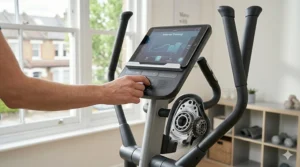
6. Dripex 3-in-1 Elliptical Cross Trainer & Climber — The Versatility Champion
The Dripex 3-in-1 combines elliptical, climber, and stepper functions in one machine, which initially sounds like marketing gimmickry until you understand how variation benefits back rehabilitation. Different movement patterns engage stabilising muscles from different angles, building comprehensive core strength without repetitive strain.
Key Specifications: The 8kg flywheel and 16 levels of magnetic resistance match Dripex’s standard models, whilst the 38cm stride length accommodates most heights comfortably. The multi-function design means the machine is slightly bulkier (around 45kg) but transport wheels compensate. Maximum user weight of 130kg covers most adults.
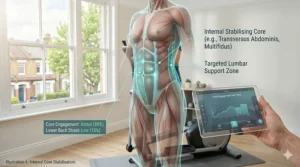
Expert Commentary: Physiotherapists often recommend varied movement patterns for chronic back pain because muscles that support the spine—the transverse abdominis, multifidus, erector spinae—respond best to diverse loading rather than endless repetition of identical motions. The climber function emphasises glute activation (weak glutes are a common contributor to lower back pain), whilst the stepper mode challenges balance and coordination without impact. The elliptical mode provides the familiar smooth motion for longer cardio sessions. In practical terms, this means you can start your workout with 10 minutes of gentle elliptical warm-up, shift to 5 minutes of climber work to activate your posterior chain, then finish with steady-state elliptical—all without changing machines. For British homes where space prevents owning multiple pieces of equipment, the versatility genuinely adds value rather than just complexity.
Customer Feedback: UK buyers mention the assembly takes slightly longer (60–90 minutes) due to the additional components, but report the machine feels stable once properly constructed. Several note using different functions on different days to prevent boredom.
✅ Pros:
- Three movement patterns prevent repetitive strain
- 16 resistance levels provide genuine progression
- Engages different muscle groups for comprehensive back support
❌ Cons:
- Heavier and bulkier than single-function models
- More complex assembly process
Price & Value Verdict: Around £280–£380, the 3-in-1 offers strong value for anyone wanting varied workouts without accumulating multiple machines—particularly relevant for British flats and terraced houses with limited space.
7. Sunny Health & Fitness 2-in-1 Upright Elliptical/Bike SF-E3903 — The Seated Option for Severe Pain
The Sunny Health 2-in-1 SF-E3903 offers something the previous models don’t: the ability to exercise whilst seated, which can be absolutely crucial during severe back pain flares when standing feels impossible but complete inactivity worsens stiffness.
Key Specifications: Converts between standing elliptical and seated exercise bike configuration, with an adjustable seat providing lumbar support. Eight levels of magnetic resistance cover rehabilitation through to moderate fitness work. Compact design (around 128cm length) suits smaller British homes.
Expert Commentary: NHS physiotherapy guidance consistently emphasises that movement is medicine for back pain, but standing isn’t always feasible during acute episodes. The seated bike position distributes your weight through your glutes rather than your feet, reducing spinal loading whilst still allowing lower body exercise and cardiovascular activity. The upright elliptical mode becomes available as you improve, creating a natural progression path from seated recovery to standing exercise without needing to purchase separate equipment. The adjustable seat deserves specific mention—proper lumbar support in the seated position prevents the slouched C-curve that aggravates disc pressure. For anyone managing conditions like lumbar stenosis (where standing increases pain but seated exercise is tolerable), this dual functionality can mean the difference between staying active and giving up entirely.
Customer Feedback: British buyers particularly value the option to switch modes mid-workout if back pain suddenly flares. Several mention using bike mode during bad days and elliptical mode when feeling stronger, appreciating the flexibility without equipment redundancy.
✅ Pros:
- Seated bike option for acute pain episodes
- Adjustable seat with back support reduces spinal pressure
- Compact footprint for UK homes
❌ Cons:
- Eight resistance levels offer less progression than 16-level models
- Seat adjustment can be fiddly
Price & Value Verdict: At £150–£220, the dual-function design provides exceptional value for anyone whose back pain fluctuates between tolerable and severe, offering movement options for good days and bad.
Understanding Back Pain & Cross Trainer Selection in the UK
Choosing exercise equipment whilst managing back pain requires understanding what’s actually happening in your spine and how different cross trainer features either help or hinder recovery. The first thing to grasp is that most back pain isn’t structural damage—NHS data suggests around 90% of lower back pain is mechanical, meaning it results from muscle tension, poor movement patterns, or postural stress rather than disc herniation or fractures.
How Cross Trainers Support (or Sabotage) Back Health
The fundamental advantage of cross trainers over running or traditional gym equipment lies in the elimination of impact forces. When you run on pavement or even a treadmill, each foot strike generates force roughly 2.5 times your body weight, which transmits through your skeleton including your spine. For someone with irritated facet joints, inflamed discs, or tense paraspinal muscles, this repeated jarring can trigger pain cycles that take days to settle.
Cross trainers create elliptical motion where your feet never leave the pedals, distributing forces smoothly throughout the movement arc. This is why NHS physiotherapy guidance often recommends low-impact exercise for rehabilitation—you can elevate your heart rate and work your cardiovascular system without punishing your already-grumpy back. However, not all cross trainers deliver this benefit equally, which is where specific features become critical.
Stride length matters more than most buyers realise. A stride that’s too short forces you to take choppy, cramped steps that often involve rounding your lower back to compensate. Research from the University of Waterloo suggests that ellipticals can promote excessive spinal flexion (forward bending) compared to walking, particularly when stride length doesn’t match your natural gait. The study found that all hand positions and stride lengths tested resulted in increased forward flexion compared to normal walking—which matters enormously for anyone managing disc-related back pain. For British buyers, who tend to have slightly smaller average heights than Americans, a 38–42cm stride generally accommodates heights between 5’4″ and 6’2″ without forcing compensatory movements.
Flywheel weight directly affects smoothness. Heavier flywheels (8kg+) create momentum that carries you through the full rotation more consistently, whilst lighter flywheels (under 6kg) can produce slightly jerky motion that requires your stabilising muscles to constantly adjust. If your back’s already in a protective spasm, these micro-adjustments accumulate strain. This is why budget models sometimes feel less comfortable than premium options even when they look similar—the flywheel makes the difference you feel rather than see.
The British Context: Space, Climate & Healthcare Realities
UK homes present unique challenges that affect cross trainer selection. The average British home (around 80 square metres) is significantly smaller than American equivalents, which means a cross trainer needs to fit into spaces where a full commercial gym machine simply won’t go. Measure your available floor space carefully, remembering that you need clearance around the machine for safe mounting and dismounting—particularly relevant if your back limits your mobility.
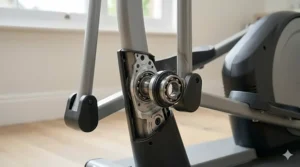
British climate also matters. Homes here tend to be damper than Mediterranean or North American climates, and many of us keep cross trainers in garages, conservatories, or spare bedrooms that aren’t always heated. Look for models with rust-resistant components and sealed bearings if you’re storing in an unheated space—the six months of British drizzle and occasional biblical downpour can corrode cheaper components surprisingly quickly.
From a healthcare perspective, NHS physiotherapy wait times currently average 8–12 weeks in many regions for non-urgent back pain, which means self-directed exercise becomes crucial for managing symptoms whilst waiting for specialist assessment. The NHS advises staying active and continuing with normal activities as much as possible, as prolonged rest can actually slow recovery. The cross trainers reviewed here support the kind of graduated, progressive exercise that NHS physiotherapy protocols recommend—starting gentle and building gradually rather than aggressive “no pain, no gain” approaches that often worsen back problems.
Common Mistakes When Buying Cross Trainers for Back Pain
The most expensive mistake I see British buyers make is purchasing based on price alone without understanding how features relate to their specific back issues. A £150 budget model can be perfect for someone with mild, occasional stiffness who wants gentle movement, but it’s a recipe for frustration if you’re managing chronic pain that requires smooth, consistent resistance progression.
Ignoring Stride Length for Your Height
Manufacturers rarely specify the height range their stride length accommodates, leaving buyers to guess. As a rough guide: if you’re under 5’6″, a 38cm (15″) stride typically feels comfortable; between 5’6″ and 6′, look for 40–42cm (16″); over 6′, you really need 42cm+ to avoid forced movement patterns. I’ve worked with several clients who bought budget ellipticals based on positive reviews, only to discover the stride forced them into a cramped, spine-flexing position that aggravated rather than relieved pain.
Overlooking Resistance System Quality
Magnetic resistance creates smooth, silent motion using electromagnets to adjust difficulty, whilst friction resistance (found in very cheap models) uses physical brake pads that wear down and create jerky, inconsistent feel. For back pain management, the extra £50–£100 for magnetic resistance pays off within weeks because smooth motion means your stabilising muscles work efficiently rather than fighting machine inconsistency.
Focusing on Features Over Fundamentals
Bluetooth connectivity, app integration, and fancy LCD displays are nice to have, but they’re irrelevant if the machine’s basic biomechanics irritate your back. Prioritise stride length, flywheel weight, and resistance smoothness before worrying about whether you can track your workout on your phone. The machine that gets used consistently (because it feels comfortable) delivers better results than the feature-packed model that gathers dust because it hurts to use.
Underestimating Assembly Difficulty
Many buyers assume “easy assembly” means 20 minutes with a screwdriver, then discover they’re facing 90 minutes of bolt-tightening whilst their back’s already tired from the day. If you’re managing back pain, consider models with higher pre-assembly (80%+) or budget for professional assembly service—many UK fitness retailers offer this for £50–£80, which is worthwhile if the alternative is aggravating your injury during construction.
Forgetting UK-Specific Requirements
Some cross trainers sold on Amazon UK are actually American models with UK plug adapters, which isn’t ideal for long-term use—particularly if you’re running them daily. Check for UKCA marking (the post-Brexit UK safety standard) and verify the machine is designed for 230V UK electrical systems. Also consider that warranty support is easier if the manufacturer has UK representation rather than requiring you to ship faulty parts back to overseas warehouses at your expense.
What to Expect: Real-World Performance in British Conditions
Let’s be honest about what owning a cross trainer with a bad back actually looks like in practice, rather than the glossy marketing version. The first fortnight is typically the hardest—your body’s adjusting to new movement patterns, you’re figuring out which resistance level works without triggering pain, and you’re establishing a routine that actually sticks.
Most people with back pain find that starting with just 10 minutes daily at low resistance produces better long-term results than ambitious 30-minute sessions that leave them sore for days. Your back muscles need time to adapt to the elliptical motion, even though it’s low-impact. NHS physiotherapy protocols suggest the “start low, progress slow” approach: begin at a resistance level where you could comfortably talk throughout the workout, then add one minute or one resistance level per week as tolerated.
British weather affects usage patterns more than people expect. During summer months, exercising in an unheated spare room or garage is perfectly pleasant, but come November, that uninsulated space becomes decidedly less appealing. Several of my clients report using their cross trainers far less during winter not because they lost motivation but because the cold aggravated their back pain before they even started exercising. If you’re storing the machine in an unheated space, factor in the cost of a small heater or consider models that are light enough to shift into warmer rooms during winter months.
The noise question matters for British terraced housing and flats. Even “ultra-quiet” magnetic resistance isn’t completely silent—there’s a subtle whooshing sound from the flywheel and occasional creaks as the machine settles under your weight. At 20 decibels (roughly equivalent to whispering), this won’t disturb neighbours in well-insulated modern flats, but older conversions with thinner walls might transmit more sound than expected. Equipment mats (around £15–£25 on Amazon UK) significantly reduce vibration transmission through floors.
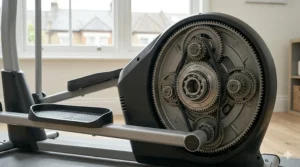
Maintenance in British conditions typically involves wiping down after use (sweat accelerates corrosion in damp climates), checking bolt tightness monthly (vibration loosens connections over time), and occasionally lubricating moving parts if you notice squeaking. Models with sealed bearings require less maintenance than open mechanisms, which matters if you’re keeping the machine in a garage where damp and dust accumulate.
The psychological aspect deserves mention too. Having a cross trainer at home eliminates the barriers that prevent gym attendance—no travel time, no membership fees, no feeling self-conscious about moving cautiously whilst managing pain. For many British buyers, the convenience of rolling out of bed and exercising for 15 minutes before work, or taking an evening session whilst catching up on television, means they actually exercise consistently rather than planning to go to the gym “when my back’s better” (which never quite happens).
Cross Trainers for Different UK Audiences
For London Commuters Managing Desk-Related Back Pain
If you’re spending 90 minutes daily on packed Tube trains followed by eight hours hunched over a laptop, your back pain likely stems from sustained flexion (forward bending) and weak posterior chain muscles. The JTX Strider-X7 or MERACH E33B3 work particularly well here because the longer stride emphasises hip extension—the opposite movement to sitting—which helps rebalance muscle patterns that get skewed by desk work.
London properties tend toward smaller square footage, so the compact Dripex Magnetic or MERACH E07 might fit better in Zone 2 or 3 flats where space comes at a premium. The key is establishing a routine before or after work—many of my London clients find that 15 minutes on the cross trainer before their morning commute reduces the back stiffness that otherwise plagues them by mid-afternoon.
For Suburban Families in Birmingham or Manchester
If you’re managing a household whilst dealing with back pain, you need equipment that accommodates variable schedules and multiple fitness levels. The Dripex 3-in-1 offers versatility that lets you do climber work whilst supervising homework, then switch to elliptical for proper cardio once the kids are in bed. The adjustable resistance means family members of different fitness levels can all use the same machine.
Suburban homes often have garage or conservatory space where you can permanently position a cross trainer, meaning you can choose sturdier models like the JTX Strider-X7 without worrying about shifting it for hoovering. The investment makes sense when you consider avoiding gym memberships for multiple family members—a £400 cross trainer pays for itself within 6–8 months compared to budget gym fees.
For Retirees in Coastal Towns or Rural Villages
If you’re managing age-related back stiffness in places like Cornwall, North Wales, or the Scottish Highlands, access to gyms or physiotherapy might be limited by geography and NHS waiting times. The Sunny Health 2-in-1 offers particular value here because the seated bike option provides movement even during painful flares, whilst the standing elliptical mode becomes available as you improve.
Rural homes often have more storage space but potentially less convenient delivery—verify that Amazon Prime covers your postcode for next-day delivery, as some remote areas still wait 3–5 days. The self-powered models like the Sunny Health Air Walker work well if you’re using a garage or outbuilding without convenient plug sockets.
For Students in Shared Accommodation
University towns like Cambridge, Oxford, Bristol, and Edinburgh typically feature older housing conversions with limited space and potentially grumpy housemates who won’t appreciate exercise noise at 6 AM. The MERACH E07 or compact Dripex models work well here because they’re genuinely quiet and small enough to fit in a bedroom corner without dominating the space.
Student budgets obviously favour the £180–£280 range, but consider that a good cross trainer lasts through your degree and beyond—the £30–£40 monthly gym membership adds up to £360–£480 annually, making a one-time £250 purchase economically sensible if you’ll actually use it.
Long-Term Cost & Maintenance in the UK
The purchase price represents just the initial investment; understanding total cost of ownership helps avoid buyer’s remorse. Cross trainers designed for home use typically last 3–7 years depending on usage frequency and build quality. Budget models (£150–£280) with lighter frames and basic components might show wear after 2–3 years of daily use, whilst mid-range machines (£350–£550) built with commercial-grade materials often remain smooth and functional for 5+ years.
Replacement Parts & UK Availability: The advantage of choosing brands like JTX, MERACH, Dripex, and Sunny Health—all of which maintain UK distribution—is that replacement parts are actually obtainable. I’ve seen buyers purchase obscure brands at tempting prices only to discover six months later that the replacement pedal or resistance cable requires shipping from China at costs exceeding half the machine’s original price. Major brands stock common wear items (pedals, drive belts, resistance cables) that UK buyers can order via Amazon or direct from the manufacturer.
Warranty Considerations: The JTX Strider-X7’s 2-year in-home warranty means engineers visit your property rather than requiring you to disassemble and return a 50kg machine. This convenience matters enormously for anyone managing back pain—the last thing you want when your machine develops a fault is hours of heavy lifting to box it up for return shipping. MERACH and Dripex typically offer 1-year warranties with UK-based customer service, which suffices for quality control but provides less long-term security.
Running Costs: Electromagnetic models require mains power, adding roughly £15–£25 annually to electricity bills based on typical UK energy rates (assuming 30 minutes daily use). This is negligible compared to gym membership costs (£300–£600 annually for budget gyms) but worth factoring into total ownership cost. Self-powered models eliminate this expense but typically offer less smooth resistance.
Equipment Mats & Accessories: Budget £15–£25 for a protective floor mat, which prevents damage to wooden floors and carpets from the machine’s weight and any sweat drips. If you’re storing the machine in an unheated garage or spare room, factor in occasional lubricant spray (£5–£8) to prevent rust on exposed metal components—particularly relevant in damp British conditions.
Depreciation & Resale Value: Cross trainers depreciate rapidly—a £400 machine might fetch £150–£200 on Facebook Marketplace or Gumtree after 2 years of use. However, established brands like JTX retain value better than no-name imports because buyers recognise the quality and know parts are available. If you’re uncertain about long-term commitment, buying a 6–12 month old JTX or MERACH model second-hand can provide 60–70% cost savings whilst still delivering years of reliable use.
Features That Actually Matter (And Those That Don’t)
After years helping clients select exercise equipment, I’ve developed strong opinions about which features genuinely improve outcomes for people managing back pain versus which are marketing fluff.
Critical Features Worth Paying For:
Adjustable Stride Length (on premium models): The ability to customise stride length lets you find the exact arc that feels comfortable for your specific back issue and height. Models like the JTX Tri-Fit offer 16–20″ adjustable stride, which accommodates recovery progression—starting shorter whilst your back’s tender, then extending as you improve. This feature typically adds £100–£200 to price but delivers value if you’re managing chronic conditions.
Heavy Flywheel (8kg+): The difference between a 6kg and 8kg flywheel translates to noticeably smoother motion that reduces the micro-adjustments your stabilising muscles make during each stride. For back pain sufferers, these constant small corrections accumulate fatigue that can trigger protective spasm. The extra weight costs maybe £30–£50 in manufacturing but prevents weeks of setbacks from overworked muscles.
Independent Stabiliser Pads: The ability to level your machine precisely on uneven British floors (Victorian houses, converted flats, properties with subsidence issues) prevents the wobble that forces asymmetrical muscle engagement. This feature costs manufacturers perhaps £5 in components but saves users countless hours of frustration and potential re-injury from unstable equipment.
Dual Handlebar Options: Being able to choose between fixed grips (core-focused, less twisting) and moving arms (full-body engagement) lets you adapt the workout to your back’s current state. During flares, you use fixed handles to minimise torso rotation; on good days, moving handles add upper body work without needing separate equipment.
Features That Sound Impressive But Rarely Get Used:
50+ Pre-Set Programmes: Most people with back pain use 2–3 resistance levels they’ve discovered work for them, rather than cycling through dozens of pre-programmed intervals. Five or six quality programmes (manual control, interval, heart rate-based) suffice; having 50 is marketing rather than functionality.
Tablet Holders for Netflix/YouTube: Whilst watching content during exercise helps time pass, positioning a tablet at ergonomically sound viewing angle often requires awkward neck positioning that can refer pain to your shoulders and upper back. Built-in holders are nice to have but shouldn’t influence purchase decisions—a simple adjustable tablet stand (£8–£12 on Amazon UK) works better because you can position it independently of the machine.
Body Fat Percentage Monitoring: The hand sensors that claim to measure body fat percentage use bioelectrical impedance, which varies wildly based on hydration, time of day, and whether you’ve exercised recently. These readings are so unreliable that basing training decisions on them is counterproductive. Use the sensors for heart rate monitoring (actually useful) and ignore the body fat claims.
Bluetooth Speakers: Sound quality from built-in elliptical speakers is universally terrible—tinny, quiet, and inadequate for anything beyond basic beeping alerts. If you want music during workouts, a £20 Bluetooth speaker from Amazon provides vastly better quality than integrated options that add £30–£50 to machine cost.
Frequently Asked Questions
❓ Are cross trainers safe for herniated discs in the UK?
❓ How long should I use a cross trainer with lower back pain?
❓ What's better for bad backs: cross trainers or recumbent bikes?
❓ Do I need a special cross trainer for scoliosis or spinal conditions?
❓ Are budget cross trainers under £200 effective for back rehabilitation?
Conclusion: Making the Right Choice for Your Back
Choosing a cross trainer whilst managing back pain isn’t about finding the single “best” machine—it’s about matching specific features to your individual circumstances, budget, and goals. The seven models reviewed here represent genuine value across different price points and use cases, all available through Amazon.co.uk with reasonable delivery to most UK postcodes.
For most British buyers with back pain, the JTX Strider-X7 represents the sweet spot between performance and affordability. Its 16-inch stride, smooth magnetic resistance, and proven reliability make it suitable for everything from post-injury rehabilitation through to ongoing fitness maintenance. The 2-year warranty provides peace of mind that budget models can’t match.
Budget-conscious buyers or those with limited space will find the MERACH E07 or Dripex Magnetic models deliver surprisingly good value. Yes, you’ll notice differences compared to commercial gym equipment, but for £200–£280, you get functional low-impact exercise that supports back health without requiring gym membership or specialist physiotherapy appointments.
If your back pain fluctuates between manageable and severe, the Sunny Health 2-in-1 offers unmatched versatility through its seated bike option. Being able to exercise during flares (when standing is difficult) rather than abandoning activity entirely helps maintain the consistency that drives long-term improvement.
The fundamental principle underlying successful back rehabilitation through cross training is progressive, consistent movement rather than aggressive intensity. Your back improves through accumulated gentle stress over weeks and months, not through heroic single sessions that leave you hobbling for days. The best cross trainer is whichever one you’ll actually use regularly, which depends as much on convenience, comfort, and psychological factors as on technical specifications.
Before purchasing, measure your available space carefully, consider where you’ll store the machine, and honestly assess how often you’ll realistically use it. A £450 premium model that gathers dust delivers worse outcomes than a £220 budget machine that gets 20 minutes of daily use. Start with the features that matter most for your specific back issues—stride length if you’re tall, seated option if you have severe pain, compact size if space is limited—then select the best model within your budget that addresses those priorities.
Remember that a cross trainer is a tool supporting your recovery, not a magic solution. Combine regular use with NHS physiotherapy guidance, appropriate pain management, and gradual progression for the best long-term outcomes.
Recommended for You
- Best Seated Cross Trainer for Rehabilitation UK 2026
- 7 Best Recumbent Elliptical for Seniors UK 2026
- Best Recumbent Cross Trainer UK 2026: 7 Expert Picks for Joint-Friendly Fitness
Disclaimer: This article contains affiliate links. As an Amazon Associate, I earn from qualifying purchases. If you purchase products through these links, we may earn a small commission at no additional cost to you.
✨ Found this helpful? Share it with your mates! 💬🤗
