In This Article
If you’ve ever abandoned a workout programme because your back staged a full-scale rebellion, you’re not alone. Roughly eight in ten Britons will experience back pain at some point in their lives, according to NHS data, and finding exercise equipment that doesn’t aggravate spinal issues can feel like searching for a unicorn in a field of donkeys. The orthopedic cross trainer represents a genuine solution rather than another gym equipment marketing gimmick.
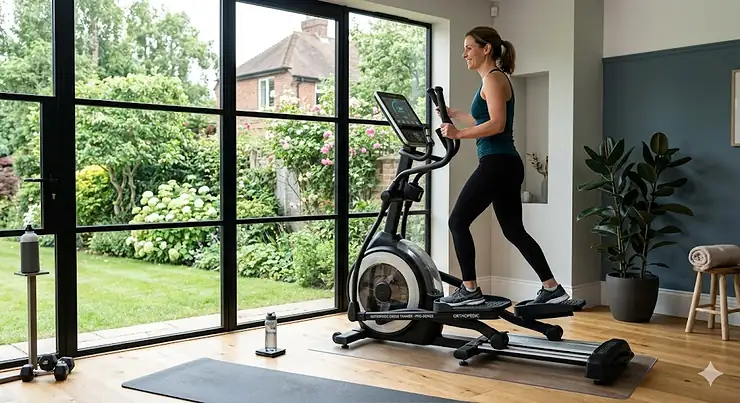
Unlike treadmills that pound your joints with every stride, or rowing machines that can torque your spine into uncomfortable positions, a properly designed orthopedic cross trainer creates a smooth, gliding motion that mimics walking without the impact. The elliptical motion keeps your feet in constant contact with the pedals, eliminating the jarring force that travels up through your knees, hips, and spine when running or jogging. What most people overlook about this category is that not all cross trainers are created equal for back health — the difference between a budget model and a genuinely orthopedic-grade machine lies in stride length, resistance smoothness, and whether the design encourages proper spinal alignment throughout your workout.
This guide examines seven real cross trainers available on Amazon.co.uk right now, with particular focus on those suitable for anyone dealing with spinal problems, recovering from back injuries, or simply wanting to avoid aggravating an already temperamental lower back. Prices range from around £170 for compact 2-in-1 models up to roughly £800 for advanced recumbent designs with physical therapy-grade features. We’ll look at what actually makes a cross trainer “orthopedic,” which features genuinely protect your spine versus those that sound impressive but add little practical value, and how to match your specific back issue to the right machine. Whether you’re in a Manchester terraced house with limited space or a Surrey detached with a dedicated home gym, there’s an option here that’ll work for your situation and budget.
Quick Comparison: Top Orthopedic Cross Trainers at a Glance
| Model | Type | Stride Length | Weight Capacity | Price Range (£) | Best For |
|---|---|---|---|---|---|
| Teeter FreeStep LT7 | Recumbent | Natural stepping | 158 kg | £700-£800 | Severe back pain, arthritis |
| JTX Strider-X7 | Upright | 16″ (40 cm) | 110 kg | £350-£450 | Mid-range, space-conscious |
| Neezee 2-in-1 | Hybrid | Adjustable | 120 kg | £170-£220 | Budget, small spaces |
| Dripex 16-Level | Upright | Standard | 130 kg | £200-£280 | Value seekers |
| Teeter FreeStep LT1 | Recumbent | Natural stepping | 158 kg | £550-£650 | Back pain, entry recumbent |
| JTX Strider-X8 | Upright | 16″ (40 cm) | 130 kg | £380-£450 | Smart features, Bluetooth |
| Neezee 16-Level Pro | Upright | 16.5″ (42 cm) | 150 kg | £250-£320 | Longer stride, heavier users |
From this comparison, the Teeter FreeStep models dominate the back-pain category for a reason — their recumbent design with physical therapy technology genuinely eliminates spinal compression during cardio, making them worth the premium if chronic back issues are your primary concern. For those on tighter budgets, the JTX Strider-X7 strikes the best balance between spine-friendly features and affordability, whilst the Neezee 2-in-1 serves as a perfectly acceptable starting point if you’re testing whether low-impact cardio helps your particular back condition before committing serious money. The key insight here is that price doesn’t always correlate with back-friendliness — several mid-range uprights outperform pricier gym-style models when it comes to actual orthopedic benefit for the typical British user dealing with garden-variety lower back pain.
💬 Just one click — help others make better buying decisions too!😊
Top 7 Orthopedic Cross Trainers: Expert Analysis
1. Teeter FreeStep LT7 Recumbent Cross Trainer
The Teeter FreeStep LT7 stands alone in the UK market as the only home-use cross trainer with patented stride technology licensed from commercial physiotherapy equipment. Rather than the circular motion of traditional ellipticals, it creates a natural stepping pattern that prevents your knees from travelling over your toes — a biomechanical detail that matters enormously if you’re nursing a dodgy back alongside creaky knees. The recumbent seating position eliminates axial loading on your spine entirely; your body weight stays supported throughout the workout, meaning even someone recovering from a herniated disc can typically use this without aggravating their condition.
In practical terms, the LT7 burns 17.4% more calories than a standard recumbent bike whilst feeling considerably easier on your body — the dual-motion handles distribute muscle exertion across upper and lower body simultaneously, so you’re not overworking any single muscle group and straining your back through compensation patterns. The 9-inch colour LCD console provides 21 pre-programmed workouts including targeted options for arthritis and mobility issues, whilst Bluetooth heart rate compatibility lets you train within safe zones if your GP has given you cardiovascular parameters to follow. Twenty resistance levels adjust via console quick-keys, ranging from zero (genuine zero, not “light resistance pretending to be zero”) up to 105 pounds of magnetic resistance — friction-free and whisper-quiet, so you won’t disturb the entire household when exercising at 6 AM before work.
UK buyers particularly appreciate that this machine ships fully assembled to your room of choice, sparing you the frustrating reality of constructing a 60-kilogramme machine using instructions that assume you’ve got three hands and the patience of a saint. At around £750-£800, it’s the most expensive option in this roundup, but orthopaedic consultants and physiotherapists across Britain routinely recommend the FreeStep range to patients who genuinely cannot tolerate upright exercise equipment. If you’re beyond the “occasional twinge” stage and into “chronic pain that limits daily activities” territory, this investment typically pays for itself in avoided NHS physiotherapy appointments and prescription NSAIDs within the first year.
✅ Zero spinal compression — genuine recumbent design
✅ Physical therapy-grade stepping motion
✅ 93% of users report easier on knees and back
❌ Premium price point around £750-£800
❌ Larger footprint than upright models
2. JTX Strider-X7 Home Cross Trainer
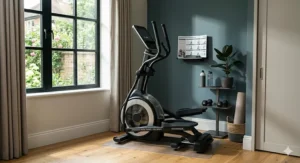
The JTX Strider-X7 has earned its position as Britain’s best-selling mid-range cross trainer through a combination of solid build quality, whisper-quiet operation, and features typically found on machines costing twice as much. Its 12.5 kg flywheel provides smooth, consistent resistance across 16 electromagnetic levels, whilst the 16-inch stride length accommodates most users up to about 5 foot 9 inches comfortably — shorter than ideal for taller folk, but perfectly adequate for the average British frame. What sets this apart for back pain sufferers is the electromagnetic resistance system, which adjusts digitally without the jerky transitions you get from cheaper magnetic friction systems that can catch you off-guard and trigger a protective spasm.
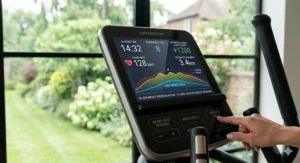
The full-colour touchscreen console tracks time, distance, speed, calories, body fat percentage, and pulse, but more importantly, it offers 21 pre-set programmes plus four customisable slots where you can design workouts around your specific limitations. If you can only tolerate 15 minutes of low-resistance movement before needing to ease off, you can programme exactly that sequence. For anyone recovering from sciatica or managing chronic lower back pain, the ability to gradually increase intensity in tiny, controlled increments makes the difference between consistent progress and boom-bust cycles where you overdo it, inflame everything, and spend a week unable to move properly.
In typical British living spaces — compact homes, upstairs bedrooms converted to home gyms, Victorian terraces with awkward doorways — the JTX’s relative portability becomes a genuine advantage. At 51 kg fully assembled, it’s still hefty enough to feel stable during use (no wobbling mid-stride), but transport wheels built into the base let you shift it from room to room without recruiting three mates and risking a hernia. Worth noting: this requires a mains plug socket to operate, so factor that into your home gym layout. Customer feedback from UK buyers consistently mentions the silent operation — crucial when you’re exercising in a semi-detached where shared walls mean your neighbour hears everything, or in flats where sound travels upward through surprisingly thin floors.
At around £350-£450 depending on seasonal offers, the Strider-X7 represents the sweet spot where genuine quality meets accessible pricing. JTX’s UK-based customer service and 2-year in-home repair warranty (where they come to you rather than making you dismantle and return a massive machine) add considerable value that Amazon reviews rightfully praise.
✅ Silent magnetic resistance — no disturbing housemates
✅ 16 levels suitable for gradual rehabilitation
✅ UK company with solid warranty support
❌ 16″ stride may feel cramped for users over 5’9″
❌ Requires mains power (no battery backup)
3. Neezee 2-in-1 Cross Trainer & Exercise Bike
The Neezee 2-in-1 won’t win design awards or revolutionise home fitness, but it serves brilliantly as a low-commitment entry point if you’re testing whether cross training actually helps your specific back issue before investing serious money. The hybrid design switches between upright elliptical motion and seated bike mode via an adjustable seat — a feature that matters more than you’d initially think when you’re having a particularly painful day and standing upright feels like too much. Being able to sit and pedal gently through a flare-up whilst still maintaining some cardiovascular activity beats abandoning exercise entirely until the pain subsides.
The machine maxes out at 120 kg user weight and provides eight levels of adjustable resistance via a simple manual knob — nothing fancy, but perfectly adequate for rehabilitative exercise where you’re prioritising movement over intense calorie burn. The LCD monitor displays the basics (time, speed, distance, calories) without overwhelming you with data, whilst pulse sensors in the static handles provide rough heart rate feedback. In practice, the resistance levels go from “barely there” through “moderate effort” without ever reaching “genuinely challenging for a fit person,” which is actually ideal if your physio has recommended low-impact cardio without specifying exactly how much resistance is safe.
For British homes where space is at a premium — think city flats, terraced housing, or bedrooms doubling as home gyms — this compact machine wins on practicality. The whole assembly measures roughly 130 cm long by 50 cm wide, small enough to tuck into an alcove or alongside a wardrobe without dominating the room. Setup takes about 30-40 minutes with reasonably clear instructions, and the finished product feels stable enough during use despite weighing considerably less than the JTX or Teeter models.
At around £170-£220, this represents the affordable end of the spectrum where you’re making compromises on features and long-term durability but still getting a functional piece of equipment that genuinely provides low-impact cardio. UK Amazon reviews from actual back pain sufferers consistently note that whilst it’s “not gym quality,” it does precisely what’s needed for daily gentle movement that keeps you mobile without aggravating spinal issues. If your budget stretches to the JTX, buy the JTX — but if finances are genuinely tight and the alternative is no exercise equipment at all, the Neezee 2-in-1 serves its purpose admirably.
✅ Switchable elliptical/bike modes for bad pain days
✅ Compact footprint for British-sized homes
✅ Budget-friendly entry point under £220
❌ Resistance tops out at “moderate” — limited for progression
❌ Build quality adequate rather than exceptional
4. Dripex 16-Level Elliptical Cross Trainer
The Dripex cross trainer occupies the value-conscious middle ground between budget compromises and premium pricing, delivering surprisingly competent performance at around £200-£280. Its 6 kg flywheel runs smaller than the JTX’s 12.5 kg unit, but the 16-level magnetic resistance system still provides smooth, consistent adjustment that won’t jolt your spine mid-workout. The standard stride length (around 36-38 cm based on user reports) works fine for average-height users, though taller individuals approaching six feet may feel slightly cramped during extended sessions.
For back pain management, the Dripex’s key strength lies in its quiet, vibration-free operation that lets you maintain a steady, controlled pace without sudden resistance changes that can trigger protective muscle spasms. The LCD monitor tracks eight metrics simultaneously — time, speed, distance, calories, odometer, pulse, scan, and recovery — though in practice, most users focus on time and pulse to ensure they’re staying within safe cardiovascular zones. Pulse sensors built into both the static front handles and moving side arms give you flexibility in grip positions, helpful when your upper back or shoulders start complaining during longer sessions.
Assembly proves straightforward for anyone reasonably handy, taking roughly 45-60 minutes solo or 30 minutes with a second person holding pieces steady. The finished machine includes transport wheels and adjustable stabiliser feet that let you level it properly even on slightly uneven floors — a practical consideration in older British homes where “perfectly level floors” remains an aspirational concept rather than reality. At 40-45 kg assembled weight, it’s substantial enough to feel stable but light enough that moving it doesn’t require a removal team.
UK buyers on Amazon particularly note the machine’s reliability over 6-12 months of regular use, with minimal maintenance required beyond occasional bolt-tightening. The device holder accommodates tablets or phones securely, letting you follow YouTube physio videos or Netflix through your cardio session — genuinely helpful for maintaining consistency when exercising feels like a chore rather than a pleasure. Worth noting: customer service responses from Dripex UK typically arrive within 24-48 hours for warranty queries, considerably better than some budget brands that vanish once they’ve made the sale.
✅ 16 resistance levels for gradual progression
✅ Quiet operation for shared living spaces
✅ Good value around £200-£280 mark
❌ Lighter flywheel than premium models
❌ Standard stride may feel short for tall users
5. Teeter FreeStep LT1 Recumbent Cross Trainer
The Teeter FreeStep LT1 delivers the same patented physical therapy stride technology as its pricier LT7 sibling but strips away some premium features to hit a more accessible price point around £550-£650. You’re still getting zero-impact exercise with complete spinal support, the natural stepping motion that prevents knee strain, and the dual-motion handles that distribute effort across your entire body. The key differences lie in the console (basic LCD display rather than colour touchscreen) and resistance range (fewer pre-programmed workouts), but the fundamental biomechanics that make FreeStep equipment orthopedic-grade remain identical.
In practical terms, if your primary concern is protecting your back during cardio rather than tracking detailed performance metrics or following dozens of pre-set programmes, the LT1 provides everything you actually need. The seated position eliminates axial spine loading completely — your vertebrae aren’t compressed by your body weight during exercise, fundamentally different from upright cross trainers where you’re still bearing your full weight through your skeletal structure. For anyone with diagnosed disc issues, spinal stenosis, or severe arthritis, this difference transforms from “nice to have” into “medically necessary.”
The British climate deserves mention here: unlike some imported fitness equipment that assumes year-round temperature stability, the FreeStep’s all-metal construction and sealed bearings handle the damp, temperature-varying reality of British homes and garages without developing the creaks and resistance issues that plague lesser machines. Customers storing these in unheated garden rooms or garage conversions report continued smooth operation through wet winters, whilst cheaper models often develop stiff resistance or rust problems after a single British autumn.
At around £600, the LT1 costs roughly £150-£200 less than the LT7 whilst providing approximately 90% of the functionality — a trade-off that makes excellent financial sense unless you genuinely need those additional pre-programmed workouts or really want the colour touchscreen. Both models come with Teeter’s solid warranty support and the option to add their app-based trainer-led workouts (subscription-free, which is rather decent of them). For most back pain sufferers on tighter budgets, the LT1 represents the minimum viable spend to access genuine recumbent, physical therapy-grade equipment rather than compromise on an upright model that’s merely “low impact” rather than truly orthopedic.
✅ Genuine PT-grade stride technology
✅ Significantly cheaper than LT7 (around £600)
✅ Same zero spinal compression benefits
❌ Basic LCD rather than colour touchscreen
❌ Fewer pre-programmed workout options
6. JTX Strider-X8 Smart Compact Cross Trainer
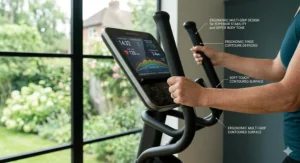
The JTX Strider-X8 represents JTX’s updated iteration of the X7, adding Bluetooth connectivity and app integration whilst maintaining the quiet, smooth operation that made its predecessor popular. The 7 kg flywheel (slightly lighter than the X7’s 12.5 kg) still provides sufficient momentum for smooth striding, whilst the electro-magnetic resistance system delivers precise digital adjustment across 16 levels without the clunky transitions found in cheaper friction-based models. The 16-inch stride length matches the X7, making it suitable for users up to about 5’9″ but potentially cramped for taller individuals.
The smart functionality connects to fitness apps via Bluetooth, letting you follow virtual routes, track long-term progress, or join online classes — features that genuinely help maintain consistency when motivation wanes, which matters enormously for back pain management where stopping and starting erratically often causes more problems than steady, moderate activity. The console itself remains clear and intuitive, displaying essential metrics without overwhelming you with unnecessary data, whilst the device holder securely grips tablets or phones for streaming workouts or entertainment.
For British buyers dealing with back issues, the X8’s particular advantage lies in its compact design that doesn’t sacrifice stability. At L130 x W70 x H169 cm fully assembled, it fits into bedrooms, spare rooms, or converted loft spaces without dominating the entire area, yet the 50+ kg weight provides enough mass to prevent wobbling during use. Transport wheels built into the base let you shift it from room to room when needed — helpful in multi-use spaces where the cross trainer shares a bedroom with actual sleeping, or where you’re exercising in a living area that needs reclaiming for family time.
The matt black finish looks considerably more contemporary than many home fitness machines that seem designed for maximum aesthetic impact circa 2005. Whilst appearance shouldn’t dominate the purchase decision when you’re primarily buying for back pain relief, the reality is that equipment you find attractive gets used more consistently than equipment you hide away because it’s an eyesore. The X8 won’t win design awards, but it looks sufficiently decent that you won’t resent its presence in your home.
At around £380-£450 depending on seasonal offers, the X8 costs slightly more than the X7 with the smart features accounting for most of the premium. If you genuinely want app connectivity and Bluetooth tracking, the extra £30-50 makes sense; if you’re perfectly happy manually tracking workouts in a notebook or don’t care about virtual routes, the X7 provides better value. Both models come with JTX’s 2-year in-home repair warranty and access to UK-based customer service that actually responds to queries — worth considerably more than the marginal price difference when something goes wrong.
✅ Bluetooth app connectivity for motivation
✅ Compact design for British-sized homes
✅ Same quiet operation as X7
❌ Lighter flywheel than original X7
❌ 16″ stride still potentially cramped for tall users
7. Neezee 16-Level Cross Trainer Pro
The Neezee 16-Level Cross Trainer Pro steps up from the budget 2-in-1 model with a longer 16.5-inch (42 cm) stride, heavier 8 kg flywheel, and 150 kg maximum user weight that accommodates larger individuals. The 16 levels of magnetic resistance provide genuine progression from rehabilitation-level gentle movement through moderate cardiovascular challenge, whilst the ultra-quiet operation lets you exercise in shared living spaces without broadcasting your fitness activities to the entire household. The LCD monitor displays standard metrics (time, speed, distance, calories, scan, pulse) via backlit display that remains readable even in dimly-lit rooms — helpful for those preferring early morning or evening workouts.
For back pain management, the Pro’s advantage lies in that extended stride length which encourages more natural movement patterns. Shorter strides often force your body into slightly awkward positions to complete each ellipse, creating compensatory movement in your hips and lower back that can aggravate existing issues. The 42 cm stride feels more natural for average-to-tall users, reducing the biomechanical weirdness that sometimes accompanies budget ellipticals. The 150 kg weight capacity also matters if you’re carrying extra weight whilst trying to exercise safely — many budget models max out at 110-120 kg, leaving heavier users wondering whether the machine will hold up under regular use.
Assembly takes 60-90 minutes depending on your DIY competence, with most UK buyers reporting the instructions as “adequate rather than brilliant” but ultimately sufficient to complete the job. The finished machine measures L150 x W60 x H165 cm approximately, requiring more floor space than the compact Neezee 2-in-1 but less than the Teeter recumbent models. Transport wheels and adjustable stabiliser feet help with positioning, whilst the non-slip pedals accommodate up to UK size 12-13 shoes comfortably.
At around £250-£320, the Neezee Pro occupies the lower-middle price range where you’re getting noticeable quality improvements over true budget models without approaching the investment required for JTX or Teeter equipment. UK Amazon reviews from back pain sufferers consistently note smooth, quiet operation and stability during use, with most reporting the machine holds up well over 6-12 months of regular use. Customer service from Neezee UK typically responds within 48-72 hours for warranty queries, not industry-leading but adequate for resolving issues. For anyone whose budget genuinely can’t stretch to £400+ but wants something more substantial than the £170 2-in-1 model, the Pro represents sensible middle ground.
✅ Longer 42 cm stride for natural movement
✅ 150 kg capacity for larger users
✅ Good value in £250-£320 range
❌ Assembly instructions merely adequate
❌ Customer service slower than JTX
Understanding Orthopedic Cross Trainers: What Actually Protects Your Spine
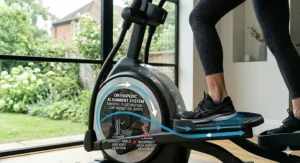
The term “orthopedic” gets bandied about liberally in fitness equipment marketing, often meaning nothing more than “this machine probably won’t actively harm you.” Genuinely orthopedic cross trainers incorporate specific design features that protect your spine through proper biomechanical alignment, smooth resistance that won’t trigger protective spasms, and motion patterns that eliminate jarring impacts. The distinction matters enormously if you’re dealing with actual back problems rather than simply wanting a bit of low-impact cardio.
The Biomechanics of Spine-Safe Exercise
Exercise and movement are essential components of back pain recovery, as supported by NHS physiotherapy guidance. However, back pain can lower your body’s tolerance to certain movements, making it crucial to start with exercises that are comfortable and don’t worsen symptoms. A proper orthopedic cross trainer minimises this loading through elliptical motion that keeps your feet planted, eliminating the impact forces from running whilst maintaining cardiovascular intensity. The best models achieve this through:
Continuous foot contact: Unlike treadmills where each step creates impact forces 2-3 times your body weight, cross trainers keep your feet on the pedals throughout the movement. This matters enormously for anyone with disc problems, where repetitive compression can worsen bulging or herniation.
Natural stride patterns: Cheaper cross trainers often force unnaturally short or choppy strides that create compensatory movement in your hips and lower back. Quality models provide 16-inch+ strides that encourage proper posture and biomechanically neutral movement.
Smooth resistance transitions: Magnetic or electromagnetic resistance systems adjust gradually without sudden changes that can catch you off-guard. This prevents the protective muscle spasms that occur when your body detects unexpected resistance and tenses everything to protect your spine.
Recumbent vs Upright: Understanding the Spinal Loading Difference
Recumbent cross trainers (like the Teeter FreeStep models) eliminate axial spine loading entirely by supporting your body weight in a seated position. Your vertebrae aren’t compressed during exercise — the seat bears your weight whilst the stepping motion provides cardiovascular and muscular challenge. This represents the gold standard for anyone with diagnosed disc problems, spinal stenosis, or severe arthritis where standing exercise genuinely isn’t safe.
Upright cross trainers still provide low-impact exercise but retain some axial loading since you’re supporting your body weight through your legs and spine. For many back pain sufferers, this remains perfectly manageable — the elliptical motion eliminates impact forces whilst the smooth pedalling maintains proper alignment. The distinction is: recumbent models suit severe back issues where standing itself causes pain, whilst quality upright models work brilliantly for moderate back pain or injury prevention.
The UK Climate Factor: Why Build Quality Matters Here
British homes operate differently from the climate-controlled environments in American or Australian households. We experience significant temperature variation, high humidity, and damp conditions that wreak havoc on poorly-constructed exercise equipment. Cheaper cross trainers with exposed bearings and basic finishes often develop rust, stiff resistance, or creaking within months of British autumn-winter cycles.
Quality orthopedic cross trainers use sealed bearings, powder-coated frames, and corrosion-resistant components that handle our weather without deteriorating. This matters beyond simple longevity — stiff resistance or unpredictable movement from corroded components can trigger back spasms or re-injury. When comparing models, UK buyers should prioritise those with full metal construction and sealed components over cheaper plastic-heavy designs that photograph well but fail rapidly in real British conditions.
How to Choose the Right Orthopedic Cross Trainer for Your Back
Selecting appropriate cross training equipment when you’re managing back pain requires balancing medical requirements, physical capabilities, available space, and budget constraints. The wrong choice wastes money; more concerning, it can worsen your condition through inappropriate exercise intensity or biomechanically unsound movement patterns.
Match Your Back Issue to Machine Type
Acute injury or recent surgery: If you’re within 3-6 months of spinal surgery, herniated disc episodes, or significant injury, consult your physiotherapist before purchasing any equipment. If cleared for exercise, recumbent models (Teeter FreeStep range) provide the safest option since they eliminate spinal compression entirely.
Chronic lower back pain: The majority of UK adults experiencing ongoing back discomfort without specific structural damage can safely use quality upright cross trainers (JTX Strider series, Neezee Pro). The key is starting with minimal resistance and short duration (10-15 minutes), gradually building up as your body adapts. The smooth motion actually helps maintain spinal mobility whilst building supporting core muscles.
Sciatica or nerve pain: Upright cross trainers generally work well since the forward-leaning posture opens up spinal nerve pathways rather than compressing them. However, if standing itself triggers leg pain, recumbent models provide better options. The Teeter FreeStep’s natural stepping motion particularly suits sciatic nerve irritation since it prevents the knee-over-toe movement that can aggravate symptoms.
Degenerative conditions (arthritis, osteoporosis, spinal stenosis): These require the lowest-impact options available — recumbent cross trainers or high-quality upright models with very smooth resistance systems. Jerky motion from cheaper magnetic resistance can trigger flare-ups, whilst the jarring from friction-based systems actively worsens degeneration over time.
Space Considerations in British Homes
The romantic notion of a dedicated home gym rarely survives contact with British housing reality. Most of us are converting bedrooms, commandeering corners of living rooms, or colonising garages and conservatories. Measure your available space carefully:
Upright cross trainers: Typically 130-150 cm long × 60-70 cm wide × 160-170 cm tall. Most fit through standard UK doorways (around 75 cm) but require assembly in-situ for upstairs rooms. Factor in clearance space — you need roughly 50 cm around the machine for safe mounting/dismounting.
Recumbent models: Longer footprint (around 170-200 cm) but lower height (around 130-150 cm). The extended length matters in narrow rooms; consider whether you’ll actually use equipment that dominates the entire space versus something that tucks into a corner.
Weight and portability: Machines under 45 kg can reasonably be moved by one person using transport wheels. Above 50 kg, you’re recruiting help or accepting permanent placement. For multi-use rooms, lighter models offer flexibility; for dedicated spaces, heavier machines provide better stability.
Budget vs Medical Necessity
UK pricing for orthopedic-suitable cross trainers ranges from £170 (basic Neezee 2-in-1) through £800 (premium Teeter FreeStep LT7). Your medical situation should heavily influence where you land in this spectrum:
Under £250: Budget models from Neezee or similar brands work for testing whether cross training helps your specific back issue. Don’t expect long-term durability or gym-quality feel, but adequate for determining if this exercise modality suits you before committing serious money.
£250-£450: Mid-range territory where JTX and Dripex compete. These provide genuinely smooth operation, proper build quality, and sufficient features for long-term use. Most back pain sufferers who don’t have severe structural damage find these entirely adequate.
£450-£800: Premium range dominated by Teeter’s recumbent models. Only financially justifiable if you have diagnosed structural issues (herniated discs, severe stenosis, post-surgical recovery) where standard upright trainers genuinely aren’t safe. The price reflects physical therapy-grade engineering rather than marketing fluff.
Warranty and UK Support Considerations
Fitness equipment breaks. Cables fray, consoles fail, resistance systems develop faults. When purchasing cross training equipment whilst managing back pain, reliable warranty support becomes medically relevant rather than merely convenient — if your machine breaks down for weeks whilst awaiting parts from China, you lose exercise consistency precisely when maintaining it matters most.
JTX models: 2-year in-home repair warranty where technicians come to you. UK-based company with responsive customer service. This matters enormously for heavy equipment that’s impossibly awkward to return.
Teeter models: Lifetime frame warranty, 2-year parts coverage. US company but established UK distribution with decent support responsiveness.
Neezee/Dripex: 1-year warranties with slower response times. Parts usually ship from EU or Asia, meaning potential 2-4 week waits. Factor this into your decision if you need daily exercise for pain management.
Real-World Scenarios: Matching Users to Machines
Sarah, 38 — Herniated L4-L5, London Flat
Sarah herniated a lumbar disc whilst helping a friend move house, spending six weeks largely immobile before physiotherapy gradually restored function. Her rented London flat offers precisely 2.1 metres of clear floor space in the second bedroom, currently occupied by a desk and various boxes pretending to be organised storage. Standing for longer than 15 minutes still triggers sciatic pain down her left leg.
Recommended: Teeter FreeStep LT1 (around £600)
The recumbent design eliminates spinal compression entirely, letting Sarah rebuild cardiovascular fitness without aggravating her disc. The compact-ish footprint (roughly 1.8 metres long) fits her available space just, whilst the zero-impact stepping motion won’t trigger nerve pain. At £600, it’s a significant investment on her salary, but NHS physiotherapy appointments at £50-80 per session were adding up rapidly, and her physio explicitly recommended low-impact cardio equipment. The app-based workouts help maintain consistency when motivation wanes — important when pain has already disrupted her normal exercise routine for months.
Michael, 52 — Chronic Lower Back Pain, Manchester Terrace
Michael’s back started complaining around age 45, gradually worsening until standing at his postal depot job became genuinely difficult. MRI scans show minor disc degeneration but nothing requiring surgery — just the joys of middle age and physical work catching up simultaneously. He’s gained nearly two stone since stopping regular football due to knee issues, creating a vicious cycle where extra weight worsens back pain. His terraced house in Chorlton offers a double bedroom he’s converted to a home office/gym, with roughly 3 metres of floor space available.
Recommended: JTX Strider-X7 (around £400)
The X7’s smooth electromagnetic resistance lets Michael start gently (15 minutes on level 2-3) and gradually increase intensity as his back adapts. The 21 pre-programmed workouts include specific fat-burning and cardio options that support his weight loss goals, whilst the quiet operation means he can exercise after his 6 PM finish without disturbing his wife downstairs. At £400, it sits at the top end of what he’s comfortable spending, but the 2-year in-home warranty and UK support provide peace of mind. The machine’s 51 kg weight ensures stability during use — important since his back sometimes spasms unexpectedly, and an unstable machine would be genuinely dangerous.
Janet & Graham, 67 & 69 — Arthritis & Osteoporosis, Rural Oxfordshire
Both dealing with the accumulated joint issues of active lives that included decades of gardening, walking holidays, and Janet’s 30-year nursing career. Graham’s osteoarthritis has progressed to the point where impact exercises are medically inadvisable, whilst Janet’s osteoporosis diagnosis means protecting bone density whilst avoiding fracture risk. They’ve got a converted garage housing Graham’s woodworking equipment and enough space for exercise equipment, but winter temperatures drop below 5°C regularly.
Recommended: Teeter FreeStep LT7 (around £750)
The LT7’s physical therapy-grade design accommodates both their conditions — zero impact for Graham’s joints, controlled resistance that builds muscle support for Janet’s bones without fracture risk. The 21 pre-programmed workouts include arthritis-specific options they can both use, whilst the sealed bearing system handles cold garage temperatures without developing the stiffness that plagued their previous budget exercise bike. At their age, viewing this as a medical investment rather than discretionary spending makes sense — the alternative is further mobility decline, which costs considerably more in quality of life than £750. NHS waiting times for physiotherapy in their rural area stretch to 4-6 months; having home equipment means they can maintain prescribed activity levels without depending on overwhelmed NHS services.
Common Mistakes When Buying Cross Trainers for Back Pain
British buyers consistently make predictable errors when selecting cross training equipment for back issues, typically through prioritising the wrong features or falling for marketing claims that sound medical but mean nothing practically.
Mistake #1: Fixating on Flywheel Weight Above All Else
Marketing materials love touting flywheel specifications — 6 kg! 12 kg! 15 kg! — as though heavier automatically means better. Whilst flywheel mass does contribute to smooth motion, the relationship isn’t linear. A well-engineered 8 kg flywheel with quality bearings and proper resistance systems will outperform a poorly-designed 15 kg one. For back pain specifically, smooth resistance matters more than raw flywheel weight. The JTX Strider-X8’s 7 kg flywheel operates more smoothly than many 10 kg units from cheaper brands because the electromagnetic resistance system maintains consistent tension throughout each rotation.
Focus on user reviews mentioning “smooth motion” and “no jerking” rather than simply comparing flywheel weights on spec sheets. If possible, try similar models in physical shops — John Lewis and SportsDirect sometimes stock cross trainers you can test, giving you better sense of actual motion quality than any specification list provides.
Mistake #2: Assuming All “Low Impact” Means Orthopedic-Suitable
Every cross trainer manufacturer claims “low impact” because the elliptical motion inherently reduces impact versus running. However, “lower than running” still leaves considerable room for spine-unfriendly design. True orthopedic suitability requires:
- Stride length sufficient for natural movement (minimum 16 inches for average adults)
- Smooth, progressive resistance without sudden changes
- Stable frame that doesn’t wobble or flex during use
- Pedal spacing that maintains hip alignment
Budget models often fail on multiple counts whilst still claiming “low impact” truthfully — they’re lower impact than running, just not low enough for genuine back pain management. If you’re buying specifically for orthopedic reasons, prioritise models explicitly marketed for rehabilitation or with visible physiotherapist endorsements over generic “fitness” marketing.
Mistake #3: Underestimating Space Requirements for Safe Use
The machine’s footprint is only half the space equation. You need clearance for mounting/dismounting safely, especially when dealing with back pain that can make awkward movements genuinely risky. The typical upright cross trainer measuring 130 × 70 cm requires roughly 180 × 120 cm of floor space to use safely — 50 cm clearance at each side for stable mounting, and 50 cm at front/back for emergency dismounting if you lose balance.
For recumbent models like the Teeter FreeStep, you need clear access to the seat from the side — roughly 80-100 cm width total including the machine itself. Measure carefully, accounting for door swings, furniture placement, and any obstacles that could complicate entering/exiting the machine when your back’s having a particularly painful day.
Mistake #4: Buying Online Without Checking Delivery Limitations
UK Amazon listings sometimes obscure the reality that certain products ship to “mainland UK only” (excluding Scottish Highlands, Northern Ireland, some Welsh areas, and many islands) or deliver to ground floor only. For equipment weighing 50-60 kg, “ground floor delivery” means you’re manhandling it upstairs yourself or hiring removal specialists.
JTX offers room-of-choice delivery to England and Wales as standard, which matters enormously if you’re converting an upstairs bedroom to a home gym. Check delivery terms carefully — a machine that costs £50 less but requires you to somehow get 60 kg up two flights of narrow Victorian stairs whilst nursing a bad back isn’t actually a better deal.
Mistake #5: Ignoring UK-Specific Compatibility Issues
Most cross trainers now include electronic consoles requiring mains power. UK voltage is 230V/50Hz with type G plugs — not universal. Cheaper imports sometimes arrive with EU plugs and adapters, or worse, US 110V units that don’t work properly on UK electricity. All the models mentioned in this guide are UK-compatible, but if you’re considering alternatives, explicitly verify UK electrical compatibility before purchasing.
Similarly, check whether warranty coverage extends to UK customers. Some Amazon marketplace sellers ship from EU suppliers whose warranty support doesn’t cover UK addresses post-Brexit. Saving £30 on purchase price then discovering your warranty’s void because you’re in Bristol rather than Brussels represents poor economy.
Long-Term Maintenance and Cost of Ownership in the UK
The purchase price represents only the initial investment; ongoing maintenance, replacement parts, and operational costs contribute to true ownership expense. For anyone relying on cross training equipment for back pain management, reliability becomes a medical consideration rather than merely an inconvenience — extended downtime disrupts exercise consistency precisely when maintaining it matters most for spinal health.
Preventive Maintenance Requirements
Quality cross trainers require minimal maintenance beyond basic cleaning and occasional bolt-tightening, but neglecting even these simple tasks shortens equipment life considerably:
Weekly cleaning: Wipe down frame, pedals, and console with damp cloth. Sweat contains salts that corrode metal over time, particularly in Britain’s humid climate. Most cross trainers now use powder-coated steel that resists corrosion better than older painted finishes, but regular cleaning still matters.
Monthly bolt check: Every 4-6 weeks, inspect and tighten any bolts that have loosened through vibration during use. Most models include the necessary Allen keys. Ten minutes monthly prevents the progressive loosening that causes wobbling and eventually structural failure.
Quarterly bearing inspection: Check that pedal motion remains smooth and quiet. If you notice increased noise or resistance, bearings may need lubrication or replacement. JTX and Teeter models use sealed bearings that rarely need attention, but cheaper units with exposed bearings require light machine oil application every 3-4 months.
Annual professional service: For machines costing £400+, annual professional inspection catches developing problems before they cause breakdowns. Many UK fitness equipment retailers offer service packages around £50-80, worthwhile insurance on expensive equipment. DIY-competent users can perform basic checks themselves following manufacturer guidelines.
Common Replacement Parts and UK Availability
Components eventually wear regardless of maintenance quality. Understanding typical replacement needs helps budget for ownership costs:
Console displays: LCD screens typically last 3-5 years before developing dead pixels or backlight failures. Replacement consoles cost £40-80 for budget models, £80-150 for premium units. JTX and Teeter stock spares readily; obscure brands often mean ordering from China with 4-6 week waits.
Pedal straps and pads: Wear occurs fastest on pedals. Replacement straps run £10-20, full pedal assemblies £30-50. Standard components fit multiple models, making replacements easier to source than proprietary designs.
Drive belts: Machines using belt drive systems need replacement every 2-4 years depending on usage intensity. Cost £20-40 including labour if you’re hiring someone. Magnetic and electromagnetic resistance systems (preferred for back pain) don’t use belts, avoiding this maintenance entirely.
Bearings: Sealed bearings in premium models rarely need replacement; exposed bearings in budget units may need changing every 12-18 months at £30-60 including labour. Another reason to favour quality construction initially.
Running Costs: Electricity Usage
Electronic consoles and electromagnetic resistance systems draw power during use. Typical UK electricity costs (roughly 28p per kWh as of 2026) make this negligible but worth calculating:
A standard cross trainer console draws 10-15W during use — roughly 0.01-0.015 kWh per hour of exercise. At 28p per kWh, that’s 0.3-0.4 pence per hour. Even exercising 30 minutes daily, annual electricity cost runs around £1.50-2.00. Utterly negligible compared to gym membership alternatives.
Machines using electromagnetic resistance draw slightly more power (20-30W total) but still cost under £3 annually for typical home use. Some budget models use completely mechanical resistance without any power consumption, but the jerky resistance transitions make them unsuitable for back pain management despite the electricity savings.
Total Cost Comparison: Equipment vs Alternatives
A £400 JTX Strider-X7 maintained properly provides 5-8 years of reliable service. At 7 years average, that’s £57 annually. Add £15 yearly for occasional replacement parts and negligible electricity, reaching roughly £72 per year or £6 per month.
Compare to alternatives:
Gym membership: Budget gyms (PureGym, The Gym Group) charge £15-25 monthly, totalling £180-300 annually. Premium gyms (David Lloyd, Virgin Active) run £50-80 monthly or £600-960 yearly.
NHS physiotherapy: Private sessions cost £50-80 per appointment. The typical back pain patient undergoes 6-10 sessions over 3-4 months, totalling £300-800. NHS waiting times in many areas stretch to 12-18 weeks, and allocation depends on severity — chronic moderate pain often doesn’t qualify for NHS physio, leaving private treatment as the only option. According to the UK Chief Medical Officers’ physical activity guidelines, adults should aim for at least 150 minutes of moderate-intensity activity weekly, which home equipment makes considerably more achievable than depending on sporadic gym visits.
Home physiotherapy equipment plus regular appointments: The combination approach (your own cross trainer for daily maintenance plus occasional professional guidance) typically costs £400-600 initially for equipment, then £100-200 annually for follow-up physio sessions as needed.
For anyone whose back pain requires regular supervised exercise, owning quality home equipment becomes cost-effective within 6-12 months whilst providing the consistency that intermittent gym visits or NHS appointments can’t match.
Frequently Asked Questions
❓ Can a cross trainer worsen existing back pain?
❓ How long should I exercise on a cross trainer with a bad back?
❓ Are recumbent cross trainers better for sciatica than upright models?
❓ Can I use a cross trainer after spinal surgery or disc herniation?
❓ What's the difference between a cross trainer and an elliptical for back pain?
Conclusion: Finding Your Spine-Friendly Solution
The orthopedic cross trainer market in Britain offers genuinely effective options across price points from around £170 through £800, with clear differentiation between budget models suitable for testing whether this exercise modality helps your specific back issue, mid-range equipment providing long-term reliability for moderate back pain, and premium recumbent designs offering physical therapy-grade support for severe structural problems.
The standout conclusion from examining real products available on Amazon.co.uk right now is that you needn’t spend £800 to access spine-friendly exercise — the JTX Strider-X7 at around £400 provides smooth, quiet operation with 16 resistance levels that genuinely suit most back pain sufferers who don’t have severe diagnosed structural damage. Its 2-year in-home warranty and UK-based support transform it from merely good equipment into a sensible long-term investment that won’t leave you stranded with a broken machine and no recourse.
For those dealing with diagnosed disc problems, spinal stenosis, or severe arthritis where standing exercise genuinely isn’t safe, the Teeter FreeStep LT1 at around £600 represents the minimum viable spend to access genuine recumbent, physical therapy-grade equipment rather than compromise on an upright model. The price reflects legitimate engineering rather than marketing fluff — the patented stride technology licensed from commercial physiotherapy equipment costs money to implement, but it delivers zero spinal compression during cardio that no upright model can match.
Budget-conscious buyers testing whether cross training helps their particular back condition before committing serious money will find the Neezee 2-in-1 at around £180 serves admirably as a low-risk entry point. Don’t expect gym-quality feel or long-term durability that matches premium models, but for determining whether daily low-impact cardio improves your specific symptoms, it provides adequate functionality at minimal financial risk.
The critical insight across all price points is prioritising smooth resistance and proper stride length over flashy features like colour touchscreens or dozens of pre-programmed workouts. Your back responds to biomechanics rather than bells and whistles — a £300 machine with smooth electromagnetic resistance and 16-inch stride will serve you better than a £500 model with jerky magnetic resistance and elaborate console features. Focus your budget on mechanical quality and UK warranty support rather than digital frippery, and you’ll end up with equipment that genuinely helps manage back pain rather than gathering dust as an expensive clothes rack.
Start conservatively — 5-10 minutes at minimal resistance — regardless of which model you choose. The biggest mistake back pain sufferers make is trying to reclaim their pre-injury fitness level immediately, triggering flare-ups that set recovery back weeks. Consistent moderate activity beats sporadic intense sessions every time when your goal is managing chronic pain rather than training for athletic performance. Used properly, a quality orthopedic cross trainer genuinely helps maintain spinal mobility, builds supporting musculature, and provides cardiovascular benefit without the impact that worsens most back conditions — making it one of the more sensible home equipment investments you can make for long-term back health.
Recommended for You
- 7 Best Lumbar Support Cross Trainer Reviews UK 2026
- 7 Best Cross Trainer for Bad Back UK 2026
- Best Seated Cross Trainer for Rehabilitation UK 2026
Disclaimer: This article contains affiliate links. As an Amazon Associate, I earn from qualifying purchases. If you purchase products through these links, we may earn a small commission at no additional cost to you.
✨ Found this helpful? Share it with your mates! 💬🤗
