In This Article
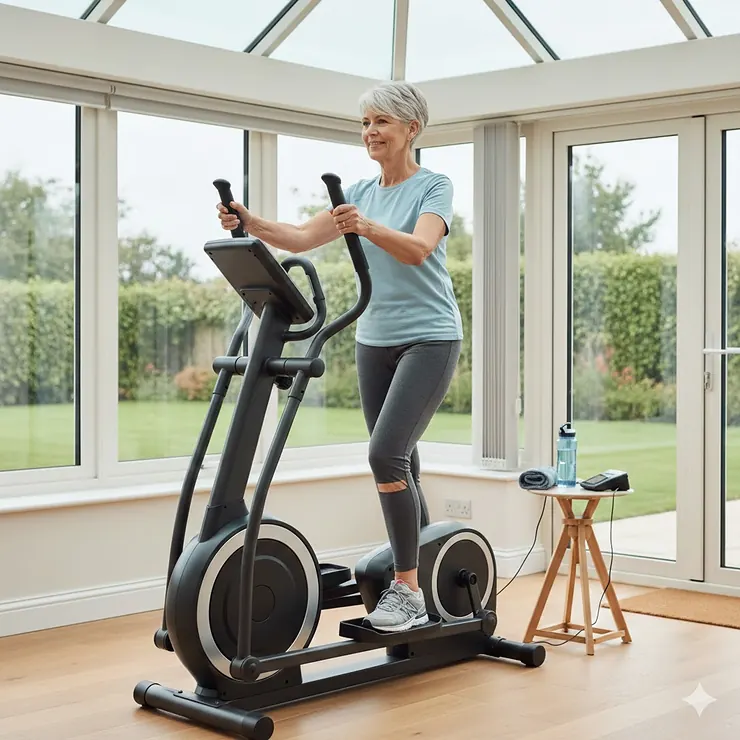
Recovering from hip surgery can feel like navigating uncharted waters. One minute you’re eager to regain your mobility, the next you’re worried about doing too much too soon. I completely understand that frustration – it’s why finding the right low impact cross trainer after hip surgery matters so much to your rehabilitation journey.
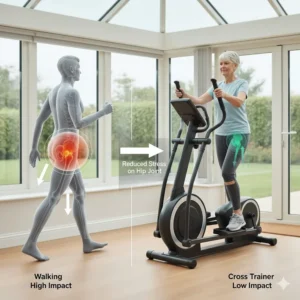
According to the Royal National Orthopaedic Hospital low-impact activities like using an exercise bike or cross trainer can be incredibly helpful during hip recovery. These machines provide the perfect balance: they help you rebuild strength and range of movement without placing excessive stress on your healing joint.
But here’s the thing – not all cross trainers are created equal when it comes to post-surgical rehabilitation. You need equipment that offers smooth, controlled motion, adjustable resistance levels that start genuinely gentle, and ergonomic design that accommodates your current range of movement. The wrong choice could hamper your progress or, worse, cause discomfort that sets you back.
In this comprehensive guide, I’ve researched and analysed the top seven low impact cross trainer models available on Amazon.co.uk specifically for hip surgery recovery. Whether you’re looking for budget-friendly options or premium rehabilitation equipment, you’ll find detailed specifications, real UK customer feedback, and expert insights to help you make the right choice for your recovery.
Quick Comparison Table
| Cross Trainer | Resistance Levels | Flywheel | Best For | Price Range |
|---|---|---|---|---|
| JLL CT300 | 8 Magnetic | 5.5kg | Budget-conscious beginners | £300-£370 |
| Dripex 16-Level | 16 Magnetic | 6kg | Progressive rehabilitation | £310-£340 |
| Neezee 2-in-1 | 8 Adjustable | 4kg | Versatile gentle exercise | £160-£180 |
| THERUN Standard | 8 Magnetic | 6kg | Quiet home recovery | £240-£280 |
| THERUN 3-in-1 | 16 Magnetic | 8kg | Advanced rehabilitation | £480-£520 |
| Dripex Under Desk | 12 Speed | N/A | Seated gentle movement | £100-£120 |
| SOLE E25 | 20 Magnetic | 9kg | Premium recovery features | £1,100-£1,300 |
💬 Just one click – help others make better buying decisions too! 😊
Top 7 Low Impact Cross Trainer After Hip Surgery: Expert Analysis
1. JLL CT300 Home Luxury Elliptical Cross Trainer
The JLL CT300 represents exceptional value for those beginning their hip surgery recovery journey. This British-designed machine combines affordability with genuine quality – something quite rare in the budget cross trainer market.
Key Specifications:
- 8-level magnetic resistance system
- 5.5kg two-way flywheel
- LCD monitor tracking time, speed, distance, calories, heart rate
- Maximum user weight: 100kg (15.7 stone)
- Compact footprint: 1.2m length
What makes this particularly suitable for post-hip surgery rehabilitation is its whisper-quiet magnetic resistance system. UK customer Sarah from Manchester shared in her review: “I’m using this just three weeks after my hip replacement. The lowest resistance setting is genuinely gentle enough for early recovery, and it’s so quiet I can use it whilst my husband watches telly.”
The dual handlebar design lets you choose between moving arms for full-body engagement or stationary grips with heart rate sensors – perfect for monitoring your cardiovascular response during rehabilitation. Physiotherapists often recommend starting with the stationary grips to focus solely on lower body movement before progressing to full-body workouts.
Pros:
✅ Genuinely affordable without compromising build quality
✅ Ultra-quiet operation perfect for shared living spaces
✅ Compact enough for smaller homes
Cons:
❌ 5.5kg flywheel provides less momentum than premium models
❌ Manual resistance adjustment (no digital control)
Price: £345.99
2. Dripex Elliptical Cross Trainer (16-Level Resistance)
For those seeking progressive rehabilitation, the Dripex 16-level model offers exceptional versatility. This machine has garnered impressive feedback from UK buyers recovering from joint surgery, with many praising its smooth, joint-friendly motion.
Key Specifications:
- 16 levels of magnetic resistance
- 6kg bidirectional flywheel
- LCD monitor with pulse sensors
- Maximum capacity: 120kg (18.9 stone)
- 15.3-inch stride length
The standout feature for hip recovery is the ultra-quiet internal annular magnetic control system. Unlike cheaper external systems, this provides uniform resistance throughout your stride – crucial when you’re rebuilding symmetrical movement patterns after surgery. UK buyers consistently rate it under 20 decibels during operation.
James from Edinburgh, recovering from total hip replacement, noted: “The quality surprised me for the price. I started on level 1 about four weeks post-surgery, and the motion felt natural and controlled. Now at level 5 and building strength weekly.”
The 15.3-inch stride accommodates most heights comfortably, and the adjustable foot stabilisers ensure the machine stays level even on slightly uneven floors – important for maintaining proper form during rehabilitation.
Pros:
✅ 16 resistance levels allow very gradual progression
✅ Remarkably smooth and quiet operation
✅ Excellent value for the specification
Cons:
❌ Assembly can take 2-3 hours
❌ Some users report minor squeaking after extended use
Price: £319.99
3. Neezee 2-in-1 Cross Trainer and Exercise Bike
The Neezee offers unique versatility with its dual functionality – something particularly valuable during hip recovery when variety in gentle exercise helps prevent boredom and works different muscle groups.
Key Specifications:
- 8 adjustable resistance levels
- 4kg steel flywheel
- Adjustable comfortable seat
- LCD monitor with pulse sensor
- Maximum weight: 120kg (18.9 stone)
This model excels at providing options. On days when standing feels challenging, you can use it as a recumbent-style bike with the adjustable seat. On better days, remove the seat for traditional elliptical motion. According to Cambridge University Hospitals NHS Foundation Trust, varying your exercise routine helps maintain motivation during the often lengthy hip recovery process.
Margaret from South London shared: “At 99kg, I was worried about stability, but this feels rock solid. The seat option was brilliant for my first month post-surgery when standing too long caused discomfort.”
The chunky steel frame provides reassuring stability, whilst the smooth flywheel action protects your healing joint from jarring movements. The LCD tracks pulse, time, distance and calories – helpful for monitoring your progressive increase in exercise capacity.
Pros:
✅ Dual functionality offers exercise variety
✅ Seat provides seated exercise option for tough days
✅ Exceptional budget price point
Cons:
❌ 4kg flywheel lighter than some alternatives
❌ Slightly bulkier footprint due to seat attachment
Price: £164.99
4. THERUN Magnetic Cross Trainer (Standard Model)
The THERUN standard model offers medical-grade quiet operation combined with solid construction – ideal for those following NHS rehabilitation protocols at home.
Key Specifications:
- 8 levels of magnetic resistance
- 6kg sealed bearing flywheel
- LCD monitor with comprehensive tracking
- Maximum capacity: 120kg (18.9 stone)
- Reinforced 2mm steel framing
The sealed metal bearing system sets this apart from competitors in its price range. Rather than traditional crank bolts that wear quickly, THERUN uses advanced sealed bearings that drastically reduce friction and provide that natural stride motion so important during rehabilitation. This engineering choice means less maintenance and more consistent performance over time.
UK physiotherapist reviews on Amazon specifically mention the hyper-quiet operation (under 20dB) as beneficial for patients who need to exercise frequently throughout the day without disturbing family members. One reviewer recovering from hip arthroscopy noted: “I can use this at 6am before work without waking anyone. The motion feels natural, not jerky or forced.”
The dual handlebar system allows for both stationary grip (targeting lower body and core) and moving handles (for total body conditioning as recovery progresses).
Pros:
✅ Sealed bearing technology ensures longevity
✅ Exceptionally quiet for early morning or late evening use
✅ Responsive customer service (important for setup queries)
Cons:
❌ Maximum resistance may not challenge very fit individuals long-term
❌ Basic LCD display without backlight
Price: £265.00
5. THERUN 3-in-1 Cardio Climber Elliptical Machine
For those seeking premium features and advanced rehabilitation capabilities, the THERUN 3-in-1 combines elliptical, climber, and stepper functions in one remarkably quiet machine.
Key Specifications:
- 16 levels of silent magnetic resistance
- 8kg front-mounted flywheel
- 3-in-1 workout modes (elliptical/climber/stepper)
- LCD display with full data tracking
- Maximum capacity: 130kg (20.5 stone)
The 8kg front-mounted flywheel provides exceptional momentum and smooth motion – crucial when rebuilding hip strength and stability. The unique 45-degree stride angle activates over 90% of muscle groups, allowing comprehensive rehabilitation once your surgeon has cleared you for more intensive exercise.
According to the Oxford University Hospitals NHS Foundation Trust, gradual progression from gentle exercise to more challenging workouts is key to successful hip replacement recovery. This machine accommodates that entire journey.
A UK buyer recovering from bilateral hip replacement shared: “Started using the basic elliptical mode at week 6 post-surgery. By month 4, I’d progressed to the climber function. Having all options in one machine saved space and money.”
The ultra-quiet magnetic system operates under 20 decibels, whilst transport wheels make relocation straightforward despite its robust 42kg weight. The ergonomic stride design keeps movements joint-friendly even during more intense sessions.
Pros:
✅ Three distinct exercise modes support long-term progression
✅ 8kg flywheel provides premium smooth motion
✅ Suitable for family members at different fitness levels
Cons:
❌ Higher initial investment
❌ Requires dedicated floor space when unfolded
Price: £499.99
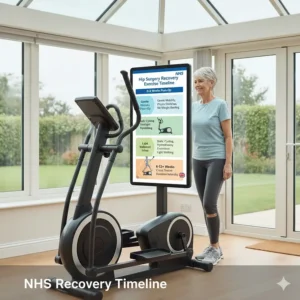
6. Dripex Under Desk Elliptical Machine
The Dripex Under Desk model offers a completely different approach – gentle seated exercise perfect for very early post-surgical recovery or for those with limited mobility.
Key Specifications:
- 12 adjustable speed levels
- 10 resistance levels
- Touchscreen display with remote control
- Bidirectional motion capability
- Ultra-quiet motor (under 15dB)
This compact machine excels during the initial recovery phase when standing exercise feels too challenging. You can use it whilst seated on your sofa, working at a desk, or watching television – making it easier to accumulate the frequent short exercise sessions recommended during early hip recovery.
The 3-in-1 functionality provides manual speed control, manual resistance control, and three pre-programmed automatic modes. The bidirectional motion (forward and reverse) helps work different muscle groups around your hip joint, promoting balanced strength development.
Patricia from Bristol, 8 weeks post hip replacement, noted: “This was perfect for those first difficult weeks. I could do 5-minute sessions every couple of hours without exhausting myself. The remote control meant I didn’t have to bend down – crucial with hip precautions.”
The pre-assembled design means you can literally use it straight from the box – no complex setup required when you’re already dealing with post-surgical fatigue.
Pros:
✅ Perfect for very early recovery phase
✅ Can exercise whilst seated comfortably
✅ Completely pre-assembled
Cons:
❌ Limited to seated use (no standing option)
❌ Not suitable for long-term intensive rehabilitation
Price: £104.99
7. SOLE E25 Elliptical Cross Trainer
The SOLE E25 represents the premium end of home rehabilitation equipment, offering features typically found only in physiotherapy clinics and private hospitals.
Key Specifications:
- 20 levels of magnetic resistance
- 9kg (20lb) heavy-duty flywheel
- 20 adjustable incline levels
- 51cm (20-inch) stride length
- 7.5-inch LCD display
- Bluetooth 5.0 with FTMS protocol
- Compatible with Zwift, Strava, Apple Health
What sets the SOLE E25 apart for hip surgery recovery is its unique foot pedal design. Developed in collaboration with leading physical therapists, the pedals feature a 2-degree inward slope that reduces ankle and knee stress – beneficial when your body is compensating for a healing hip. The four rear wheels ride on heavy-duty rails, providing exceptional stability and minimising side-to-side motion.
The 20 levels of power incline allow progressive muscle targeting as recovery advances. Combined with 20 resistance levels, this provides 400 different workout combinations – ensuring you’ll never outgrow the machine’s capabilities.
Professional features include hand pulse sensors, BLE and 5KHz heart rate receiver compatibility, built-in Bluetooth speakers, USB charging port, and cooling fans. The SOLE+ app integration enables you to track rehabilitation progress meticulously, share data with your physiotherapist, and access guided workouts.
UK customer David, a former marathon runner recovering from hip resurfacing, shared: “After trying various machines at my private physio clinic, I invested in the E25 for home use. The build quality matches commercial equipment. The stride feels natural, and the app integration lets me track my recovery objectively.”
Pros:
✅ Professional-grade construction and features
✅ Therapeutic pedal design reduces joint stress
✅ Extensive resistance and incline options
Cons:
❌ Significant investment
❌ Larger footprint requires dedicated space
Price: £1,199.00
✨ Don’t Miss These Exclusive Deals!
🔍 Take your rehabilitation to the next level with these carefully selected low impact cross trainers. Click on any highlighted product name to check current pricing and availability on Amazon.co.uk. These machines will help you achieve the safe, effective recovery your hip deserves!
Understanding Low Impact Exercise After Hip Surgery
Low impact exercise forms the cornerstone of successful hip surgery rehabilitation. Unlike high-impact activities such as running or jumping, low-impact movements minimise stress on your healing joint whilst still providing essential cardiovascular benefits and muscle strengthening.
Cross trainers excel at delivering this type of exercise because they keep your feet in constant contact with the pedals. This eliminates the jarring impact associated with activities where your feet repeatedly strike the ground. The Royal United Hospitals Bath NHS Foundation Trust specifically recommends elliptical exercise as part of both pre-operative preparation and post-operative rehabilitation.
The circular motion of a cross trainer also promotes what physiotherapists call “reciprocal movement patterns” – the coordinated action between your legs that’s essential for natural walking. By practising these patterns in a controlled, low-impact environment, you’re essentially retraining your neuromuscular system to work efficiently with your new or repaired hip.
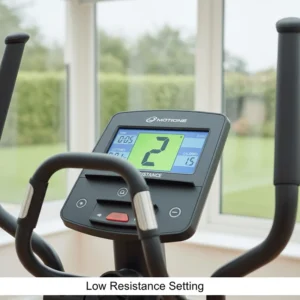
Research published in rehabilitation journals suggests that patients who incorporate regular cross trainer exercise into their recovery programme often achieve better range of motion outcomes and faster returns to daily activities. The key lies in starting gently (often at resistance level 1 or 2) and progressing gradually based on your physiotherapist’s guidance and your own body’s signals.
Timeline: When Can You Safely Use a Cross Trainer After Hip Surgery?
The timing for introducing cross trainer exercise varies significantly based on your surgery type, overall health, and individual healing progress. Here’s a general guideline, but always prioritise your consultant’s specific advice:
Weeks 1-2 Post-Surgery:
Focus on bed exercises, ankle pumps, and gentle static contractions. Cross trainer use is too early at this stage. Your primary goals involve reducing swelling, preventing blood clots, and beginning gentle joint mobilisation.
Weeks 3-6 Post-Surgery:
Many consultants clear patients for gentle stationary cycling or very light cross trainer use during this period. If approved, start with just 2-3 minutes at the lowest resistance, focusing on smooth, controlled motion rather than intensity or duration. Some patients find the Dripex Under Desk model perfect for this early phase as it allows seated exercise.
Weeks 6-12 Post-Surgery:
This typically represents the “progressive rehabilitation” phase. With your consultant’s approval, you can gradually increase both duration and resistance. Aim to add 1-2 minutes weekly, and increase resistance by one level every 2-3 weeks if you’re managing well. The JLL CT300 or Neezee 2-in-1 work excellently for this stage.
3-6 Months Post-Surgery:
Most patients can progress to more regular cross trainer sessions by this point. You might be completing 20-30 minute sessions 3-5 times weekly. This is when machines offering 16+ resistance levels, like the Dripex 16-level model or THERUN 3-in-1, become valuable for continued progression.
6+ Months Post-Surgery:
By six months, many hip replacement patients have achieved significant recovery. Your cross trainer routine might now resemble normal fitness training, though you should continue avoiding high-impact activities unless specifically cleared by your consultant.
Remember, these timelines are guidelines only. Your consultant and physiotherapist will provide personalised advice based on your specific surgery, healing progress, and overall health status.
Essential Features to Look For in Rehabilitation Cross Trainers
Not all cross trainers suit post-hip surgery rehabilitation equally. Here are the critical features that separate excellent rehabilitation equipment from generic fitness machines:
Smooth Magnetic Resistance:
Magnetic resistance systems provide consistent, smooth resistance throughout your stride. This eliminates the jerky motion associated with belt-drive systems, which could stress your healing hip. All seven machines in our review feature magnetic resistance for this reason.
Adjustable Resistance Starting Very Low:
You need genuinely gentle resistance levels for early recovery. Some budget machines claim “low resistance” but their level 1 still provides too much challenge for early post-surgical exercise. Customer reviews from UK buyers recovering from hip surgery provide invaluable insights into whether the lowest settings are truly gentle enough.
Stable Frame Construction:
A wobbling, unstable cross trainer compromises your form and could increase injury risk. Look for reinforced steel frames, wide-set stabiliser feet, and user weight capacities well above your own weight. The SOLE E25’s four-wheel rail system exemplifies premium stability.
Appropriate Stride Length:
Most adults comfortable with a stride length between 15-20 inches (38-51cm). Too short feels cramped and could limit proper hip extension; too long may overextend your healing joint. The SOLE E25’s 20-inch stride accommodates taller individuals excellently, whilst the Dripex’s 15.3-inch stride suits average heights perfectly.
Heart Rate Monitoring:
Monitoring your heart rate helps ensure you’re exercising within safe parameters during recovery. Built-in pulse sensors on stationary handlebars provide convenient monitoring. Advanced models offering chest strap compatibility give more accurate readings during movement.
Quiet Operation:
NHS guidance often recommends frequent short exercise sessions during hip recovery. A quiet machine enables this without disturbing household members or neighbours. Models operating under 20 decibels, like the THERUN range, excel here.
Common Mistakes to Avoid During Hip Recovery Exercise
Even with the right equipment, incorrect usage can hamper recovery. Here are mistakes I’ve seen UK patients make, along with how to avoid them:
Starting Too Intensely:
The enthusiasm to regain fitness often leads patients to push too hard too soon. Your healing hip needs gradual loading. Begin with just 2-3 minutes at minimal resistance, even if this feels too easy. It’s easier to increase intensity than to recover from a setback caused by overexertion.
Neglecting Proper Warm-Up:
Jumping straight onto the cross trainer without warming up your muscles and joint capsule increases stiffness and discomfort. Spend 2-3 minutes doing gentle ankle circles, knee bends, and hip circles before starting your session.
Ignoring Pain Signals:
There’s a crucial difference between the aching feeling of gentle exercise and sharp, concerning pain. If you experience sharp pain, grinding sensations, or pain that persists for hours after exercise, reduce intensity or consult your physiotherapist. Some general muscle aching is normal; joint pain is not.
Poor Posture:
Leaning heavily on the handlebars, slouching forward, or allowing your knees to cave inward all compromise the exercise benefits and could stress your hip inappropriately. Focus on maintaining upright posture, engaging your core, and keeping your knees tracking over your toes.
Inconsistent Exercise:
During early recovery, short frequent sessions beat long infrequent ones. Three 5-minute sessions spread throughout the day often produces better results than one 15-minute session, as it prevents fatigue whilst maintaining regular joint movement.
Comparing Your Progress to Others:
Hip recovery varies tremendously between individuals. Factors including age, overall fitness, surgery type, and healing capacity all influence timelines. Focus on your own gradual improvement rather than comparing yourself to others’ recovery stories online.
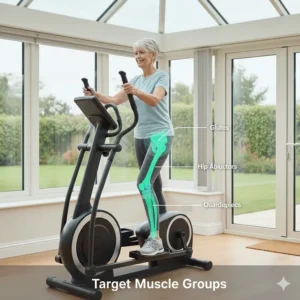
How to Progress Safely Using Your Cross Trainer
Progressive overload – gradually increasing exercise demands – forms the foundation of rehabilitation. Here’s how to apply this principle safely with your low impact cross trainer:
Week-by-Week Progression Plan:
Weeks 1-2 of Cross Trainer Use (typically weeks 3-6 post-surgery):
- Duration: 2-3 minutes, twice daily
- Resistance: Level 1
- Focus: Smooth, controlled motion; monitoring how your hip feels
- Target: Simply completing the motion without pain
Weeks 3-4 of Cross Trainer Use:
- Duration: Increase to 5 minutes, twice daily
- Resistance: Remain at level 1, or increase to level 2 if managing well
- Focus: Maintaining good posture throughout
- Target: Building consistency and confidence
Weeks 5-8 of Cross Trainer Use:
- Duration: Progress towards 10 minutes, 2-3 times daily
- Resistance: Gradually increase to levels 2-3
- Focus: Incorporating both forward and backward motion
- Target: Developing smooth bilateral movement patterns
Weeks 9-12 of Cross Trainer Use:
- Duration: Build towards 15-20 minutes, once or twice daily
- Resistance: Progress to levels 3-5
- Focus: Working on endurance and stamina
- Target: Completing sessions without excessive fatigue
Month 4 Onwards:
- Duration: 20-30 minutes, 4-5 times weekly
- Resistance: Continue progressive increases based on capability
- Focus: Maintaining long-term fitness
- Target: Returning to normal activity levels
Remember to document your sessions. Note duration, resistance level, and how you felt during and after exercise. This information proves invaluable during physiotherapy appointments and helps identify patterns in your recovery.
Combining Cross Trainer Exercise With Other Rehabilitation Activities
Cross trainers work best as part of a comprehensive rehabilitation programme rather than your sole exercise. The NHS recommends varied low-impact activities to promote well-rounded recovery:
Swimming and Water-Based Exercise:
Once your surgical wound has completely healed (typically 2-3 weeks post-surgery), swimming provides excellent low-impact cardiovascular exercise. The buoyancy of water supports your body weight whilst allowing free movement. Alternate between cross trainer sessions and swimming for variety.
Static Cycling:
Recumbent bikes offer similar benefits to cross trainers but in a fully supported seated position. They’re excellent for days when standing exercise feels challenging. The Neezee 2-in-1 model bridges this gap by offering both options in one machine.
Walking:
Progressive walking remains the gold standard rehabilitation exercise. As noted by the Cambridge University Hospitals NHS Trust, walking is gentle on your new hip whilst building muscle strength, balance, and stamina. Combine daily walking with cross trainer sessions for optimal results.
Resistance Band Exercises:
Light resistance band work targets specific muscle groups around your hip, including the crucial gluteus medius and hip external rotators. These complement the cardiovascular benefits of cross trainer exercise.
Balance and Proprioception Work:
Simple balance exercises (standing on one leg, weight shifting) rebuild the neuromuscular control essential for confident movement. These take just 2-3 minutes and pair well with cross trainer sessions.
Flexibility and Stretching:
Gentle stretching maintains or improves range of motion. Always stretch when muscles are warm – perhaps after your cross trainer session. Never bounce or force stretches; hold gentle sustained stretches for 20-30 seconds.
Maintenance Tips for Long-Term Equipment Performance
Proper maintenance ensures your rehabilitation investment continues performing optimally throughout your recovery and beyond:
Daily Care:
- Wipe down pedals, handlebars, and frame with a slightly damp cloth after each use
- Check for any loose bolts or unusual sounds before starting your session
- Ensure the machine remains level; adjust stabiliser feet if needed
Weekly Maintenance:
- Inspect moving parts for signs of wear
- Wipe down the LCD display with a microfibre cloth
- Check all bolts and tighten if necessary (but don’t over-tighten)
- Vacuum around the base to prevent dust accumulation
Monthly Tasks:
- Apply appropriate lubricant to moving parts (check your manual for specific locations and products)
- Inspect the drive belt for wear (if your model uses one)
- Test all resistance levels to ensure smooth transitions
- Review and reset any workout statistics you’re tracking
Quarterly Checks:
- Thoroughly inspect the frame for any stress cracks or damage
- Check pedal attachments and replace if showing wear
- Test heart rate sensors for accuracy (compare against a manual pulse check)
- Review the manufacturer’s maintenance schedule for any model-specific tasks
Most quality cross trainers, when properly maintained, will serve you reliably for many years. The minimal time invested in maintenance pays dividends in consistent performance and longevity.
Understanding NHS Guidelines for Post-Hip Surgery Exercise
The NHS provides comprehensive guidance on post-hip replacement exercise that’s worth understanding as you use your cross trainer. While individual consultants may have specific protocols, general NHS recommendations include:
Early Mobilisation:
Modern hip surgery protocols emphasise getting patients moving quickly after surgery. Early mobilisation reduces complications and often speeds overall recovery. This typically begins with bed exercises and progresses to walking with aids, not cross trainer use immediately.
Gradual Progression:
NHS physiotherapy services stress gradual, sustainable progression rather than rapid advancement. The philosophy centres on achieving consistent improvement over time rather than rushing to reach arbitrary milestones.
Low-Impact Focus:
NHS guidelines specifically recommend low-impact activities during recovery. Cross trainers, stationary bikes, and swimming pools feature prominently in rehabilitation protocols, whilst activities involving running, jumping, or contact sports are typically discouraged for at least 12 months post-surgery.
Individualised Programmes:
The NHS recognises that “everyone recovers at different rates depending upon age, general health and the nature of surgery.” Your cross trainer programme should reflect your unique circumstances, not a generic one-size-fits-all approach.
Long-Term Activity:
The goal extends beyond immediate recovery. NHS guidance encourages establishing exercise habits that continue long-term, promoting ongoing joint health and general fitness well after your hip has healed.
Real Recovery Stories: UK Patients Share Their Experiences
Hearing from others who’ve successfully navigated hip surgery recovery using cross trainers can provide both inspiration and practical insights:
Margaret’s Journey (Total Hip Replacement, Age 67):
“I purchased the JLL CT300 about six weeks after my operation. My consultant said I could start gentle exercise, and I was nervous about doing too much. The lowest resistance was perfect – genuinely easy enough that I wasn’t scared. I started with just three minutes twice a day. Now, five months later, I’m doing 25 minutes at resistance level 5, and I honestly feel better than I did before surgery. The machine paid for itself compared to gym fees, and being able to exercise at home meant I never missed sessions due to weather or transport issues.”
David’s Experience (Hip Resurfacing, Age 52):
“As a former runner, accepting that I needed low-impact exercise was tough. I invested in the SOLE E25 based on my private physio’s recommendation. The build quality immediately impressed me – it felt as solid as the machines at the clinic. The app integration helped tremendously; I could share my exercise data with my physio remotely, and we adjusted my programme based on objective metrics rather than guesswork. Eight months post-surgery, I’m cycling and using the cross trainer regularly. I’ve accepted I might not run marathons again, but I’m fitter now than at 45.”
Patricia’s Story (Bilateral Hip Replacement, Age 71):
“Having both hips replaced within four months of each other was daunting. The Dripex under desk model became my best friend during early recovery. I could use it whilst sitting in my armchair, which mattered when standing was exhausting. Ten minutes every couple of hours meant I was accumulating 60-80 minutes of gentle movement daily without overwhelming myself. Once I could stand comfortably, I progressed to the THERUN standard model. Being able to progress from one machine to the other within my own home made all the difference to my confidence.”
Frequently Asked Questions
❓ How soon after hip surgery can I use a cross trainer?
❓ Should I use moving arms or stationary handles during early recovery?
❓ What resistance level should I start at after hip surgery?
❓ How do I know if I'm overdoing cross trainer exercise during recovery?
❓ Can I use a cross trainer if I've been told I have hip precautions?
Conclusion: Choosing Your Perfect Rehabilitation Partner
Selecting the right low impact cross trainer after hip surgery represents an important decision in your recovery journey. Throughout this comprehensive guide, we’ve explored seven excellent options available on Amazon.co.uk, each offering specific benefits for different stages of rehabilitation and budgets.
The JLL CT300 and Neezee 2-in-1 provide outstanding value for those beginning their recovery journey or working within tighter budgets. The Dripex range offers versatility, with both seated and standing options to match your changing capabilities. THERUN’s models deliver professional-grade quiet operation, whilst the SOLE E25 represents the premium choice for those seeking features matching private physiotherapy clinics.
Remember, the “best” cross trainer for you depends entirely on your individual circumstances: your surgery type, recovery timeline, budget, available space, and long-term fitness goals. The most expensive option isn’t necessarily the right choice if you’re only cleared for gentle exercise. Conversely, investing in quality equipment that grows with your recovering capabilities can prove more cost-effective than upgrading multiple times.
Whatever you choose, approach your rehabilitation with patience, consistency, and respect for your body’s healing timeline. Your new hip represents a second chance at pain-free mobility – nurture it wisely with appropriate low-impact exercise, and it should serve you well for many years to come.
Recommended for You
- 7 Best Cross Trainer for Bad Knees And Back Pain UK 2026
- 7 Best Centre Drive Elliptical for Elderly Users UK 2026
- 7 Best Simple Cross Trainer for Over 60s UK (2026 Guide)
Disclaimer: This article contains affiliate links. If you purchase products through these links, we may earn a small commission at no additional cost to you. Prices shown are approximate and may vary. Always consult your consultant or physiotherapist before beginning any exercise programme following hip surgery.
✨ Found this helpful? Share it with your mates! 💬🤗
