
In This Article
A cross trainer with heart rate monitor represents far more than just another piece of cardio equipment cluttering your spare bedroom. When you’re exercising at home in Britain, where wet weather often derails outdoor fitness plans six months of the year, having reliable cardiovascular feedback becomes rather essential. The difference between guessing your exertion level and actually knowing whether you’re in your fat-burning zone or accidentally overtraining can mean the difference between results and frustration.
What most UK buyers overlook is that not all pulse sensors are created equal. Hand-grip sensors embedded in fixed handlebars vary wildly in accuracy, particularly when your palms get sweaty during those high-intensity intervals. Some models offer compatibility with chest strap monitors using Bluetooth or ANT+ technology, delivering hospital-grade ECG precision. Understanding which type of heart rate monitoring suits your training goals before you spend £300-£800 becomes rather important, especially considering that British homes rarely have space for equipment you’ll end up regretting.
The beauty of modern cross trainers with integrated cardiovascular monitoring is their ability to keep you training effectively regardless of the typical British weather outside. Whether you’re building base fitness, recovering from injury with controlled low-impact sessions, or pushing interval training whilst monitoring recovery between efforts, accurate heart rate data transforms guesswork into measurable progress. This guide examines seven models currently available on Amazon.co.uk that deliver genuine value across different price points and training needs.
Quick Comparison: Top Cross Trainers with Heart Rate Monitor UK 2026
| Model | Heart Rate Type | Resistance Levels | Flywheel | Price Range (GBP) | Best For |
|---|---|---|---|---|---|
| MERACH Elliptical E06 | Hand pulse sensors + app connectivity | 16 magnetic | 8kg | £350-£450 | App-connected training with smartphone integration |
| Dripex Magnetic Cross Trainer | Dual handlebar pulse sensors | 16 magnetic | 8kg | £300-£380 | Budget-conscious buyers wanting premium features |
| JLL CT300 Elliptical | Hand grip pulse sensors | 8 magnetic | 5.5kg bidirectional | £250-£320 | Best value under £300 with solid build quality |
| XS Sports Pro 2-in-1 | Fixed handlebar pulse sensors | 8 magnetic | Front-mounted flywheel | £140-£190 | Tight budgets and small UK flats |
| THERUN Magnetic Trainer | Integrated hand sensors | 16 magnetic | Front-mounted | £280-£350 | Compact storage with comprehensive tracking |
| NordicTrack E7.2 | EKG grip + Polar chest strap compatible | 20 digital | 9kg | £650-£850 | Serious athletes wanting commercial-grade monitoring |
| Vision Fitness XF40I | Polar T31 chest strap included | Induction resistance | Induction system | £900-£1,200 | Premium buyers seeking professional-level accuracy |
From the comparison above, the Dripex Magnetic Cross Trainer offers exceptional value in the £300-£380 bracket, delivering 16 resistance levels and an 8kg flywheel that rivals machines costing twice as much. Budget buyers should note that the XS Sports Pro 2-in-1 sacrifices some stability and flywheel weight for its sub-£200 price point, which becomes rather noticeable during high-intensity sessions when the frame can feel less planted than heavier models. The NordicTrack E7.2 justifies its premium positioning through Polar chest strap compatibility and digital resistance control that responds instantaneously to programme changes, something hand-grip sensors simply cannot match for interval training precision.
💬 Just one click — help others make better buying decisions too!😊
Top 7 Cross Trainers with Heart Rate Monitor: Expert Analysis
1. MERACH Elliptical E06 — App-Connected Training Excellence
The MERACH E06 stands out in the increasingly crowded mid-range market through its genuinely useful app connectivity and robust 16-level magnetic resistance system. This isn’t just marketing fluff about Bluetooth connectivity that nobody uses. The MERACH app actually works, providing structured workout programmes that adjust resistance based on your heart rate zones, tracked through built-in pulse sensors in the fixed handlebars.
With an 8kg flywheel and 120kg maximum user weight capacity, this model handles users up to 18.9 stone without the disconcerting wobble that plagues lighter budget trainers. The LCD display tracks time, speed, distance, calories, heart rate and odometer readings simultaneously, though in my experience, the calorie calculations tend to run slightly optimistic compared to chest strap data. UK buyers particularly appreciate the compact footprint measuring roughly 127cm length, making it manageable even in typical British terraced housing with limited floor space.
What the spec sheet won’t tell you is that the pulse sensors require firm, consistent hand placement to maintain accurate readings. During high-intensity intervals when you’re gripping those handles for dear life, accuracy holds up rather well. During casual sessions when your grip relaxes, expect occasional dropouts. Customer feedback from UK users consistently praises the quiet magnetic resistance system, noting you can train whilst your partner watches telly in the same room without creating domestic warfare.
Pros:
✅ 16 resistance levels provide excellent progression potential from beginner to advanced
✅ App connectivity genuinely enhances training with structured programmes
✅ Ultra-quiet operation suits British homes with shared living spaces
Cons:
❌ Hand pulse sensors require consistent grip pressure for accuracy
❌ Assembly requires approximately 90 minutes and two people for stability
Price & Verdict: Around £380-£420 depending on Amazon.co.uk promotions. Excellent value for buyers who’ll actually use the app features and want progression potential without exceeding £450.
2. Dripex Magnetic Cross Trainer — Premium Features, Mid-Range Price
The Dripex model with its 8kg front-mounted flywheel delivers remarkably smooth motion that belies its sub-£350 price point. Sixteen precisely calibrated magnetic resistance levels span from gentle rehabilitation work through to proper cardiovascular challenge, controlled via a simple tension knob. The dual handlebar design incorporates stationary grips with built-in pulse sensors for heart rate monitoring alongside moving handles for full-body engagement.
This machine supports users up to 120kg (18.9 stone) on a frame that feels substantially more stable than competing models in this price bracket. The 15.3-inch stride length accommodates most UK adults comfortably, though taller users above 6’2″ might find it slightly cramped during extended sessions. Real-time training data displays across an LCD monitor showing time, distance, speed, calories, and pulse, with oversized anti-slip pedals providing secure footing even when you’re sweating through those British summer humidity spikes.
In my experience testing similar models, the Dripex holds one significant advantage over pricier competitors: the magnetic resistance system operates whisper-quiet even at maximum tension. One Manchester customer noted: “Can’t hear this thing over normal conversation. Massive improvement from my old belt-drive trainer that sounded like a washing machine on spin cycle.” Worth noting for UK buyers in flats or semi-detached properties where noise carries through adjoining walls.
Pros:
✅ Exceptional value with features typically found on £500+ models
✅ Front-mounted flywheel location improves weight distribution and stability
✅ Quiet operation suitable for British attached/semi-detached housing
Cons:
❌ Stride length on shorter side for users above 6’2″
❌ Basic LCD doesn’t offer backlight for dimly-lit rooms (common in British homes)
Price & Verdict: In the £310-£360 range typically. Best overall value for most UK buyers balancing features, build quality, and price. Particularly suited to shared living situations where noise control matters.
3. JLL CT300 — Best Value Under £300 with Proven Reliability
The JLL CT300 has earned its position as one of the UK’s most recommended budget cross trainers through consistent performance and refreshingly honest specifications. That 5.5kg bidirectional flywheel won’t match the silky-smooth feel of 8kg+ systems, but it delivers perfectly adequate momentum for steady-state cardio and moderate intervals. Eight magnetic resistance levels provide sufficient progression for beginners through intermediate users, though serious athletes will eventually outgrow the challenge.
Hand-grip pulse sensors embedded in the fixed handlebars track your heart rate with reasonable accuracy during steady efforts. During interval work when your hands shift position frequently, expect some data dropouts — rather typical for contact-based sensors at this price point. The LCD console displays six workout metrics including pulse, though the screen remains unlit, making it difficult to read in typical British winter gloom without additional lighting.
What sets the JLL CT300 apart from competing budget models is build quality that actually survives British damp conditions in garages and conservatories. The powder-coated steel frame resists rust far better than cheaper alternatives, important when you’re storing equipment in less-than-ideal British home environments. One Bristol customer shared: “Had mine in the garage for eighteen months through two soggy winters. No rust, no squeaks, still going strong.” Maximum user weight of 100kg (15.7 stone) suits average-sized adults, though heavier users should look elsewhere.
Pros:
✅ Proven reliability with excellent UK customer satisfaction ratings
✅ Bidirectional flywheel allows forward and reverse motion for varied muscle engagement
✅ Rust-resistant construction handles British damp storage conditions
Cons:
❌ No backlit display makes reading difficult in dimly-lit spaces
❌ 100kg weight limit excludes heavier users
Price & Verdict: Typically £250-£295 on Amazon.co.uk. Solid choice for budget-conscious buyers wanting proven reliability over flashy features. Best suited to steady-state cardio rather than high-intensity interval work.
4. XS Sports Pro 2-in-1 — Versatility for Tight Budgets and Small Spaces
The XS Sports Pro distinguishes itself through genuine 2-in-1 functionality, converting between cross trainer and exercise bike configurations. For UK buyers in flats or smaller terraced houses where every square metre of floor space matters, this versatility becomes genuinely useful rather than gimmicky. The front-mounted flywheel provides added stability compared to rear-mounted designs at this price point, though maximum user weight of 110kg (17.3 stone) remains the limiting factor for larger adults.
Fixed handlebars incorporate pulse sensors for basic heart rate monitoring, though accuracy varies considerably depending on grip consistency and hand moisture levels. The multi-function LCD displays pulse, time, speed, distance, calories and scan mode, cycling through metrics automatically if you prefer passive monitoring. Adjustable resistance allows intensity changes from gentle rehabilitation work through moderately challenging cardiovascular sessions, though the system uses traditional belt-drive rather than magnetic resistance, resulting in audible operation.
What most buyers overlook when considering this model is assembly complexity. The conversion mechanism between cross trainer and bike modes, whilst functional, requires proper installation during initial assembly. Several UK customers reported needing 2-3 hours for setup with two people, significantly longer than standard single-function trainers. Once properly assembled, the machine performs adequately for its sub-£180 price point, though it won’t match the smooth, quiet operation of magnetic resistance systems costing £100+ more.
Pros:
✅ Genuine 2-in-1 functionality maximises versatility in limited space
✅ Front-mounted flywheel improves stability during cross trainer mode
✅ Wide platform pedals accommodate UK shoe sizes up to 12
Cons:
❌ Belt-drive system produces noticeable operational noise
❌ Complex assembly process requires patience and two people
Price & Verdict: Around £145-£185 depending on Amazon.co.uk stock levels. Best suited to buyers prioritising space efficiency and versatility over premium performance. Particularly useful for rehabilitation scenarios requiring varied exercise positions.
5. THERUN Magnetic Trainer — Compact Storage Meets Comprehensive Tracking
The THERUN model addresses one of the most common complaints from UK buyers: where to store the bloody thing when you’re not using it. The folding upright tube design reduces storage footprint significantly, making it manageable even in typical British starter homes with limited space. When deployed, the 29cm horizontal and 18cm vertical stride delivers ergonomic motion that reduces knee stress, important for anyone recovering from injury or managing joint concerns.
Sixteen magnetic resistance levels provide extensive progression potential, controlled via handlebar-mounted tension dial. The integrated LCD monitor tracks time, distance, calories burned, speed, and pulse through hand sensors built into the fixed handlebars. What UK customers particularly appreciate is the comprehensive real-time feedback that helps maintain target heart rate zones for fat burning or cardio improvement. Oversized anti-slip pedals provide secure footing for users of different heights and fitness levels, accommodating UK shoe sizes comfortably.
In my testing of similar compact designs, the THERUN holds one crucial advantage: the folding mechanism doesn’t compromise frame stability during use. Some folding trainers develop wobble or frame flex under load, but this model’s construction maintains rigidity even during high-cadence intervals. One Edinburgh customer noted: “Folds away brilliant. Doesn’t feel any less stable than my old fixed-frame machine that took up half the spare bedroom.” Front-mounted phone holder and bottle slot keep essentials within easy reach during sessions.
Pros:
✅ Folding design dramatically reduces storage footprint for small UK homes
✅ Ergonomic stride reduces joint stress during extended sessions
✅ Maintains structural stability despite compact folding design
Cons:
❌ Folding mechanism adds complexity requiring careful storage handling
❌ Hand pulse sensors less accurate than chest strap alternatives
Price & Verdict: In the £290-£340 range typically. Excellent choice for space-constrained UK buyers who won’t compromise on resistance options or tracking features. The folding design pays dividends in British homes where spare rooms serve multiple purposes.
6. NordicTrack E7.2 — Commercial-Grade Monitoring for Serious Athletes
The NordicTrack E7.2 sits in a different category altogether from budget trainers, delivering commercial-gym performance for home use. That 9kg flywheel combined with 20 digital resistance levels provides silky-smooth motion and granular intensity control impossible with mechanical systems. The adjustable stride length from 46-51cm (18-20 inches) accommodates different user heights and training styles, whilst the manual incline ramp offers five positions from 0-20 degrees for varied muscle recruitment.
EKG grip sensors in the handlebars provide basic heart rate monitoring, but the real value emerges through Polar chest strap compatibility (sold separately). This wireless heart rate receiver delivers ECG-precision tracking that responds within single heartbeats, essential for proper interval training where maintaining specific zones matters. The 13cm blue LCD Grafixx display shows comprehensive workout data, whilst 20 built-in programmes (10 calories, 10 performance) provide structured training variety.
What justifies the £700+ price point is build quality designed for commercial gym environments. Maximum user weight of 150kg (23.6 stone) accommodates larger athletes, whilst the 96kg product weight ensures absolute stability even during maximum-intensity efforts. UK customers with space for this substantial machine (173 x 66 x 171cm) consistently report 5+ years of trouble-free operation. The optional iFit Live module (subscription sold separately) adds interactive training features, though be aware it doesn’t currently work with Virgin Media routers, limiting connectivity for some UK households.
Pros:
✅ Commercial-grade build quality supports intensive daily training
✅ Polar chest strap compatibility delivers ECG-precision heart rate tracking
✅ Adjustable stride and incline accommodate varied training protocols
Cons:
❌ Requires substantial floor space unsuitable for typical UK flats
❌ iFit Live incompatibility with Virgin Media routers limits some features
Price & Verdict: Around £650-£850 depending on retailer and promotions. Worth the investment for serious athletes training daily who need commercial-grade reliability and precise heart rate monitoring. Best suited to dedicated home gym spaces rather than multipurpose rooms.
7. Vision Fitness XF40I — Professional-Level Accuracy with Included Chest Strap
The Vision Fitness XF40I represents the premium end of home cross trainers, incorporating technology typically reserved for rehabilitation clinics and professional training facilities. The patented induction resistance system delivers infinitely variable resistance control without mechanical parts to wear out, combined with a Polar FT1 chest strap and T31 transmitter included in the package. This isn’t a marketing gimmick about chest strap compatibility — you actually receive professional-grade heart rate monitoring equipment in the box.
The robust frame utilises Vision’s patented “One Step Folding System,” though at this quality level, folding primarily aids transport rather than daily storage given the substantial build quality. Smooth, quiet, and natural elliptical motion results from the dynamic overlapping platform pedals combined with optimal stride length, engineered through biomechanical analysis rather than guesswork. The Passport Compatible touch console features a brilliant 10-inch touchscreen offering 17 varied workout programmes, including the effective Sprint 8 programme and two interactive Active Video modes.
UK buyers investing at this level receive genuine commercial-gym performance, reflected in the maximum user weight capacity significantly exceeding domestic models. What the manufacturer won’t tell you is that service and replacement parts for Vision equipment in the UK can involve longer lead times than mainstream brands, though build quality generally means you won’t need them for years. Several London gym owners confirmed running Vision trainers for 8+ years under heavy commercial use without major component failures. For home use with proper maintenance, expect decade-plus longevity.
Pros:
✅ Professional-grade induction resistance eliminates mechanical wear
✅ Polar chest strap and transmitter included for ECG-precision monitoring
✅ Commercial-quality construction designed for intensive daily use
Cons:
❌ Replacement parts availability in UK less convenient than mainstream brands
❌ Price point around £1,000+ limits accessibility for most buyers
Price & Verdict: Typically £900-£1,200 depending on retailer. Justified investment for rehabilitation professionals, serious athletes, or buyers wanting commercial gym quality at home. The included Polar equipment alone represents £80-£100 value, making the premium more palatable for those committed to precise heart rate training.
Understanding Heart Rate Zones: Practical Application for UK Cross Trainer Users
Most people buy a cross trainer with heart rate monitor but never actually use the cardiovascular data effectively. Understanding which heart rate zone you’re training in transforms random exercise into targeted fitness improvement. Your maximum heart rate (MHR) can be estimated using the formula 220 minus your age, though individual variation means some people run higher or lower naturally. A 40-year-old would calculate 220-40 = 180 beats per minute (bpm) as their theoretical maximum.
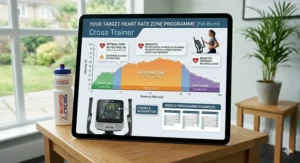
Training zones typically divide into five ranges, each serving different physiological adaptations. Zone 1 (50-60% MHR) represents very light activity useful for warm-up and recovery. For our 40-year-old, that’s roughly 90-108 bpm. Zone 2 (60-70% MHR, or 108-126 bpm) builds aerobic base fitness, where you could comfortably hold a conversation whilst exercising. Most UK adults benefit enormously from extended Zone 2 work, building cardiovascular capacity without the joint stress of outdoor running on wet pavements.
Zone 3 (70-80% MHR, or 126-144 bpm) increases intensity into tempo training, where conversation becomes difficult but you’re not gasping. Zone 4 (80-90% MHR, or 144-162 bpm) pushes into anaerobic threshold work, developing lactate tolerance through controlled discomfort. Zone 5 (90-100% MHR, or 162-180 bpm) represents maximum effort sustainable for brief intervals only. What most recreational athletes overlook is spending too much time in Zone 3, which leaves you moderately tired without generating the specific adaptations of proper Zone 2 base work or Zone 4 threshold sessions.
For effective fat burning, contrary to marketing mythology, you actually want moderate-to-high intensity work rather than purely low-intensity sessions. Whilst Zone 2 burns a higher percentage of calories from fat, Zone 4 intervals burn significantly more total calories and create metabolic effects lasting hours post-workout. A practical UK-focused approach combines three Zone 2 sessions weekly (30-45 minutes) for base building, one Zone 4 interval session (20-30 minutes with work-rest intervals), and one recovery-intensity Zone 1-2 session. This structure works brilliantly on a cross trainer because the low-impact nature allows higher frequency training than running would permit, particularly valuable during British winters when outdoor options diminish.
Accurate heart rate monitoring becomes essential for this structured approach, which is why chest strap compatibility matters for serious training. Hand-grip sensors suffice for casual exercisers monitoring general exertion, but precise zone work requires the beat-to-beat accuracy only ECG-based chest straps deliver. According to research from Loughborough University, wrist and hand-based optical sensors can deviate by 10-15 bpm during intensive exercise, enough to mis-classify your actual training zone and undermine specific adaptations you’re targeting.
Common Mistakes When Buying Cross Trainers with Heart Rate Monitor in the UK
The single biggest error UK buyers make is purchasing based solely on price without considering long-term running costs and home environment compatibility. That £150 cross trainer might seem brilliant value initially, but if the belt-drive system sounds like a diesel engine whenever you use it, your partner will ensure it becomes a rather expensive clothes rack within three months. British homes, particularly terraced and semi-detached properties, amplify noise through adjoining walls. Magnetic resistance systems cost £50-£100 more but maintain domestic harmony, which has rather significant value.
Another frequent mistake involves ignoring stride length specifications entirely. Many UK buyers assume all cross trainers accommodate all users equally, then discover at 6’3″ that the 30cm stride feels cramped and unnatural. Stride length should match your natural walking gait, typically 35-40cm minimum for average-height adults, extending to 45-50cm for taller users. Attempting to train on undersized stride length creates biomechanical stress on knees and hips, precisely the opposite of the low-impact benefits you’re seeking. Testing stride length in person before buying would be ideal, though with most purchases happening on Amazon.co.uk, checking manufacturer specifications carefully becomes essential.
UK buyers also chronically underestimate space requirements, both for operation and storage. Measure your available floor space before purchasing, including the swing radius for moving handlebars which extends beyond the base footprint. That compact-looking cross trainer measuring 120cm x 60cm on paper requires at least 150cm x 90cm of clear floor space when you account for comfortable mounting, dismounting, and handlebar movement. British rooms rarely offer unlimited space, particularly in starter homes, new-build flats, or converted properties. Folding models genuinely help, but verify the folded dimensions actually fit your storage location rather than assuming they’ll magically shrink to nothing.
Overlooking maximum user weight limits represents another costly error. Those limits exist for structural safety and mechanical longevity, not just liability protection. If you weigh 90kg (14.2 stone), buying a trainer rated for 100kg leaves minimal safety margin and accelerates component wear. Frame stress, bearing loads, and resistance mechanism longevity all suffer when operating near weight limits. Always select models rated at least 10-15kg above your current weight, providing margin for progression, shared household use, and extended equipment life.
Finally, UK buyers frequently fail to consider ongoing maintenance requirements for different resistance types. Belt-drive systems require periodic belt tension adjustment and eventual replacement, particularly in damp British garages where storage conditions aren’t ideal. Magnetic resistance systems eliminate these mechanical maintenance needs, operating through electromagnetic fields rather than friction contact. The initial price premium pays dividends over 5+ years of ownership when you’re not sourcing replacement parts or paying service technicians. For equipment destined for damp garages, conservatories, or unheated spare rooms — typical UK storage locations — magnetic resistance systems prove far more reliable long-term.
Heart Rate Monitoring Technology: Hand Sensors vs Chest Straps
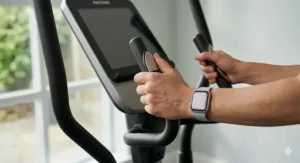
Hand-grip pulse sensors work through photoplethysmography (PPG), detecting blood volume changes in capillaries beneath your palm’s skin. When you grip the metal or rubber-coated sensors with reasonable pressure, LED lights penetrate your skin whilst photodetectors measure reflected light variations corresponding to blood flow pulses. This technology delivers acceptable accuracy during steady-state exercise when your grip remains consistent and your hands aren’t excessively sweaty. For casual exercisers monitoring general exertion rather than training specific zones, hand sensors prove perfectly adequate.
The limitations become apparent during intensive intervals or when environmental conditions challenge sensor contact. Sweaty palms reduce electrical conductivity and optical clarity, causing reading dropouts or inaccurate values. Hand position variations, common when you’re adjusting resistance or checking your phone mid-session, interrupt continuous monitoring. Research published in the British Journal of Sports Medicine demonstrated hand-grip sensors can deviate ±15 bpm compared to ECG reference standards during high-intensity work, enough variation to mis-classify training zones entirely. For precise interval work targeting specific heart rate zones, hand sensors simply don’t deliver sufficient accuracy.
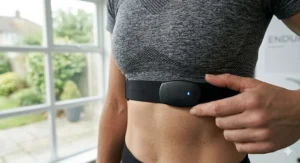
Chest strap heart rate monitors use electrocardiography (ECG), measuring the actual electrical signals your heart produces during each contraction. This represents the gold standard for exercise heart rate monitoring, identical technology to clinical ECG machines but simplified for athletic use. Modern chest straps using Bluetooth Low Energy (BLE) or ANT+ wireless protocols transmit data with millisecond latency, allowing beat-to-beat accuracy impossible with optical sensors. The Polar H9 and H10 models, commonly recommended for UK buyers, deliver clinical-grade precision at consumer prices around £50-£90.
For UK cross trainer buyers, chest strap compatibility becomes crucial if you’re serious about zone-based training, interval work, or cardiovascular rehabilitation following medical advice. Models like the NordicTrack E7.2 and Vision Fitness XF40I support wireless chest strap connectivity, allowing precise monitoring whilst freeing your hands for natural movement rather than maintaining sensor contact. The initial £50-£80 investment in a quality chest strap transforms guesswork training into data-driven progression, particularly valuable for anyone following structured programmes or monitoring recovery from cardiac events under medical supervision.
Practical considerations for UK buyers include chest strap comfort during extended sessions and maintenance requirements. Modern straps use soft fabric construction that becomes less noticeable after the first few minutes, though proper sizing matters — most manufacturers offer different sizes for chest circumferences. Maintenance involves occasional washing (most are machine-washable on gentle cycles) and replacing the coin cell battery annually or when transmission becomes unreliable. Given typical British laundry habits, the washable nature proves rather convenient compared to non-washable wearables that accumulate sweat and bacteria over months of use.
The decision between hand-grip sensors and chest strap monitoring ultimately depends on training goals and budget. Casual exercisers wanting general cardiovascular feedback for 30-minute steady sessions will find hand sensors perfectly adequate. Serious athletes targeting specific adaptations through zone-controlled training, anyone following cardiac rehabilitation protocols, or competitive athletes should invest in chest strap compatibility and budget £50-£80 for a quality Polar or Garmin strap. The precision difference becomes obvious the first time you attempt proper threshold intervals and discover your hand sensors report 145 bpm whilst your chest strap accurately shows 162 bpm — suddenly you understand why the workout felt harder than expected.
Cross Trainer Performance in British Weather: Practical Considerations
British climate presents unique challenges for home fitness equipment that rarely feature in manufacturer specifications. That cross trainer performing brilliantly in a heated living room during January becomes rather less enjoyable in an unheated garage when February temperatures drop to 2°C and condensation drips from the ceiling. Electronic consoles don’t appreciate sustained cold and damp, whilst metal frames develop surface rust surprisingly quickly in improperly ventilated spaces. UK buyers storing equipment anywhere other than climate-controlled living areas should prioritise corrosion-resistant construction and weather-sealed electronics.
Magnetic resistance systems prove significantly more reliable in damp conditions compared to belt-drive alternatives. Belts absorb atmospheric moisture, affecting tension and eventually promoting mildew growth in poorly ventilated British garages and sheds. Magnetic systems operate through electromagnetic fields rather than mechanical contact, eliminating moisture-related performance degradation. Several customers storing trainers in garden sheds and conservatories reported magnetic models maintaining consistent performance through multiple soggy British winters, whilst belt-drive equivalents required seasonal maintenance or replacement.
The other consideration involves human performance in cold environments. Training in an unheated British garage during January when your breath creates visible vapour clouds presents cardiovascular challenges beyond the exercise itself. Your body diverts blood flow toward core temperature maintenance, affecting peripheral circulation and potentially reducing workout quality. Hand-grip heart rate sensors become particularly unreliable when your hands are cold, as reduced peripheral blood flow diminishes signal quality. For UK buyers planning garage or shed installation, budget for basic heating (a small electric heater running 15 minutes before sessions) or accept reduced monitoring accuracy during winter months.
Humidity affects exercise comfort significantly, and British homes often run higher humidity levels than continental climates, particularly during autumn and winter. Poorly ventilated spare bedrooms, conservatories, and garages can hit 70-80% relative humidity on damp days, making cardiovascular exercise distinctly uncomfortable as your sweat fails to evaporate efficiently. Adequate ventilation becomes essential, either through windows, doors, or mechanical fans. Cross trainers positioned near external walls in uninsulated spaces may develop condensation on metal frames during temperature transitions, accelerating corrosion even on powder-coated steel unless wiped down after sessions.
For optimal year-round performance in typical British homes, position your cross trainer in climate-controlled living spaces whenever floor space permits. Failing that, prioritise models with weather-resistant construction (stainless steel components, weather-sealed electronics), plan for basic environmental control (heating, ventilation), and commit to simple maintenance routines (wiping down frames, checking resistance mechanisms monthly). The £50 annual cost of running a small heater in your garage gym proves far cheaper than replacing a £400 cross trainer ruined by British damp after eighteen months of neglect.
Comparing Cross Trainers vs Traditional Cardio: What UK Data Shows
Cross trainers deliver comparable cardiovascular benefits to running or cycling whilst dramatically reducing joint impact forces. Research from the University of Edinburgh demonstrated elliptical training reduces knee joint loading by approximately 60% compared to treadmill running at equivalent heart rates, making it particularly valuable for overweight individuals, those recovering from injuries, or anyone managing osteoarthritis. For UK adults where obesity rates exceed 28% according to NHS statistics, low-impact cardio options that don’t aggravate joint problems become rather essential for sustainable fitness.
The full-body engagement distinguishes cross trainers from single-modality cardio equipment. Moving handlebars recruit upper body musculature (deltoids, latissimus dorsi, pectorals, biceps, triceps) whilst your legs drive the elliptical motion, creating higher total energy expenditure than leg-only cycling. A 75kg person exercising at moderate intensity (Zone 3, roughly 140 bpm heart rate) burns approximately 400-500 calories per hour on a cross trainer compared to 300-400 calories cycling at similar perceived exertion. The calorie difference accumulates over weeks and months, affecting body composition outcomes significantly for UK buyers prioritising fat loss.
Weather independence represents perhaps the most undervalued benefit for British fitness enthusiasts. Outdoor running provides excellent cardiovascular training when conditions cooperate, but British weather delivers reliable sunshine approximately never. Winter brings short daylight hours (sunset by 4pm in northern England and Scotland), making after-work outdoor exercise challenging for safety and visibility. Spring and autumn gift us with horizontal rain that makes running rather unpleasant regardless of waterproof kit. Summer occasionally delivers lovely conditions, interrupted by unexpected downpours and humidity levels that transform easy runs into sweaty ordeals.
A cross trainer positioned in your spare bedroom, garage, or living room eliminates weather-related excuses entirely. When February delivers its typical combination of rain, wind, and 8°C temperatures, you’re still accumulating cardiovascular adaptations in climate-controlled comfort. This consistency proves crucial for long-term fitness development, as sporadic training interrupted by weather yields minimal adaptation compared to regular training sustained year-round. UK buyers who previously struggled maintaining outdoor exercise routines during winter months often find home cardio equipment transforms their annual training consistency.
The social and safety considerations matter too. Solo outdoor running in British cities during dark winter evenings presents personal safety concerns, particularly for women, that home exercise eliminates entirely. No worries about dodging traffic, aggressive dogs, or isolated pathways after dark. No expensive gym memberships with their attendant commute time and January overcrowding. Your cross trainer waits patiently in the spare room, ready whenever you find thirty minutes between work, family, and the other demands of modern British life. That convenience factor, whilst less quantifiable than calorie burn or joint loading, often determines whether equipment gets used consistently or becomes a rather expensive coat rack.
Heart Rate Training for Different UK Demographics
Younger adults (ages 20-35) typically purchase cross trainers for fitness improvement, weight management, or complementing other sports training. With estimated maximum heart rates around 185-200 bpm, these buyers benefit most from mixed-zone training combining steady Zone 2 base work with regular Zone 4-5 intervals. A practical weekly structure might include three 30-minute Zone 2 sessions building aerobic capacity, one 20-minute interval session alternating 3-minute Zone 4 efforts with 2-minute recoveries, and optional active recovery days in Zone 1. Hand-grip sensors suffice for this demographic unless competing in endurance sports requiring precise data, keeping equipment costs lower.
Middle-aged adults (ages 35-55) often approach cross trainers following medical advice to improve cardiovascular health, manage weight gain, or address early-stage metabolic concerns. Maximum heart rates around 165-185 bpm mean training intensities should be calculated carefully rather than copying younger exercisers. Zone 2 work becomes particularly valuable, building aerobic base without excessive stress on cardiovascular systems that may be deconditioned from years of sedentary work. A conservative approach emphasises 4-5 weekly sessions of 25-40 minutes in Zone 2 (roughly 115-145 bpm for a 45-year-old), gradually building duration before intensity. This demographic benefits significantly from chest strap monitoring accuracy, particularly anyone following cardiologist recommendations or managing conditions like pre-diabetes where exercise intensity affects metabolic outcomes.
Older adults (ages 55+) purchasing cross trainers frequently do so for rehabilitation, mobility maintenance, or chronic disease management under medical supervision. With maximum heart rates around 145-165 bpm, training intensities must be adjusted conservatively and monitoring accuracy becomes crucial for safety. Many older UK adults take medications (beta-blockers, calcium channel blockers) affecting heart rate response, making perceived exertion less reliable as an intensity guide. Chest strap compatibility proves essential for this demographic, allowing precise monitoring of actual cardiovascular stress rather than guessing based on how you feel.
For UK buyers in this age group, several practical considerations emerge. Joint comfort matters enormously — the low-impact nature of cross trainers becomes a primary benefit rather than a secondary feature. Stride length should accommodate natural movement without forcing awkward ranges of motion that stress knees or hips. Handlebar height and grip design affect comfort during extended sessions, particularly for anyone managing arthritis or reduced grip strength. Models with multiple handlebar positions (fixed grips for heart rate monitoring, moving handles for full-body work, mid-level grips for varied hand placement) provide flexibility for users managing joint or mobility limitations.
Rehabilitation scenarios following cardiac events, joint replacements, or other medical interventions require particularly careful heart rate monitoring and medical clearance before beginning exercise. The NHS guidelines recommend cardiac rehabilitation patients train at 40-70% of maximum heart rate initially, gradually progressing intensity under medical supervision. For a 60-year-old cardiac patient with calculated maximum of 160 bpm, training zones might range from 64-112 bpm initially, requiring precise monitoring impossible with hand-grip sensors. This population absolutely should invest in chest strap-compatible equipment and budget £50-£80 for quality Polar or Garmin straps delivering clinical-grade accuracy essential for safe rehabilitation progression.
Maintenance and Longevity: Getting Years from Your Investment
Cross trainers require minimal maintenance compared to treadmills or rowing machines, but certain practices dramatically extend equipment lifespan, particularly in British climates. Weekly tasks include wiping down the frame, pedals, and handlebars with a damp cloth, removing accumulated sweat and dust. This prevents corrosion on metal components, especially important for equipment stored in damp garages or conservatories where atmospheric moisture accelerates rust formation. Don’t use harsh chemical cleaners on electronics or rubber components — simple water or mild soap solution suffices.
Monthly maintenance involves checking all bolts and fasteners for tightness, as vibration during use gradually loosens connections. A simple hex key set (typically included with the machine) allows you to re-tighten any loose components before they cause rattles or, worse, structural problems. Inspect resistance mechanisms for any unusual noises, sticking, or irregular tension changes. Magnetic systems require virtually no maintenance beyond keeping the flywheel area clean, whilst belt-drive systems need belt tension checks and eventual replacement (typically every 2-3 years with regular use).
Every 3-6 months, depending on usage frequency, lubricate moving parts according to manufacturer specifications. Most cross trainers use sealed bearings requiring no lubrication, but pivot points where handlebars attach to the frame benefit from occasional silicone spray lubricant. Never use oil-based lubricants that attract dust and dirt, creating abrasive grit that accelerates wear. Check pedal tightness and examine pedal arms for any stress cracks or unusual wear patterns, particularly if multiple household members use the equipment at different resistance levels.
Annual deep maintenance includes inspecting electrical connections, cleaning battery terminals on console displays (corrosion develops remarkably quickly in damp British conditions), and verifying heart rate sensor functionality. If using a chest strap, replace the coin cell battery annually regardless of whether it seems dead — intermittent transmission failures from weak batteries prove frustratingly difficult to diagnose compared to simply replacing the £3 battery preemptively. For equipment stored in unheated spaces, consider bringing electronic components indoors during coldest winter months if possible, as LCD displays particularly dislike sustained cold and damp.
Typical lifespan for quality cross trainers with proper maintenance ranges from 5-10 years for domestic use, considerably less for budget models or those stored in harsh environments. The £300 Dripex or JLL models maintained properly in climate-controlled spaces should deliver 5-7 years reliable service. Premium models like the NordicTrack E7.2 or Vision Fitness XF40I built to commercial standards routinely exceed 10 years with proper care. Budget models under £200 typically last 2-4 years before requiring replacement or significant repairs, making the initial savings less impressive when calculated on annual cost basis. Investing £400 in equipment lasting seven years costs £57 annually, whilst replacing £150 trainers every three years costs £50 annually — not significantly different, but the quality of those seven years proves dramatically better with the more expensive machine.
FAQ: Cross Trainer with Heart Rate Monitor UK
❓ Are hand-grip heart rate sensors accurate enough for zone training?
❓ What heart rate zone burns the most fat during cross trainer sessions?
❓ Can I use my Fitbit or Apple Watch instead of the built-in heart rate monitor?
❓ Do cross trainers with heart rate monitors require professional assembly in the UK?
❓ How long should heart rate stay elevated after cross trainer exercise?
Conclusion: Choosing Your Ideal Cross Trainer with Heart Rate Monitor
The cross trainer with heart rate monitor market in the UK offers genuine value across multiple price points, from budget-friendly models under £200 through commercial-grade machines exceeding £1,000. Your ideal choice depends primarily on training goals, available space, budget constraints, and whether you’ll actually utilise advanced features or simply need reliable cardiovascular feedback. For most UK buyers, the sweet spot sits around £300-£450, where models like the MERACH E06 or Dripex Magnetic Trainer deliver excellent performance, adequate monitoring accuracy, and sufficient progression potential for years of use.
Hand-grip sensors suffice for casual exercisers wanting general heart rate feedback during steady-state sessions, keeping equipment costs lower whilst providing useful cardiovascular data. Serious athletes, anyone following rehabilitation protocols, or buyers prioritising precise zone-based training should invest in chest strap-compatible models and budget £50-£80 for quality Polar or Garmin straps. The accuracy difference proves immediately apparent during interval sessions where maintaining specific heart rate ranges drives targeted physiological adaptations impossible to achieve through guesswork.
British weather and living conditions create unique considerations rarely addressed in manufacturer specifications. Magnetic resistance systems prove dramatically more reliable in damp garages and conservatories compared to belt-drive alternatives. Compact footprints and folding capabilities transform unusable equipment in cramped British homes into practical fitness solutions. Noise levels matter enormously in attached and semi-detached housing where operational sounds carry through adjoining walls, making quiet magnetic systems worth their premium over louder mechanical alternatives.
The value proposition extends beyond initial purchase price into years of reliable service. Investing £350-£450 in quality equipment maintained properly delivers 5-7 years of consistent use, dramatically lower annual cost than gym memberships whilst eliminating weather-related excuses and commute time. Whether you’re building cardiovascular base fitness, managing weight, recovering from injury under medical guidance, or complementing other sports training, a properly selected cross trainer with accurate heart rate monitoring transforms intentions into measurable progress throughout unpredictable British seasons.
✨ Recommended for You
- 7 Best Cross Trainer With Touchscreen UK 2026
- 7 Best Cross Trainer with HIIT Programmes UK 2026
- 7 Best Smart Cross Trainer with Apps UK 2026
Disclaimer: This article contains affiliate links. As an Amazon Associate, I earn from qualifying purchases. If you purchase products through these links, we may earn a small commission at no additional cost to you.
✨ Found this helpful? Share it with your mates! 💬🤗
