In This Article
Choosing an elliptical cross trainer can feel overwhelming, can’t it? You’re standing in your spare bedroom, measuring the floor space, wondering whether that £200 budget model will collapse under you after a fortnight, or if splashing out £2,000 on a commercial-grade beast is complete madness. I’ve been exactly where you are now – scrolling through Amazon.co.uk at midnight, reading contradictory reviews, utterly baffled by flywheel weights and stride lengths.
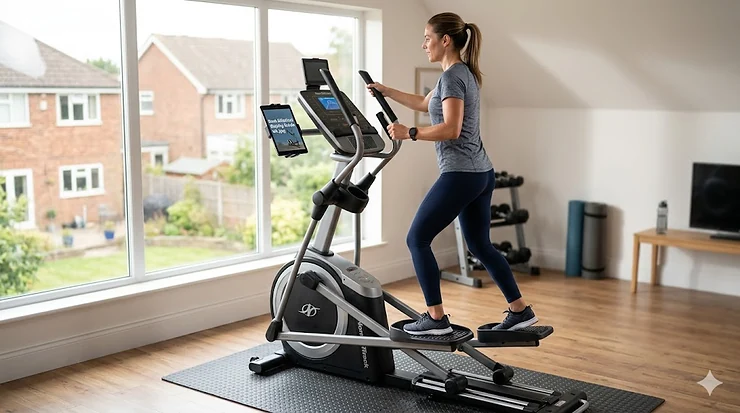
Here’s the truth: finding the right elliptical buying guide doesn’t require a sports science degree. What you need is straightforward, practical advice from someone who understands UK homes, British budgets, and the unique challenges we face (like those narrow Victorian doorways and upstairs spare rooms). Whether you’re recovering from a dodgy knee, building cardiovascular fitness after lockdown lethargy, or simply want a low-impact alternative to pounding the pavements in February drizzle, there’s a cross trainer perfectly suited to your needs.
According to research published in the National Institutes of Health, regular physical exercise significantly reduces the progression of cardiovascular disease, with low-impact activities like elliptical training offering tremendous benefits without the joint stress of running. The NHS actively recommends cross trainers as excellent low-impact cardiovascular equipment for maintaining fitness whilst protecting your joints.
This comprehensive elliptical buying guide covers everything from budget-friendly options under £300 to premium models approaching £2,000. You’ll discover which features genuinely matter, which are marketing fluff, and most importantly, how to choose elliptical for home gym use without wasting your hard-earned pounds. Let’s crack on!
Quick Comparison Table: Top Elliptical Trainers at a Glance
| Model | Price Range (£) | Flywheel | Stride Length | Resistance Levels | Best For | Rating |
|---|---|---|---|---|---|---|
| JTX Strider-X8 | £449-£499 | 7kg | 16″ (41cm) | 16 (magnetic) | Compact spaces, under 5’9″ | ⭐⭐⭐⭐½ |
| NordicTrack X16i | £1,999-£2,299 | Premium | Adjustable | 26 + incline/decline | Serious athletes, variety | ⭐⭐⭐⭐⭐ |
| JLL CT300 | £240-£280 | 5.5kg | 14″ (35cm) | 8 (magnetic) | Beginners, tight budgets | ⭐⭐⭐⭐ |
| Reebok A4.0 | £180-£220 | 6kg | 15″ (38cm) | 32 (digital) | Entry-level users | ⭐⭐⭐½ |
| Bowflex Max Trainer M9 | £1,299-£1,499 | Hybrid design | Variable | 20 (magnetic/air) | HIIT enthusiasts, small spaces | ⭐⭐⭐⭐½ |
| JTX Strider-X7 | £380-£450 | 12.5kg | 16″ (41cm) | 16 (electromagnetic) | Mid-range, families | ⭐⭐⭐⭐⭐ |
| XS Sports 2-in-1 | £90-£130 | 4kg | 11″ (28cm) | 8 (manual) | Occasional use, very tight budgets | ⭐⭐⭐ |
💬 Just one click – help others make better buying decisions too!😊
Top 7 Elliptical Trainers: Expert Analysis for UK Homes
After extensive research into models available on Amazon.co.uk and specialist UK fitness retailers, I’ve identified seven exceptional cross trainers spanning every budget and requirement. Each has been evaluated based on build quality, customer feedback from British buyers, value for money, and suitability for typical UK homes.
1. JTX Strider-X8: The Smart Compact Champion
Price: £449-£499 | Flywheel: 7kg inertia-enhanced | Stride: 16″ (41cm)
If you’re working with limited space but refuse to compromise on quality, the JTX Strider-X8 deserves serious consideration. This sleek, all-black compact cross trainer punches well above its weight class, delivering gym-quality performance in a footprint that won’t dominate your spare bedroom.
The electromagnetic resistance system offers 16 digitally adjustable levels, ensuring whisper-quiet operation that won’t disturb your neighbours or sleeping family members. UK customers consistently praise its smooth, natural motion despite the compact dimensions (130cm length × 70cm width × 169cm height when fully assembled). The built-in Bluetooth connectivity allows seamless integration with Kinomap and other popular training apps – resistance automatically adjusts to match virtual hills displayed on your screen.
What UK buyers say: “Surprisingly sturdy for the price point. Been using it daily for three months and it’s holding up brilliantly. The Kinomap integration makes workouts genuinely enjoyable rather than a chore,” reports a verified Amazon.co.uk purchaser from Manchester.
✅ Pros:
- Compact footprint ideal for UK homes
- Bluetooth app connectivity (Kinomap compatible)
- 18 workout programmes including heart rate training
❌ Cons:
- 16″ stride may feel restrictive for users over 5’9″
- No bottle holder included
Perfect for: Space-conscious buyers under 5’9″ seeking smart connectivity features without premium pricing.
2. NordicTrack X16i: The Premium Powerhouse
Price: £1,999-£2,299 | Flywheel: Premium commercial-grade | Stride: Adjustable
The NordicTrack X16i represents the pinnacle of home elliptical technology. This 3-in-1 training platform combines elliptical, stepper, and treadmill functionality, offering unprecedented workout variety. The standout feature? Genuine 10% incline to -10% decline capability – virtually unheard of in home equipment.
The massive 16″ HD rotating touchscreen provides access to over 10,000 iFIT Pro trainer-led workouts (subscription sold separately but includes free trial). You’ll train alongside elite coaches through stunning global locations, from Norwegian fjords to Patagonian trails. With 26 resistance levels, even elite athletes will find genuine challenge here.
UK availability: Currently available with finance options through Fitness Superstore (£166.58 per month with 0% APR). Stock arrival imminent with delivery estimated from 10th March 2026.
What UK buyers say: “Worth every penny. The decline feature absolutely murders your glutes in the best possible way. Build quality is phenomenal – feels like commercial gym equipment,” shares a buyer from Edinburgh who’s owned it for eight months.
✅ Pros:
- Incline/decline capability (-10% to +10%)
- Adjustable stride length for optimal biomechanics
- iFIT Pro integration with global workout library
❌ Cons:
- Significant investment (£1,999+)
- Requires iFIT subscription for full functionality
Perfect for: Serious fitness enthusiasts with budget flexibility seeking ultimate workout variety and premium features.
3. JLL CT300: Best Budget Cross Trainer Under £300
Price: £240-£280 | Flywheel: 5.5kg two-way | Stride: 14″ (35cm)
The JLL CT300 has earned legendary status amongst UK budget-conscious fitness enthusiasts. Despite its modest price tag, this cross trainer delivers surprising quality and reliability. JLL Fitness has built an excellent reputation for producing decent gym equipment at accessible prices, and the CT300 exemplifies this philosophy perfectly.
The 5.5kg two-way flywheel (allowing forward and backward motion) operates smoothly thanks to magnetic resistance, offering 8 adjustable levels. The 9-function on-board computer tracks essential metrics: time, distance, speed, calories, pulse, and more. Built-in heart rate sensors and a tablet holder add unexpected premium touches at this price point.
What UK buyers say: “Brilliant value. Yes, it’s basic, but it does exactly what it promises. Been using it four times weekly for six months with zero issues. My teenage daughter and I both use it comfortably,” reports a Leicester customer.
✅ Pros:
- Exceptional value under £280
- Two-way flywheel (forward/backward motion)
- Maximum 120kg user weight (impressive for price)
❌ Cons:
- No pre-programmed workouts
- Shorter stride may feel limiting for taller users
Perfect for: Budget-conscious beginners wanting reliable quality without breaking the bank.
4. Reebok A4.0: Entry-Level Excellence
Price: £180-£220 | Flywheel: 6kg | Stride: 15″ (38cm)
Reebok’s pedigree in fitness equipment shines through the A4.0 model. This entry-level cross trainer offers remarkable features considering its sub-£220 price point. The 5.5-inch digital screen provides clear readouts of speed, time, distance, calories burned, pulse, watts, and RPM.
Twelve pre-set workout programmes address various fitness goals from fat burning to endurance building. The 32 levels of resistance (digitally controlled) genuinely surprise at this price bracket – most budget models offer 8-10 levels maximum. The extra-long handles feature integrated heart rate monitoring technology for training zone tracking.
What UK buyers say: “Compact, quiet, and does the job. The 32 resistance levels mean I won’t outgrow it quickly. Assembly took about 90 minutes with my partner helping,” shares a Cardiff buyer.
✅ Pros:
- Recognised brand reliability
- 32 resistance levels (exceptional for price)
- 12 pre-programmed workouts
❌ Cons:
- Lighter 6kg flywheel (less smooth than heavier models)
- 15″ stride feels short for users over 5’10”
Perfect for: First-time buyers wanting brand recognition and basic programmes without excessive spending.
5. Bowflex Max Trainer M9: HIIT Specialist
Price: £1,299-£1,499 | Unique Design: Stepper/elliptical hybrid | Resistance: 20 levels (magnetic + air)
The Bowflex Max Trainer M9 breaks conventional elliptical moulds entirely. This ingenious hybrid combines stepper and elliptical movements, creating uniquely intense calorie-burning workouts. According to Bowflex, you’ll achieve cardiovascular benefits of much longer traditional workouts in significantly less time – perfect for time-pressed professionals.
The 10″ HD touchscreen integrates seamlessly with JRNY adaptive fitness membership, offering personalised cardio, strength, and whole-body workouts that evolve as you progress. You can even stream Netflix and Amazon Prime Video whilst training (via built-in apps with appropriate subscriptions). The compact footprint (125cm × 77.5cm × 165.4cm) makes it surprisingly space-efficient despite premium features.
What UK buyers say: “Game-changer for my fitness. The stepping motion absolutely exhausts me in 15 minutes flat – way more effective than my old elliptical. JRNY workouts keep things fresh,” enthuses a London buyer who previously owned traditional cross trainers.
✅ Pros:
- Space-saving compact design (half the size of average treadmill)
- Unique stepper/elliptical combination for maximum calorie burn
- Netflix/Prime Video integration during workouts
❌ Cons:
- Requires JRNY subscription for full experience
- Stepping motion won’t suit everyone’s preferences
Perfect for: HIIT enthusiasts and busy professionals wanting maximum results in minimum time.
6. JTX Strider-X7: The Family Favourite
Price: £380-£450 | Flywheel: 12.5kg | Stride: 16″ (41cm)
The JTX Strider-X7 consistently appears in “best mid-range cross trainer” lists across UK fitness websites, and for excellent reasons. This large, sturdy model represents exceptional value, offering features typically found on machines costing £600-£800.
The reassuringly heavy 12.5kg flywheel delivers smooth, natural motion across all 16 electromagnetic resistance levels. The full-colour touchscreen console provides intuitive navigation through 21 pre-installed programmes (covering everything from caloric burn to hill climbs and interval training), plus 4 customisable user programmes. It tracks comprehensive metrics including body fat percentage and pulse measurement.
What particularly impresses is JTX’s warranty and customer service reputation. You receive a 5-year frame warranty, 2-year in-home repairs warranty (engineers visit your home for problems), and 28-day money-back guarantee. UK buyers consistently praise JTX’s responsive support team.
What UK buyers say: “Feels like commercial gym equipment. My husband (6’1″) and I (5’6″) both use it comfortably. The touchscreen is brilliant – far superior to basic LCD displays on cheaper models,” reports a Bristol family who’ve owned it for 18 months.
✅ Pros:
- Heavy 12.5kg flywheel for premium smoothness
- 21 pre-set + 4 custom programmes
- Outstanding 5-year frame warranty
❌ Cons:
- No adjustable stride or incline
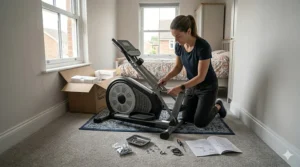
- Assembly requires two people (machine weighs 57.6kg boxed)
Perfect for: Families wanting one quality machine suitable for multiple users and fitness levels.
7. XS Sports 2-in-1: Ultra-Budget Option
Price: £90-£130 | Flywheel: 4kg | Stride: 11″ (28cm)
For those absolutely needing to stay under £150, the XS Sports 2-in-1 offers basic cross training functionality without complete rubbish quality. This budget model includes an unusual feature – an attachable seat, converting it into a recumbent-style exercise bike for variation.
Eight levels of magnetic resistance provide manual adjustment via a tension knob. The simple LCD display shows time, distance, speed, and calories. Large anti-slip foot platforms accommodate various shoe sizes, whilst floor stabilisers allow use on uneven ground or carpets. Transport wheels enable easy repositioning after workouts.
Be realistic about expectations here. The lightweight 4kg flywheel and ultra-short 11″ stride won’t deliver premium smoothness. However, for light cardiovascular exercise, gentle rehabilitation, or elderly users wanting low-impact movement, it serves its purpose adequately.
What UK buyers say: “Perfect for my mum who’s 72 and wants gentle exercise. The seat option is brilliant for her – she alternates between sitting and standing,” explains a Glasgow buyer who purchased it for their parent.
✅ Pros:
- Remarkably affordable (under £130)
- 2-in-1 functionality (standing/seated use)
- Compact and easily moveable
❌ Cons:
- Very short 11″ stride (restrictive for most adults)
- Light flywheel creates less smooth motion
- Maximum 100kg user weight limit
Perfect for: Elderly users, light rehabilitation work, or absolute emergency budget situations.
How to Choose Elliptical for Home Gym: The Essential Decision Framework
Selecting your perfect cross trainer needn’t be complicated. Follow this systematic approach to narrow down thousands of options into your ideal match.
Step 1: Establish Your Realistic Budget
UK elliptical prices span £90 to £3,000+. Here’s what each bracket typically delivers:
Under £200: Basic functionality, lighter flywheels (4-6kg), shorter strides, manual or limited resistance levels. Suitable for occasional light use.
£200-£500: Sweet spot for home users. Decent flyweels (6-8kg), electromagnetic resistance, basic programmes, acceptable build quality.
£500-£1,000: Premium home equipment. Heavy flywheels (10-15kg), extensive programmes, better warranties, app connectivity, superior smoothness.
£1,000-£2,500: Commercial-grade features. Adjustable strides, incline/decline, touchscreens, subscription workout platforms, exceptional durability.
Purchase decision criteria should prioritise long-term value over initial savings. A £400 machine lasting 5+ years represents better value than a £150 model requiring replacement after 18 months.
Step 2: Measure Your Available Space
Ellipticals demand more room than you’d expect. Measure twice, purchase once! Consider:
Floor space: Most require 130-160cm length × 60-80cm width. Add 30cm clearance all around for safe mounting/dismounting.
Ceiling height: Your head height plus 50-60cm minimum. Upstairs rooms with sloped ceilings require careful assessment.
Doorway access: Can you actually get it into the room? Some models require complete assembly inside the destination room. Check delivery box dimensions against doorways, stairwells, and tight corners.
Storage: Non-foldable models (most decent ones) become permanent room fixtures. Can you live with that?
Step 3: Match Stride Length to User Height
This critical specification directly impacts comfort and workout effectiveness. Too short feels cramped and unnatural; excessive length wastes money on features you won’t utilise.
Under 5’3″: 12-14″ stride adequate
5’3″-5’9″: 16-18″ stride recommended
5’10”-6’2″: 18-20″ stride minimum
Over 6’2″: 20″+ stride or adjustable models essential
If multiple family members will use it, base stride length on the tallest regular user. Taller individuals using short-stride machines risk knee discomfort and reduced workout efficiency.
Step 4: Prioritise What Features Matter Most
Essential vs optional features clarity prevents overspending on marketing gimmicks whilst ensuring you don’t miss genuinely valuable capabilities.
Genuinely Essential Features:
- Electromagnetic resistance (quieter, smoother than mechanical)
- Minimum 8 resistance levels (preferably 12-16+)
- Heart rate monitoring (pulse sensors or Bluetooth chest strap compatibility)
- Basic metrics display (time, distance, calories, resistance level)
- Sturdy frame supporting your weight + 20kg safety margin
- Transport wheels for repositioning
Nice-to-Have Features:
- Pre-programmed workouts (adds variety, especially for beginners)
- Bluetooth/app connectivity (Kinomap, Zwift, etc.)
- Tablet holder for entertainment
- Water bottle holder
- Multiple grip positions on handlebars
Premium Features (Worth It for Serious Users):
- Touchscreen displays
- Adjustable stride length
- Incline/decline capability
- Interactive subscription platforms (iFIT, JRNY)
- Commercial-grade build quality
According to the British Heart Foundation, low-intensity aerobic exercises like cross training provide excellent cardiovascular benefits when performed regularly, making features that encourage consistent use (like app connectivity and varied programmes) particularly valuable for long term ownership considerations.
Step 5: Research Brand Reputation and Warranties
Brand matters less than warranty quality and UK customer service responsiveness. Excellent brands with British presence include:
JTX Fitness: Outstanding UK support, generous warranties, responsive engineers
NordicTrack: Established global brand, decent UK service network
Reebok/Bowflex: Recognised names, reliable quality
Life Fitness: Commercial-grade excellence (expensive)
JLL Fitness: Budget specialist, surprisingly reliable
Warranty Red Flags:
- Frame warranty under 2 years (suggests cheap construction)
- No in-home repair option (you’ll struggle moving 60kg machines)
- Vague warranty terms or difficult claims processes
- Limited UK service coverage
Step 6: Read Real UK Customer Reviews
Amazon.co.uk reviews prove invaluable, but read critically:
Green Flags in Reviews:
- Specific details about assembly, usage, and longevity
- Photos/videos of the product in UK homes
- Updates after 3-6+ months of ownership
- Balanced feedback (both pros and cons)
Red Flags:
- Generic praise lacking specifics
- Suspiciously high concentration of 5-stars
- No mention of assembly difficulty
- Absence of long-term usage reports
Understanding Flywheel Weight: Why It Matters for Smooth Motion
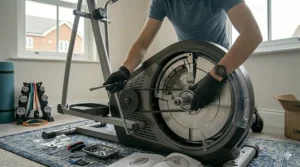
The flywheel represents the heart of your elliptical’s performance. This heavy wheel creates momentum, smoothing out the pedalling motion and providing that premium “gym quality” feel.
Budget Range (4-6kg): Noticeable resistance changes, slight choppiness at lower resistance levels. Adequate for gentle exercise.
Mid-Range (7-10kg): Smooth transitions, comfortable motion across all resistance levels. Excellent for home use.
Premium (10-15kg+): Silky smooth, commercial-gym quality. Imperceptible resistance transitions.
Heavier doesn’t automatically mean better for everyone. If you primarily use low-resistance settings for gentle cardio, a 7kg flywheel suffices. Serious athletes pushing high-resistance intervals benefit tremendously from 12kg+ flywheels’ superior smoothness.
Electromagnetic vs Magnetic Resistance: What’s the Difference?
Both systems use magnetic fields to create resistance without physical contact (meaning quiet operation and minimal maintenance), but electromagnetic versions offer significant advantages:
Standard Magnetic Resistance:
- Manual knob adjustment
- Typically 8-12 discrete levels
- Good for basic needs
- Budget-friendly
Electromagnetic Resistance:
- Digital button/touchscreen control
- Usually 16-32 finely graduated levels
- Integrates with workout programmes (auto-resistance adjustment)
- App connectivity possible
- Smoother transitions between levels
- Premium feature
For budget-conscious buyers, magnetic suffices. If considering £400+ models, electromagnetic justifies the extra cost through superior user experience.
Essential Maintenance Tips for Long-Term Ownership Considerations
Proper care extends your elliptical’s lifespan significantly:
Weekly Maintenance
- Wipe down frame and pedals with damp cloth
- Check for loose bolts (tighten if needed)
- Vacuum beneath machine (dust accumulates in moving parts)
Monthly Maintenance
- Inspect pedal straps/grips for wear
- Clean display screen with microfibre cloth
- Check resistance adjustment still functions smoothly
Quarterly Maintenance
- Tighten all bolts and connections thoroughly
- Inspect drive belt for wear (if accessible)
- Lubricate moving joints if manufacturer recommends (many modern electromagnetic models require zero lubrication)
Annual Maintenance
- Professional service for premium models
- Replace worn grips/pedals
- Check warranty covers parts replacement
Never:
- Use oil-based cleaners (damages plastic components)
- Allow sweat to pool on frame (causes corrosion)
- Store in damp environments (rust risk)
- Exceed maximum user weight specifications
Space-Saving Solutions for Compact UK Homes
British homes rarely offer dedicated gym rooms. Here’s how to integrate cross trainers into limited space:
Bedroom Integration: Choose models under 140cm length. Position against wall with minimal clearance one side (you only mount from front). Use decorative screen or curtain to “hide” when not exercising.
Living Room Placement: Opt for attractive designs (Technogym Cross Personal offers mirror-finish aesthetics). Position near window for natural light during workouts. Ensure TV remains visible for entertainment.
Conservatory/Garden Room: Ideal spaces often overlooked. Ensure adequate ventilation and avoid extreme temperature fluctuations.
Garage Conversion: Excellent option if insulated. Protect machine from moisture and dust with breathable cover. Ensure adequate heating for winter use.
Multi-Purpose Rooms: Compact models like Bowflex Max Trainer M9 or JTX Strider-X8 occupy minimal floor space whilst delivering full workouts.
Comparing Cross Trainers to Alternative Cardio Equipment
Understanding how ellipticals stack against alternatives helps confirm your choice:
Elliptical vs Treadmill
Elliptical Advantages:
- Dramatically lower joint impact
- Full-body workout (arms engaged)
- Generally quieter operation
- Safer (no risk of falling off)
Treadmill Advantages:
- More natural running motion
- Better preparation for outdoor running/events
- Typically burns slightly more calories at equivalent intensity
Verdict: Choose elliptical if joint health concerns exist, you want full-body engagement, or noise reduction matters.
Elliptical vs Exercise Bike
Elliptical Advantages:
- Standing position engages core muscles
- Upper body involvement
- More muscles worked simultaneously
- Better posture development
Exercise Bike Advantages:
- More compact footprint
- Often cheaper for equivalent quality
- Easier to read/watch screen while exercising
- Better for specific cycling training
Verdict: Elliptical delivers superior calorie burn and full-body conditioning; bike suits those with balance issues or preferring seated exercise.
Elliptical vs Rowing Machine
Elliptical Advantages:
- Simpler learning curve
- Lower back strain risk
- Continuous smooth motion
- Quieter operation
Rowing Machine Advantages:
- Phenomenal full-body workout
- Superior calorie burn potential
- Often foldable/storable
- Better core strengthening
Verdict: Both excellent choices. Rowing demands better technique; elliptical offers gentler, more accessible full-body cardio.
Benefits vs Traditional Alternatives: Why Ellipticals Win for Joint Health
| Factor | Elliptical | Running (Outdoor/Treadmill) | Cycling | Rowing |
|---|---|---|---|---|
| Joint Impact | Very Low | High | Very Low | Low |
| Calorie Burn | High (600-800/hour) | Very High (700-1000/hour) | Moderate (400-600/hour) | Very High (600-900/hour) |
| Upper Body Engagement | Yes (moving handles) | No | No | Excellent |
| Learning Curve | Easy | Easy | Easy | Moderate |
| Weather Dependent | No | Yes (outdoor) | Yes (outdoor) | No |
| UK Winter Suitability | Excellent | Poor (outdoor) | Poor (outdoor) | Excellent |
Common Mistakes When Purchasing Cross Trainers
Avoid these frequent errors that cost UK buyers thousands annually:
Mistake #1: Buying Too Small for Growth
“I’ll just use it for gentle exercise” often evolves into serious training after fitness improves. That budget £150 model becomes inadequate within months. Purchase with room for progression.
Mistake #2: Ignoring Stride Length
“It’s adjustable resistance – that’s what matters!” Wrong. Incorrect stride length causes knee discomfort, reduces effectiveness, and makes workouts unpleasant. Prioritise appropriate stride over fancy features.
Mistake #3: Overlooking Assembly Complexity
“How hard can it be?” Very hard, actually. Budget 2-4 hours for assembly. Some models require professional installation. Factor this into total cost and schedule.
Mistake #4: Skipping In-Person Testing
Online-only purchases risk disappointment. If possible, test similar models at local gyms or fitness equipment showrooms before committing. Motion feel varies dramatically between designs.
Mistake #5: Focusing Exclusively on Price
Cheapest rarely equals best value. Calculate cost-per-year over realistic ownership period. A £400 machine lasting 5 years (£80/year) beats a £150 model requiring replacement after 2 years (£75/year) whilst delivering superior experience.
Frequently Asked Questions About Elliptical Buying Guide
❓ What is the ideal flywheel weight for home elliptical use?
❓ How much space do I need for a cross trainer in a UK home?
❓ Are budget ellipticals under £300 worth buying?
❓ Do elliptical cross trainers actually help with weight loss?
❓ What's the difference between front-drive and rear-drive ellipticals?
Price Range & Value Analysis: Finding Your Sweet Spot
Understanding the true cost-benefit relationship helps avoid overspending or false economy:
| Price Band | Typical Features | Best Use Case | Expected Lifespan |
|---|---|---|---|
| £90-£200 | Manual/basic magnetic resistance, 4-6kg flywheel, LCD display | Occasional light use, elderly users, rehabilitation | 1-3 years |
| £200-£400 | Electromagnetic resistance, 6-8kg flywheel, basic programmes | Regular moderate use, beginners, single users | 3-5 years |
| £400-£800 | Premium electromagnetic, 10-12kg flywheel, app connectivity, extensive programmes | Daily use, families, fitness enthusiasts | 5-8 years |
| £800-£1,500 | Commercial-grade components, 12-15kg flywheel, touchscreens, subscriptions | Serious athletes, intensive training | 8-12 years |
| £1,500+ | Adjustable stride, incline/decline, premium subscriptions, exceptional build | Elite performance, unlimited budget | 10-15+ years |
Value Sweet Spot for Most UK Buyers: £400-£600 delivers exceptional quality without premium pricing. Models like JTX Strider-X7 or NordicTrack mid-range options provide features satisfying 95% of home users’ needs.
Conclusion: Making Your Final Decision with Confidence
Choosing the right elliptical buying guide ultimately depends on honest self-assessment. Ask yourself these final questions:
How often will I genuinely use it? Daily? Three times weekly? Occasionally? Answer truthfully, not optimistically. Purchase quality matching realistic usage.
Who else will use it? If multiple family members, invest in heavier flywheels, wider stride ranges, and higher maximum user weights.
What’s my genuine budget? Include delivery, assembly, and any subscription costs. A £1,500 machine requiring £30/month subscriptions costs £1,860 in year one.
Do I have space commitment? Non-foldable models become permanent fixtures. Ensure family accepts this before purchasing.
What features will I actually use? Fancy touchscreens and app connectivity are brilliant – if you’ll genuinely utilise them. Otherwise, they’re wasted money.
The British market offers exceptional elliptical choices across all price points. From the ultra-budget XS Sports 2-in-1 at under £130 through to the premium NordicTrack X16i approaching £2,300, there’s genuinely a perfect match for every UK home and budget.
My personal recommendation for most readers? The JTX Strider-X7 at £380-£450 delivers unbeatable value. Its 12.5kg flywheel, 16 resistance levels, comprehensive programmes, and outstanding 5-year warranty make it the sweet-spot choice for families and individuals alike. For space-conscious buyers, the JTX Strider-X8 sacrifices nothing in quality whilst occupying minimal floor space.
Remember – the best elliptical is the one you’ll actually use. Choose wisely, stay consistent, and enjoy the journey towards improved fitness and health.
✨ Don’t Miss These Exclusive Deals!
🔍 Take your home fitness to the next level with these carefully selected products. Click on any highlighted item to check current pricing and availability on Amazon.co.uk. These tools will help you create authentic cardiovascular improvements your GP will notice!
Recommended for You
- Is £800 Elliptical Worth It Over £400? 7 Shocking Truths (2026)
- Front Drive vs Rear Drive Elliptical: 7 Best UK Models (2026)
- 7 Best 2 in 1 Elliptical Bike Combinations UK 2026
Disclaimer: This article contains affiliate links. If you purchase products through these links, we may earn a small commission at no additional cost to you. Prices shown are approximate and may vary. All product information was accurate as of April 2026. We recommend checking current prices and specifications on Amazon.co.uk before purchasing.
✨ Found this helpful? Share it with your mates! 💬🤗
