In This Article
There’s a particular kind of fitness equipment frustration that’s uniquely British. You’ve squeezed a cross trainer into the corner of your spare bedroom, narrowly avoiding the ironing board, and you’re ready to go. But then you’re stuck cycling through someone else’s pre-set programmes — a punishing hill climb when you only wanted a gentle warm-up, or a barely-there resistance level that offers all the challenge of walking to the kitchen. Sound familiar?
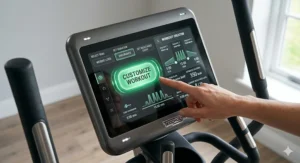
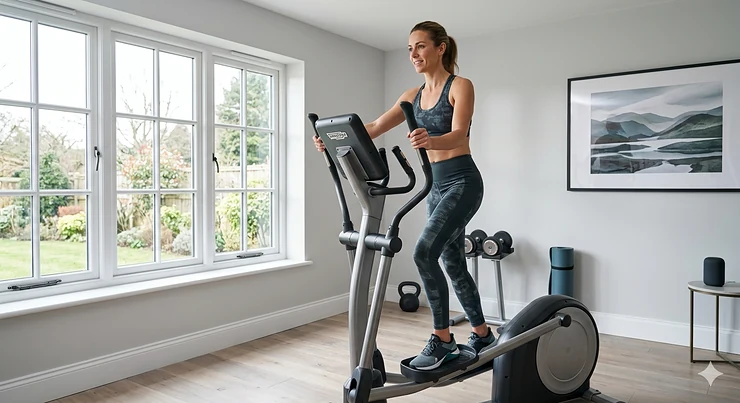
That’s precisely where a custom workout cross trainer changes the game entirely. Rather than adapting yourself to your machine, these trainers adapt to you — your fitness goals, your pace, your current ability, your schedule. Whether you’re a busy mum in Manchester trying to squeeze in 20 minutes before the school run, a returning runner in Leeds easing back from injury, or a keen fitness enthusiast in Edinburgh chasing serious cardiovascular gains, the right custom workout cross trainer can be calibrated to match exactly where you are and where you want to go.
Simply put: a custom workout cross trainer is an elliptical machine that allows users to create, save, and repeat their own personalised resistance and intensity profiles, rather than being limited to factory-programmed routines. These machines sit at the intersection of gym-grade flexibility and home-friendly convenience — and in 2026, the best ones have become genuinely impressive pieces of kit.
In this guide, we’ve researched and analysed seven of the best models available on Amazon.co.uk right now. We’ve gone beyond the spec sheets, talked real-world performance, and matched each machine to a specific type of UK buyer. Read on.
Quick Comparison: Best Custom Workout Cross Trainers at a Glance
| Model | Custom Programmes | Resistance Levels | Flywheel | Stride Length | Best For | Price Range |
|---|---|---|---|---|---|---|
| JTX Strider-X7 | 4 custom + 21 preset | 16 | 12.5kg | 40cm | Budget-conscious home users | £300–£400 |
| JTX Tri-Fit | Custom + 12 preset | 16 | 17kg | 40–51cm adjustable | Versatile family use | £800–£950 |
| Reebok ZR8 | Programmable console | 32 | 9kg | 38cm | Mid-range beginners | £250–£350 |
| THERUN 3-in-1 Climber | Manual resistance | 16 | 8kg | Standard | Small spaces, variety seekers | £200–£300 |
| NordicTrack FS14i | iFit + user profiles | 26 | — | Freestride variable | Tech-forward athletes | £1,400–£1,800 |
| ProForm Carbon EL | iFit + manual mode | Standard | 7kg | 48cm adjustable | iFit subscribers | £600–£800 |
| JLL CT200 | Manual resistance | 8 | ~10kg equivalent | Standard | Tight budgets, beginners | £150–£200 |
The comparison above tells an interesting story. The JTX range dominates mid-to-premium territory with real, meaningful customisation baked into the hardware — no subscription required. The NordicTrack FS14i is genuinely exceptional, but at nearly five times the price of the JLL CT200, you need to be certain you’ll use every feature. Budget buyers should note that fewer resistance levels means a lower ceiling on challenge; what feels demanding in week one might feel easy in month three.
✨ Don’t Miss These Exclusive Deals!
🔍 Take your custom workout cross trainer journey to the next level with these carefully selected products. Click on any highlighted item to check current pricing and availability on Amazon.co.uk. These picks will help you find exactly what you need!
💬 Just one click — help others make better buying decisions too! 😊
Top 7 Custom Workout Cross Trainers: Expert Analysis
1. JTX Strider-X7 Home Cross Trainer
The JTX Strider-X7 is what happens when a British fitness brand decides to take compact home training seriously. It doesn’t shout about itself — and it doesn’t need to.
At its core, the Strider-X7 offers 21 pre-set training programmes alongside 4 fully customisable “design your own” programmes — a feature that’s genuinely rare at this price point. The 12.5kg flywheel provides sufficient inertia for a smooth, consistent stride even at lower resistance levels, and the 16 levels of electromagnetic resistance are genuinely distinct from one another. You can feel the difference when you nudge the dial. That matters more than you’d think.
The 40cm stride length is comfortable for users up to about 5’9″ (175cm) — taller users may find it slightly cramped. For a typical semi-detached or terraced house, the footprint is manageable, and the machine is stable enough that it won’t rattle the ceiling of your downstairs neighbour when you’re pushing harder intervals. The console is Bluetooth-connected for use with the JTX app, letting you log and revisit your custom programmes digitally.
UK buyers specifically tend to appreciate the two-year in-home repair warranty — no arranging couriers for a 40kg machine; an engineer comes to you. Several UK reviewers on Amazon noted that JTX’s customer service team “actually picked up the phone,” which in the home fitness world is practically a five-star feature in its own right.
✅ Pros:
- 4 programmable custom workout slots — rare at this price
- Quiet electromagnetic resistance; won’t disturb housemates
- UK-based customer service with in-home warranty
❌ Cons:
- Stride length may feel restrictive for users over 6ft
- LCD console is functional rather than flashy
Best for: Budget-to-mid-range buyers who want genuine customisation without a subscription. Price range: £300–£400. Solid value by any measure.
2. JTX Tri-Fit Incline Cross Trainer
If the Strider-X7 is the sensible saloon, the JTX Tri-Fit is the estate version: more space, more grunt, more ways to get where you’re going.
The headline feature here is the combination of adjustable stride length (40–51cm) and three levels of manual incline — and crucially, you can adjust them independently. That’s a design decision that sounds minor but makes an enormous practical difference. Want a long, flat stride for a recovery day? Done. Short stride, steep incline, maximum resistance for a lung-burning 20 minutes? That’s covered too. The 17kg flywheel gives a genuinely gym-grade smoothness to the motion — noticeably better than most home machines below £1,000 — and the custom programme feature alongside 12 preset routines means serious users can map out training weeks rather than just individual sessions.
At 135kg max user weight, it handles heavier users without drama. Bluetooth connectivity links to the iConsole app, which — unlike iFit — is free. No monthly subscription standing between you and your own training data.
UK reviewers frequently mention that assembly, while involved, is well-documented, and the lifetime frame warranty is worth factoring into the value calculation. It’s the kind of machine you buy once and keep for a decade.
✅ Pros:
- Adjustable stride and incline — rare combination at this price
- 17kg flywheel for genuinely smooth, gym-quality motion
- Free app, no subscription required
❌ Cons:
- Expensive relative to entry-level options
- Bulkier footprint — measure your space carefully before ordering
Best for: Families wanting one machine to suit multiple users and fitness levels. Price range: £800–£950. Worth every pound if the space allows.
3. Reebok ZR8 Elliptical Cross Trainer
Reebok doesn’t need much introduction on British high streets — or British living rooms, for that matter — and the ZR8 has been one of the most consistently recommended mid-range home cross trainers in the UK for several years. There’s a reason it keeps appearing on “best of” lists: it earns its place.
The ZR8’s party piece is its 32 electronically controlled resistance levels — the most in its price bracket and more than some machines costing twice as much. For a custom workout cross trainer, this is rather important: those extra resistance increments allow genuinely fine-tuned personalised sessions. The programmable console lets you set your own targets across time, distance, and calories, and the 12 pre-set programmes cover enough variety to keep training fresh across several months.
The 9kg flywheel is adequate rather than exceptional — you’ll notice the motion is less silky than the heavier JTX flywheels — but at this price, it’s a fair trade-off. The 38cm stride length suits most average-height users, though the same caveat applies: if you’re significantly over 6ft, look at machines with 46cm+ stride lengths. The backlit LCD monitor is clear and easy to navigate mid-workout.
UK buyers will find the Reebok ZR8 available on Amazon.co.uk with Prime delivery in many postcodes. It’s a machine that rewards consistent use — and frankly, for under £350, it’s difficult to criticise with any conviction.
✅ Pros:
- 32 resistance levels — exceptional for the price
- Programmable console for personalised targets
- Trusted British-familiar brand with solid warranty
❌ Cons:
- 9kg flywheel feels slightly underpowered at higher resistance levels
- Stride length limiting for taller users
Best for: Budget-conscious beginners who want room to grow. Price range: £250–£350. A benchmark machine for good reason.
4. THERUN 3-in-1 Cardio Climber Elliptical Machine
The THERUN 3-in-1 occupies an interesting niche — part elliptical, part stair climber, part cardio machine — and for buyers in compact UK homes, that versatility is genuinely valuable. Why buy three machines when one does the job?
The 16-level silent magnetic resistance system is the headline spec here, and it lives up to the “silent” claim rather admirably. In a mid-terrace or flat where the walls are, shall we say, conversational, the ability to train without generating industrial-level noise is not a trivial benefit. The 8kg flywheel is on the lighter side, which means very experienced athletes may find the upper resistance ceiling a touch soft — but for the vast majority of home users, the range is more than sufficient.
Customisation on the THERUN is manual rather than pre-programmed: you dial in resistance and effort directly, which suits self-directed trainers who know what they want without needing a console to manage it. The LCD monitor tracks all the key metrics — time, calories, pulse, step count — and the device holder keeps your phone or tablet secure if you prefer Netflix to silence during a session.
UK buyers note that delivery is typically fast (Prime-eligible), and the assembly is refreshingly manageable — a quality that shouldn’t be underestimated for solo self-assembly.
✅ Pros:
- 3-in-1 versatility — excellent for varied, user-customisable sessions
- Near-silent operation; ideal for flats and terraced houses
- Compact footprint for UK living spaces
❌ Cons:
- No pre-set programmes — fully self-directed
- 8kg flywheel may feel limiting for advanced users
Best for: Small-space dwellers who want workout variety without complex programming. Price range: £200–£300. A clever solution to a very British problem.
5. NordicTrack FS14i FreeStride Trainer
The NordicTrack FS14i is simply one of the most sophisticated home cross trainers available in the UK. It’s also, if we’re being forthright, one of the most expensive. Whether that price is justified depends entirely on how seriously you take your training.
The defining feature is the FreeStride mechanism: an adaptive stride that automatically adjusts from a short elliptical motion to a full walking stride to a long running stride — all within the same session, all according to your natural movement. Paired with 26 resistance levels and iFit’s multi-user profile system (up to five individual accounts on a family plan), you get a genuinely personalised workout experience that adapts not just to you, but to everyone in the household. Each user’s preferences, history, and progress are stored separately. iFit’s trainer-led sessions automatically adjust the machine’s resistance in real time — the console doesn’t suggest effort levels; it enforces them.
The iFit subscription is an ongoing cost worth factoring in (around £15/month individually or around £39/month for the family plan). Without it, the machine operates in manual mode — still excellent, but you’re not fully utilising what you’ve paid for. For families already subscribed, however, this represents outstanding value per user.
✅ Pros:
- Multi-user profiles with full personalised history and adaptive programmes
- FreeStride mechanism offers unmatched workout variety
- Commercial-grade build quality for home use
❌ Cons:
- Premium price requires genuine commitment to justify
- iFit subscription is an additional recurring cost in GBP
Best for: Serious athletes and multi-person households who will genuinely use every feature. Price range: £1,400–£1,800. A significant investment — but a remarkable machine.
6. ProForm Carbon EL Elliptical Cross Trainer
ProForm sits in the same stable as NordicTrack (both are iFit companies), and the Carbon EL represents the more accessible entry point into that ecosystem. What you give up in build mass compared to the FS14i, you gain in value: this is a genuinely capable machine at a fraction of the flagship price.
The standout practical feature is the 19-inch (48cm) adjustable stride length — generous enough to feel natural for users up to and beyond 6ft, and meaningful for creating varied personalised workout cross trainer sessions. The iFit integration brings the same trainer-led, auto-adjusting experience as the NordicTrack range, and the one-year free iFit subscription included at purchase is worth factoring into the overall cost calculation (it represents meaningful savings). Manual operation without iFit is entirely functional; the LCD console with dual speakers is clear and responsive.
The 7kg flywheel is the weakest link — lighter than almost every JTX competitor and perceptible at higher resistance levels — and the 125kg max user weight is lower than you might expect for a machine at this price. Both are worth knowing before you buy.
For UK buyers considering iFit, the ProForm Carbon EL represents a sensible, cost-conscious path into personalised digital training.
✅ Pros:
- 48cm adjustable stride — accommodates taller users well
- iFit included free for one year — significant added value
- Compact enough for most UK spare rooms
❌ Cons:
- 7kg flywheel is notably lighter than comparably priced competitors
- 125kg user weight limit — lower than expected for the price
Best for: iFit enthusiasts and taller users wanting personalised sessions without NordicTrack prices. Price range: £600–£800. Good value when iFit is part of the plan.
7. JLL CT200 Home Elliptical Cross Trainer
Not everyone needs a machine with the features of a commercial gym. Some people need something sensible, reliable, and affordable — the fitness equivalent of a dependable hatchback that starts first time, every time. Enter the JLL CT200.
The CT200 runs on eight levels of manual magnetic resistance, which is honest rather than impressive — but for beginners, or for those using a cross trainer as a supplementary rather than primary form of exercise, eight levels is genuinely sufficient. The advanced momentum mechanism is marketed as delivering the feel of a 10kg flywheel, and while that claim deserves a grain of salt, the motion is smoother than you might expect at this price. The console tracks time, calories, distance, speed, and heart rate — everything you actually need.
Customisation here is entirely self-directed: you control resistance manually, there are no custom programme slots, and the machine doesn’t store your history. Think of it as a blank canvas rather than a structured framework. For many users, particularly those just starting out, that simplicity is a feature rather than a limitation.
UK reviews consistently praise the build quality relative to the price point, and the machine is compact enough for the typical British spare room or corner of a kitchen-diner.
✅ Pros:
- Excellent value — one of the best-built budget cross trainers on Amazon.co.uk
- Compact, well-suited to smaller UK homes
- Simple to assemble; low learning curve
❌ Cons:
- No stored custom programme slots
- Only 8 resistance levels — will feel limiting as fitness improves
Best for: Beginners, casual users, or those on genuinely tight budgets. Price range: £150–£200. Do not underestimate what it delivers for the money.
How to Use Your Custom Workout Cross Trainer Effectively: A Practical UK Guide
Buying the machine is the easy part. Using it intelligently over the long term is where most people either thrive or quietly start using it as an expensive clothes horse. Here’s how to make sure yours stays a training tool.
The first two weeks are everything. Start below your perceived ability. It sounds counterintuitive, but most home cross trainers are abandoned within six weeks because people launch themselves at maximum resistance on day one, hate every minute, and never return. Use week one to learn the machine’s resistance curve — how the levels actually feel, not just what the numbers say. Build a baseline.
Programme your custom sessions thoughtfully. If your machine offers custom programme slots, plan them around specific goals rather than random intensity. A useful UK home-user framework: one endurance session (lower resistance, 30–40 minutes), one interval session (alternating resistance levels every 2–3 minutes), and one active recovery session (low resistance, focus on cadence). That’s three distinct sessions covering most fitness objectives.
Wet weather maintenance matters more than you think. If your cross trainer lives in a garage, outhouse, or conservatory — as many British home gym setups do — humidity is your enemy. Condensation and damp accelerate wear on the flywheel casing, pedal joints, and console. A breathable machine cover (widely available on Amazon.co.uk for under £20) and occasional application of dry lubricant to the stride mechanism will extend machine life significantly. Check for surface rust on steel components monthly through autumn and winter.
Storage in compact spaces. Most cross trainers don’t fold — plan your space before delivery, not after. Measure the machine’s footprint with pedals at maximum extension; manufacturers often list base dimensions only. A rubber mat underneath (roughly 150 x 70cm for most models) protects floors, reduces vibration, and keeps the machine stable on hard surfaces.
Realistic expectations on calorie data. The calorie figures on cross trainer consoles are theoretical estimates based on body weight inputs — they don’t account for actual metabolic variability. Treat them as relative rather than absolute; they’re useful for comparing session intensity over time, not for precise dietary calculations.
The Custom Workout Cross Trainer for Every UK Buyer: Real-World Scenarios
Three users. Three very different needs. Three quite different right answers.
Scenario 1: The London Commuter, Home Gym in a Flat Sarah works in Canary Wharf, lives in a one-bedroom flat in Stratford, and has approximately 180cm × 80cm of floor space available in her bedroom corner. She wants a cross trainer she can use three to four times a week, needs it to be quiet enough not to anger the downstairs neighbour, and has a budget of around £350. She doesn’t want a subscription.
Right choice: The Reebok ZR8. 32 resistance levels give her plenty of room to progress over months. The programmable console handles her personalised targets. The footprint works. No subscription required. Done.
Scenario 2: The Suburban Family in Birmingham The Patels have a dedicated garage gym, a household of four adults with wildly different fitness levels, and a budget stretching to around £900. They want one machine that everyone can use meaningfully, with different sessions stored for different people.
Right choice: The JTX Tri-Fit. Adjustable stride length means it suits everyone from 5’4″ to 6’2″. The custom programme feature and iConsole app let each family member save their own sessions. The 17kg flywheel handles consistent, multi-user daily use without complaint. Worth every penny spread across four users.
Scenario 3: The Serious Athlete in Edinburgh Marcus runs marathons, has a dedicated training room, and genuinely wants trainer-led adaptive sessions that push him through a structured programme. Budget is secondary to quality and he’s comfortable with a subscription model.
Right choice: The NordicTrack FS14i. The FreeStride mechanism, multi-user iFit profiles, and 26 resistance levels give him the training intelligence to complement his running programme. Edinburgh’s hills feature rather heavily in iFit’s virtual route library — which is, for once, a genuinely useful coincidence.
How to Choose a Custom Workout Cross Trainer in the UK: 7 Key Criteria
Buying a cross trainer is a commitment. Here’s how to avoid the most common mistakes and identify exactly what you need.
1. Define what “custom” actually means to you. True custom workout cross trainers store your personal resistance profiles on the machine. Others simply allow manual resistance adjustment. Know which you want before you look at a single product listing.
2. Count resistance levels — and their spread. A machine with 8 levels and a machine with 32 levels both claim to offer “customisation.” The difference in practical use is enormous. Fewer than 16 levels means you’ll hit the ceiling quickly as your fitness improves. Look for at least 16, ideally more.
3. Flywheel weight correlates directly with motion quality. A heavier flywheel means a smoother, more consistent stride — particularly important at lower resistance levels where lighter flywheels can feel jerky. Under 10kg is budget territory; 12–17kg is mid-range; commercial machines typically run 20kg+.
4. Measure your space — then measure again. UK homes average smaller than North American or continental European equivalents. The machine dimensions listed by manufacturers often exclude pedal extension at maximum stride. Add 30–40cm to both the length and width before deciding whether it fits. According to research published by the UK Government’s English Housing Survey, the average floor area of an English home is around 92m² — which sounds generous until you start placing furniture.
5. Subscription vs. one-off. iFit-compatible machines (NordicTrack, ProForm) are excellent platforms — but the ongoing subscription cost in GBP is real. If you cancel the subscription, you’re left with a manual-mode machine. Factor the total 3-year cost of ownership, not just the purchase price.
6. User weight capacity. Often overlooked until it matters. Most budget cross trainers cap at 100–120kg; mid-range and premium models typically handle 130–165kg. Buy for where you are, not where you want to be.
7. Warranty and UK support. A two-year in-home repair warranty from a UK-based brand (JTX being the standout example here) is worth meaningful money on a machine this size. Avoid brands offering only “return to base” warranties — arranging international courier collection for an 80kg cross trainer is as unpleasant as it sounds.
Custom Workout Cross Trainer vs. Pre-Set Only: What the Spec Sheet Won’t Tell You
There’s a persistent myth in home fitness marketing that more programmes equals more value. It doesn’t. What matters is whether those programmes adapt to you.
A machine with 35 pre-set programmes is less useful for a tailored motion cross trainer experience than one with 10 programmes and four custom slots. Here’s why: pre-set programmes are designed for statistical averages — the “average” fitness level, the “average” stride preference, the “average” recovery time. You are not average. Neither is anyone else.
| Feature | Pre-Set Only | Custom Workout Cross Trainer |
|---|---|---|
| Session variety | Limited to manufacturer’s design | Unlimited based on your goals |
| Long-term progression | Must “graduate” to higher pre-sets | Adjust incrementally on your own terms |
| Multiple users | One-size approach | Each user saves their own profile |
| Fitness test responsiveness | No | Yes — custom sessions adapt to your data |
| Subscription required | Usually not | Depends on model |
| Value for progression | Degrades as fitness improves | Maintains relevance over time |
This is perhaps the most important table in the article. The value proposition of a user customisable cross trainer only becomes clear over a three-to-six-month window. Pre-set machines feel fine in week one; they feel constraining in month four. Custom-programme machines grow with you. That long-term value matters far more than the headline number of included pre-sets.
Common Mistakes When Buying a Custom Workout Cross Trainer in the UK
Every category has its buying pitfalls. Cross trainers have more than most.
Confusing programme count with customisation. Forty pre-set programmes with no custom slots is categorically not the same as six programmes and four editable user profiles. The marketing rarely makes this clear.
Ignoring stride length relative to height. A 38cm (15-inch) stride feels natural for someone 5’6″. For someone 6’1″, it feels like a leisurely shuffle. Always check stride length against your height — and if the listing doesn’t specify, ask the retailer.
Underestimating the subscription trap. Several appealing mid-range cross trainers ship with free app subscriptions for 30–90 days. After that, you’re paying monthly in GBP to access the features that influenced your purchase. Read the small print. Which? has covered subscription fitness products extensively and their guidance on assessing ongoing costs is worth consulting before buying.
Buying US-specced models from grey-market sellers. This is an oddly common problem on Amazon.co.uk. Some listings ship 110V machines designed for North American homes — entirely useless with UK 230V sockets and lacking UKCA marking. Always verify the seller is UK-authorised and confirm UK plug compatibility before purchase.
Skipping the mat. Cross trainers on hard floors (laminate, tiles, wood) will migrate, vibrate, and potentially damage surfaces. A rubber equipment mat under £25 on Amazon.co.uk is arguably the best accessory purchase you can make alongside any cross trainer. Most buyers who review without one and complain about noise or movement would have avoided both problems with this single addition.
Long-Term Cost & Maintenance of Your Cross Trainer in the UK
Let’s talk pounds and pence, because the purchase price is only part of the story.
| Cost Category | Budget Range (GBP) |
|---|---|
| Machine purchase | £150–£1,800 |
| Rubber floor mat | £15–£30 |
| Machine cover (for garage/conservatory) | £15–£25 |
| iFit/app subscription (annual, if applicable) | £149–£396 |
| Drive belt replacement (approx. every 3–5 years) | £10–£30 |
| Pedal hardware/greasing kit | £5–£15 |
| In-home service call (outside warranty) | £50–£120 |
The pattern is fairly clear. Machines without app subscriptions cost less over a three-to-five-year ownership window, even if the initial price is higher. A JTX Strider-X7 at around £350 with a free app and in-home warranty represents lower total cost of ownership over three years than a £600 iFit machine with a £149/year subscription.
Drive belts and flywheel bearings are the most common maintenance items on home cross trainers. Replacement belts are widely available on Amazon.co.uk for most major brands and are typically a 30-minute self-installation job. If your cross trainer suddenly sounds like a damp wellington boot in a tumble dryer, the drive belt is usually the culprit. NHS guidance on physical activity recommends 150 minutes of moderate aerobic activity weekly — which on a well-maintained home cross trainer, is entirely achievable year-round, British weather notwithstanding.
✨ Don’t Miss These Exclusive Deals!
🔍 Ready to invest in your fitness? Click any highlighted product above to check current pricing and availability on Amazon.co.uk. Prime members enjoy next-day delivery on most of these picks — so you could be training by tomorrow.
FAQ: Custom Workout Cross Trainers in the UK
❓ What is a custom workout cross trainer and how does it differ from a standard model?
❓ Are custom workout cross trainers available with free delivery on Amazon.co.uk?
❓ Do I need a subscription to use a custom workout cross trainer in the UK?
❓ What is the best custom workout cross trainer for a small UK flat or terraced house?
❓ Are cross trainers available in the UK with UKCA marking and UK plug compatibility?
Conclusion: The Right Custom Workout Cross Trainer Is a Long-Term Training Partner
After everything, here’s the honest summary.
A custom workout cross trainer is only as good as the commitment it enables. The best machines on this list — the JTX Strider-X7 for value, the JTX Tri-Fit for families, the NordicTrack FS14i for serious athletes — share one quality: they grow with you. They don’t lock you into someone else’s version of a workout. They wait to be told what your version looks like.
In a country where a gym membership in London costs an average of £40–60 per month and half of gym-goers stop attending within six weeks of joining (according to research cited by the BBC), the case for a well-chosen home cross trainer is compelling. At under £400 for the Strider-X7, you’ve paid for six months of gym membership — and you get to keep the machine.
Buy something you’ll actually use. Match it to your space, your height, your goals, and your patience for subscription fees. And for goodness’ sake, buy the rubber mat.
✨ Don’t Miss These Exclusive Deals!
🔍 Ready to find your perfect custom workout cross trainer? Click through to Amazon.co.uk to check the latest pricing, availability, and real UK customer reviews on every model featured in this guide.
Recommended for You
- Best Adjustable Incline Cross Trainer UK 2026: 7 Top Picks
- Best Fully Adjustable Cross Trainer UK 2026: Top 7 Picks
- Best Adaptive Stride Trainer UK 2026: 7 Top Picks Reviewed
Disclaimer: This article contains affiliate links. As an Amazon Associate, I earn from qualifying purchases. If you purchase products through these links, we may earn a small commission at no additional cost to you.
✨ Found this helpful? Share it with your mates! 💬🤗
