In This Article
There’s a persistent myth in British fitness culture that decent cross trainers cost a fortune. Walk into any high street sports shop and you’ll understand why — glossy shelves lined with £180 trainers, each one promising to revolutionise your squat form and possibly your entire personality. The reality? You don’t need to hand over a month’s worth of groceries for a pair of shoes that can handle a gym session.
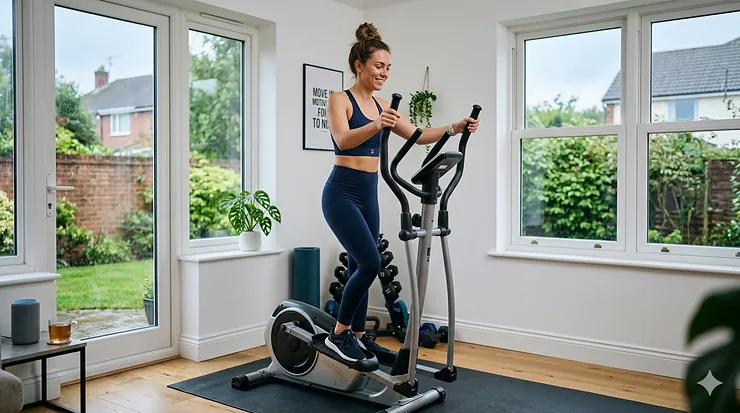
A cheap cross trainer, done right, is a versatile bit of kit that earns its keep across weightlifting, HIIT, circuit training, box jumps, and everything in between. Think of it as the Swiss Army knife of gym footwear — not specialised enough to run a marathon, too focused to wear casually on the high street, but absolutely perfect for the sweaty, varied, slightly chaotic reality of most people’s workouts. In 2026, the budget end of the cross-trainer market has genuinely never been better.
For this guide, I’ve researched every product on Amazon.co.uk, scrutinised UK customer reviews, and applied the kind of practical filter that only matters when you’re actually working out rather than photographing your trainers for Instagram. All seven picks are currently available for British buyers, verified for UK sizing, and priced in a range that doesn’t require a second mortgage.
Whether you’re a gym newcomer with thirty quid to spare on your first proper training shoe, a seasoned lifter who’s decided their current footwear is ageing poorly, or someone who just wants to stop sliding around the studio floor in old running shoes — there’s something here for you.
Quick Comparison: Cheap Cross Trainers UK 2026
| Trainer | Best For | Price Range | Key Feature | Amazon.co.uk |
|---|---|---|---|---|
| Adidas Dropset 3 | Strength & lifting | £60–£90 | HEAT.RDY + dual-density sole | ✅ Available |
| PUMA Fuse 3.0 | Budget all-rounder | £55–£75 | Flat, grippy outsole | ✅ Available |
| Under Armour TriBase Reign 6 | Stability training | £70–£95 | UA TriBase technology | ✅ Available |
| Nike Metcon 9 | CrossFit & HIIT | £90–£130 | Hyperlift plate + dual foam | ✅ Available |
| Reebok Nano X5 | Versatile gym use | £100–£125 | DUALRESPONSE midsole | ✅ Available |
| inov-8 F-Lite 235 V3 | Functional fitness | £80–£110 | Graphene grip outsole | ✅ Available |
| New Balance Minimus TR v2 | Minimalist lifting | £55–£80 | Zero-drop platform | ✅ Available |
The table tells an interesting story if you read between the lines. Notice that the three most affordable options — the PUMA Fuse 3.0, Adidas Dropset 3, and New Balance Minimus TR v2 — are the most lifting-focused, with flatter soles and firmer midsoles that actually suit heavy gym work better than cushioned running shoes repurposed for training. Meanwhile, the Nike Metcon 9 sits at the premium end of “cheap,” but the frequency with which it appears on Amazon.co.uk sale makes it genuinely attainable for under £100 if you shop smartly.
💬 Just one click — help others make better buying decisions too! 😊
✨ Don’t Miss These Exclusive Deals!
🔍 Take your training to the next level with these carefully selected cross trainers. Click on any highlighted item to check current pricing and availability on Amazon.co.uk. These picks will help you find exactly what you need without breaking the bank!
Top 7 Cheap Cross Trainers UK 2026: Expert Analysis
1. Adidas Dropset 3 — The Gym Rat’s Bargain
The Adidas Dropset 3 is, without question, the most underrated value proposition in British gym footwear right now. While everyone’s debating Metcons and Nanos, the Dropset 3 quietly sits on Amazon.co.uk in the £60–£90 range, doing everything a dedicated lifter needs without demanding your undivided financial attention.
The dual-density midsole is the standout feature here — firmer in the heel to keep you stable under a loaded barbell, slightly more forgiving in the forefoot for those moments when the programming calls for some box jumps. The TPU sidewall locks in the midfoot during lateral movements, which matters far more than it sounds when you’re doing lunges and your foot is trying to collapse inward. HEAT.RDY technology in the upper means breathability is genuinely good — relevant for anyone who trains in a warm British gym where the air conditioning is perpetually “being looked at.”
This is the shoe for the serious gym-goer who doesn’t care about brand cachet and cares enormously about their deadlift. Wider than standard fit, so particularly worth noting if you’ve got a broader foot — which, anecdotally, is rather common among UK men who’ve spent years in European lasts. UK reviewers on Amazon.co.uk consistently praise the flat, grippy sole and the quality of materials relative to price.
✅ Excellent lift stability
✅ HEAT.RDY breathability
✅ Wider fit suits UK feet
❌ Limited colour options
❌ Not ideal for distance running
Price range: £60–£90 — outstanding value for dedicated strength work. Check current price on Amazon.co.uk.

2.PUMA Fuse 3.0 — The Honest Budget Pick
If the Adidas Dropset 3 is understated value, the PUMA Fuse 3.0 is almost aggressively honest about what it is: a no-frills, flat-soled, get-the-job-done cross trainer that costs somewhere in the £55–£75 range and refuses to be embarrassed about it. PUMA has quietly been producing the best budget training shoes on the British market for several years running, and the Fuse 3.0 represents the sharpest iteration of that formula yet.
The flat outsole creates a genuinely grounded sensation for heavy lifts — squats, deadlifts, Romanian deadlifts — in a way that high-cushioned running shoes simply cannot replicate. What most buyers overlook is that this “boring” feature is actually premium functionality. Cushioning absorbs force; when lifting, you want force to transfer through your foot into the floor, not disappear into a foam stack. At this price, that understanding of biomechanics is impressive.
The upper breaks in quickly — most UK buyers report it’s comfortable from the first session, which isn’t always true of stiffer lifting shoes. PUMA’s evoKNIT upper offers decent ventilation, which is handy for British gym conditions that range from “pleasantly cool” to “a sauna owned by someone who’s never heard of windows.” The Fuse 3.0 is ideal for the cost-conscious gym member who trains three or four times a week across mixed modalities.
✅ Genuinely budget-friendly
✅ Quick break-in period
✅ Flat sole perfect for lifting
❌ Limited cushioning for cardio
❌ Basic aesthetic
Price range: £55–£75 — the honest answer to the question “what’s the cheapest decent cross trainer?” Check current price on Amazon.co.uk.
3. Under Armour TriBase Reign 6 — The Stability Specialist
Under Armour doesn’t get nearly enough credit in the UK fitness community, where the conversation tends to default to Nike and Adidas. The TriBase Reign 6 is a compelling argument that this oversight is a mistake. Available on Amazon.co.uk in the £70–£95 range, it represents an impressive balance between stability-focused design and the kind of all-round capability most recreational athletes actually need.
The TriBase technology itself is worth understanding rather than just citing: the sole is divided into three points of contact that flex and grip independently, allowing for more natural foot movement during dynamic exercises whilst maintaining the structural integrity needed for heavy compound lifts. In practice, this means box jumps and barbell work can comfortably coexist in the same session, in the same shoe. The UA HOVR cushioning in the midsole is notably responsive — more so than you’d expect at this price — providing what the spec sheet calls “zero gravity feel,” which is marketing-speak for “your ankles won’t hate you after a hard session.”
This is the shoe for the functional fitness enthusiast: someone doing a bit of lifting, some sled work, perhaps a conditioning circuit, with occasional awkward movements that a pure lifting shoe would struggle with. UK Amazon customers regularly highlight the lockdown fit as a particular strength — a slightly less common sentiment for wide-format training shoes, where fit can be inconsistent. Available Prime-eligible for next-day delivery in most UK postcodes.
✅ TriBase technology for natural movement
✅ HOVR cushioning holds up well
✅ Excellent foot lockdown
❌ Runs slightly narrow — size up if in doubt
❌ Less suitable for high-mileage cardio
Price range: £70–£95 — punches above its weight. Check current price on Amazon.co.uk.
4. Nike Metcon 9 — The Aspirational Budget Buy
Let me be upfront: the Nike Metcon 9 sits at the upper end of what most people would call “cheap.” At £90–£130 on Amazon.co.uk depending on colourway and size availability, it’s not exactly pocket change. But here’s the thing — Amazon UK discounts it with a frequency that suggests Nike is perfectly comfortable with it living in this price bracket more often than not. If you can catch it in the £90 range, you’re getting a genuinely premium training shoe at a budget price.
The Metcon 9’s Hyperlift plate is the engineering achievement that makes everything else work. Sitting beneath the heel, it creates a stable, elevated base for squats and Olympic lifting whilst the dual-density foam forefoot keeps things comfortable during running and jumping. UK fitness professionals often describe wearing the Metcon 9 as feeling “nailed to the ground” — meant entirely as a compliment. The lateral rubber coating extends heel-to-toe, protecting against rope climbs and abrasive surfaces that cheaper shoes deteriorate against quickly. The breathable mesh upper, meanwhile, handles warm training environments with considerably more grace than the shoe’s robust aesthetic might suggest.
This is the shoe for the CrossFit enthusiast, the HYROX competitor, or simply the gym regular who wants the shoe everyone in the gym seems to be wearing — at a price that’s actually justifiable. One note for UK buyers: Metcons run narrow. If you’re between sizes or have a wider foot, size up half a size. Most UK Amazon reviews flag this, and it’s worth heeding.
✅ Industry-standard stability
✅ Exceptional rope-climb durability
✅ Versatile across all training modalities
❌ Runs narrow — size up if needed
❌ At full RRP, not the best value
Price range: £90–£130 — worth monitoring on Amazon.co.uk for sale pricing. Check current price on Amazon.co.uk.
5. Reebok Nano X5 — The All-Rounder You Won’t Outgrow
Since 2011, the Reebok Nano series has been the default recommendation for anyone who trains across multiple disciplines and doesn’t want to think too hard about their footwear. The Nano X5 continues that tradition with meaningful upgrades. At £100–£125 on Amazon.co.uk, it sits slightly above the budget tier, but earns that extra spend through a versatility that cheaper, more specialised options genuinely cannot match.
The DUALRESPONSE EVA midsole is the headline improvement over its predecessor: firmer foam in the heel for stability during heavy lifts, more responsive foam in the forefoot for running and plyometrics. These aren’t interchangeable qualities — getting both in the same shoe without compromising either requires careful engineering. The Flexweave upper is both durable and breathable, which matters considerably in damp British conditions where wet kit has a tendency to stay wet for longer than you’d like. The MetaSplit outsole enhances multidirectional grip — genuinely useful during agility drills and lateral movement, less important if you mostly deadlift and go home.
One quirk worth mentioning: the Nano X5 ships with longer laces than typical, leading to what one reviewer memorably described as a “goofy bunny-eared look” if you don’t know what you’re doing with the excess. A small complaint, but rather British in its specificity. UK reviewers on Amazon praise the comfort from day one and the shoe’s ability to handle the varied programming of most commercial gym classes.
✅ Genuinely versatile across all training types
✅ DUALRESPONSE midsole delivers both stability and cushioning
✅ Flexweave upper handles damp conditions well
❌ Premium-adjacent price point
❌ Long laces require attention
Price range: £100–£125 — the most versatile shoe in this list. Check current price on Amazon.co.uk.
6.inov-8 F-Lite 235 V3 — The British Underdog
Here’s one most UK buyers overlook entirely, which is frankly embarrassing given that inov-8 is a British brand — founded in the Lake District, designed with Northern grit, and built for the kind of functional fitness that involves getting on with it rather than admiring yourself in the gym mirror. The F-Lite 235 V3 is available on Amazon.co.uk in the £80–£110 range, and the graphene grip outsole alone justifies every penny.
What graphene means in practice: a sole compound so grippy that rope climbs, box step-ups, and lateral shuffles on a variety of surfaces become noticeably more confident. Regular rubber outsoles can’t replicate this traction, and in a British gym context — where the flooring ranges from decent rubber matting to suspiciously shiny wood — grip matters more than most trainers acknowledge. The 235 in the name refers to the weight in grams, making this one of the lighter cross trainers on this list, which translates directly to less fatigue during long conditioning sessions.
The toe box is wider than Nike’s offerings, making it a natural choice for anyone who’s always found Metcons uncomfortably snug. The 3mm heel-to-toe drop positions it firmly in the minimalist camp — outstanding for deadlifts and Olympic lifting, requiring some adaptation if you’re coming from a heavily cushioned running shoe. UK customers consistently highlight durability as exceptional, with multiple reviewers noting the outsole showing minimal wear after many months of heavy use.
✅ British-made heritage and quality
✅ Graphene grip outsole is genuinely outstanding
✅ Wide toe box suits many UK feet
❌ Minimalist drop requires adaptation
❌ Less cushioning for cardio
Price range: £80–£110 — and supporting a British brand in the process. Check current price on Amazon.co.uk.
7. New Balance Minimus TR v2 — The Beginner’s Best Friend
The New Balance Minimus TR v2 might just be the most sensible shoe on this entire list. Available on Amazon.co.uk in the £55–£80 range, it’s targeted at exactly the kind of person who’s new to gym training, wants to invest sensibly, and has absolutely no desire to spend a hundred pounds on footwear before they’ve worked out whether they actually enjoy squatting. Zero-drop platform. Flexible. Lightweight. Sorted.
The zero-drop construction means your heel and forefoot sit at the same height — a closer approximation of training barefoot than any heeled shoe can offer. For beginners learning movement patterns like squats and deadlifts, this proprioceptive feedback is arguably more beneficial than the stability features of pricier options. Your feet can feel the floor. Your form self-corrects. You learn how the lift is supposed to feel rather than having the shoe compensate for positional errors.
The Vibram outsole provides reliable multi-surface grip — another nod to New Balance’s understanding that gyms are not uniformly surfaced environments. The flexible upper accommodates natural foot spread during exertion, which is particularly useful for those who find traditional trainers restrictive during low, wide movement patterns like sumo deadlifts or wide squats. UK Amazon reviewers are particularly enthusiastic about comfort for everyday gym use, and several note it works well for yoga and Pilates crossover sessions — the kind of fitness versatility that suits the British habit of combining different disciplines rather than committing exclusively to one.
✅ Genuinely affordable entry-level option
✅ Zero-drop excellent for beginner lifters
✅ Vibram outsole for reliable grip
❌ Minimal arch support — not ideal for overpronation
❌ Limited performance at higher intensities
Price range: £55–£80 — the smart first cross trainer. Check current price on Amazon.co.uk.
How to Get the Most From Your Cheap Cross Trainer: A Practical Guide for British Gym-Goers
Buying the right shoe is step one. Step two — which nobody puts in the product description — is understanding how to get the most out of it in the specific conditions of a British gym life.
Break them in gradually. Even the quickest-breaking-in shoes benefit from a week of lighter sessions before you ask them to perform under maximum load. The foam needs to compress and adapt to your foot’s unique shape. Rushing this process with a heavy deadlift session is how you end up with blisters in inconvenient places.
Keep them dry. British gyms in the autumn and winter mean arriving in wet kit. Cross trainers aren’t waterproof, and repeated soaking accelerates midsole breakdown. Remove them when you get home, stuff them loosely with newspaper if particularly damp, and avoid direct radiator heat — which can warp the foam and delaminate the upper. A damp shed or garage is the worst storage environment; ideally, bring them indoors.
Rotate your footwear. If you train five days a week, wearing the same pair every session means the foam never fully recovers between uses. Even a second budget pair from this list, alternated with your primary trainer, meaningfully extends the lifespan of both. The maths works out — two pairs at £60 each last longer than one pair at £120.
Don’t use them for road running. Every trainer on this list is designed for gym surfaces. Take them on the pavement regularly and you’ll wear through the outsole in a fraction of the time. If you run as well as train, keep separate footwear for each purpose — your cross trainers and your feet will both thank you.
Check the sizing notes. Nike runs narrow; size up. inov-8 and Reebok run broad; size down if you’re between sizes. New Balance typically runs true to size. Getting this wrong means returning parcels via Royal Mail, which, depending on your local delivery office, is an afternoon you’ll never get back.
Real-World Scenarios: Which Cheap Cross Trainer Suits Your Training Life?
Let me make this concrete, because the right shoe depends almost entirely on what you actually do in it.
The North London flat-dweller who goes to a budget gym three times a week. You’re doing a mix of machine work, free weights, and the occasional group class. Storage space is limited — the shoe needs to live under your bed or in a rucksack. You want something versatile, not bulky, and priced so that spilling a protein shake on it doesn’t cause emotional distress.
Best pick: PUMA Fuse 3.0 or New Balance Minimus TR v2. Both are compact, genuinely capable across mixed programming, and won’t dominate your trainer bag.
The Manchester suburb dweller doing a structured lifting programme. You’re squatting and deadlifting multiple times a week, you care about foot contact with the floor, and you’ve noticed your running shoes feel spongy and unstable under a loaded bar.
Best pick: Adidas Dropset 3 or inov-8 F-Lite 235 V3. Both are engineered for exactly this: stable heel contact, minimal drop or firm heel construction, and enough durability to survive years of barbell sessions.
The Edinburgh CrossFit member who does WODs four days a week. You’re running short distances, doing box jumps, rope climbs, barbell cycling, and wall balls — sometimes all in twenty minutes. You need a shoe that transitions seamlessly and doesn’t punish you for asking too much of it. Best pick: Reebok Nano X5 or Nike Metcon 9. Both were built for this specific chaos. The Metcon 9 has the edge on rope climb durability; the Nano X5 is slightly more forgiving on the foot during longer conditioning pieces.
The Birmingham gym newcomer on a tight budget. You’re not sure yet what you enjoy, you don’t want to spend serious money on gear before you’ve established a habit, and you need something that works for everything adequately.
Best pick: New Balance Minimus TR v2. It’s honest, capable, affordable, and won’t feel like a wasteful purchase if your training priorities shift in six months.
Common Mistakes When Buying Cheap Cross Trainers in the UK
Buying running shoes and calling them cross trainers. This is the most widespread error in British gym culture. Running shoes are engineered for forward motion and heel-strike cushioning — both properties that actively undermine stability during lateral movements and lifting. The spongy feel that makes a running shoe comfortable on the pavement is the same property that makes you feel wobbly under a squat rack. Get dedicated cross trainers, even at the budget end.
Ignoring UK sizing notes. American and European reviews dominate search results, but UK sizing doesn’t always map cleanly onto US sizing conventions. Always check the Amazon.co.uk size guide specifically, and read UK buyer reviews rather than defaulting to the US consensus. A shoe that “runs true to US 10” might behave differently in a UK 9.
Buying on aesthetics alone. The most visually appealing cross trainer is rarely the most biomechanically appropriate one for your training style. The PUMA Fuse 3.0 is not a glamorous shoe. It will not receive compliments at the gym. It will, however, serve your deadlift better than something that looks considerably more impressive.
Overlooking post-Brexit warranty considerations. Some EU-manufactured trainers sold through third-party Amazon.co.uk sellers may have warranty processes routed through European service centres. For peace of mind, prioritise products fulfilled by Amazon or sold directly by the brand — both offering clean returns under the Consumer Rights Act 2015 and the 14-day cooling-off period under Consumer Contracts Regulations.
Underestimating British climate impact. Damp commutes to the gym, wet changing room floors, and the general moisture that characterises about eight months of the British year all accelerate certain types of shoe wear. Fabric uppers trap moisture more readily than synthetic mesh; sealed construction holds up better over a winter. Worth considering if you’re deciding between two otherwise comparable options.
How to Choose Cheap Cross Trainers in the UK: 6 Expert Criteria
Choosing well means knowing what to prioritise. Here are the six questions that actually matter:
- What’s your primary training style? Heavy lifting needs flat, firm soles. Mixed fitness needs cushioning and flexibility. HIIT and conditioning need grip and lateral support. Identify your dominant activity first, then compromise on the rest.
- What’s your foot width? Nike’s narrow last suits slim feet; Reebok and Adidas tend to run broader. Getting width wrong causes more training-day misery than getting any other single feature wrong.
- What floor surfaces will you train on? Rubber matting, polished wood, rope surfaces, and outdoor tarmac all demand different outsole compounds. Graphene grip (inov-8) handles variety best; standard rubber is more than adequate for a single, consistent surface.
- How do you train in winter? If you walk or cycle to the gym in wet British weather, your trainers will get damp. Mesh uppers dry quickly; denser fabrics retain moisture. Consider this if you have a long commute on foot.
- What’s your actual budget? The honest answer includes laces, insoles if you have specific orthotic needs, and the cost of replacing a cheap shoe that falls apart in six months. Sometimes spending £20 more upfront costs less over a year.
- Are you Prime-eligible? All seven shoes on this list are available through Amazon.co.uk with Prime next-day delivery in most UK postcodes. If you need them for a class starting Monday, this matters rather more than any technical specification.
✨ Don’t Miss These Exclusive Deals!
🔍 Ready to upgrade your gym footwear? Click on any highlighted trainer name to check current pricing and availability on Amazon.co.uk. Prices change frequently — always check before buying to make sure you’re getting the current best deal!
Cheap Cross Trainers vs. Running Shoes: The Real Difference
This comparison comes up constantly in UK fitness communities, and the answer is clearer than most people expect. According to research on biomechanics and footwear, the right footwear for your activity significantly reduces injury risk — and cross training is a distinctly different set of demands from running.
Running shoes are optimised for a single plane of motion: forward. The heel-to-toe drop (typically 8–12mm in running shoes) is engineered to promote heel-strike and propulsion in a straight line. The cushioning stack is designed to absorb repetitive vertical impact — which is excellent for the pavement but counterproductive under a barbell, where energy should transfer into the floor, not disappear into foam.
Cross trainers, by contrast, are built for multidirectional movement. Lower heel-to-toe drop (0–4mm in most models on this list). Firmer midsoles that transfer force rather than absorbing it. Wider base geometry for lateral stability. Reinforced uppers for rope climbs and abrasive surfaces. The Adidas Dropset 3’s dual-density midsole and the inov-8’s graphene outsole are both solutions to problems running shoes don’t even acknowledge exist.
The practical upshot: if you squat in running shoes, you’re fighting the shoe’s design intent with every rep. Switching to cross trainers — even cheap ones — typically produces an immediate, noticeable improvement in how ground contact feels during compound lifts. It’s one of the few gear upgrades that genuinely delivers a training benefit rather than simply a confidence placebo.
Long-Term Value: What Does a Budget Cross Trainer Actually Cost You?
The sticker price is only part of the calculation. Here’s a more honest accounting of what these shoes cost over 12 months of regular training.
| Trainer | Price Range | Estimated Lifespan (5x/week use) | Effective Cost/Month |
|---|---|---|---|
| PUMA Fuse 3.0 | £55–£75 | 10–14 months | ~£5–£6/month |
| New Balance Minimus TR v2 | £55–£80 | 12–18 months | ~£4–£6/month |
| Adidas Dropset 3 | £60–£90 | 14–18 months | ~£4–£6/month |
| Under Armour TriBase Reign 6 | £70–£95 | 12–16 months | ~£5–£7/month |
| inov-8 F-Lite 235 V3 | £80–£110 | 18–24 months | ~£4–£5/month |
| Nike Metcon 9 | £90–£130 | 18–24 months | ~£4–£6/month |
| Reebok Nano X5 | £100–£125 | 18–22 months | ~£5–£6/month |
All prices in GBP. Lifespan estimates based on UK consumer reviews and standard training usage. Individual results will vary.
This is where the calculus gets interesting. The inov-8 F-Lite 235 V3 — which looks mid-range at first glance — actually delivers the best effective monthly cost once durability is factored in, thanks to the exceptional graphene outsole lifespan. The PUMA Fuse 3.0 remains genuinely competitive: the cheapest monthly cost if it reaches the upper end of its lifespan estimate.
The broader lesson: buying cheap isn’t the same as buying poorly. A £65 shoe that lasts 16 months at five sessions per week costs roughly £4 per month. A £40 shoe that falls apart in four months costs £10 per month and leaves you shoe-shopping in a rush, which never ends well.
FAQ: Cheap Cross Trainers UK
❓ What is a cheap cross trainer and what should it do?
❓ Are cheap cross trainers suitable for heavy lifting in the UK?
❓ What's the difference between cross trainers and running shoes for UK buyers?
❓ How long should a budget cross trainer last with regular UK gym use?
❓ Can I get cheap cross trainers delivered quickly in the UK?
Conclusion: Buy Smart, Not Expensive
The British fitness industry has a vested interest in convincing you that performance requires premium pricing. It doesn’t. The seven cheap cross trainers in this guide represent a collective body of evidence that good gym footwear — stable, durable, versatile, and genuinely fit for purpose — can be had for well under £130, and often considerably less.
If I had to pick one? The Adidas Dropset 3 sits in that £60–£90 sweet spot where value and functionality genuinely converge. It won’t win aesthetic awards and the colourway selection is modest, but it will serve your training reliably for over a year. For absolute beginners on the tightest budgets, the New Balance Minimus TR v2 is the most honest recommendation — a capable, affordable starting point that leaves budget for other kit priorities.
Whatever you choose, the step change from running shoes to dedicated cross trainers is immediately noticeable. Your feet will feel more stable. Your lifts will feel more grounded. The gym floor will feel less like a surface you’re balanced on top of and more like something you’re pushing through. That improvement costs less than most people assume. It just requires knowing where to look.
For further guidance on training footwear and gym safety in the UK, Sport England and the NHS Get Active pages offer useful context on safe, sustainable exercise habits.
✨ Don’t Miss These Exclusive Deals!
🔍 Ready to make your move? Click on any highlighted trainer in this guide to check current pricing and availability on Amazon.co.uk. These picks are updated for 2026 — find the right cheap cross trainer for your training style and budget today!
Recommended for You
- Best Home Cross Trainer Under £500 UK: 7 Top Picks (2026)
- Best Cross Trainer for Tall Person UK 2026: 7 Top Picks
- Best Cross Trainer for Knee Problems UK 2026
Disclaimer: This article contains affiliate links. As an Amazon Associate, I earn from qualifying purchases. If you purchase products through these links, we may earn a small commission at no additional cost to you. All products were researched on Amazon.co.uk and verified for UK availability at time of writing. Prices change frequently — always check current pricing on Amazon.co.uk before purchasing.
✨ Found this helpful? Share it with your mates! 💬🤗
