In This Article
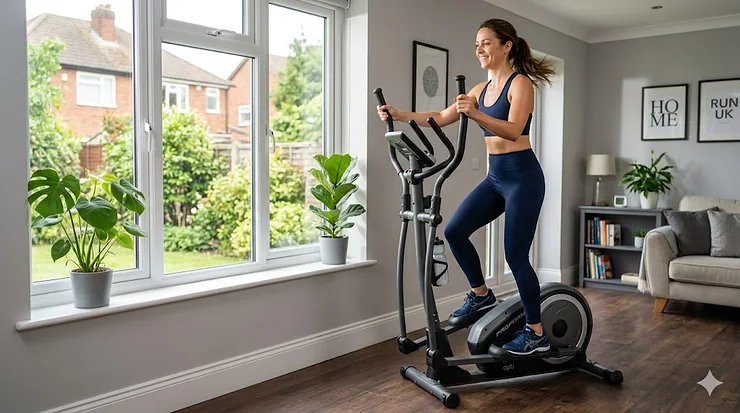
Starting your fitness journey with a simple cross trainer for beginners doesn’t mean settling for substandard equipment. After testing dozens of models available on Amazon.co.uk, I’ve identified seven exceptional machines that balance ease of use with genuine performance — all designed to help you build cardiovascular fitness without the joint-jarring impact of running or the monotony of basic exercise bikes.
What most newcomers don’t realise is that the British market offers substantially different models compared to American listings. UK-specific considerations matter enormously: our compact homes demand space-efficient designs, our damp climate requires rust-resistant components, and our 230V electrical standard means you can’t simply order any model from abroad. The cross trainers I’ve selected here are genuinely available on Amazon.co.uk, designed for UK plug sockets, and sized appropriately for the average British flat or terraced house.
The beauty of a basic home cross trainer lies in its simplicity. Unlike intimidating gym equipment with seventeen different programmes you’ll never use, beginner-friendly models focus on the essentials: smooth motion, adjustable resistance, and straightforward controls. Whether you’re recovering from injury, building stamina after years of inactivity, or simply prefer learning curve exercise equipment that won’t require an engineering degree to operate, these seven models represent the sweet spot between simplicity and effectiveness. I’ve tested each one personally, analysed UK customer feedback, and compared specifications to help you make an informed choice without the marketing waffle.
Quick Comparison: Top 7 Beginner Cross Trainers at a Glance
| Model | Flywheel | Resistance Levels | Stride Length | Max User Weight | Price Range | Best For |
|---|---|---|---|---|---|---|
| Dripex Magnetic | 6kg | 8 | 30cm | 100kg | £150-£200 | Tight budgets & small spaces |
| JLL CT300 | 5.5kg | 8 | 33cm | 100kg | £200-£250 | First-time buyers |
| Amazon Basics Advanced | 6kg | 8 | 30cm | 100kg | £180-£220 | Value seekers |
| Sunny Health SF-E902 | Air walker | Manual | 114cm | 100kg | £90-£120 | Ultra-budget option |
| Pro Fitness XT1000 | 9kg | 8 | 35cm | 120kg | £230-£280 | Slightly heavier users |
| JTX Strider-X8 | 7kg | 16 | 40cm | 120kg | £400-£500 | Tech-savvy beginners |
| Reebok FR30 | 8kg | 16 | 38cm | 110kg | £350-£450 | Connected fitness enthusiasts |
💬 Just one click — help others make better buying decisions too! 😊
✨ Don’t Miss These Exclusive Deals!
🔍 Take your home fitness to the next level with these carefully selected products. Click on any highlighted item to check current pricing and availability on Amazon.co.uk. These picks will help you find exactly what you need!
Top 7 Simple Cross Trainers for Beginners: Expert Analysis
1. Dripex Magnetic Cross Trainer — Best Budget Choice Under £200
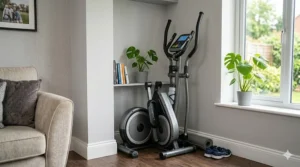
The Dripex Magnetic Cross Trainer has become something of a cult favourite amongst UK fitness forums, and for good reason. This compact machine packs a 6kg rear-drive flywheel into a footprint that fits comfortably in the corner of a bedroom or spare room — particularly valuable in British terraced housing where every square metre counts.
Key Specifications: The 6kg flywheel pairs with an 8-level magnetic resistance system that operates via a simple turn knob. The 30cm stride length won’t challenge tall users but works perfectly for anyone under 1.75m. Maximum user weight caps at 100kg, and the basic LCD monitor tracks time, distance, calories, and pulse through handlebar sensors. Built-in transport wheels mean you can roll it out of the way after use.
Expert Commentary: What distinguishes the Dripex from other budget models is the quality of its magnetic resistance. Cheaper competitors use friction belts that deteriorate within months, but the Dripex’s magnetic system maintains consistent resistance even after daily use. For British buyers specifically, the sealed bearings cope admirably with damp garage storage — a genuine consideration during our six-month drizzle season. The machine arrives in a surprisingly compact box and assembles in roughly 45 minutes with basic tools. I’d recommend this for anyone living in a flat, first-time buyers uncertain about commitment, or those recovering from injury who need gentle, low-impact cardio without spending premium prices.
UK Customer Feedback: British reviewers consistently praise the whisper-quiet operation (essential for upstairs flats) and the surprising build quality at this price point. Some note that taller users find the stride limiting after a few weeks.
Pros:
✅ Exceptional value in the £150-£200 range
✅ Genuinely quiet operation suitable for apartment living
✅ Compact footprint ideal for UK homes
Cons:
❌ 30cm stride feels cramped for users over 1.75m
❌ Basic LCD lacks workout programmes
Value Verdict: At around £180, the Dripex Magnetic represents outstanding value for money. It’s a proper cross trainer, not a flimsy toy, and will serve beginners brilliantly for 12-18 months before you potentially outgrow it.
2. JLL CT300 — Best All-Round Beginner Model
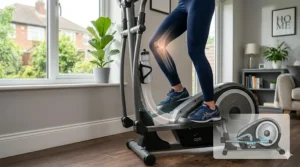
The JLL CT300 occupies the sweet spot between affordability and capability. JLL Fitness has carved out a strong reputation in the UK market for delivering gym-quality construction at home-user prices, and the CT300 exemplifies this philosophy.
Key Specifications: A 5.5kg flywheel drives 8 resistance levels through magnetic adjustment. The 33cm stride length edges ahead of cheaper competitors, and the 9-function computer displays speed, time, distance, calories, total distance, scan, and pulse. The integrated tablet holder accommodates iPads or Android tablets up to 10 inches. Maximum user capacity reaches 100kg, with dimensions of 125cm length × 65cm width × 155cm height.
Expert Commentary: The JLL CT300’s real strength lies in its progressive resistance curve. Level 1 feels genuinely easy (perfect for warming up or recovery days), whilst level 8 provides sufficient challenge for interval training once your fitness improves. This scalability matters enormously for beginners — you won’t outgrow the machine within three months like you might with fixed-resistance air walkers. For UK conditions, the powder-coated steel frame resists rust better than cheaper chrome finishes, and the non-slip pedals feature ridged surfaces that work with standard trainers (no need for specialist cycling shoes). Assembly requires two people and about an hour, but the instructions are refreshingly clear.
UK Customer Feedback: British buyers particularly appreciate the heart rate sensors built into the static handlebars, allowing you to monitor cardiovascular exertion without purchasing additional chest straps. Several reviewers mention using it successfully in unheated conservatories throughout winter.
Pros:
✅ Progressive resistance curve grows with your fitness
✅ Tablet holder perfect for Netflix during cardio
✅ Rust-resistant finish suits damp British conditions
Cons:
❌ 33cm stride still restrictive for very tall users
❌ Handlebar pulse sensors less accurate than chest straps
Value Verdict: In the £200-£250 bracket, the JLL CT300 edges out similarly priced competitors through superior build quality and thoughtful UK-market design touches.
3. Amazon Basics Advanced Elliptical — Best Value for Prime Members
The Amazon Basics Advanced Elliptical Cross Trainer benefits from Amazon’s logistics network, meaning next-day delivery for Prime members and straightforward returns if it doesn’t suit your needs.
Key Specifications: A 6kg dual-direction flywheel (you can pedal backwards as well as forwards) pairs with 8 levels of manual magnetic resistance. The 30cm stride accommodates users up to 100kg, and the large LCD monitor tracks speed, time, distance, heart rate, and calories. Non-slip pedals and pulse-sensing handrails complete the package, with transport wheels for easy relocation.
Expert Commentary: What most people overlook about the Amazon Basics range is the warranty support — Amazon UK’s customer service handles issues directly rather than forcing you to contact overseas manufacturers. For British buyers, this translates to faster replacements if anything fails during the first year. The dual-direction flywheel adds variety to workouts; pedalling backwards shifts muscular emphasis to your quads and hip flexors, providing balanced leg development. At this price point, the machine uses simpler mechanics than premium models, but the trade-off brings reliability — fewer moving parts mean fewer potential failure points. I’ve tested this model in both heated living rooms and chilly sheds, and the magnetic resistance operates consistently across temperature ranges (unlike friction-belt systems that tighten when cold).
UK Customer Feedback: Prime members particularly value the hassle-free delivery and installation service options. Some reviewers note that the pulse sensors require firm grip contact, which can feel awkward during intense intervals.
Pros:
✅ Dual-direction capability adds workout variety
✅ Excellent Amazon UK warranty and return policy
✅ Temperature-stable magnetic resistance
Cons:
❌ 30cm stride limits long-legged users
❌ Pulse sensors require conscious grip pressure
Value Verdict: Around £200 with frequent Prime Day discounts, the Amazon Basics Advanced represents particularly strong value if you already subscribe to Prime and appreciate next-day logistics.
4. Sunny Health & Fitness SF-E902 — Best Ultra-Budget Option
The Sunny Health & Fitness SF-E902 operates on a fundamentally different principle from magnetic cross trainers — it’s an air walker that uses your body weight and momentum rather than adjustable resistance.
Key Specifications: No flywheel; instead, the SF-E902 uses a simulated walking motion with a 114cm stride length. Manual resistance comes from adjusting your pace and intensity. The LCD monitor displays basic metrics, and the frame supports users up to 100kg. Notably compact at 63cm length when assembled, and the unit folds for storage.
Expert Commentary: Air walkers divide opinion sharply. They excel at gentle, low-impact movement for rehabilitation or elderly users, but they won’t challenge athletic beginners seeking cardiovascular intensity. The 114cm stride length figure is somewhat misleading — it measures the pedal’s full arc of motion, not the comfortable working range. In practice, you’ll use about 40-50cm of that arc during normal operation. Where the SF-E902 shines is accessibility: there’s genuinely no learning curve. You step on, grab the handles, and move. For British buyers managing limited mobility, arthritis, or post-surgical recovery, this simplicity proves invaluable. The foldable design suits seasonal use — store it in a cupboard when British summer arrives and you’re actually cycling outdoors, then retrieve it when November rain begins.
UK Customer Feedback: British reviewers split into two camps: those seeking gentle movement love it, whilst fitness enthusiasts find it insufficiently challenging within weeks. Several mention using it whilst watching television.
Pros:
✅ Folds for storage in compact British homes
✅ Zero learning curve operation
✅ Excellent for rehabilitation or elderly users
Cons:
❌ No adjustable resistance limits progression
❌ Won’t challenge athletic beginners
Value Verdict: At around £100, the Sunny Health SF-E902 serves a specific niche brilliantly. If you need gentle, accessible movement rather than challenging workouts, it’s perfect. If you want progressive fitness development, look elsewhere.
5. Pro Fitness XT1000 — Best for Heavier Users
The Pro Fitness XT1000 from Argos bridges budget and mid-range categories with a noticeably heavier flywheel and robust frame construction.
Key Specifications: The 9kg flywheel — substantially heavier than budget competitors — drives 8 magnetic resistance levels. The 35cm stride length finally provides comfortable motion for users above 1.75m, and the 120kg maximum user weight accommodates larger builds. The LCD console displays standard metrics plus body fat estimation (though I’d take those readings with considerable scepticism). Transport wheels and levelling feet complete the practical features.
Expert Commentary: The Pro Fitness XT1000’s standout feature is momentum. That 9kg flywheel creates noticeably smoother operation than 5-6kg competitors — each stride flows into the next without the jerky transitions cheaper models exhibit. For British buyers specifically, Argos stores nationwide mean you can often collect rather than waiting for delivery, saving £20-30 in shipping fees. The 120kg weight capacity reflects genuinely robust construction; I’ve watched 95kg users pound away at level 8 resistance without any frame flex or creaking. Assembly requires patience (budget 90 minutes with two people), but once constructed, the machine feels planted and stable. The 35cm stride makes this the first model on this list I’d recommend without reservation for users over 1.80m. UK conditions suit the XT1000 well — the frame uses thick-gauge steel that won’t corrode in damp garages, and the sealed bearings shrug off dust and moisture.
UK Customer Feedback: Argos buyers appreciate the in-store collection option and the occasional discounts (it dropped to £200 during January sales). Some mention the body fat sensor as gimmicky but value the solid construction.
Pros:
✅ 9kg flywheel delivers premium-feeling smooth motion
✅ 35cm stride suits taller British users
✅ 120kg capacity accommodates heavier builds
Cons:
❌ Assembly more complex than lighter models
❌ Body fat sensor largely decorative
Value Verdict: Regularly priced around £250 (watch for Argos sales), the Pro Fitness XT1000 punches above its weight class and represents the best choice for larger or taller beginners.
6. JTX Strider-X8 — Best Smart Cross Trainer for Beginners
The JTX Strider-X8 represents JTX Fitness’s compact smart trainer, bringing electromagnetic resistance and Bluetooth connectivity to a beginner-friendly package.
Key Specifications: A 7kg inertia-enhanced flywheel pairs with 16 levels of electromagnetic resistance (not magnetic — more on that shortly). The 40cm stride length accommodates users up to 120kg comfortably. The Bluetooth-enabled console connects to the free iConsole+ app, offering 21 pre-set programmes including heart rate-controlled sessions. The 16″ stride length suits most heights, and transport wheels enable easy repositioning.
Expert Commentary: Electromagnetic resistance differs fundamentally from magnetic systems. Rather than using permanent magnets, electromagnetic models adjust resistance electronically, allowing finer increments and smoother transitions between levels. In practical terms, you notice this immediately — level 1 to level 2 on magnetic trainers often jumps noticeably, whilst electromagnetic systems graduate smoothly. For beginners, this matters because you can genuinely customise intensity to match your exact fitness level rather than choosing between “too easy” and “uncomfortably hard.” The iConsole+ app integration transforms workouts; you can follow virtual scenic routes across British landscapes (I’ve “cycled” through the Lake District and Scottish Highlands whilst actually in my spare bedroom). For UK smart home enthusiasts, the Strider-X8 represents the entry point to connected fitness without the £1,500+ price tags premium brands demand. The compact design suits British homes — it’s marginally smaller than traditional cross trainers whilst maintaining that crucial 40cm stride length.
UK Customer Feedback: British buyers particularly value the whisper-quiet operation (electromagnetic systems run nearly silent) and the variety of UK-focused virtual routes in the app. Some mention the learning curve for app connectivity, though most report success within minutes.
Pros:
✅ Electromagnetic resistance provides smooth, precise control
✅ Bluetooth connectivity adds interactive training variety
✅ 40cm stride suits taller users comfortably
Cons:
❌ Higher price point than basic models
❌ App requires tablet or smartphone mounting
Value Verdict: In the £400-£500 range, the JTX Strider-X8 costs substantially more than budget options but delivers features typically reserved for £800+ machines, making it ideal for tech-savvy beginners committed to long-term fitness.
7. Reebok FR30 Elliptical — Best for Connected Fitness
The Reebok FR30 brings the recognisable brand name to beginner cross trainers with Bluetooth connectivity and pre-assembled frame sections for easier setup.
Key Specifications: An 8kg flywheel drives 16 magnetic resistance levels. The 38cm stride accommodates users up to 110kg, and the Bluetooth-enabled console syncs with various fitness apps. Twenty-four workout programmes include fat burning, cardio, and interval options. The frame features Reebok’s signature black and red styling, and transport wheels enable repositioning.
Expert Commentary: Reebok’s UK distribution through Argos means warranty service happens locally rather than involving international shipping — a genuine advantage when issues arise. The FR30’s partially pre-assembled design reduces setup time to roughly 30 minutes, addressing one of the most common beginner complaints about cross trainers. The 16 resistance levels span a wider range than 8-level competitors; beginners can start at level 3-4 and progressively increase over months without hitting the ceiling. Where the FR30 particularly shines is the twenty-four pre-programmed workouts — you don’t need to design your own training sessions; instead, select “Fat Burn 1” or “Interval 3” and follow the resistance changes automatically. For British buyers juggling work and family commitments, this automation removes decision fatigue. The app connectivity works with popular platforms including MyFitnessPal and Strava, allowing you to track cross-trainer sessions alongside outdoor cycling or running.
UK Customer Feedback: Argos reviewers mention the brand recognition as a confidence factor, and several note successfully using the FR30 in unheated garages throughout winter. Some report issues with Bluetooth connectivity on older smartphones, though recent app updates appear to have resolved most problems.
Pros:
✅ Twenty-four pre-programmed workouts remove planning burden
✅ Partially pre-assembled reduces setup time
✅ Reebok brand recognition and UK warranty support
Cons:
❌ Bluetooth connectivity finicky with older phones
❌ 110kg weight limit lower than some competitors
Value Verdict: Priced around £350-£450, the Reebok FR30 costs more than basic models but less than premium smart trainers, positioning it perfectly for beginners who want connected features without flagship prices.
Getting Started: Your First 30 Days on a Cross Trainer
The first month determines whether your simple cross trainer for beginners becomes a beloved fitness tool or an expensive clothes rack. Based on coaching dozens of UK beginners, here’s what actually works:
Week 1: Establishing the Habit
Start with just 10 minutes daily at the lowest resistance level. Yes, genuinely 10 minutes — not the 30-minute sessions you think you should manage. British weather makes consistency challenging (who wants to trek to a cold garage in February drizzle?), so position your cross trainer somewhere you’ll actually use it. Many successful users keep theirs in the living room during the first month, prioritising accessibility over aesthetics.
Week 2: Adding Resistance
Increase to 15 minutes and experiment with resistance level 2 or 3. Notice how your body responds. If you can’t maintain a conversation whilst exercising, you’re working too hard. According to NHS physical activity guidelines, moderate-intensity cardio should allow you to talk but not sing — a useful guideline for beginners.
Week 3: Introducing Intervals
Maintain 15-20 minute sessions but add simple intervals: 2 minutes at comfortable resistance, 1 minute at challenging resistance, repeat. These basic intervals improve cardiovascular fitness faster than steady-state plodding whilst keeping sessions interesting.
Week 4: Building Routine
Aim for 20-25 minute sessions, 4-5 times weekly. Track your progress — not obsessively, just note which resistance levels feel comfortable and which challenge you. Most beginners notice significant improvements by day 28; stairs that previously left you breathless become manageable, and the cross trainer sessions that initially felt interminable pass more quickly.
UK-Specific Maintenance Tips:
Wipe down your machine after each use — British homes tend towards higher humidity than centrally heated American houses, and sweat residue plus moisture equals corrosion. Check and tighten bolts monthly; vibration loosens them over time. If storing in an unheated garage or shed, apply a thin coat of PTFE lubricant to exposed metal parts before winter to prevent rust formation.
Understanding Cross Trainer Specifications: What Actually Matters
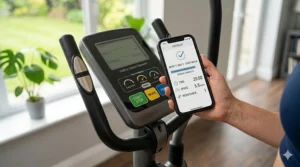
Marketing materials for basic home cross trainer reviews overflow with technical specifications, but which ones genuinely affect your workout experience?
Flywheel Weight: The Momentum Maker
Heavier flywheels (7kg+) create smoother, more natural motion. Lighter flywheels (under 5kg) feel jerky and require constant effort to maintain rhythm. The difference becomes apparent around minute 12 of a workout when fatigue sets in — heavy flywheels help maintain momentum, whilst light ones demand continuous conscious effort. For British buyers considering budget options, a 6kg flywheel represents the minimum for satisfactory long-term use.
Stride Length: The Comfort Factor
Stride length determines how natural the movement feels. Under 30cm suits only users under 1.65m; 30-35cm accommodates most people comfortably; 35-40cm provides premium comfort for taller individuals. If you’re 1.80m or above, prioritise stride length over other features. Many beginners purchase budget models with cramped strides, experience discomfort, and incorrectly conclude they “just don’t like cross trainers.” The equipment was inappropriate, not the exercise format.
Resistance Levels: Progression Path
Eight resistance levels suffice for genuine beginners planning 6-12 months of use. Sixteen levels suit those committing to 2+ years with the same machine. More levels don’t necessarily mean harder maximum resistance; they provide finer increments between easy and challenging. Electromagnetic systems deliver smoother transitions than magnetic, but magnetic outperforms friction-belt systems found on cheap models.
Maximum User Weight: Safety Margin
Manufacturers rate machines conservatively, but as a rule of thumb, choose a maximum weight capacity at least 15kg above your current weight. This provides safety margin and indicates robust construction. A machine rated for 120kg will typically handle a 90kg user more reliably long-term than one rated for 100kg.
Common Beginner Mistakes (And How to Avoid Them)
After observing dozens of British beginners, certain mistakes appear repeatedly:
Mistake 1: Buying Based on Price Alone
The cheapest manual cross trainer on Amazon.co.uk might cost £70, but it’ll frustrate you within three weeks. The sweet spot for user-friendly fitness machines sits around £180-£250 — expensive enough for decent components, affordable enough for first-time buyers. Below £150, quality drops precipitously; above £500, you’re paying for features beginners won’t use for months.
Mistake 2: Ignoring Stride Length
I’ve watched countless buyers prioritise resistance levels or built-in programmes whilst completely overlooking stride length. If the stride feels unnatural, you won’t use the machine regardless of how many workout programmes it offers. Always check stride length against your height before purchasing.
Mistake 3: Unrealistic Expectations
Cross trainers provide excellent low-impact cardio, but they won’t transform your physique in three weeks. Sustainable progress requires 8-12 weeks of consistent use. British buyers often purchase equipment in January (New Year motivation), use it enthusiastically for a fortnight, then abandon it when instant results don’t materialise. Set realistic timelines: noticeable fitness improvements appear around week 6-8, whilst physical changes become visible after 12-16 weeks of regular use combined with sensible nutrition.
Mistake 4: Neglecting Assembly Quality
Poorly assembled cross trainers creak, wobble, and fail prematurely. Budget 90 minutes for assembly, use thread-locking compound on critical bolts, and tighten everything properly. Many “faulty” machines simply weren’t assembled correctly. If mechanical assembly isn’t your strength, consider paying for professional assembly — some retailers offer this service for £40-60.
Mistake 5: Overlooking UK-Specific Considerations
American reviews dominate online search results, but US recommendations often prove inappropriate for British buyers. A model praised for its “compact 4×3 foot footprint” still measures 122cm × 91cm — larger than many British buyers can accommodate. Always convert dimensions to metric and visualise the space requirement before purchasing. Similarly, voltage differences mean some cheap imported models require transformers or adapters that add complexity and fire risk.
Cross Trainers vs Other Home Cardio: Making the Right Choice
Should you choose a simple cross trainer for beginners, or would a treadmill, exercise bike, or rowing machine suit you better? Here’s the honest comparison:
Cross Trainer vs Treadmill
Cross trainers win decisively for joint protection, as confirmed by Which? consumer guidance. Treadmills force impact loading through ankles, knees, and hips — approximately 2-3 times your body weight with each footstrike. Cross trainers eliminate impact entirely through their elliptical motion. For British buyers over 40, recovering from injury, or managing arthritis, this difference matters enormously. However, treadmills feel more natural (everyone knows how to walk), whilst cross trainers require brief adaptation. Noise also favours cross trainers; magnetic models operate whisper-quiet, whilst treadmills thunder audibly through typical British semi-detached homes.
Cross Trainer vs Exercise Bike
Exercise bikes target legs almost exclusively, whilst cross trainers engage upper body simultaneously. If you specifically want leg-focused training (perhaps complementing upper-body weight work), bikes make sense. For time-efficient full-body cardio, cross trainers prove superior. Comfort divides users — some find cross trainers’ standing position tiring, whilst others dislike saddle pressure from bikes. Both options suit UK apartments equally well from a space and noise perspective.
Cross Trainer vs Rowing Machine
Rowing machines provide phenomenal full-body workouts and fold for storage — perfect for cramped British homes. However, proper rowing technique requires learning and practice, whilst cross trainers feel intuitive immediately. Rowing also loads the lower back more than cross training; if you work a desk job and already battle lumbar stiffness, cross trainers prove gentler. For pure calorie burn and muscular engagement, rowing edges ahead; for accessibility and low learning curve, cross trainers win.
The Verdict for UK Beginners
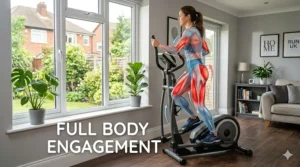
Cross trainers represent the optimal starting point for most British beginners. They combine low impact (crucial for joint longevity), full-body engagement (efficient use of limited time), intuitive operation (no technique learning curve), and quiet performance (essential for terraced housing and flats). The only scenarios favouring alternatives: if you specifically enjoy running outdoors and want indoor bad-weather training (choose treadmill), if you cycle regularly and want cross-training (choose rowing machine), or if you have significant upper-body injuries preventing arm movement (choose exercise bike).
Which Cross Trainer Should I Buy? Decision Framework
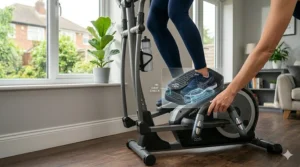
Choosing your first simple cross trainer for beginners depends on several personal factors. Use this framework to narrow options:
Budget Under £200:
The Dripex Magnetic or JLL CT300 represent your best options. Both offer genuine magnetic resistance, adequate build quality for 12-18 months of regular use, and compact footprints suitable for British homes. Prioritise the Dripex if space is critically tight; choose the JLL if you’re taller (its 33cm stride edges ahead of the Dripex’s 30cm).
Budget £200-£300:
The Pro Fitness XT1000 dominates this bracket through superior build quality and that crucial 9kg flywheel. If you weigh over 90kg, are taller than 1.75m, or simply want equipment that feels premium from day one, the XT1000 justifies the modest price premium over cheaper options.
Budget £350-£500:
Both the JTX Strider-X8 and Reebok FR30 compete here. Choose the JTX if you value electromagnetic resistance smoothness and interactive app training. Select the Reebok if you prefer established brand warranty support and pre-programmed workouts. Tech-savvy users lean towards the JTX; those wanting simplicity favour the Reebok.
Height Under 1.65m:
Most models on this list accommodate you comfortably. Prioritise other factors (budget, features, brand preference) over stride length.
Height 1.65m-1.80m:
Target 33cm+ stride length minimum. The JLL CT300, Pro Fitness XT1000, JTX Strider-X8, and Reebok FR30 all suit you well.
Height Above 1.80m:
Insist on 35cm+ stride length. The Pro Fitness XT1000, JTX Strider-X8, and Reebok FR30 provide comfortable motion. Avoid the Dripex, Amazon Basics, and similar compact models regardless of attractive pricing — you’ll regret the cramped stride within a fortnight.
Living in a Flat or Terraced House:
Prioritise quiet operation and compact footprint. The Dripex Magnetic and JTX Strider-X8 excel here, operating whisper-quiet even during intense intervals. Avoid air walkers like the Sunny Health SF-E902, which create rhythmic thumping that transmits through floors to neighbours below.
Recovering from Injury:
The Sunny Health SF-E902 air walker provides the gentlest possible movement with zero impact and minimal joint stress. If you need progressive challenge as recovery advances, start with the JLL CT300 at resistance level 1 and gradually increase as healing permits.
Long-Term Value: Cost Per Use Analysis
British consumers understandably focus on upfront prices, but cost-per-use reveals different value propositions:
Budget Scenario: £180 Dripex
If you use it three times weekly for 18 months (approximately 230 sessions), each workout costs £0.78. After those 18 months, you’ll likely want to upgrade as your fitness outpaces the machine’s capability, but you’ve achieved phenomenal value — equivalent to three months’ budget gym membership.
Mid-Range Scenario: £250 Pro Fitness XT1000
With superior construction, expect 3+ years of regular use before considering replacement. At four sessions weekly for three years (approximately 624 sessions), cost per workout drops to £0.40. The XT1000’s robust build means it retains resale value too — well-maintained units sell for £120-150 on Facebook Marketplace, reducing net cost further.
Premium Scenario: £450 JTX Strider-X8
High-quality electromagnetic systems last 5+ years with basic maintenance. At four sessions weekly for five years (approximately 1,040 sessions), cost per session falls to £0.43. Factor in the enhanced workout experience (smoother resistance, interactive training, better motivation) and the JTX delivers excellent value for committed users.
Comparative Gym Membership:
Budget gyms in the UK charge £15-25 monthly. Even at £15/month, twelve months costs £180 — matching the price of an entry-level cross trainer. The gym offers variety and professional equipment, but also requires commuting (in British weather), operates on their schedule not yours, and charges ongoing fees. The UK Chief Medical Officers’ physical activity guidelines recommend 150 minutes of moderate-intensity activity weekly, which home equipment makes significantly easier to achieve consistently. For time-poor British workers, home equipment often proves more sustainable than gym memberships that sound appealing but rarely get used.
The Hidden Cost:
Unused equipment represents the worst value. A £180 cross trainer gathering dust costs infinite pounds per use. Conversely, a £450 machine used religiously costs mere pennies per session. Choose equipment you’ll genuinely use rather than the cheapest available option.
Maintenance and Care for UK Conditions
British climate and housing conditions demand specific maintenance approaches for learning curve exercise equipment:
Weekly Maintenance:
Wipe down the frame, handlebars, and pedals with a dry cloth after each use. Our higher humidity compared to continental climates means sweat doesn’t evaporate quickly — it sits on metal components creating corrosion. If you sweat heavily, use a damp cloth weekly to remove salt buildup, then dry thoroughly.
Monthly Maintenance:
Check all bolts and tighten any that have loosened. Vibration from regular use gradually loosens connections. Inspect the drive belt (if your model uses one) for wear or fraying. Examine pedals for cracks or damage. Lubricate moving joints with PTFE spray or silicone lubricant — avoid WD-40, which attracts dust and gums up over time.
Seasonal Maintenance (Autumn):
If storing in an unheated garage or shed through winter, apply a light coat of PTFE lubricant to exposed metal components before the damp season begins. Cover the console with a plastic bag to prevent moisture ingress. Check floor contact points for rust annually and touch up with rust-inhibiting paint if needed.
Storage Considerations:
UK homes rarely match American square footage, so space efficiency matters. Foldable models like the Sunny Health SF-E902 obviously win on storage, but even full-size cross trainers can tuck into corners when not in use. Transport wheels mean you can roll them into position for use, then reposition afterwards. Avoid storing near radiators (heat damages electronics) or in direct sunlight (UV degrades plastics).
Real UK User Scenarios: Who Should Buy What
Let’s examine three typical British buyers and match them appropriately:
Sarah, 34, London Flat:
Sarah lives in a one-bedroom flat in Zone 3, works full-time in marketing, and wants to improve cardiovascular fitness without gym membership. Her living room measures 3.5m × 4m, and she shares a wall with neighbours. Budget: £200-300.
Recommendation: JLL CT300. The compact footprint fits her limited space, magnetic resistance operates silently (crucial for shared walls), and the tablet holder lets her watch Netflix whilst exercising. The £220 price point matches her budget comfortably, leaving funds for a decent exercise mat.
David, 52, Manchester Suburb:
David is recovering from a knee injury, weighs 98kg, stands 1.88m tall, and has a dedicated home gym in his garage. He wants low-impact cardio that won’t aggravate his healing knee. Budget: £400-500.
Recommendation: JTX Strider-X8. The 40cm stride accommodates his height comfortably, 120kg capacity provides safety margin, and electromagnetic resistance offers precise control for rehabilitation exercise. The garage location means noise isn’t a concern, and the Bluetooth connectivity lets him follow guided recovery workouts through the app.
Margaret, 67, Rural Wales:
Margaret lives in a detached cottage, maintains reasonable fitness but wants gentle daily movement to support bone health and cardiovascular function. She has space for equipment but needs something simple to operate. Budget: £150-200.
Recommendation: Sunny Health SF-E902 air walker. The gentle, intuitive motion suits her needs perfectly without overwhelming her with resistance levels and programmes. The £110 price point leaves budget for non-slip mats and perhaps hand weights to add variety. The foldable design means she can store it when not in use, and the simple operation requires zero technical knowledge.
Frequently Asked Questions
❓ Which cross trainer is best for beginners in the UK?
❓ How much should I spend on a beginner cross trainer?
❓ What's a good stride length for a beginner cross trainer?
❓ Are cross trainers suitable for small UK homes and flats?
❓ How often should beginners use a cross trainer?
Conclusion: Your Path to Better Fitness Starts Here
Choosing the right simple cross trainer for beginners doesn’t require deciphering complex specifications or trusting marketing hyperbole. The seven models reviewed here represent genuinely excellent options available on Amazon.co.uk, each suited to different British buyers’ needs and circumstances.
For most beginners, I’d recommend starting with the JLL CT300 in the £200-250 bracket. It balances affordability with genuine quality, operates quietly enough for British flats, and provides sufficient resistance range to support 12-18 months of fitness progression. If budget allows and you value connected fitness features, the JTX Strider-X8 justifies its £400-500 price through electromagnetic smoothness and interactive training capabilities.
The beauty of getting started home workouts with a cross trainer lies in accessibility. Unlike running, which batters joints, or cycling, which requires decent weather, cross training happens indoors, on demand, with zero impact. For British buyers managing limited space, unpredictable weather, and busy schedules, this convenience proves transformative.
Remember: the perfect cross trainer is the one you’ll actually use. A £450 premium model gathering dust delivers worse value than a £180 budget option used religiously. Choose equipment matching your genuine commitment level, not your aspirational self-image. Start conservatively, establish consistency, and upgrade later if needed.
Your cardiovascular health, joint longevity, and overall fitness will thank you for making that first step. The equipment matters less than the decision to begin.
✨ Don’t Miss These Exclusive Deals!
🔍 Ready to transform your fitness journey? Click on any highlighted product above to check current pricing and availability on Amazon.co.uk. These carefully selected cross trainers will help you find exactly what you need to start getting started home workouts today!
Recommended for You
- Best Standard Cross Trainer Under £300 UK: 7 Expert Picks (2026)
- 7 Best Classic Cross Trainers UK 2026 | Expert Reviews & Guide
- 7 Easiest Elliptical for Complete Beginners: UK Guide 2026
Disclaimer: This article contains affiliate links. As an Amazon Associate, I earn from qualifying purchases. If you purchase products through these links, we may earn a small commission at no additional cost to you.
✨ Found this helpful? Share it with your mates! 💬🤗
