In This Article
Somewhere around minute eleven of a 12-3-30 session, your calves start sending strongly worded letters to the rest of your body. That’s the moment you understand what the best incline treadmill is actually for — it isn’t a fancier version of a flat belt, it’s a hill you can summon on demand, in your pyjamas, at half past six on a wet Tuesday. An incline treadmill for this purpose is simply a motorised running machine whose deck tilts upward (and, on the cleverer models, downward too) to mimic real terrain, ramping up the effort your legs and lungs have to put in without you needing to move an inch faster.
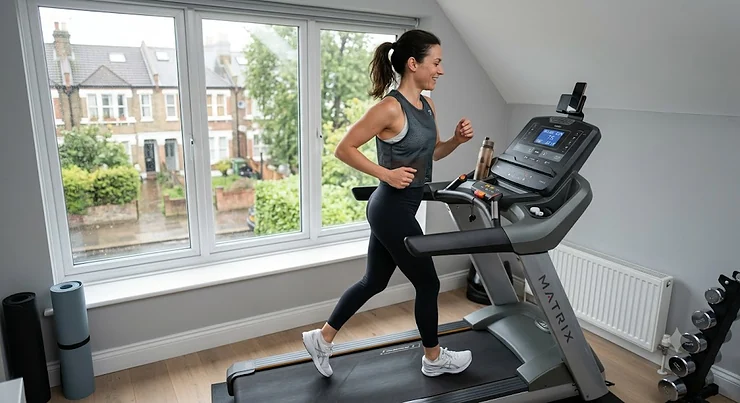
The appeal isn’t just psychological. Uphill walking recruits your glutes, hamstrings and calves far harder than flat walking does, and the numbers back it up rather emphatically — one widely cited biomechanics study found metabolic cost rising by 52% at a modest 5% grade and a full 113% at 10%, purely from tilting the floor. That’s before you even touch the speed dial. Whether you’re chasing the viral 12-3-30 walk, training for a hilly trail race, or simply trying to burn more without pounding your knees into submission, the treadmill you buy needs to actually deliver a genuine gradient, not a token wobble that calls itself “incline” on the box.
We’ve spent this guide digging into seven real machines, from a scrappy sub-£600 Reebok through to a NordicTrack that tilts a genuinely alarming 40%, so you can work out which hill-in-a-box actually suits your legs, your living room and your bank balance. And before you spend a penny, it’s worth anchoring your expectations to something solid: the NHS physical activity guidelines for adults recommend at least 150 minutes of moderate activity a week, and a steep incline session gets you there considerably faster than the same time spent strolling flat. Let’s get into it.
Quick Comparison Table
| Treadmill | Best For | Max Incline / Decline | Price Range |
|---|---|---|---|
| Reebok GT40z | Best budget pick | 12% / none | £500-£600 |
| Xterra TRX2500 | Best value, no subscription | 15% / none | £700-£900 |
| NordicTrack T Series 9 | Best mid-range all-rounder | 12% / -3% | £950-£1,150 |
| JTX Sprint 9 Pro | Best fixed-frame durability | 11% / none | £1,500-£1,700 |
| NordicTrack Commercial 1750 | Best mid-premium smart training | 15% / -3% | £1,800-£2,100 |
| NordicTrack Commercial 2450 | Best immersive hill simulation | 15% / -3% | £2,200-£2,600 |
| NordicTrack X22i | Best steep-incline specialist | 40% / -6% | £3,200-£3,400 |
Glance down that incline column and you’ll notice something telling: the jump from 12% to 15% barely nudges the price, but the leap to 40% costs you thousands. That’s because a 40% grade isn’t just “more of the same” mechanically — it demands a completely different motor, frame and lift mechanism capable of holding a much heavier structural load at a dramatic angle without shuddering. For most home users chasing genuine hill training and calorie burn, 12-15% covers the vast majority of useful workouts; the extreme end is a specialist purchase for people who genuinely want to simulate mountain trails indoors.
💬 Just one click — help others make better buying decisions too!😊
Top 7 Best Incline Treadmills: Expert Analysis
Buying an incline treadmill is really buying two separate things at once: a treadmill, and a hill. Plenty of machines nail the first and fudge the second with a token 3% ramp that barely qualifies as a speed bump. These seven don’t — every one delivers a genuine, motorised gradient worth the name, spread across every budget tier a UK buyer is likely to be shopping in.
1. Reebok GT40z — best budget pick with a genuine 12% incline
Here’s the thing that makes the GT40z worth your attention: at its £549 RRP, a true powered 12% incline is almost unheard of. Most machines at this price either skip incline entirely or offer a manual ramp you adjust by physically lifting the deck yourself, which gets old fast. The GT40z gives you a proper button-press gradient capable of running the full 12-3-30 protocol — 12% grade, 3 mph, 30 minutes — without breaking a sweat on the machine’s part, even if yours tells a different story.
What most buyers overlook about a treadmill in this bracket is the cushioning underfoot, and this is where Reebok’s running-shoe heritage quietly earns its keep: the ZigTech deck cushioning, borrowed from the brand’s footwear line, takes a genuinely noticeable edge off impact during longer incline walks. Based on the spec comparison with rivals at this price, the trade-off is unsurprising — there’s no decline function, and the top speed of 11.2 mph will start to feel modest if you’re a committed runner rather than an incline walker. Reviewers consistently flag it as the best incline treadmill under £600, with several UK buying guides naming it their top budget recommendation specifically because the incline is real rather than decorative.
Aggregated sentiment across UK treadmill review sites is notably consistent: the GT40z is described as “exceptional” value at its price point, particularly once it dips below £500 during regular sales.
Pros:
- ✅ Genuine powered 12% incline capable of full 12-3-30 workouts
- ✅ ZigTech cushioning reduces joint impact on longer sessions
- ✅ Zwift and Kinomap compatible with no mandatory subscription
Cons:
- ❌ No decline function whatsoever
- ❌ Top speed of 11.2 mph limits serious runners
At around £500-£600, and often lower during sales, the Reebok GT40z remains the sensible starting point for anyone who wants real incline training without committing four figures.
2. Xterra TRX2500 — best value with a steeper 15% grade and zero subscription costs
The TRX2500’s party trick is squeezing a 15% incline — a spec you’d normally expect to pay considerably more for — into a mid-range machine with no ongoing app fees hanging over your head. Where the NordicTrack range leans hard on iFIT to unlock its best features, the Xterra is happy to let you run manual incline programmes straight out of the box, which is a genuinely different philosophy worth weighing before you buy into either ecosystem.
Here’s what to weigh if steep grades are your priority: a 15% incline pushes meaningfully into “proper hill” territory rather than the gentle 10-12% most budget machines top out at, and reviewers comparing it directly against pricier rivals have called it the strongest raw-spec option in its price bracket. What the spec sheet doesn’t spell out is that without iFIT’s automatic terrain-matching, you’ll be dialling in incline changes yourself during interval sessions — perfectly manageable, but a genuinely different experience from the hands-off automation on this list’s smarter machines.
Reviewer sentiment consistently frames the TRX2500 as winning on specification-per-pound, precisely because you’re not being asked to pay a subscription tax on top of the hardware to access the incline you already own.
Pros:
- ✅ Genuine 15% incline without any subscription requirement
- ✅ Strong value relative to machines with similar grade capability
- ✅ Solid frame stability during steeper interval work
Cons:
- ❌ No decline setting, so downhill training isn’t available
- ❌ Incline adjustments during workouts are manual rather than automated
Typically priced in the £700-£900 range, the Xterra TRX2500 suits buyers who want a steep, no-nonsense hill without paying an ongoing toll to use it.
3. NordicTrack T Series 9 — best mid-range all-rounder with decline training
The T Series 9’s standout advantage over its cheaper siblings is decline capability — a genuine -3% downhill setting that most machines in this price bracket simply don’t offer. Running (or walking) downhill loads your quadriceps and challenges eccentric muscle control in ways flat and uphill work never touch, which matters enormously if you’re training for anything involving actual hills, since every ascent eventually demands a descent.
What most buyers overlook here is that the 12% incline pairs with NordicTrack’s Runners Flex cushioning system, letting you toggle between a softer surface for incline walking recovery days and a firmer feel that simulates genuine road contact for faster sessions — a small feature that quietly does a lot of work if you split your training between easy incline walks and harder flat runs on the same machine. Based on the spec comparison with the smaller-screened T Series 8, the 14-inch HD touchscreen here is the meaningful upgrade, unlocking the full depth of iFIT’s guided incline programming rather than leaving you squinting at a smaller display mid-workout.
Aggregated reviewer sentiment praises the T Series 9 specifically for balancing incline capability, deck size and training experience without tipping into flagship pricing — a common description is that it “offers the best balance” in the mid-range bracket.
Pros:
- ✅ Genuine -3% decline alongside a 12% incline for full terrain simulation
- ✅ Runners Flex cushioning toggles between soft and firm underfoot feel
- ✅ 14-inch touchscreen unlocks the full iFIT incline-programming experience
Cons:
- ❌ Full incline automation features require an ongoing iFIT subscription
- ❌ Noticeably larger footprint than budget alternatives
Priced around £950-£1,150, the T Series 9 is the strongest mid-range pick for anyone who wants both directions of terrain simulation without stepping into premium territory.
4. JTX Sprint 9 Pro — best fixed-frame durability for daily incline training
The Sprint 9 Pro’s defining feature isn’t its incline at all — it’s the fixed, non-folding frame, built from heavy-gauge steel specifically so it never has to flex, wobble or fold under repeated incline loading. That matters more than it sounds: a folding hinge is a mechanical weak point, and if you’re planning to hammer daily incline sessions for years rather than months, removing that hinge from the equation is a genuinely different long-term proposition.
Here’s what the spec sheet won’t tell you outright: the Sprint 9 Pro’s 11% incline is actually lower than several rivals on this list, including its own folding sibling the Sprint 8 Pro, which manages 15% incline with a fold included. What most buyers overlook is that this isn’t an oversight — it’s the trade-off JTX made deliberately in favour of frame rigidity and commercial-grade CushionStep decking, and for most home training, 11% at pace is still plenty demanding; walking at 4 mph on a 10% grade already has most people breathing harder than a flat jog. On paper this means the Sprint 9 Pro rewards buyers who value longevity and stability over chasing the steepest possible number.
Reviewer sentiment is consistently glowing on build quality and UK-based aftercare, with testers specifically noting the fixed frame “doesn’t move when in use” even during committed incline sessions — a meaningfully different experience from lighter folding machines that can feel skittish at a steep grade.
Pros:
- ✅ Fixed steel frame eliminates fold-hinge flex during incline training
- ✅ Commercial-grade CushionStep deck built for daily, heavy use
- ✅ UK-based warranty with in-home engineer visits, no shipping hassle
Cons:
- ❌ 11% max incline trails several rivals on this list
- ❌ Heavy, non-folding design demands permanent dedicated floor space
At around £1,500-£1,700, the JTX Sprint 9 Pro suits buyers who’ve decided incline training is a permanent fixture of their routine, not an experiment.
5. NordicTrack Commercial 1750 — best mid-premium smart incline training
The Commercial 1750 earns its place through ActivePulse technology, which automatically adjusts incline (and speed) in real time to keep your heart rate inside a target zone — genuinely useful if you’ve ever caught yourself either coasting through a hill session or unintentionally redlining halfway up one. Pair a Bluetooth heart-rate monitor and the treadmill effectively takes over the pacing decisions your brain gets unreliable at making once you’re gasping on a 12% grade.
What most buyers overlook about the 15% incline and -3% decline combination here is how it transforms iFIT’s guided trail workouts from a nice video into something that actually loads your muscles the way the on-screen terrain suggests it should — when your virtual trainer heads uphill in the Alps, the deck tilts to match, rather than leaving you strolling flat while pretending to climb. Based on the spec comparison with the JTX Sprint 9 Pro, the 1750 wins decisively on incline range and automation but trades away the fixed-frame rigidity for a foldable design, which is the classic premium-treadmill compromise: more tech, slightly less permanence.
Reviewer sentiment consistently highlights the 1750 as a genuine step up for tech-loving runners, with testers specifically praising the tilting, rotating touchscreen for making the incline and decline adjustments feel less like fiddling with settings and more like following a guide.
Pros:
- ✅ ActivePulse automatically manages incline to hit heart-rate targets
- ✅ Genuine 15% incline and -3% decline for full terrain range
- ✅ Tilting, rotating touchscreen usable for off-treadmill workouts too
Cons:
- ❌ Full automatic incline features require an active iFIT subscription
- ❌ Folding design trades some rigidity versus fixed-frame rivals
Typically priced around £1,800-£2,100, the Commercial 1750 rewards buyers who want their incline training genuinely guided rather than just theoretically available.
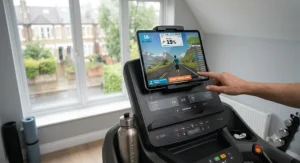
6. NordicTrack Commercial 2450 — best immersive hill simulation with real-world mapping
The 2450’s headline trick is genuinely clever: it can pull real-world terrain data from Google Maps and automatically adjust its incline and decline to match whatever route you’re virtually running, turning a flat London commute route into an accurate gradient simulation of every dip and rise along the way. That’s a meaningfully different experience from generic “hill program 4” on a basic console — you’re climbing an actual hill’s actual profile, just indoors and in your slippers.
What the spec sheet doesn’t fully convey is how immersive the pairing of a 24-inch pivoting touchscreen with that same 15% incline and -3% decline range becomes during a guided iFIT session; testers have described losing track of time entirely during 45-minute virtual hikes, which is not a sentence anyone writes about a treadmill very often. Based on the spec comparison with the Commercial 1750, the meaningful upgrade here is screen size and the pivot mechanism, letting you swing the display round for off-treadmill strength work between incline intervals — genuinely useful if your sessions mix hill walking with floor exercises.
Aggregated reviewer sentiment is enthusiastic about the tech layer specifically, with the auto-adjusting cooling fan and terrain-matching incline repeatedly singled out as features that justify the step up from the 1750 for buyers who’ll actually use the immersive content.
Pros:
- ✅ Google Maps terrain matching automatically adjusts incline to real routes
- ✅ Large 24-inch pivoting touchscreen usable for off-treadmill sessions too
- ✅ Auto-adjusting fan responds to workout intensity without input
Cons:
- ❌ Meaningful price premium over the 1750 for largely the same incline range
- ❌ Full feature set is effectively locked behind an iFIT subscription
At around £2,200-£2,600, the Commercial 2450 is for buyers who want their hill simulation to feel like an actual hill, not a menu setting.
7. NordicTrack X22i — best for genuinely steep incline and decline training
The X22i exists to answer one question decisively: what happens if you stop pretending 15% is “steep” and build a treadmill that goes to 40%? The answer, according to testers, is that you’ll barely stay upright without the tall incline handles NordicTrack thoughtfully bolted on either side — this is less “brisk walk” territory and more “climbing a flight of stairs that never ends” territory, and it changes what a treadmill is fundamentally for.
Here’s what most buyers overlook about the -6% decline half of that equation: downhill training at genuine gradient is almost impossible to find anywhere else on the domestic market, and it specifically targets the eccentric quadriceps loading that trail and mountain runners need for real descents without wrecking their knees on tarmac. Based on the spec comparison with every other machine on this list, nothing here comes close on raw range — NordicTrack’s own testing suggests walking at 40% incline can burn roughly five times the calories of the same pace at -6% decline, a genuinely staggering intensity gap for what still counts, on paper, as “walking.” The trade-off is size and price: this is a two-person assembly job weighing well over 200kg, and it will dominate a room the way a piece of gym equipment, rather than home furniture, tends to.
Reviewer sentiment is close to unanimous that the X22i delivers a training experience nothing else on the consumer market matches, with one long-term reviewer noting they’d “never enjoyed training on a treadmill” until this one, specifically because of what the incline range unlocks.
Pros:
- ✅ Unmatched 40% incline and -6% decline range for extreme terrain simulation
- ✅ Quiet, powerful 4.0 CHP motor holds pace steady even at maximum grade
- ✅ Large, well-cushioned deck genuinely absorbs impact at steep angles
Cons:
- ❌ Substantial size and weight demand serious dedicated floor space
- ❌ Full incline-automation experience depends on an iFIT subscription
At around £3,200-£3,400, the NordicTrack X22i is the specialist’s choice — overkill for casual incline walking, but genuinely unmatched if mountain-grade training is the actual goal.
Practical Usage Guide: Getting Started with Incline Training Without Wrecking Your Calves
Jumping straight to a steep grade on day one is the single fastest way to make your first week of incline training also your last. Start at a modest 3-5% for your first few sessions regardless of which machine you’ve bought, and let your calves, Achilles tendons and hip flexors adapt gradually — these are the areas that take the real hit from sustained gradient work, far more than your knees, which is actually one of incline training’s biggest selling points over flat running. A sensible progression looks like adding roughly 1-2% incline every week or two once a given grade starts to feel comfortable rather than punishing.
Once you’re established, common mistakes in the first 30 days include holding the handrails throughout an incline session, which quietly removes most of the muscle-recruitment benefit you’re supposedly there for, and ignoring your posture as the deck tilts — leaning too far forward strains your lower back, while standing too upright shortens your stride awkwardly. Maintenance-wise, incline mechanisms take genuinely more mechanical wear than a flat belt, so check the manufacturer’s lubrication schedule (typically every three months or so of regular use) and listen for any new grinding or straining noises specifically when the deck is tilting, since that’s usually where incline-specific problems announce themselves first.
Real-World Scenarios: Which Incline Treadmill Buyer Are You?
The 12-3-30 convert. If your entire treadmill life revolves around 12% grade, 3 mph, 30 minutes, and you have no ambition to run flat-out or train downhill, you don’t need to overspend. The Reebok GT40z or Xterra TRX2500 both deliver the exact gradient this workout demands without paying for decline capability or automation features you’ll never touch.
The hilly-race trainer. If you’re building toward an event with genuine elevation change — a trail marathon, a hilly half, a fell race — decline training matters as much as incline, since every descent you’ll face on race day loads your quads in ways flat training simply doesn’t prepare you for. The NordicTrack T Series 9 or Commercial 1750, both with real -3% decline, are the sensible fit here.
The mountain-training obsessive. If you’re genuinely trying to replicate steep alpine or fell terrain indoors — perhaps training for an ultramarathon with serious vertical gain — nothing on this list except the NordicTrack X22i gets close. The 40%/-6% range simply isn’t available anywhere else at a comparable price, and for this specific use case, it justifies its considerable cost.
Problem → Solution: Fixing Common Incline Treadmill Frustrations
Incline-specific problems tend to cluster around a handful of recurring complaints. First, the incline feels far harder than the percentage suggests it should — this is genuinely expected; a 15% treadmill grade only translates to roughly an 8.5-degree angle, but the metabolic cost climbs disproportionately faster than the angle itself, so trust your legs’ feedback over the number on the display. Second, the deck feels unstable or wobbly at steeper grades typically points to an under-built frame rather than user error; this is precisely why fixed-frame machines like the JTX Sprint 9 Pro or heavier flagship NordicTracks feel noticeably more secure than lightweight folding budget models once you’re past 10-12%.
Third, calf tightness or shin pain developing after a few weeks of incline training usually means you’ve progressed the gradient faster than your lower legs have adapted; dropping back a level or two and rebuilding more gradually resolves this far more reliably than pushing through it. Fourth, incline programs on iFIT-dependent machines feel locked or limited once a subscription trial ends — this is a genuine limitation of the ecosystem rather than a fault, and buyers who don’t want ongoing costs should prioritise machines like the Xterra TRX2500 or JTX Sprint 9 Pro that don’t gatekeep their core incline function behind a paywall. Finally, the treadmill struggles to hold speed steady while inclining or declining mid-workout is usually a motor or software limitation on cheaper machines; it’s the main practical reason premium models justify their more powerful motors specifically for smooth automated terrain transitions.
Gradient Walking Workout: Why the 12-3-30 Trend Actually Works
The viral 12-3-30 workout — a 12% incline, 3 mph, for 30 minutes — sounds almost too simple to matter, and yet the science behind it holds up considerably better than most fitness trends manage. According to research examining metabolic responses to incline walking, a 10% grade at a comparable pace increased metabolic cost by roughly 113% versus flat walking — more than doubling the effort for the same speed, purely from tilting the floor. That’s the whole trick: rather than asking your joints to absorb the impact of running faster, the workout asks your muscles to work harder against gravity at a pace gentle enough that your form barely changes.
The practical upshot for gradient walking workouts generally is that grade, not speed, is your primary intensity lever once you’re already walking briskly. A 155-pound person walking at 3.5 mph on flat ground burns roughly 267 calories an hour; add a genuine incline at the same speed and that figure climbs meaningfully into the 400-calorie range, all while staying in a sustainable aerobic zone rather than tipping into the anaerobic strain of sprinting. This is precisely why a treadmill with a real, motorised incline — not a token manual ramp — is worth prioritising over raw top speed if fat loss and joint-friendly cardio are your actual goals.
Treadmill with Automatic Incline: How Auto-Incline Actually Works
An automatic incline treadmill takes the guesswork and button-mashing out of gradient changes by letting either a pre-built program or a connected app control the deck angle for you mid-workout. On entry-level machines, this typically means selecting a built-in hill profile that cycles the incline up and down on a timer, giving you a structured interval session without manual input. On premium models like the NordicTrack range on this list, it goes considerably further: features like ActivePulse read your live heart rate and adjust incline automatically to keep you in a target training zone, while iFIT’s Automatic Trainer Control lets an on-screen instructor’s real hike or run dictate your treadmill’s grade in real time.
The genuine benefit here isn’t just convenience — it’s consistency. Manually adjusting incline mid-interval, especially at speed, is a distraction that can throw off your stride and, on a bad day, your balance. Automation removes that risk entirely, letting you focus purely on the effort rather than the console. The trade-off, as covered in our product breakdowns above, is that the most sophisticated auto-incline features on this list are generally locked behind an ongoing iFIT subscription, so factor that recurring cost into your decision rather than treating the treadmill’s sticker price as the full story.
Treadmill 15% Incline vs Treadmill with Steep Incline: How Much Grade Do You Actually Need?
| Incline Range | Typical Use Case | Best Suited To |
|---|---|---|
| 10-12% | 12-3-30 style walking, general hill training | Casual walkers, weight-loss focused training |
| 15% | Serious hill simulation, structured interval work | Hikers, trail runners, dedicated home gym users |
| 25-40%+ | Extreme gradient, mountain and altitude-style training | Ultramarathon and mountain-specific training |
The jump from 12% to 15% is a meaningful but manageable step up in intensity, and it’s the sweet spot for most buyers who want genuine hill training without needing specialist equipment. Beyond that, though, the curve gets dramatically steeper, both metabolically and in terms of hardware demands — research into steep incline treadmill walking found energy expenditure at a 40% grade reaching roughly 1.9 times higher than at 12-15%, and nearly triple that of a gentle 5% incline. That’s not a linear progression; it’s closer to an exponential one.
Practically speaking, this means a “treadmill with steep incline” in the 25-40% range genuinely is a different category of product from a standard 12-15% incline treadmill, not just a beefed-up version of the same thing. Unless you have a specific training goal that demands it — mountain running, altitude prep, extreme conditioning — the mid-range grade covers the overwhelming majority of useful, sustainable hill training without the price tag or the floor space commitment.
Treadmill with Decline and Incline: Why Downhill Training Matters Too
It’s easy to fixate on incline and forget that real hills go both ways, but decline training genuinely deserves its own attention rather than being treated as a footnote. Running or walking downhill changes your biomechanics substantially: your stride lengthens, your foot strike shifts forward, and your quadriceps have to work eccentrically — contracting while lengthening — to control your descent and stop you accelerating out of control. That’s a fundamentally different muscular demand from anything flat or uphill training provides, and it’s precisely the mechanism behind the notorious muscle soreness hikers feel two days after a big descent.
For anyone training toward an event with real elevation change, skipping decline practice indoors means turning up to race day having never actually rehearsed the movement pattern that will hurt the most. Of the seven machines here, the NordicTrack T Series 9, Commercial 1750, Commercial 2450 and X22i all offer genuine decline, ranging from a gentle -3% to an aggressive -6% on the X22i. If your training plan includes hills of any real significance, treating decline capability as optional rather than essential is arguably the single biggest gap in most home treadmill shopping.
Hill Simulation Treadmill: What iFIT and Google Maps Terrain Matching Really Do
The phrase “hill simulation treadmill” gets thrown around loosely, but on the machines that do it properly, it’s a genuinely different experience from a basic incline program. iFIT’s core promise is Automatic Trainer Control: when a filmed instructor climbs a real hill on screen, sensors and software translate that terrain data into live incline and decline adjustments on your deck, so your legs are working against the actual gradient the camera is showing you, not an approximation.
The Commercial 2450 pushes this further with genuine Google Maps integration, pulling elevation data from real streets and trails so you can, in theory, “run” your actual commute or a specific holiday route and feel every rise and fall along the way. What most buyers overlook is that this kind of terrain matching is only as good as your subscription — the hardware capability exists on the treadmill regardless, but the immersive content library and live terrain data require an active iFIT plan, so the “simulation” half of hill simulation genuinely depends on ongoing software, not just the motor underneath your feet.
How to Choose the Best Incline Treadmill for Your Home
- Decide whether decline actually matters to your goals. If you’re training for hilly events, prioritise machines with genuine negative grade; if you’re purely doing incline walking or the 12-3-30 workout, skip the extra cost.
- Check whether incline is powered or manual. A manual ramp you adjust by hand before starting is a fundamentally different experience from a button-press motorised incline you can change mid-workout.
- Match the incline range to your actual training, not your aspirations. Most buyers get far more genuine use from a reliable 12-15% than they ever will from an occasionally-used 40%.
- Factor in subscription costs before comparing sticker prices. iFIT-dependent automation features add a genuine recurring cost that changes the real-world value comparison between machines significantly.
- Prioritise frame stability at your target incline, not just at 0%. A treadmill that feels rock-solid flat can wobble alarmingly once tilted, so check reviewer notes on steep-grade stability specifically.
- Measure your ceiling height, not just floor space. Steeper inclines raise the front of the deck considerably, and low ceilings can become a genuine problem on machines with high maximum grades.
- Consider motor power relative to incline range. Holding a steep gradient under load demands considerably more from a motor than flat running does, so cheaper motors paired with high advertised inclines are worth scrutinising closely.
Common Mistakes When Buying an Incline Treadmill
The single most common mistake is comparing incline percentages without checking whether they’re genuinely motorised or just a manual adjustment you set once before starting — the difference in real-world usefulness is enormous, yet it’s rarely highlighted clearly in marketing copy. A second frequent error is assuming a higher advertised incline automatically means a better treadmill; as our seven-product breakdown shows, machines with lower max incline but genuine decline, sturdier frames, or better cushioning can be the smarter buy depending on your actual training goals.
Third, many buyers underestimate ongoing subscription costs when comparing sticker prices, effectively comparing a £1,800 machine that needs £180+ a year in software against a £900 machine that doesn’t, without factoring that gap into the real total cost. Fourth, ignoring frame weight and stability specifically at steep grades is a mistake that only becomes obvious after purchase, when a budget machine starts to feel genuinely unsettling above 10-12% incline under load. Finally, buying based on maximum incline alone while ignoring deck size is a classic error — a narrow, short deck becomes considerably more claustrophobic and harder to use safely once the front end is tilted well above your head height at the rear.
Long-Term Cost & Maintenance
The sticker price on an incline treadmill is rarely the full financial picture. iFIT-dependent machines — which covers the majority of the mid-range and premium options on this list — typically require an ongoing monthly subscription to unlock automatic incline features, guided terrain matching and the bulk of the on-screen content library; over a three-year ownership period, that recurring cost can meaningfully close the gap between a “cheaper” smart treadmill and a pricier subscription-free alternative like the JTX Sprint 9 Pro or Xterra TRX2500.
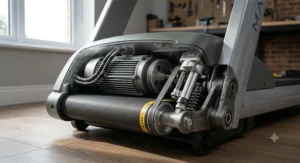
Mechanically, incline mechanisms do take more sustained wear than a flat belt alone, since the lift motor and hinge points are working every time the grade changes, not just when you’re moving. Regular lubrication on the manufacturer’s recommended schedule, prompt attention to any new grinding noises specifically during incline transitions, and honest weight-capacity headroom (buying a machine rated comfortably above your own weight extends component life considerably) all pay dividends over a multi-year ownership period. Fixed-frame machines generally show less long-term wear at the incline mechanism specifically, simply because there’s no folding hinge introducing an additional point of mechanical stress.
Features That Actually Matter (And Those That Don’t)
For genuine incline training, the two features that matter most are motorised, button-adjustable grade — as opposed to a manual pre-set ramp — and a deck and frame rated to remain stable at your target incline under load, not just at zero. Everything else is secondary. Screen size, speaker quality and even the specific streaming content library are genuinely nice-to-haves that improve the experience, but they don’t change whether the treadmill actually delivers the workout you’re buying it for.
Conversely, extreme maximum incline figures beyond roughly 15-20% are, for the overwhelming majority of home users, marketing headroom rather than genuine daily-use value — impressive on a spec sheet, rarely exercised in practice beyond the first excited fortnight of ownership. Decline capability, by contrast, is consistently undervalued relative to how useful it actually is for anyone training toward events with real elevation change. If you’re choosing between a machine with a slightly higher maximum incline and one with genuine decline plus a sturdier frame, the latter is very often the better real-world purchase.
Frequently Asked Questions
❓ What incline percentage is needed for the 12-3-30 workout?
❓ Is a treadmill with automatic incline worth the extra cost?
❓ Do I need a treadmill with steep incline, or is 15% enough?
❓ Why does a treadmill with decline and incline cost more than incline-only models?
❓ Can a hill simulation treadmill really replicate outdoor terrain accurately?
Conclusion
The best incline treadmill for you isn’t necessarily the one with the biggest number on the spec sheet — it’s the one whose gradient range actually matches what you’re training for, sitting on a frame stable enough to trust once that deck starts tilting. For most UK buyers chasing the 12-3-30 trend or general hill fitness, a genuine 12-15% incline from the Reebok GT40z or Xterra TRX2500 will do everything you need without the premium price tag or the subscription tax.
Step up to the NordicTrack range once decline training, automatic terrain matching or genuinely immersive hill simulation start to matter to your goals, and reserve the extreme 40% territory of the X22i for the specific, serious case of mountain-grade conditioning. Whichever you choose, start gentle, progress gradually, and let the gradient — not the speed dial — do most of the work. Your calves will thank you eventually, even if they’re furious with you around minute eleven.
Recommended for You
- Best Walking Pad 2026: 7 Under-Desk Treadmills Worth Buying
- Folding Treadmill for Small Flat: 7 Best Picks 2026
- Best Folding Treadmill UK 2026: 7 Expert Picks for Small Spaces
Disclaimer: This article contains affiliate links. As an Amazon Associate, I earn from qualifying purchases. If you purchase products through these links, we may earn a small commission at no additional cost to you.
✨ Found this helpful? Share it with your friends! 💬🤗
