In This Article
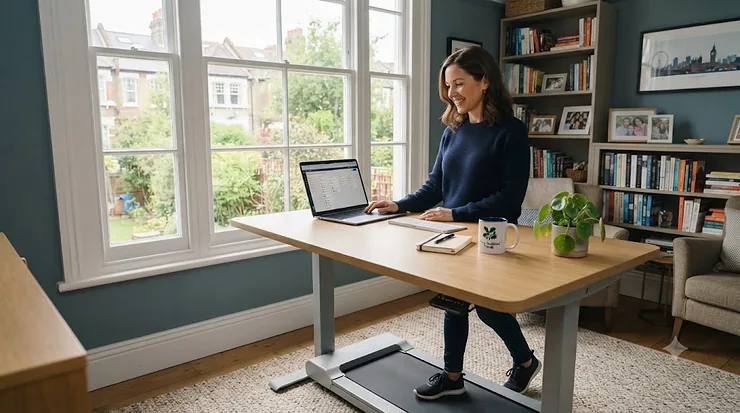
Somewhere around your third hour of back-to-back video calls, your legs quietly file a complaint. You don’t hear it — not consciously — but your lower back does, and so does whatever’s left of your resting heart rate by 4pm. That’s the entire pitch behind the best walking pad you can buy: not a gym replacement, not a marathon simulator, just a slim, motorised belt that slides under your desk and turns “sitting all day” into “walking gently while you answer emails.” Simple idea. Surprisingly hard to get right.
And here’s the thing nobody tells you before you start shopping — this category is a minefield of nearly identical black rectangles, most made in the same handful of factories and rebadged a dozen times over. Some are genuinely well-built. A fair few are flimsy decks with a motor that sounds like it’s grinding coffee. This guide cuts through that by comparing seven real machines you can actually buy right now, from a sub-£100 starter pad to a premium incline machine that’ll make your quads remember they exist. We’ll talk specs, sure, but more importantly we’ll talk about who each one actually suits — because the “best” walking pad for a 5’4″ flat-dweller doing gentle desk laps is not the same machine a 6’2″ home-office warrior wants for a proper incline session.
One housekeeping note before we dive in: prices below are given as ranges rather than fixed figures, because this category runs almost constant promotions — always check the live price on the listing before you buy.
Quick Comparison Table
Short on time? Here’s the cheat sheet. The full breakdown, with the honest pros and cons of each, is further down.
| Walking Pad | Top Speed | Incline | Price Range | Best For |
|---|---|---|---|---|
| UREVO CyberPad | 7.5 mph | Up to 14% auto | £520–£650 | Maximum incline and jogging speed |
| WalkingPad A1 Pro | 3.7 mph | None | £370–£460 | Premium build, brushless motor |
| DeerRun Q1 Classic Pro | 5 mph | None | £150–£220 | Heavier users, high weight capacity |
| WalkingPad P1 | 3.7 mph | None | £330–£390 | Tightest storage spaces |
| UREVO SpaceWalk | 3.7 mph | None | £180–£220 | Branded budget flat pad |
| MERACH Walking Pad | 3.72 mph | None | £85–£110 | Best under £100 |
| JTX MoveLight | 4.3 mph | None | £430–£480 | Warranty and after-sales support |
Look at that spread for a second — it isn’t really a straight line from “cheap and cheerful” to “expensive and brilliant.” The MERACH punches well above its price purely on review volume and belt width, while the JTX earns its premium tag almost entirely through warranty rather than raw speed. If you’re choosing on spec sheet alone, incline is the single biggest differentiator on this list; only the UREVO CyberPad brings meaningful incline into the mix, and it charges accordingly.
💬 Just one click — help others make better buying decisions too!😊
Top 7 Best Walking Pads: Expert Analysis
Affiliate disclosure: This post contains Amazon affiliate links. As an Amazon Associate, I earn from qualifying purchases, at no extra cost to you.
1. UREVO CyberPad — best for incline and jogging speed
Let’s start at the top of the range, because it makes everything else make more sense by comparison. The CyberPad tops out at 7.5 mph and climbs to a 14% auto incline — the steepest of anything on this list, and one of the steepest available anywhere near this price bracket.
Here’s what that incline figure actually buys you: walking at a gentle 2.5 mph on a 10% grade torches noticeably more calories than the same speed on the flat, and it recruits your glutes and hamstrings in a way flat walking simply can’t. Based on the spec comparison with flatter rivals, the CyberPad is really the only machine here built to double as a proper cardio session rather than a background activity — the brushless motor and companion SmartCoach app (complete with AI workout plans) back that up.
Reviewers consistently flag the incline and speed range as the standout, with the trade-off being obvious the second you check the price tag: this sits at roughly three times the cost of a flat pad with similar footprint. Worth it if incline actually matters to your routine; overkill if you just want to shuffle through Slack messages at 2 mph.
Pros:
- ✅ Steepest auto incline of any pad on this list
- ✅ 7.5 mph top speed covers walking through to jogging
- ✅ Brushless motor for quieter, longer-lasting performance
Cons:
- ❌ Meaningfully pricier than every flat-only alternative here
- ❌ Overkill if you only ever want gentle desk walking
For anyone chasing genuine cardio benefit rather than just “less sitting,” this is the one worth stretching the budget for.
2. WalkingPad A1 Pro — best premium build and folding mechanism
WalkingPad — made by Kingsmith — more or less invented the folding walking pad category, and the A1 Pro is where that heritage shows most clearly. The 180-degree fold is the detail that matters here: it halves the machine’s stored length, and frankly nothing else on this list folds down as cleanly or as fast.
What most buyers overlook when comparing motors on paper is the difference between brushed and brushless — the A1 Pro’s brushless motor runs quieter, produces no carbon dust, and simply lasts longer than the brushed units found in most sub-£300 pads. It comes in two weight-capacity variants, so it’s worth double-checking which one you’re ordering before you commit; the higher-capacity version costs a touch more but is the safer pick if you’re not travelling light.
Aggregated feedback on WalkingPad’s flagship models tends to praise the fold mechanism and app control (via the KS Fit app) most consistently, with the main gripe being warranty length rather than build quality — WalkingPad’s standard cover trails the two-year, in-home support that some competitors now offer.
Pros:
- ✅ Patented 180° fold, the cleanest storage solution here
- ✅ Brushless motor for quieter, longer-lasting operation
- ✅ KS Fit app tracks steps, distance and speed control
Cons:
- ❌ Standard one-year warranty trails premium rivals
- ❌ No incline option at any level
If storage space and design refinement top your list, this is the most convincing case for spending a little more.
3. DeerRun Q1 Classic Pro — best for heavier users and no-nonsense reliability
Not every walking pad needs to reinvent the wheel, and the Q1 Classic Pro is refreshingly happy just being a solid, dependable deck. No incline, no suitcase fold, no AI coach barking encouragement at you — just a 2.5 HP brushless motor, a remote, and the highest weight capacity of anything on this list.
That capacity is the headline here: it comfortably out-classes most rivals, which matters enormously if you’ve been quietly ruled out of this whole category by every other listing’s fine print. The 5 mph top speed stretches from a genuine stroll to a properly brisk walk, and the brushless motor keeps things quiet enough for calls even at the upper end of that range.
Reviewers on DeerRun’s own site have built up a substantial track record for this model, with recurring praise for reliability and relatively few complaints beyond the belt feeling a touch narrow for taller users pushing top speed. Given the price point, that’s a small trade for what’s on offer.
Pros:
- ✅ Highest weight capacity of any pad on this list
- ✅ 5 mph top speed covers stroll to brisk walk
- ✅ Strong track record of reviews backing reliability
Cons:
- ❌ No incline option available
- ❌ Belt feels tight for taller users at top speed
If you’ve been quietly excluded by low weight limits elsewhere, this is very likely your answer.
4. WalkingPad P1 — best for tight storage spaces
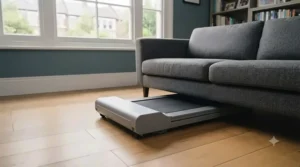
If your home office doubles as a guest room, a nursery, or basically anywhere that can’t permanently sacrifice floor space to a treadmill, the P1 solves that problem better than anything else here. The same 180-degree fold as the A1 Pro drops the stored footprint down to a genuinely tiny length — short enough to slide under a bed frame without a second thought.
On paper, this means the P1 trades some of the A1 Pro’s motor refinement (it runs a brushed rather than brushless motor) for a meaningfully lower price, which is a sensible compromise if outright storage convenience is your priority over long-term motor smoothness. It’s also noticeably heavier than budget alternatives, which sounds like a downside until you realise that extra mass is exactly what keeps it planted and stable underfoot.
This is genuinely one of the more reviewed walking pads on the UK market, and the recurring theme in that feedback is exactly what you’d hope: people bought it because it disappears when they’re done, and it does.
Pros:
- ✅ Folds to one of the shortest lengths in this category
- ✅ Extra weight adds stability during use
- ✅ Large review base gives real buying confidence
Cons:
- ❌ Lower weight capacity than several rivals here
- ❌ Brushed motor, less refined than the A1 Pro’s
For anyone whose walking pad needs to vanish the moment the workday ends, this is the pick.
5. UREVO SpaceWalk — best branded budget flat pad
Sitting between the true budget options and the mid-range crowd, the SpaceWalk is UREVO’s way of saying “you don’t need the flagship CyberPad to get our name on your walking pad.” It’s a straightforward flat deck with SmartCoach app integration, no incline, and a brushed motor doing honest, unglamorous work.
Here’s what the spec sheet won’t tell you outright: buying into a recognised brand at this price point buys you app support and a more established customer service trail than most anonymous Amazon-only listings offer, even if the physical hardware itself isn’t dramatically different from cheaper alternatives. It’s the safer bet for anyone nervous about ordering from a brand they’ve genuinely never heard of.
Build quality reads as adequate rather than exceptional based on aggregated feedback across UREVO’s range — solid enough for daily desk walking, without quite matching the CyberPad’s more premium feel.
Pros:
- ✅ Recognised brand with established app support
- ✅ Straightforward flat deck, easy to set up and use
- ✅ Reasonable middle-ground price for a named brand
Cons:
- ❌ Brushed motor, less refined than premium alternatives
- ❌ No incline option, purely flat walking
If you want a brand name without stretching to flagship pricing, this lands in a sensible spot.
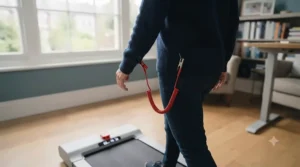
6. MERACH Walking Pad — best under £100
Every category needs an honest entry point, and this is it. At well under the £100 mark, the MERACH hits a genuinely useful sweet spot: sturdier than most machines at this price, and backed by one of the largest review counts of any budget pad currently sold in the UK.
The standout spec here is belt width — it’s one of the wider decks in this entire guide, which makes a real difference to how natural your stride feels, particularly if you’ve got broader shoulders or simply prefer not walking a tightrope. What most buyers overlook about budget pads generally is that a narrow belt is usually the first thing to feel wrong in daily use, long before motor power becomes an issue — MERACH sidesteps that specific complaint by prioritising deck width even at this price.
The volume and consistency of positive feedback for this listing is genuinely unusual for a sub-£100 product in this category, where flimsy build and vanishing customer support are common complaints.
Pros:
- ✅ Wide belt for a more natural stride than most budget rivals
- ✅ Large, consistently positive review base
- ✅ Genuinely low entry price for the category
Cons:
- ❌ No incline, flat walking only
- ❌ Motor and materials feel basic compared with premium picks
If you’re just testing whether desk walking suits your routine at all, start here before spending more.
7. JTX MoveLight — best for warranty and after-sales confidence
We’re closing on the pick that wins not through speed, incline, or fancy folding, but through sheer confidence in what happens if something breaks. JTX is a British fitness brand, and the MoveLight’s headline feature is a genuinely rare two-year, in-home repair warranty — parts and labour included, an engineer sent to your door rather than a box shipped back and forth.
A quick availability note, in the spirit of honesty rather than assumption: JTX sells primarily through its own website, though stock does surface through Amazon UK via authorised sellers from time to time — it’s worth checking the current listing rather than assuming Amazon is guaranteed to have it in stock. The 4.3 mph top speed is a deliberate ceiling rather than a limitation; it’s tuned specifically for walking-pace video calls without breathlessness creeping into your voice.
Reviewers and independent UK reviewers alike tend to single out build confidence and after-sales support as the reason to pick this over cheaper Amazon-only alternatives — the trade-off being a price that sits above most of this list, justified almost entirely by what happens after you’ve clicked “buy.”
Pros:
- ✅ Two-year in-home repair warranty, rare in this category
- ✅ British company with a strong customer service reputation
- ✅ Arrives ready-assembled, genuinely no tools required
Cons:
- ❌ No incline and a lower top speed than jogging-capable rivals
- ❌ Costs more than most Amazon-native alternatives
If peace of mind matters more to you than shaving off the last £100, this is the sensible splurge.
Practical Usage Guide: Setting Up Your Walking Pad for WFH Success
Getting a walking pad delivered is the easy part. Making it a habit rather than an expensive coat rack is where most people actually struggle, so let’s talk through the first thirty days properly. Start slow — genuinely slow. A walking pad set to 1.5–2 mph feels almost comically gentle at first, and that’s precisely the point: your brain needs to learn that typing and walking can coexist before you push the pace up.
Desk height matters more than most buyers expect going in. Standing desks pair obviously well here, but if you’re using a walking pad under a fixed-height desk, check there’s genuinely enough clearance for your natural arm position once the deck’s added height is factored in — a few centimetres makes a bigger difference than it sounds. Cable management deserves five minutes of your first day too: a laptop charger cable trailing across a moving belt is asking for trouble.
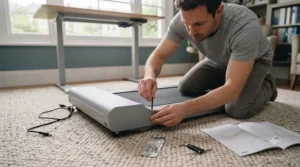
On maintenance, a walking pad used daily for desk work needs occasional belt lubrication and an alignment check every few months — skipping this is the single most common cause of the annoying squeak or drift that creeps in after a few months of regular use. Most manuals include the specific lubrication schedule; it’s worth actually reading that page rather than binning the booklet on day one.
Real-World Scenarios: Matching a Walking Pad to Your Workday
Rather than pretending every buyer has identical needs, it’s worth walking through a few genuinely different situations. If you’re in a one-bedroom flat with a small desk nook and you mostly want to quietly reduce how many hours you spend fully seated, the MERACH or UREVO SpaceWalk suits that brief perfectly — compact, unfussy, and not a huge investment if it turns out desk walking isn’t for you.
If you’re a taller home worker who’s been quietly filtered out of this category by narrow belts and low weight limits, that’s a genuinely common and frustrating problem — and it’s exactly where the DeerRun Q1 Classic Pro earns its keep, thanks to that higher weight capacity and slightly wider deck. And if you’re someone who already walks for fitness rather than just habit — someone who’d genuinely use an incline setting rather than let it gather dust — the UREVO CyberPad is worth the extra spend in a way it simply wouldn’t be for a casual once-a-day walker.
How to Choose the Best Walking Pad: 7 Expert Criteria
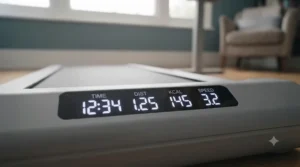
What is a walking pad? In short, it’s a slim, low-profile, low-speed treadmill — usually without handrails — designed to slide under a desk so you can walk gently while working rather than sitting still all day.
Once you’ve decided you want one, here’s the order to work through the decision in:
- Desk clearance first. Measure the actual gap under your desk before shopping — a machine that’s 15cm tall on paper can still be a squeeze once you factor in your chair height.
- Weight capacity, honestly checked. Don’t assume; check the stated limit against your own weight with a sensible margin, since several budget pads sit lower than you’d expect.
- Speed range needed. Most desk walkers never exceed 3 mph — only go for a faster, jogging-capable model if you’ll genuinely use the extra range.
- Incline or flat. Incline turns gentle walking into real cardio, but it adds significant cost — decide honestly whether you’ll use it before paying for it.
- Noise tolerance. If you’re on calls most of the day, a brushless motor is worth the premium; brushed motors are noticeably louder at speed.
- Storage need. A 180-degree folding hinge halves stored length; a flat-fold design stays longer but slimmer — match this to your actual floor space.
- Warranty length. Check what happens if something breaks — cover ranges from twelve months handled through Amazon returns up to two years with in-home repair.
Working through these in order, rather than starting from “which one has the best photos,” genuinely saves a returns cycle later.
Walking Pad Under £300: What You Actually Get at Each Price Point
Sticking to a walking pad under £300 is entirely realistic, but it’s worth being honest about what changes as you move through that bracket rather than assuming price and quality track perfectly together. At the very bottom, sub-£100 machines like the MERACH deliver a genuinely usable flat pad — the trade-off is motor refinement rather than core functionality, since a brushed motor at gentle walking speeds still does the job perfectly well for most people.
Moving up toward the £150–£220 range brings machines like the DeerRun Q1 Classic Pro and UREVO SpaceWalk into play, where you start seeing higher weight capacities, wider belts, and more established brand backing. What most buyers overlook at this stage is that the biggest quality jump within a sub-£300 budget isn’t speed or incline — it’s belt width and motor type, both of which affect daily comfort far more than a headline speed figure most people will never actually use.
Above roughly £300, you’re generally paying for either a brushless motor, a genuinely refined folding mechanism, or a meaningfully longer warranty — the WalkingPad P1 sits right at this threshold and is a reasonable illustration of exactly that trade-off in action.
Slim Walking Belt vs Wide Deck: Does Belt Size Matter?
It’s tempting to treat belt width as a minor spec buried in the small print, but honestly, it’s one of the details that affects daily comfort the most. A narrow, slim walking belt keeps the whole unit more compact and easier to store, which matters enormously in a small flat — but it also means less margin for error with your foot placement, especially at faster speeds or for broader-framed users.
Wider decks, like the one on the MERACH, trade a little extra footprint for a noticeably more natural stride — you’re less likely to catch a foot on the edge rail mid-stride, which matters more than it sounds once you’re an hour into a walking session while trying to concentrate on a spreadsheet. Here’s what most product photos won’t make obvious: two pads that look nearly identical in marketing shots can differ by several centimetres in belt width, and that gap is very noticeable underfoot even if it looks trivial on a spec sheet.
The honest advice is this: if your space is genuinely tight, prioritise a slim walking belt and accept the slightly narrower stride; if you’ve got the floor space to spare, a wider deck is worth choosing over a slimmer profile almost every time.
Common Mistakes When Buying a Walking Treadmill for Desk Use
The single most common mistake is buying based on top speed alone, when the reality is that most desk walkers rarely exceed a gentle 2–3 mph during actual working hours — a 7.5 mph ceiling is wasted if you’ll never realistically use more than half of it. Check your actual intended use before letting a big speed number sway the decision.
A second frequent misstep is ignoring desk clearance until after the walking pad arrives, only to discover the combined height of desk, chair, and deck puts your arms at an awkward angle for typing. Measuring properly beforehand, factoring in your existing chair height, avoids an expensive repositioning exercise later.
Thirdly, buyers regularly underestimate how much noise matters until they’re mid-call and the motor’s whirring away underneath them — brushed motors are meaningfully louder than brushless ones at anything above a slow walk, and it’s a detail easy to skip past on a spec sheet but impossible to ignore in daily use. Finally, skipping the maintenance schedule entirely remains one of the most avoidable causes of belt drift and unwanted noise creeping in after a few months.
Best Under Desk Treadmill vs Full-Size Treadmill: Which Wins for WFH?
It’s worth comparing the walking pad approach directly against simply buying a compact full-size treadmill instead, since both genuinely solve the “too much sitting” problem, just differently.
| Approach | Space Needed | Speed Range | Typical Cost | Best For |
|---|---|---|---|---|
| Walking Pad (Under Desk) | Minimal, slides away | 3–7.5 mph | £85–£650 | Desk-based walking alongside work |
| Full-Size Treadmill | Significant, rarely foldable flat | Up to 12+ mph | £400–£1,500+ | Dedicated workout sessions |
A full-size treadmill wins decisively on raw exercise capability — proper running, steeper genuine incline, sturdier decks built for higher-impact use. But it demands permanent floor space and generally can’t be used while you’re actually working, which somewhat defeats the specific purpose of this whole category. A walking pad, by contrast, is built entirely around coexisting with a working day: slim enough to tuck away, quiet enough for calls, and priced low enough that trying the habit doesn’t require a serious financial commitment. If your goal is genuinely “move more while I work” rather than “replace my gym membership,” the walking pad wins this comparison fairly comfortably.
Slim Treadmill for Office: Noise, Space and Video-Call Etiquette
Office use — whether that’s a shared home office or an actual workplace desk — adds a layer of consideration that a private bedroom setup doesn’t need to worry about. A slim treadmill for office use needs to genuinely disappear both visually and acoustically: nobody wants their desk mate wondering what that faint hum is during a client call.
Brushless motors earn their premium here specifically because of this scenario — the UREVO CyberPad and WalkingPad A1 Pro both run noticeably quieter at typical desk-walking speeds than the brushed alternatives on this list, which matters far more in a shared office than it would at home alone. Profile height matters too: a slimmer deck sits lower under a desk, reducing how visible it is to colleagues walking past and keeping your typing posture closer to normal.
There’s also a simple courtesy angle worth mentioning: using a walking pad in a genuinely shared office space is worth flagging with colleagues first, purely so the quiet whirring sound doesn’t become a mystery someone else has to solve mid-meeting.
Standing Desk Add-On: Pairing Your Walking Pad With the Right Desk
Treating a walking pad purely as a standing desk add-on is honestly the most natural way to think about this whole category, since the two pieces of kit solve overlapping but distinct problems — one keeps you upright, the other keeps you moving. If you’re pairing the two, desk height range matters more than almost anything else on the spec sheet: you’ll need enough upward adjustment on the desk to comfortably clear the walking pad’s own added height, which typically runs to several centimetres depending on the model.
Cable routing deserves a proper think here too — a desk that raises and lowers combined with a treadmill belt underneath means power cables need genuine slack, not just enough for a static setup. Anti-fatigue matting under the whole rig, rather than directly under the walking pad itself, tends to work better than skipping it entirely, since it reduces vibration transfer to the desk above.
For anyone building a WFH setup from scratch rather than retrofitting one, buying the standing desk and walking pad together, with clearance measurements checked against each other before either purchase, avoids the fairly common scenario of buying a lovely desk that simply won’t rise high enough to clear the treadmill comfortably.
What to Expect: Real-World Performance of Desk Treadmills
Spec sheets and product photography only tell half the story, so it’s worth being straightforward about how these machines perform once they’re genuinely part of a working day rather than sitting in a marketing shot. Speed consistency at the lower end — 1.5 to 2.5 mph — tends to be reliable across most models on this list; it’s really only at the top of each machine’s range that motor quality starts to visibly separate the premium options from the budget ones.
Noise, in practice, is less about the decibel figure quoted on a listing and more about your specific desk and flooring — a wobbly desk on a hard floor transmits far more vibration noise than the motor itself typically produces, which is worth bearing in mind before assuming a “quiet” rated pad will be silent in your specific setup. Belt drift and the odd squeak tend to appear gradually over months of regular use rather than immediately, which is exactly why the maintenance schedule mentioned earlier genuinely matters rather than being boilerplate advice.
On the whole, the gap between “not moving at all during the working day” and “gently walking for a chunk of it” is one of the more meaningful, low-effort health changes available to anyone with a desk job — which is really the entire premise this whole category is built on.
Long-Term Cost & Maintenance
Thinking past the sticker price changes the calculation meaningfully. A sub-£100 pad that needs replacing within eighteen months due to a worn brushed motor may end up costing more over three years than a pricier brushless model that simply keeps running. Warranty length factors directly into this: a two-year, in-home repair warranty effectively removes the risk of an expensive early failure, which is worth weighing against the upfront saving of a cheaper, shorter-warranty alternative.
Maintenance itself is genuinely minimal across this whole category — belt lubrication every few months and the occasional alignment check covers most of what’s needed, and most of it takes under ten minutes. According to NHS guidance on the benefits of regular movement, even short bursts of brisk walking count meaningfully toward weekly activity targets, which is a useful way to reframe the investment: you’re not just buying a machine, you’re buying a low-friction way to hit a genuinely evidence-backed health target most desk workers otherwise miss.
For anyone treating this as a long-term habit rather than a New Year’s resolution destined for the loft, spending slightly more upfront for a longer warranty and better motor tends to work out cheaper per year of actual use.
Safety & Ergonomics: What UK Home Workers Should Know
Desk-based walking pads sit in an interesting overlap between fitness equipment and office furniture, and it’s worth treating the ergonomics seriously rather than as an afterthought. The Health and Safety Executive’s guidance on display screen equipment is written for standard seated desk setups, but the underlying principles — screen height, wrist position, avoiding glare — apply just as much once you’ve added a moving deck underneath; if anything, checking your setup against that guidance becomes more important, since a walking pad changes your natural posture and reach compared with sitting still.
On safety specifically, a stable, level floor surface matters more than most buyers assume before their first session — an uneven or heavily carpeted surface can affect belt tracking and stability at speed, so a firm, flat base is worth prioritising over convenience of placement. It’s also sensible to keep pets and young children away from a running belt, and to fully power down the unit rather than just pausing it when you step away for an extended period.
The NHS’s physical activity guidelines for adults recommend building movement into the day in whatever way fits realistically — a walking pad is one legitimate route toward that target, though it’s sensible to build up gradually rather than assuming day one should match your eventual routine.
Frequently Asked Questions
❓ What is the best walking pad for a small home office?
❓ How fast should I walk on a walking pad while working?
❓ Do I need incline on a walking pad?
❓ Can a walking pad work as a standing desk add-on?
❓ What's the difference between a walking pad and an under desk treadmill?
Conclusion
There’s genuinely no single best walking pad for everyone here, and that’s rather the point of comparing seven real machines properly instead of just picking whatever’s top of an algorithm-sorted list. If incline and jogging speed matter to you, the UREVO CyberPad earns its premium price tag. If storage space is your biggest constraint, the WalkingPad P1’s fold is hard to beat. Heavier users and taller frames are best served by the DeerRun Q1’s higher weight capacity, and anyone who simply wants peace of mind if something breaks should take a serious look at the JTX MoveLight’s warranty.
What unites every entry on this list is the same basic promise: turning otherwise wasted sitting hours into gentle, cumulative movement, without demanding a gym membership or a dramatic lifestyle overhaul. Measure your space, be honest about the speed and incline you’ll actually use, and check the current price before buying — get those three things right and any of these seven should serve you well for years, not months.
✨ Ready to Walk Your Way Through the Workday?
🔍 Take your home office from sedentary to gently active with any of the seven walking pads above. Click through to check current pricing and availability, and give your afternoon slump the send-off it deserves!
Recommended for You
- Folding Treadmill for Small Flat: 7 Best Picks 2026
- Best Folding Treadmill UK 2026: 7 Expert Picks for Small Spaces
- Best Electric Treadmill Under £500 UK: 7 Top Picks for 2026
Disclaimer: This article contains affiliate links. As an Amazon Associate, I earn from qualifying purchases. If you purchase products through these links, we may earn a small commission at no additional cost to you.
✨ Found this helpful? Share it with your friends! 💬🤗
