
In This Article
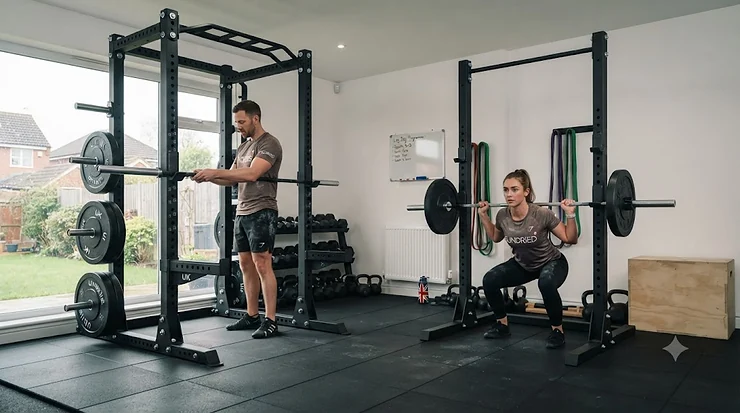
The full power rack vs half rack decision is the one that trips up almost every first-time home gym buyer — and it’s usually made in the wrong order. People pick a rack, then discover it doesn’t fit the garage, or that it can’t do half the exercises they actually wanted. A full power rack surrounds you on four uprights, giving you J-cups, safety bars, and often a pull-up bar and cable attachments inside one enclosed cage. A half rack drops the rear two uprights, trading a bit of built-in safety and attachment space for a smaller footprint and, usually, a smaller price tag. Neither is objectively “better” — they’re built for different rooms and different lifters.
I’ve spent the past few weeks digging through spec sheets, forum threads, and aggregated Amazon.co.uk review data to work out which racks genuinely earn their keep in a British garage, box room, or converted outbuilding. What follows isn’t a rewritten product listing — it’s a proper comparison, built around real steel gauges, real weight capacities, and honest commentary on where each rack falls short. Whether you’re squatting alone in a narrow garage or building out a fully-kitted strength studio, you’ll find a rack (and a rationale) that fits.
We’ll cover seven real products spanning roughly £180 to £1,500, walk through the practical differences between full and half designs, and finish with a straightforward buyer’s framework so you’re not left second-guessing your order.
Quick Comparison: Top Power Racks at a Glance
| Rack | Type | Steel Frame | Max Load | Best For |
|---|---|---|---|---|
| GYM MASTER Heavy Duty Half Power Cage | Half | 50mm tube | 200kg | Tightest budgets and spaces |
| GYM MASTER GM1 Power Rack | Full | 2.0mm steel | 250kg | Budget full-cage safety |
| Sunny Health & Fitness Power Zone Rack | Full/bench hybrid | Reinforced steel | 275-455kg | All-round versatility |
| SPORTNOW Power Cage with Cable Pulley | Full | Reinforced steel | 900kg static | Cable-based training |
| Mirafit M3 Half Rack | Half | 60x60x3mm (11 gauge) | Commercial-grade | Freestanding, no bolt-down |
| Mirafit M3 Power Rack | Full | 60x60x3mm (11 gauge) | Commercial-grade | Long-term, upgradeable setup |
| Strongway Multi Gym Smith Machine | Full/all-in-one | Reinforced steel | Weight-stack rated | Cable crossover + Smith combo |
Looking at the spread above, the split isn’t really budget versus premium — it’s footprint versus feature set. The two half racks (GYM MASTER Heavy Duty Half Power Cage and Mirafit M3 Half Rack) sacrifice the rear uprights to save floor space, while the full cages add rear stability, more attachment points, and in some cases cable systems. Steel gauge is the detail worth lingering on: 11-gauge (3mm) tube, as used on both Mirafit M3 models, is the same thickness commercial gyms specify, whereas budget 2mm frames flex slightly more under heavy static load. That difference rarely matters at 60kg; it matters a great deal at 180kg.
💬 Just one click — help others make better buying decisions too!😊
Top 7 Power Racks for Home Gym: Expert Analysis
1. GYM MASTER Heavy Duty Half Power Cage — cheapest genuine safety cage on this list
The standout here is the price-to-safety ratio: for under £200, you get proper full-length safety bars rather than the flimsy spotter pins some budget racks ship with. The frame is built from 50mm reinforced steel tube, rated to a 200kg barbell max and 200kg pull-up max, with dimensions of roughly 210cm high, 119cm wide, and 136cm deep. In practice, that 200kg ceiling is plenty for the vast majority of home lifters — you’d need to be squatting well above double bodyweight before it becomes a limiting factor. This is the rack for someone converting a small garage corner or box room who wants to squat and bench safely without spending big, and it comes with an adjustable dip bar accessory bolted onto the frame, which most half racks in this price bracket skip entirely. Aggregated Amazon.co.uk review sentiment for GYM MASTER’s half cage range is consistently positive on build quality and value, though a recurring theme in reviews is that assembly takes patience and the instructions could be clearer — budget an evening, not an hour.
Pros:
- ✅ Full-length safety bars, not just spotter pins
- ✅ Adjustable dip bar accessory included as standard
- ✅ Compact footprint suits small garages
Cons:
- ❌ 200kg cap will limit advanced powerlifters
- ❌ Assembly instructions criticised as unclear
Price range: under £200 at the time of research. For a first rack in a genuinely tight space, this is hard to beat on value — check current price before ordering, as Amazon pricing shifts often.
2. GYM MASTER GM1 Power Rack — best budget full cage with 25-level adjustment
What most buyers overlook about entry-level full cages is how much the adjustment granularity matters day to day — and the GM1’s 25 laser-cut height levels are genuinely useful for dialling in J-cup and safety bar height precisely, rather than settling for “close enough.” Built from 2.0mm steel with a 250kg max load, it includes a multi-grip pull-up bar and two full-length safety bars with HDPE-lined J-cups to protect your barbell’s finish. Based on the spec comparison with the half cage above, the extra £50-70 buys you the enclosed four-post design, which matters most for bench pressing solo — the rear uprights give you somewhere to rack a spotter arm or simply feel less exposed under a heavy bar. It suits a lifter who wants proper squat and bench safety in a full cage but isn’t ready to commit to commercial-grade 11-gauge steel pricing. Reviewers consistently note the GM1 feels sturdy for the price, with occasional comments about the powder coating chipping if attachments are swapped frequently.
Pros:
- ✅ 25 adjustment levels for precise J-cup height
- ✅ HDPE-lined J-cups protect barbell finish
- ✅ Enclosed four-post design for solo bench safety
Cons:
- ❌ 2.0mm steel is thinner than commercial 11-gauge racks
- ❌ Powder coat can chip with frequent attachment changes
Price verdict: around £250 represents solid entry-level value for a full cage — check current price, as GYM MASTER runs frequent promotions.
3. Sunny Health & Fitness Power Zone Rack — best all-rounder for combined bench and rack training
This is the rack that turns up again and again in aggregated review data as a genuine crowd favourite, sitting at 4.6 stars across well over a thousand Amazon.co.uk reviews — a volume that gives real confidence in the sentiment being representative rather than cherry-picked. The standout feature is versatility: it’s rated for 275-455kg depending on configuration, includes pull-up and pulley options, plate storage posts, a preacher curl pad, and a leg developer attachment, all built around a safety latch system on the bench itself. What the spec sheet won’t tell you, but reviewers note repeatedly, is that this rack rewards patience during assembly but then holds its adjustment settings reliably for months of squatting and pressing without loosening — a common complaint with cheaper multi-gyms. It’s best suited to someone who wants one machine that replaces both a squat rack and a home multi-gym bench, rather than buying separate pieces. Budget-conscious buyers and small-space families get particularly good value here, since the leg developer and preacher curl functions mean fewer additional purchases down the line.
Pros:
- ✅ Highest review volume and rating of any rack here
- ✅ Combines rack, bench, preacher curl, and leg developer
- ✅ Holds adjustment settings well over time
Cons:
- ❌ Bulkier footprint than a dedicated squat rack alone
- ❌ Assembly is reported as lengthy
Price verdict: in the £250-£300 range, this delivers the broadest functionality per pound on this list — check current price on Amazon.co.uk.
4. SPORTNOW Power Cage with Adjustable Cable Pulley System — best for cable-based training
The SPORTNOW Power Cage stands out for one reason: it’s the only rack in this line-up built around an integrated cable pulley system from the outset, rather than treating cables as a bolt-on afterthought. With a rated 900kg static capacity, a pull-up bar, dip station, and landmine attachment, it functions closer to a compact functional trainer than a traditional squat rack, and it currently holds Amazon’s Choice status for “power rack with cable system.” Here’s what to weigh: the dual cable pulleys open up lat pulldowns, cable rows, tricep pushdowns, and functional training movements that a bare power cage simply can’t offer, which is exactly why it appeals to lifters who’ve outgrown dumbbells-only home gyms but don’t have room for a separate cable machine. On the flip side, that extra hardware adds width and depth versus a stripped-back rack, so measure your garage carefully before committing. Aggregated review sentiment sits around 4.6 stars, with buyers repeatedly praising the pulley smoothness relative to the price point.
Pros:
- ✅ Integrated dual cable pulley system as standard
- ✅ Landmine and dip station attachments included
- ✅ Amazon’s Choice with strong review sentiment
Cons:
- ❌ Larger footprint than cable-free full racks
- ❌ Cable attachments add ongoing maintenance points
Price verdict: in the £350-£400 range, this is genuinely more functionality per pound than most cable-equipped alternatives on Amazon.co.uk.
5. Mirafit M3 Half Rack — best freestanding half rack, no bolt-down required
The Mirafit M3 Half Rack solves a problem that trips up a lot of renters and garage-gym owners: it uses a flat-foot design that provides real stability without needing to bolt the frame to the floor, while still offering optional floor fixing brackets for anyone who wants extra rigidity. Built from the same 60mm x 60mm x 3mm (11-gauge) steel as its full-rack sibling, it carries UHMW-lined J-cups to protect barbell knurling, west-side hole spacing for precise 1-inch adjustment through the bench press zone, and laser-cut height markings at 5-hole intervals for quick recalibration between lifters. Based on the spec comparison with budget half cages, the commercial-grade steel gauge here is the real differentiator — this is the same tubing thickness used in Mirafit’s premium full rack, just arranged in a two-post configuration to save depth. It’s the obvious pick for anyone who wants Mirafit’s build quality but doesn’t have the 90cm-plus depth a full cage demands, or who might relocate the rack in future without drilling into a landlord’s garage floor.
Pros:
- ✅ Freestanding stability without bolting to the floor
- ✅ Same 11-gauge steel as the premium full rack
- ✅ West-side hole spacing for precise adjustment
Cons:
- ❌ No rear uprights limits attachment options
- ❌ Pricing sits above most budget half cages
Price verdict: at roughly £300-£380 at the time of research, it’s a premium price for a half rack, but the steel quality justifies it for buyers planning to keep it long term — check current price, as Mirafit runs seasonal offers.
6. Mirafit M3 Power Rack — best premium full rack for a long-term setup
If you’re building a garage gym you don’t intend to outgrow, the Mirafit M3 Power Rack is the rack most UK home-gym communities point serious lifters towards, and the spec sheet backs that reputation up. The 60mm x 60mm x 3mm (11-gauge) steel frame is genuinely commercial-spec, available across three heights (188cm, 208cm, and 228cm — including a short model for lower ceilings) and two internal depths, with west-side hole spacing giving 1-inch precision through the bench zone and 2-inch spacing throughout the rest of the frame. What most buyers overlook when comparing racks on price alone is the attachment ecosystem: Mirafit sells cable pulley kits, monolifts, extension bays, and storage poles that all bolt straight onto the M3 platform, meaning this rack can grow with your training rather than being replaced by it. Reviewers on Mirafit’s own site and Amazon consistently praise the fit and finish, and the brand backs every unit with a 30-day money-back guarantee — a level of after-sales confidence rarer among imported budget cages.
Pros:
- ✅ Commercial-grade 11-gauge steel throughout
- ✅ Three heights and two depths to fit most garages
- ✅ Wide official attachment ecosystem for future upgrades
Cons:
- ❌ Base price sits well above budget full cages
- ❌ Full-depth versions need significant floor space
Price verdict: from around £400, climbing toward £600-£900 once you add the cable pulley system or extension bay — genuinely solid value for a rack built to last a decade, but check current price before configuring your build.
7. Strongway Multi Gym Smith Machine — best all-in-one premium setup with cable crossover
At the top of this list sits the Strongway Multi Gym Smith Machine, which folds a Smith machine, cable crossover station, weight stack, and pull-up bar into a single footprint — effectively replacing three separate pieces of commercial gym equipment. The standout advantage is guided-bar safety: a Smith machine’s fixed vertical track lets you train squats, presses, and rows without a spotter, which is exactly the reassurance solo home-gym lifters often say they’re missing from a standalone power rack. On paper this means less versatility for free-weight variations than an open power cage offers, since the barbell path is locked to the frame, but what you gain is the ability to train heavy and safely alone, plus the cable crossover unlocks flye, pulldown, and functional movements a bare rack can’t touch. This is squarely a premium purchase — the price reflects a genuinely different category of equipment, closer to light-commercial kit than a home power rack, and it suits a dedicated home gym room rather than a shared garage corner.
Pros:
- ✅ Guided Smith machine bar enables safe solo lifting
- ✅ Integrated cable crossover and weight stack
- ✅ Replaces multiple separate machines in one footprint
Cons:
- ❌ Significantly higher price than any other rack here
- ❌ Fixed bar path limits free-weight exercise variety
Price verdict: in the £1,400-£1,600 range, this is a serious investment aimed at buyers who want a near-commercial home gym rather than a simple squat rack — check current price on Amazon.co.uk before committing.
Full Power Rack vs Half Rack: What’s the Real Difference
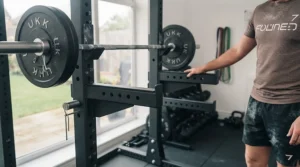
Strip away the marketing copy and the full power rack vs half rack choice comes down to three variables: depth, attachment capacity, and solo-training confidence. A full rack’s four-post design typically needs 90cm-140cm of depth once you account for the frame and safety bars, while a half rack like the GYM MASTER Heavy Duty Half Power Cage or Mirafit M3 Half Rack can often sit comfortably in 60-80cm, because there’s nothing behind the front uprights but open floor.
| Factor | Full Power Rack | Half Rack |
|---|---|---|
| Typical depth | 90-140cm | 60-90cm |
| Rear attachment points | Yes (cable systems, landmines) | Limited or none |
| Solo bench press confidence | Higher (fully enclosed) | Slightly lower (open rear) |
| Typical UK price (2026) | £250-£900+ | £180-£380 |
The analysis holds up in practice: if you’re bench pressing alone regularly, the enclosed structure of a full cage like the Mirafit M3 Power Rack or GYM MASTER GM1 Power Rack gives you safety bars on both sides of your torso, not just in front, which matters if a rep goes wrong and you need to bail sideways rather than straight down. Half racks compensate reasonably well for squats, since the safety bars still catch a failed rep from below, but they offer less reassurance for bench work performed without a spotter. Where half racks win decisively is footprint and, often, price — the Mirafit M3 Half Rack uses identical 11-gauge steel to its full-rack sibling but needs roughly 40% less depth, which is the deciding factor for anyone converting a single garage bay rather than a double.
How to Choose a Power Rack for Home Gym
Choosing a power rack for home gym use comes down to matching hard constraints — ceiling height, floor depth, and budget — before you even look at attachments. Here’s the process I’d actually recommend:
- Measure your ceiling height first. Subtract at least 30cm for the pull-up bar and your own reach; a 240cm garage ceiling rules out most 228cm-tall racks once you account for clearance.
- Measure available depth, not just width. Full racks need real depth behind the J-cups; half racks like the GYM MASTER Heavy Duty Half Power Cage need far less.
- Set a realistic max-load target. Most home lifters never exceed 200-250kg on a barbell, so don’t overpay for 900kg-rated steel unless you have a specific reason to.
- Decide whether you’ll bench alone. If so, lean toward a fully enclosed rack such as the Mirafit M3 Power Rack rather than a half cage.
- Check the steel gauge, not just the price. 11-gauge (3mm) frames, as used on both Mirafit M3 models, flex noticeably less than 2mm budget steel under heavy static load.
- Factor in attachment ecosystems. A rack like the SPORTNOW Power Cage with Adjustable Cable Pulley System bakes cable training in from day one, saving a separate purchase later.
- Read aggregated review sentiment, not star ratings alone. A 4.6-star average across 1,000+ reviews, as with the Sunny Health & Fitness Power Zone Rack, tells you more than a 5-star average from a dozen reviews.
Squat Rack Size Comparison
Squat rack size comparison is where most first-time buyers get caught out, because product listings quote frame dimensions, not the working clearance you actually need around the rack. As a rule of thumb, add 60-90cm in front of any rack for a safe squat unrack-and-walkout, and another 45cm on each side if you plan to load and unload plates without shuffling sideways.
| Rack | Height | Width | Depth |
|---|---|---|---|
| GYM MASTER Heavy Duty Half Power Cage | 210cm | 119cm | 136cm |
| GYM MASTER GM1 Power Rack | 213cm | 149cm | 121.5cm |
| Mirafit M3 Half Rack | 208-233cm | 122cm (190cm with poles) | 139cm |
| Mirafit M3 Power Rack | 188-228cm | 122-133cm | 81-111cm |
Reading across this table, the pattern that jumps out is that half racks aren’t always shallower than full racks once weight storage poles are fitted — the Mirafit M3 Half Rack‘s 139cm depth with poles installed actually exceeds the shallow-depth configuration of the Mirafit M3 Power Rack. The lesson here is to check the exact configuration you’re buying, not just whether it’s labelled “full” or “half,” since accessory choices can flip the space calculation entirely.
Power Rack Buying Guide: Common Mistakes to Avoid
Even a well-researched power rack buying guide can’t save you from a handful of recurring mistakes UK buyers make. Reviewers consistently flag the same handful of issues across brands, so it’s worth naming them directly.
- Buying on height alone and ignoring ceiling clearance for the pull-up bar — you need headroom above the bar itself, not just up to the rack’s stated height.
- Underestimating assembly time. Multiple products in this guide, including the Sunny Health & Fitness Power Zone Rack, are reported in reviews as taking considerably longer to build than the listing suggests — block out a full afternoon.
- Choosing steel gauge by price rather than checking it directly. A 2mm frame and an 11-gauge (3mm) frame can look identical in photos but behave very differently under a heavy bar.
- Forgetting delivery logistics. Heavier racks like the Strongway Multi Gym Smith Machine ship in multiple boxes that can arrive days apart — plan for a staged delivery, not a single parcel.
- Ignoring the floor beneath the rack. Concrete garage floors handle bolt-down racks well; suspended timber floors often don’t, which pushes many buyers toward freestanding half racks instead.
Rack Safety Features You Shouldn’t Compromise On
Rack safety features separate a genuinely useful piece of home gym equipment from an expensive way to get hurt, so this is one area where cutting corners rarely pays off. Full-length safety bars — the kind fitted to the GYM MASTER Heavy Duty Half Power Cage and GYM MASTER GM1 Power Rack — are non-negotiable if you’re training squats or bench press without a spotter, since they physically stop a barbell from crushing you if a lift fails. Pin-and-pipe spotter arms, as used on the Mirafit M3 Power Rack, achieve a similar result with slightly less bar-catching surface area but a lower profile that some lifters prefer for deep squats. J-cups lined with UHMW or HDPE plastic, found across most racks in this guide, might look like a minor detail, but they protect both your barbell’s finish and the rack’s paint from repeated metal-on-metal contact — a small feature that adds up to real longevity. Laser-cut, numbered hole markings, standard on both Mirafit M3 racks, aren’t strictly a safety feature, but they reduce the chance of mismatching J-cup and safety bar heights when you’re tired at the end of a heavy session, which is exactly when mistakes happen.
According to NHS guidance, adults should aim to do strengthening activities that work all the major muscle groups on at least 2 days a week, alongside regular aerobic activity — which is worth keeping in mind when weighing up how much rack you actually need for consistent, safe training rather than occasional heavy sessions. You can read the full NHS physical activity guidelines for adults for more detail on recommended frequency and intensity.
✨ Don’t Miss These Exclusive Deals!
🔍 Take your home gym to the next level with these carefully selected racks. Click on any highlighted item to check current pricing and availability. These tools will help you build a safe, effective training space you’ll actually use for years.
Garage Gym Design: Fitting a Rack Into a British Garage
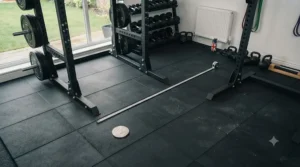
Garage gym design in the UK comes with a constraint most American buying guides never mention: British single garages are frequently narrower and shorter than their US equivalents, often closer to 2.4-2.7m wide with ceiling heights that can dip under 2.3m in older properties. That single fact rules out the tallest configuration of several racks in this guide, including the 228cm Mirafit M3 Power Rack, unless your garage has been extended or has a pitched roof void. Before ordering anything, check whether your garage conversion needs any consent — most internal fit-outs like adding a rack, flooring, and lighting don’t require planning permission in England and Wales under permitted development rights, though it’s worth confirming your specific property hasn’t had those rights restricted; the Planning Portal’s garage conversion guidance covers this clearly.
Once space is confirmed, prioritise rubber gym flooring tiles to protect both the concrete slab and dropped plates, and leave at least 60cm of clear walkway on at least one side of the rack for safe entry and exit during a set. Ventilation matters more than people expect in an enclosed garage — a small extractor fan or simply leaving the up-and-over door cracked during sessions prevents the space becoming uncomfortably humid, particularly with a half rack pushed tight against a back wall where airflow is already limited.
Setting Up and Maintaining Your Rack: A Practical Usage Guide
Getting a new rack from flat-pack to workout-ready smoothly comes down to a handful of habits most first-time buyers skip. First, unbox everything and lay out the hardware before starting assembly — missing a bag of bolts halfway through is the single most common reason builds stall, and it’s flagged repeatedly in reviews across brands including Mirafit. Second, don’t fully tighten every bolt until the entire frame is loosely assembled and square; this lets you correct minor misalignments before they’re locked in permanently, which matters more on wider full racks like the Mirafit M3 Power Rack than on compact half cages.
Once built, run a maintenance check every 4-6 weeks: re-torque all bolted joints, since vibration from repeated barbell drops gradually loosens fixings, and inspect J-cup liners for wear if you’re loading heavy. If your rack is bolted to a concrete floor, check the anchor bolts annually for corrosion, particularly in an unheated garage prone to condensation. A common mistake in the first 30 days is over-tightening safety bar pins, which can make height adjustments unnecessarily stiff — a light coat of dry lubricant on the pin mechanism keeps adjustments smooth without attracting dust. Finally, resist the temptation to bolt every attachment on immediately; adding a cable pulley kit or dip station a few weeks in, once you know how you actually train, avoids buying accessories you never use.
Real-World Scenarios: Which Rack Suits Which Lifter
The solo garage lifter. If you’re training alone in a single garage after work, prioritise a fully enclosed cage over a half rack — the GYM MASTER GM1 Power Rack gives you safety bars on all sides for around £250, which matters most when nobody’s around to spot a failed bench press.
The space-constrained flat or terraced house owner. With a shallow box room or narrow garage, the Mirafit M3 Half Rack‘s freestanding, no-bolt-down design is the practical choice — it delivers commercial-grade steel without demanding the depth a full cage needs, and you won’t need landlord permission to drill the floor.
The family building a shared training space. For a household where two or three people use the same rack at different fitness levels, the Sunny Health & Fitness Power Zone Rack‘s combination of squat rack, bench, preacher curl, and leg developer covers a much wider range of exercises than a bare cage, reducing the need for separate equipment purchases.
The upgrader who’s outgrown dumbbells-only training. Someone moving from home dumbbells to structured barbell and cable work should look at the SPORTNOW Power Cage with Adjustable Cable Pulley System, since it bakes lat pulldowns and cable rows into the rack itself rather than requiring a second machine later.
Weightlifting Equipment to Pair With Your Rack
A rack alone doesn’t make a functional home gym — the weightlifting equipment you build around it determines how much you’ll actually use it. At minimum, budget for an Olympic barbell (most racks here suit 6ft or 7ft bars), a set of bumper or cast iron plates, and quick-release collars. If your chosen rack, such as the Mirafit M3 Power Rack, doesn’t include a bench, add an adjustable flat-to-incline bench early, since bench press is one of the exercises most home lifters cite as the reason they bought a rack in the first place. For anyone doing pull-ups regularly, check the bar’s diameter and knurling — the 32mm bars fitted as standard to Mirafit’s M3 range work well for most hand sizes, though some lifters upgrade to a thicker or knurled bar for grip training. Gym flooring, chalk, and a simple barbell jack for loading plates without bending awkwardly round the frame round out a sensible first-year equipment list, and none of it needs to be bought all at once.
Long-Term Cost & Maintenance
Looking at total cost of ownership rather than sticker price changes the calculus between full and half racks considerably. A budget half cage like the GYM MASTER Heavy Duty Half Power Cage costs less upfront, but if you outgrow its 200kg limit or later want cable attachments, you may end up buying a second rack entirely — effectively doubling your spend within a few years. A premium full rack such as the Mirafit M3 Power Rack, by contrast, costs more initially but is designed around an official attachment ecosystem, meaning you add a cable pulley kit, extension bay, or monolift as your training evolves rather than replacing the whole frame. Maintenance costs across all seven racks here are low — realistically just replacement J-cup liners every few years and the occasional bolt — but the resale value of commercial-grade 11-gauge steel racks tends to hold up noticeably better on the UK secondhand market than 2mm budget frames, which is worth factoring in if you might move house or upgrade in future.
Frequently Asked Questions
❓ Is a half rack strong enough for heavy squats?
❓ Do I need to bolt my power rack to the floor?
❓ What's the minimum ceiling height for a power rack?
❓ Can a full power rack fit in a single UK garage?
❓ How much does a decent home power rack cost in 2026?
Conclusion
The full power rack vs half rack decision ultimately comes down to honest measurements and honest training habits, not marketing claims. If you’ve got the depth and want maximum safety and attachment flexibility, a full cage like the Mirafit M3 Power Rack or GYM MASTER GM1 Power Rack earns its extra footprint. If space is genuinely tight — a single garage bay, a box room, a rented property where drilling isn’t an option — a half rack such as the Mirafit M3 Half Rack or GYM MASTER Heavy Duty Half Power Cage delivers most of the safety benefit in a fraction of the depth. For buyers wanting more than a bare rack, the Sunny Health & Fitness Power Zone Rack and SPORTNOW Power Cage with Adjustable Cable Pulley System bundle in genuine additional training value, while the Strongway Multi Gym Smith Machine sits at the premium end for anyone building a near-commercial home gym.
Whichever direction you go, measure twice, check the steel gauge, and don’t skimp on safety bars — that’s the one place a home gym should never cut corners.
Recommended for You
- Half Rack For Home Gym: 7 Best Picks To Save Space (2026)
- Wall-Mounted Power Rack For Small Spaces: 7 Best Picks (2026)
- Power Rack For Home Gym: 7 Proven Picks For UK Lifters (2026)
Disclaimer: This article contains affiliate links. As an Amazon Associate, I earn from qualifying purchases. If you purchase products through these links, we may earn a small commission at no additional cost to you.
✨ Found this helpful? Share it with your friends! 💬🤗
