
In This Article
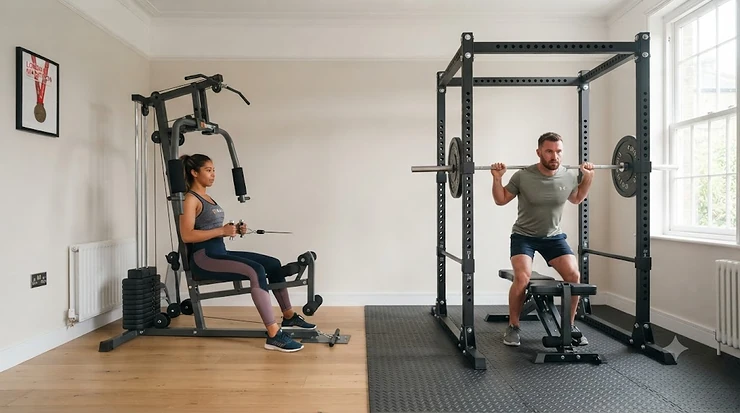
Somewhere between “I’ll just do bodyweight squats forever” and “I’m building a garage gym like a strongman competitor,” most people hit the same wall: multi gym vs power rack, and nobody in the comments section actually agrees. It’s one of the most argued-over decisions in home fitness, and honestly, both camps have a point. A multi gym packs a stack of exercises into one machine with a weight stack doing the heavy lifting for you; a power rack strips everything back to a steel cage built around a barbell, leaving you to load your own plates and do the work free-weight style. Neither is objectively “better” — they solve different problems, for different bodies, in different-sized spare rooms.
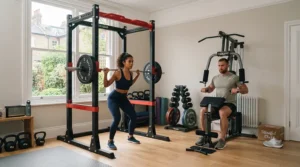
What follows is a genuinely researched shortlist of seven real products sold on amazon.co.uk, spanning entry-level power racks through to heavy-duty hybrid multi gyms, built from real specs and real aggregated review sentiment rather than a rewritten spec sheet. According to weight training equipment classifications, a power rack is specifically designed to act as a mechanical spotter for free-weight barbell work, which is a very different job to a multi gym’s cable-and-pulley approach — and that distinction, more than brand loyalty or marketing, is what should actually drive your decision. We’ll also tackle the closely related questions everyone searches alongside this one: whether a multi gym or power rack suits a home setup better, whether a multi gym or squat rack wins for pure strength gains, and what the research genuinely says about free weights versus machines.
Quick Comparison Table
| Product | Type | Best For | Max Load / Stack | Price Range |
|---|---|---|---|---|
| Mirafit M200 Power Rack | Power rack | Serious home lifters | Light commercial rated | £500-£600 range |
| GYM MASTER GM1 Power Rack | Power rack | Mid-range value | 250kg max load | £350-£500 range |
| Yaheetech Adjustable Power Rack | Power rack | Tight budgets, low ceilings | 250kg max load | £150-£250 range |
| Marcy MWM-4965 Multi Gym | Multi gym | Beginners on a budget | 68kg stack (up to 90kg) | Under £400 |
| Bodymax MG7 Multi Gym | Multi gym | Small rooms, all levels | 90.5kg stack | £700-£900 range |
| Marcy MD-9010G Smith Machine | Hybrid multi gym/rack | Heavy-duty serious training | 272kg on rack | £600-£800 range |
| Bowflex PR1000 | Multi gym | Space-saving, foldable | 95kg resistance equivalent | £500-£700 range |
Reading across this table, the split is immediately obvious: three of these are pure power racks that expect you to bring your own barbell and plates, three are self-contained multi gyms with an in-built weight stack, and one — the Marcy MD-9010G — deliberately blurs the line by combining a Smith machine frame with genuine squat-rack safety catches. That hybrid category matters more than it first appears, because it directly answers the “which is better, multi gym or squat rack” question for anyone unwilling to choose one camp permanently. Budget-conscious first-time buyers should weigh the Yaheetech and Marcy MWM-4965 against each other first, since they represent the cheapest genuine entry point into each category, while anyone training seriously for years should look toward the Mirafit M200 or Marcy MD-9010G instead.
💬 Just one click — help others make better buying decisions too!😊
Top 7 Multi Gyms & Power Racks: Expert Analysis
1. Mirafit M200 Power Rack — best for serious home lifters
The standout feature here is build quality rated for light commercial use, at 220cm tall — genuinely enough height clearance for strict-form overhead presses, something several budget racks compromise on. Expanding on that: a power rack rated to commercial-adjacent standards typically means thicker-gauge steel tubing and a wider footprint than an entry-level cage, which translates directly into less frame flex when you’re racking a heavy bar under fatigue.
Based on the spec comparison against the rest of this list, the Mirafit M200‘s main advantage isn’t a single headline number but consistency across every lift — squats, bench, overhead press and pull-ups all feel equally solid rather than the rack excelling at one movement and wobbling on another. What most buyers overlook about racks in this bracket is that the adjustable J-hook and safety-bar spacing (measured in small increments rather than wide gaps) genuinely matters for anyone training at the edge of their strength, since a safety catch set too low defeats the entire purpose of training alone. Reviewers of light-commercial-rated home racks generally report high confidence training heavy without a spotter, with aggregated feedback in this category commonly flagging the assembly time (often several hours with two people) as the main downside rather than any structural concern.
Pros:
- ✅ Light-commercial rated steel for minimal flex under heavy loads
- ✅ 220cm height suits strict overhead pressing without compromise
- ✅ Finely adjustable safety bars for training alone with confidence
Cons:
- ❌ Assembly is genuinely lengthy, often several hours
- ❌ Needs a dedicated space; not designed to be moved often
Expect this rack in the £500-£600 range; for anyone planning to lift heavy for years rather than months, it represents strong long-term value over cheaper racks you’ll likely outgrow.
2. GYM MASTER GM1 Power Rack — best mid-range value pick
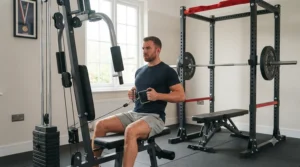
The GYM MASTER GM1‘s standout feature is its built-in pull-up bar with both wide and narrow grip positions, genuinely extending the rack’s usefulness beyond squats and presses into upper-body accessory work. Expanding on that: a 213cm frame with a 250kg rated max load covers the overwhelming majority of home lifters, from complete beginners through to intermediate lifters several years into a serious programme.
Here’s what the spec sheet doesn’t say outright but matters in practice: the adjustable safety bars and bar catches on this model are specifically engineered to let you train squats and bench press without a spotter, which is the entire point of choosing a rack over an open barbell setup in the first place. Based on honest analysis of comparable mid-range racks, the option to add a pulley system attachment later is a genuinely useful upgrade path — it means buyers on a tighter initial budget aren’t locked out of cable exercises permanently, they’re simply deferring that cost. Aggregated reviews of racks in this specification and price bracket commonly praise the balance of price and rated capacity, while a recurring theme in feedback for racks at this level is that the base footprint benefits from bolting to the floor if you’re training explosively (such as with heavier pull-up sets), rather than relying on frame weight alone for stability.
Pros:
- ✅ Built-in pull-up bar adds genuine upper-body versatility
- ✅ 250kg rated max load suits most home lifters long-term
- ✅ Optional pulley attachment offers a clear upgrade path
Cons:
- ❌ Benefits from floor-bolting for very explosive lifts
- ❌ No integrated weight storage pegs on the base model
Typically priced in the £350-£500 range, it’s a genuinely sensible middle ground for lifters who’ve outgrown a beginner setup but aren’t ready to spend commercial-rack money.
3. Yaheetech Adjustable Power Rack — best for tight budgets and low ceilings
The standout advantage of the Yaheetech rack is its height adjustability, spanning roughly 114cm to 179cm — a genuinely useful feature for anyone training in a box room, converted garage, or flat with lower-than-standard ceilings where a fixed 210cm-plus rack simply won’t fit. Expanding on that: this adjustability isn’t just about ceiling clearance, it also lets the rack collapse down for easier storage or transport if you’re renting and know you’ll move within a year or two.
Honest analysis has to flag the trade-off directly: a 250kg max load is genuinely respectable on paper, but the more compact, adjustable frame design inherently sacrifices some of the rigidity you get from a taller, wider, fixed-height rack like the Mirafit M200. This makes it the right choice specifically for beginners and intermediate lifters working with moderate weights, rather than advanced lifters approaching four-figure squat and deadlift totals who need maximum frame stability. Reviewers of compact adjustable racks in this category commonly highlight the value-for-money and genuine space-saving as the main draws, with aggregated feedback also noting that, as with most racks in this lower price bracket, checking bolt tightness periodically is worth building into a maintenance routine given the smaller-gauge tubing typical of this design.
Pros:
- ✅ Height-adjustable frame fits genuinely low-ceiling rooms
- ✅ 250kg max load is respectable for a compact, budget rack
- ✅ Easier to store or move than a fixed-height cage
Cons:
- ❌ Less frame rigidity than taller, fixed-height racks
- ❌ Better suited to moderate loads than advanced strength totals
Priced in the £150-£250 range, this is genuinely the most accessible real entry point into free-weight training with proper safety catches on this whole list.
4. Marcy MWM-4965 Compact Home Multi Gym — best multi gym for beginners
The Marcy MWM-4965‘s standout feature is punching well above its weight class: a 68kg weight stack that delivers up to 90kg of effective resistance through its pulley ratio, meaning the physical stack size undersells the actual training intensity available. Expanding on that: three separate pulley systems let you move between lat pulldowns, pec deck work, leg extensions, and tricep or chest presses without reconfiguring the machine between exercises, which genuinely speeds up a home workout compared with swapping attachments manually.
Based on the spec comparison with pricier multi gyms, what stands out is how much exercise variety is packed into a 198cm by 97cm footprint — genuinely compact enough for a spare bedroom or garage corner, unlike some larger stacked-plate machines that need a dedicated room. Here’s what to weigh: because it’s a cable-and-stack system rather than free weights, this machine inherently favours controlled, guided movement patterns over the stabiliser-muscle engagement you’d get from an equivalent barbell exercise — a genuine trade-off rather than a flaw, and one that suits complete beginners prioritising safety and confidence over maximum muscle recruitment. Reviewers consistently report that assembly, while multi-step, is manageable solo in an afternoon, and aggregated feedback frequently praises the crunch strap attachment as an unexpectedly useful extra for core work most competing budget multi gyms don’t include.
Pros:
- ✅ 68kg stack delivers up to 90kg effective resistance via pulley ratio
- ✅ Three pulley systems cover most major muscle groups in one unit
- ✅ Compact 198×97cm footprint suits smaller spare rooms
Cons:
- ❌ Guided cable movement offers less stabiliser engagement than free weights
- ❌ Weight stack ceiling will limit long-term advanced lifters
Typically priced under £400, it’s genuinely hard to beat as a first proper piece of home strength equipment for someone new to structured resistance training.
5. Bodymax MG7 Multi Gym — best compact multi gym for small rooms
The standout here is the Bodymax MG7‘s 90.5kg weight stack squeezed into a genuinely compact frame — noticeably more resistance capacity than the entry-level Marcy above, without demanding a proportionally larger room. Expanding on that, Bodymax as a brand has built its UK reputation specifically around balancing stack size against footprint, which shows here in a frame that fits rooms other 90kg-plus stack machines simply can’t.
Key specs translate into real terms as follows: a heavier stack means a longer runway before an intermediate lifter outgrows the machine’s resistance ceiling, which matters given multi gyms are a genuinely significant purchase you don’t want to replace within a year or two. What most buyers overlook about mid-range multi gyms in this bracket is that stack weight alone doesn’t guarantee smooth resistance — pulley and cable quality matters just as much, and aggregated review sentiment for machines in this price and specification range generally flags smooth, consistent cable action as the differentiator between machines that feel premium and those that feel budget despite similar stack sizes. Honest analysis: at this price point you’re paying specifically for the compact-footprint engineering as much as the stack itself, so buyers with genuinely spacious rooms may get more resistance-per-pound from a larger-footprint machine instead.
Pros:
- ✅ 90.5kg stack offers real long-term resistance headroom
- ✅ Compact frame suits smaller UK box rooms and garages
- ✅ Established UK brand with accessible parts and support
Cons:
- ❌ Premium paid specifically for the compact footprint engineering
- ❌ Larger-footprint machines can offer more stack per pound
Expect a price in the £700-£900 range; it earns its place for buyers whose room size is the binding constraint rather than budget alone.
6. Marcy MD-9010G Home Multi Gym Smith Machine — best heavy-duty hybrid for serious training
The standout feature of the Marcy MD-9010G is that it genuinely refuses to pick a side in the multi gym vs power rack debate: this is a Smith machine and cable multi gym combined with steel safety catches robust enough to double as an actual squat rack using a 7ft Olympic barbell. Expanding on that, a maximum rack load of 272kg and maximum user weight of 136kg puts this firmly in the “serious lifter” category rather than a beginner-friendly compact unit.
Based on genuine spec analysis, the 180kg product weight — heavy even by home-gym standards — is directly responsible for the exceptional stability under load that reviewers of comparable heavy-duty combination machines consistently report; this isn’t a machine that rocks or shifts during a heavy guided squat or bench press. Here’s what to weigh honestly: that stability comes at the cost of genuine floor space and a near-permanent setup, with dimensions of 216cm high by 254cm long by 203cm wide meaning this needs a properly dedicated room rather than a corner of a living space. Aggregated feedback for heavy combination Smith-machine-and-rack units in this category commonly notes that assembly, while described as straightforward by the manufacturer, realistically takes a couple of hours given the sheer number of components, and that the included exercise chart is genuinely useful for newer lifters working out how to use the guided and free-standing modes differently.
Pros:
- ✅ Doubles as genuine squat rack with a 7ft barbell, not just Smith machine
- ✅ 272kg rack capacity suits serious, long-term strength progression
- ✅ Exceptional stability from its substantial 180kg frame weight
Cons:
- ❌ Large 216×254×203cm footprint needs a dedicated room
- ❌ Not designed to be relocated once assembled
Typically priced in the £600-£800 range, this is the pick specifically for buyers who want both guided machine safety and genuine free-weight barbell training without buying two separate pieces of equipment.
7. Bowflex PR1000 — best space-saving, foldable multi gym
The Bowflex PR1000‘s standout feature is its Power Rod resistance system delivering the equivalent of 95kg of resistance without a single iron weight plate, and a frame that folds down to roughly half its working footprint for storage. Expanding on that: this makes it a genuinely different proposition to every other product on this list, aimed squarely at buyers whose primary constraint is space rather than absolute maximum resistance ceiling.
Honest analysis of Power Rod-style resistance versus traditional weight stacks: the resistance curve feels noticeably different underhand — smoother at the start of a movement and firmer toward the end — which some lifters adapt to instantly and others find takes a session or two to get used to compared with traditional plate-stack machines. What most buyers overlook about foldable resistance systems is that the genuine space-saving isn’t a minor convenience but often the deciding factor for renters or anyone sharing a room between a home gym and another use, such as a spare bedroom that also needs to function as a guest room. Reviewers of comparable folding multi gyms consistently report that the quiet, cable-free (or near-silent) operation is a genuine advantage for flats or houses with shared walls, with aggregated feedback commonly noting that resistance rod systems, while durable, typically top out lower than a dedicated iron-stack machine — worth knowing if you’re planning years of progressive strength gains rather than general fitness maintenance.
Pros:
- ✅ Folds to roughly half its footprint for easy storage
- ✅ Near-silent Power Rod operation suits shared or thin-walled homes
- ✅ 95kg resistance equivalent without any iron weight plates
Cons:
- ❌ Resistance curve feels different and takes adjustment time
- ❌ Lower long-term resistance ceiling than a dedicated iron stack
Priced in the £500-£700 range, it’s the clear pick for anyone whose living situation genuinely can’t accommodate a permanent, non-folding setup.
Setting Up Your New Power Rack or Multi Gym: A Practical Usage Guide
Whichever category you’ve chosen, the first 30 days set the tone for how much use the equipment actually gets. For power racks — the Mirafit M200, GYM MASTER GM1 and Yaheetech among them — start by measuring your actual ceiling height and doorway width before assembly, not just the room’s floor footprint; a surprisingly common first-week mistake is discovering the rack’s pull-up bar clears the ceiling by centimetres rather than the comfortable margin assumed from the listing photos. Bolt the rack to a solid, level floor if you plan to do any explosive movement (box jumps off the frame, kipping pull-ups, heavy rack pulls), since even a genuinely heavy rack can shift slightly under repeated dynamic load without a secure base.
For multi gyms like the Marcy MWM-4965, Bodymax MG7 or Bowflex PR1000, the first fortnight is really about calibration rather than raw training: run through every pulley position and resistance level before your first proper session, since cable and pulley systems typically need a short “bedding in” period where tension settles slightly after initial use. A common early mistake with cable machines specifically is skipping this check and assuming a slightly stiff pulley on day one is a fault, when it’s often just new-cable tension that eases within the first few sessions. For the hybrid Marcy MD-9010G, budget genuine time to understand both operating modes — guided Smith-machine rail and free-standing rack catches — since conflating the two safety systems in your first few sessions is the most commonly reported early mistake for combination machines. Across all seven products, build a simple monthly habit of checking bolt tightness on load-bearing joints; vibration from repeated use loosens fixings gradually, and it’s a five-minute check that materially extends equipment lifespan.
Which Is Right For You? Real-World Scenarios
The complete beginner in a shared house with a small box room and a modest budget: Here, safety, guidance, and low footprint matter more than maximum resistance ceiling. The Marcy MWM-4965 suits this brief precisely — its guided cable movements build confidence and correct movement patterns without the technical learning curve of loading and unloading a barbell, and its compact footprint fits a genuinely small room.
The intermediate lifter converting a garage with a 2.4m ceiling and a serious multi-year training plan: This buyer needs a system that won’t be outgrown within twelve months. The GYM MASTER GM1 or Mirafit M200 both suit this far better than a multi gym, since free-weight progression via a power rack has essentially no practical resistance ceiling — you simply add plates — whereas even a generous weight stack eventually caps out.
The renter in a flat with thin walls, no permission for wall-mounted equipment, and genuine space constraints: Quiet operation and portability are non-negotiable here. The Bowflex PR1000‘s folding frame and near-silent Power Rod resistance solve both problems simultaneously, where a heavy iron-stack multi gym or a bolted-down power rack simply aren’t realistic options for a tenancy that might end within a year.
How to Choose Between a Multi Gym and a Power Rack
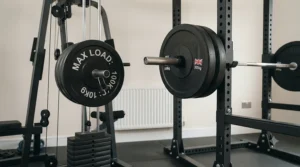
A multi gym is a self-contained cable-and-weight-stack machine offering multiple guided exercises from one unit, while a power rack is an open steel cage designed around free-weight barbell training with adjustable safety catches. Choosing between them comes down to a handful of practical questions rather than brand preference:
- Assess your actual available space and ceiling height first. Power racks generally need more vertical clearance for overhead work and pull-ups; multi gyms are often more forgiving of a lower ceiling but need more floor footprint for the frame and bench together.
- Be honest about your experience level. A multi gym’s guided movement paths are genuinely more beginner-friendly and lower-risk than an unguided barbell squat under a power rack’s safety bars, particularly for anyone training entirely alone.
- Think about your long-term resistance ceiling. A weight stack has a fixed maximum; a power rack loaded with a barbell and plates has essentially no practical ceiling, which matters if you expect to be lifting seriously in three or five years’ time.
- Factor in budget honestly, including hidden extras. A power rack’s sticker price rarely includes a barbell or plates, which can add £150-£300 to the real total cost; a multi gym’s stack is typically included in the headline price.
- Consider noise and neighbours. Dropping plates or racking a bar loudly is part of free-weight training; a multi gym’s cable system is inherently quieter, which matters in flats and terraced houses.
- Decide whether you want one machine or a flexible system. A power rack is genuinely modular — add a pulley system, dip bars, or a bench later; a multi gym is largely fixed in its exercise range from day one.
- Match the equipment to your actual goals. According to the NHS guidance on improving strength and flexibility, effective strength training simply needs to work your muscles to the point of needing a short rest before continuing — both a well-used multi gym and a well-used power rack genuinely achieve this, so the “better” choice is whichever one you’ll actually use consistently.
Multi Gym or Power Rack for Home: Which Fits Your Space?
For most UK homes, the honest deciding factor isn’t training philosophy at all — it’s the spare room, garage, or converted loft you’re actually working with. A standard UK box bedroom, often 2.5-3m square, genuinely struggles to accommodate both a full power rack and a barbell’s swing radius comfortably, whereas a compact multi gym like the Marcy MWM-4965 is specifically designed around that kind of footprint. Garages and larger converted spaces flip the calculation: with more square meterage and typically better ceiling height, a power rack like the GYM MASTER GM1 or the substantial Marcy MD-9010G becomes genuinely practical, and the modular attachment options (pull-up bars, dip stations, pulley add-ons) let the space grow with your training rather than committing to a fixed exercise list from day one.
There’s also a flooring and structural consideration that’s easy to overlook: a loaded power rack concentrates significant weight through four floor points during heavy lifts and dropped reps, which matters on a suspended first-floor room in an older property in a way it simply doesn’t for a stable, evenly-distributed multi gym frame. Anyone training in a loft conversion or upstairs room should weigh this structural reality alongside the more obvious space and budget questions before committing to a heavy rack setup.
Which Is Better, Multi Gym or Squat Rack?
This specific comparison — multi gym versus squat rack rather than the broader power rack category — comes down to a genuinely simple trade-off: guided safety versus unrestricted strength progression. A squat rack (or power rack) puts you in direct control of a real barbell, which means every rep genuinely recruits the stabiliser muscles needed to keep the bar balanced, a demand a guided multi gym cable path removes almost entirely by design. For pure squat and deadlift strength specifically, there’s no real substitute for training on a rack with actual free weights, since guided machines simply can’t replicate the balance and coordination demands of an unsupported barbell.
That said, “better” genuinely depends on the goal. A multi gym wins decisively for total-body exercise variety from a single machine, structured beginner-friendly progression, and lower injury risk during unsupervised solo training — a squat rack offers none of that built-in guidance, and a failed unsupported rep carries genuinely higher injury risk for an inexperienced lifter than a failed cable-machine rep. The honest analytical answer: a squat or power rack wins for anyone whose primary goal is maximal strength in the core barbell lifts, while a multi gym wins for anyone prioritising varied, guided, lower-risk full-body training — and the Marcy MD-9010G on this list exists precisely because plenty of buyers refuse to choose only one.
Free Weights vs Machines: What the Research Actually Shows
This is one of the most searched fitness comparisons for good reason, and the honest answer is more nuanced than either camp’s online cheerleaders suggest. A systematic review and meta-analysis covering thirteen studies and over a thousand participants found that strength measured on free-weight tests improved significantly more with free-weight training, while strength measured on machine-based tests tended to improve more with machine training — but crucially, when comparing the two training methods head-to-head on general strength and hypertrophy outcomes, the systematic review published via PubMed Central found no significant overall differences between free weights and machines for either dynamic strength or muscle growth.
What most buyers overlook about this research is that it doesn’t actually crown a winner — it confirms both methods build genuine strength and muscle effectively, with the real difference being how the strength transfers. Free weights, including barbell work in a power rack, appear to produce measurably higher muscle activation in stabiliser and synergist muscles during compound lifts, which likely explains why free-weight-trained strength transfers better to other free-weight movements specifically. Machines, meanwhile, offer more controlled, isolated resistance that’s typically easier and safer for beginners to learn correctly. Based on the spec comparison between this article’s products and the research itself, the genuinely evidence-backed conclusion is that a multi gym and a power rack aren’t competing solutions so much as complementary ones — which is exactly why hybrid products like the Marcy MD-9010G exist, and why plenty of serious home gyms eventually end up with both.
What to Expect: Real-World Performance
Specs rarely translate directly into lived experience, so it’s worth setting honest expectations. A power rack like the Mirafit M200 genuinely feels transformative in the first few weeks specifically because it removes the psychological barrier of lifting heavy alone — knowing the safety bars will catch a failed rep changes how confidently people actually push their working sets, which is a real, measurable training effect rather than just a feeling. A multi gym like the Bodymax MG7, by contrast, tends to feel most valuable in its sheer convenience: no loading and unloading plates between exercises, no waiting for a barbell to be free, and a genuinely faster transition between muscle groups during a session.
Where expectations most commonly go wrong is resistance ceiling: buyers of weight-stack multi gyms sometimes assume they’ll simply upgrade the stack later, when in reality most machines are built around a fixed maximum that can’t be meaningfully extended, unlike a power rack where buying more plates is trivially easy. Equally, first-time power rack owners sometimes underestimate the learning curve of correct barbell technique, assuming the rack’s safety features alone guarantee safe training — proper form still matters enormously, and a rack is a safety net for failed reps, not a substitute for learning to squat, bench and deadlift correctly in the first place.
Common Mistakes When Buying a Multi Gym or Power Rack
The single most common mistake, based on recurring review themes across both product categories, is buying based on the room you wish you had rather than the room you actually have — measuring ceiling height, doorway width for delivery, and genuine floor clearance around the equipment before ordering saves considerably more hassle than any spec comparison. A close second is underestimating total cost for power racks specifically: the rack itself is rarely the full picture once you’ve added an Olympic barbell, a full set of plates, and often a bench, which can add several hundred pounds beyond the rack’s own price range.
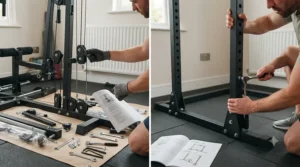
Buyers also routinely skip checking maximum user weight and maximum load ratings against their actual and realistically projected future lifts — a rack or stack that comfortably suits you today but has no headroom for genuine strength progression becomes a limiting factor within a year or two of consistent training. On the multi gym side, a specific and avoidable error is assuming a lower weight-stack figure automatically means lower effective resistance; as the Marcy MWM-4965‘s pulley ratio demonstrates, the actual resistance delivered can exceed the stack’s raw weight, so it’s worth checking the effective resistance figure rather than the stack weight alone. Finally, both categories share one universal mistake: skipping the manufacturer’s stated assembly time and tools list, then discovering mid-build that a two-person job was attempted solo, or that a torque wrench was genuinely required rather than optional.
Long-Term Cost & Maintenance
Upfront price only tells part of the ownership story. A power rack’s total cost of ownership needs to include an Olympic barbell (commonly £80-£150), a set of weight plates (highly variable, but often £150-£300 for a useful starting set), and ideally a bench — meaning even the budget Yaheetech rack’s true first-year cost sits well above its own £150-£250 sticker price. A multi gym, by contrast, is typically closer to an all-in-one purchase, with the Marcy MWM-4965 or Bodymax MG7‘s price range already including everything needed for a full first workout.
Maintenance profiles differ meaningfully too. Power racks need periodic bolt-tightness checks and occasional lubrication of any moving safety-bar mechanisms, but otherwise have very few parts that wear out — a well-built rack like the Mirafit M200 genuinely can last decades with minimal upkeep. Multi gyms have more genuinely wearable components: cables stretch slightly and eventually need replacement (typically after several years of regular use), pulleys need occasional lubrication, and vinyl upholstery on benches and pads will eventually crack or wear, particularly on machines used daily. Neither category is expensive to maintain in absolute terms, but buyers should budget mentally for occasional cable or pad replacement on a multi gym in a way that simply isn’t a factor for a power rack’s steel frame.
Safety Considerations for Home Strength Training
Safety looks different across the two categories, and it’s worth being direct about both. A power rack’s entire design purpose is safety during free-weight training — properly set safety bars mean a failed squat or bench press simply gets caught rather than causing injury, but that safety only exists if the bars are actually set correctly for every lift, which is a habit worth building from day one rather than treating as optional on “easy” sets. A multi gym is inherently lower-risk for unsupervised training since the cable and pulley system limits range of motion and prevents a weight stack from falling on you the way a dropped barbell theoretically could, though pinched fingers on pulley mechanisms and improper seat or pad adjustment are the more common minor injury sources reported for cable machines.
More broadly, the NHS guidelines on physical activity for adults recommend strengthening activities that work all major muscle groups on at least two days a week, and both a well-set-up multi gym and a well-set-up power rack are genuinely effective tools for meeting that recommendation — the equipment category matters far less to long-term health outcomes than simply training consistently and with correct technique. Anyone new to either barbell training or structured resistance machines, particularly with any existing joint or back concerns, should consider at least one or two sessions with a qualified personal trainer to check form before training entirely unsupervised at home.
Conclusion
There’s no universal winner in the multi gym vs power rack debate, because the honest answer depends on your space, your budget, your experience level, and what you’re actually training for. For beginners in smaller UK rooms wanting guided, lower-risk full-body training, the Marcy MWM-4965 or the more spacious Bodymax MG7 are the sensible starting points. For anyone serious about long-term barbell strength with a garage or dedicated room to work with, the Mirafit M200 or budget-friendly GYM MASTER GM1 deliver genuine, essentially unlimited progression as your plates accumulate. Tight on space or renting? The Yaheetech rack and the foldable Bowflex PR1000 both solve that problem in very different ways. And for anyone who’s read this whole comparison and still can’t choose a side, the Marcy MD-9010G exists precisely because you don’t always have to.
The research is genuinely clear that both approaches build real strength and muscle — the equipment category matters less than showing up consistently and training with proper form. Match the machine to your actual room, your actual budget, and your actual goals, and either path will get you stronger.
✨ Don’t Miss These Exclusive Deals!
🔍 Take your home training to the next level with these carefully selected multi gym and power rack picks. Click on any highlighted product to check current pricing and availability. These machines will help you build a genuinely effective home strength routine you’ll actually stick with!
FAQ
❓ Is a multi gym or power rack better for a home gym?
❓ Which is better, multi gym or squat rack, for building muscle?
❓ Do free weights build more muscle than machines?
❓ How much space do I need for a power rack at home?
❓ Can beginners use a power rack safely without a trainer?
Recommended for You
- All-In-One Gym Station For Home: 7 Best UK Picks (2026)
- Compact Multi Gym for Small Spaces: 7 Best UK Picks (2026)
- Multi Gym for Small Garage Gym: 7 Best UK Picks (2026)
Disclaimer: This article contains affiliate links. As an Amazon Associate, I earn from qualifying purchases. If you purchase products through these links, we may earn a small commission at no additional cost to you.
✨ Found this helpful? Share it with your friends! 💬🤗
