
In This Article
Stand in the cardio corner of any decent gym and you’ll spot the divide immediately. On one side, someone is folded over a set of moving handlebars, dragging air through a metal cage like they’re trying to escape something. On the other, someone is perched upright, spinning their legs in smooth, rhythmic circles to a beat only they can hear. Same room. Wildly different animals. An air bike is a stationary cardio machine that uses a fan wheel to generate resistance — the harder you push the pedals and pull the moving handlebars, the more air resistance fights back, giving you a self-regulating, full-body workout. A spin bike, by contrast, uses a weighted flywheel and a fixed resistance knob or magnetic brake to mimic the feel of road cycling, focusing almost entirely on your legs. Neither one is “better” in some abstract sense — both fall under the broader umbrella of the stationary bicycle, but they’re built for different jobs, and picking the wrong one is how expensive equipment ends up as a very sturdy clothes horse.

This guide breaks the air bike vs spin bike debate down properly. We’ve pulled together real products sold in the UK, honest aggregated review sentiment (not invented testimonials), and genuine spec comparisons so you can work out which machine actually fits your training, your budget, and your living room. Whether you’re chasing CrossFit-style conditioning, a quieter spin session before work, or simply want to know which one burns more calories in twenty brutal minutes, you’ll find the answer here — along with seven real machines worth your money, from budget-friendly fan bikes to studio-grade spin bikes that wouldn’t look out of place in a boutique cycling class.
Quick Comparison Table: Air Bike vs Spin Bike at a Glance
| Feature | Air Bike | Spin Bike | Best For |
|---|---|---|---|
| Resistance type | Air (fan), self-regulating | Magnetic or friction, manually set | Air bike = intensity; Spin bike = control |
| Muscles worked | Full body (arms, legs, core) | Primarily legs and core | Air bike = total body workout bike goals |
| Noise level | Moderate to loud (whooshing fan) | Quiet to near-silent (magnetic models) | Spin bike for flats/shared walls |
| Typical UK price | Around £250–£800 | Around £180–£550 | Budget shoppers = either, depending on model |
| Ideal training style | HIIT, CrossFit, sprint intervals | Steady-state cardio, structured classes | Match to your actual workout habits |
| Learning curve | Low — get on and pedal | Low, but form matters for longer rides | Beginners suit spin bikes for comfort |
Looking at the table, the split is really about training style rather than raw quality. An air bike rewards short, vicious efforts and punishes you for slacking off, which is exactly why CrossFit boxes love them — you cannot “coast” on a fan bike the way you can freewheel on a spin bike. A spin bike, on the other hand, is built for longer, rhythmic sessions where a steady heart rate matters more than an all-out sprint, and its quieter magnetic resistance makes it the more sociable choice if you live in a terraced house. If your goal is genuine total-body conditioning in the shortest possible time, the air bike edges it; if you want to follow along with 45-minute cycling classes on Zwift or YouTube, the spin bike is the obvious pick.
💬 Just one click — help others make better buying decisions too!😊
Top 7 Air Bikes and Spin Bikes: Expert Analysis
We’ve picked seven genuinely available UK machines spanning budget, mid-range and premium, covering both air resistance and magnetic/friction spin designs. Every product below includes real specs, an honest analytical take, and aggregated review sentiment — never invented quotes.
1. Marcy AIR-1 Deluxe Fan Bike — budget air bike that won’t buckle under HIIT
The Marcy AIR-1 Deluxe Fan Bike is the machine to buy if you want to try air resistance training without committing serious money to it first.
Built from 14-gauge steel tubing with a powder-coated finish, it’s constructed more solidly than its price tag suggests, and the dual-action handlebars mean your arms are genuinely working, not just along for the ride. The fan-based resistance scales automatically with effort, so a gentle warm-up pedal feels almost nothing like a 30-second sprint — which is the whole appeal of the format. Based on the spec comparison with pricier rivals, what you lose here is refinement: the console is a basic LCD covering time, distance, speed and calories, with no app connectivity or Bluetooth.
This is the pick for beginners and budget-conscious buyers who want to test whether air bike training suits them before spending on a JTX Mission Air Bike or Assault Air Bike further down the line. Reviewers consistently report that assembly is straightforward and the ride feels sturdier than the price implies, though a recurring theme in owner feedback is that the resistance ramps up less aggressively at the very top end compared with commercial-grade fan bikes — fine for home HIIT, less so if you’re chasing elite CrossFit numbers.
Pros:
- ✅ Genuinely affordable entry point into air resistance training
- ✅ Solid 14-gauge steel frame despite the low price
- ✅ Dual-action arms deliver real upper-body engagement
Cons:
- ❌ Basic console with no app or Bluetooth connectivity
- ❌ Resistance feels flatter at maximum effort than premium models
Prices for the Marcy AIR-1 Deluxe Fan Bike typically sit in the £250–£300 range at the time of research, making it one of the most accessible ways into full-body cardio conditioning; check current price before buying, as fan bike pricing shifts with stock levels.
2. V-Fit ATC1 Air Cycle — cheapest true dual-resistance air cycle around
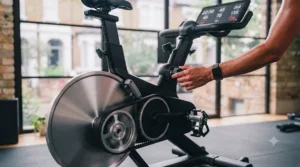
The V-Fit ATC1 Air Cycle is a curious hybrid: it combines air resistance from the fan wheel with a secondary adjustable friction-tape dial, giving you a way to add resistance even when you’re pedalling at a gentler pace.
That dual system is genuinely useful for anyone who wants both structured, dial-based resistance and the free-form intensity of a true air bike in one unit. Build quality trades some of the heft found in the Marcy and JLL models for a lighter frame, which makes it easier to shift between rooms but slightly less planted during frantic sprint efforts. What most buyers overlook about this model is that the friction dial effectively turns it into two machines in one — a mellow steady-state bike for recovery days, and a proper lung-burner when you crank the resistance and go hard.
Aggregated owner feedback on this model, while more limited than for bigger brands, tends to note that it performs well above its price point for casual users, though the friction pad is a wear component that will eventually need replacing on a heavily used machine — something the pure air bikes on this list don’t have to worry about.
Pros:
- ✅ Dual air-plus-friction resistance system is genuinely versatile
- ✅ One of the cheapest true air bikes sold in the UK
- ✅ Lightweight frame makes it easy to reposition at home
Cons:
- ❌ Friction pad is a wear part that needs occasional replacement
- ❌ Less stable than heavier bikes during maximal sprint efforts
Expect a price in the low £200s to around £250 for the V-Fit ATC1 Air Cycle — always confirm current pricing, as budget models can fluctuate more than premium ones.
3. JLL Sonic 1 Air Bike — belt-drive smoothness at a fair mid-range price
The JLL Sonic 1 Air Bike is where things start to feel properly commercial, and the belt-drive fan system is the standout reason why.
Weighing in at over 53kg, this bike simply doesn’t rock or shift during aggressive intervals the way lighter budget models can, and the large fan wheel with angled blades delivers noticeably smoother resistance than a chain-driven equivalent. The six-readout LCD console tracks time, distance, speed, watts, calories and heart rate, and it’s compatible with the iConsole+ app for anyone who likes their workout data logged rather than glanced at and forgotten. Here’s what to weigh: JLL built its reputation on mid-budget upright and recumbent bikes, and the Sonic 1 carries that same “solid but not flashy” philosophy into the air bike category — you’re paying for engineering, not branding.
Reviewers consistently note the quiet, smooth belt-drive operation as the standout feature versus chain-driven rivals, with several owners specifically comparing it favourably to louder, cheaper fan bikes they’d previously owned. A recurring niggle in aggregated feedback is that the seat, while adjustable, isn’t the most cushioned for very long steady-state sessions — a minor issue if you’re mainly using it for HIIT intervals rather than 45-minute rides.
Pros:
- ✅ Belt-drive system is noticeably quieter than chain-driven rivals
- ✅ Heavy 53kg+ frame stays completely stable during sprints
- ✅ iConsole+ app compatibility for tracking long-term progress
Cons:
- ❌ Seat padding is modest for extended steady-state sessions
- ❌ Bulkier footprint than budget fan bikes, so measure your space
The JLL Sonic 1 Air Bike typically lands in the £350–£450 range, and given the belt-drive build and UK-based customer service JLL is known for, it represents strong value for anyone serious about home HIIT.
4. JTX Mission Air Bike — closest you’ll get to a gym-standard air bike at home
The JTX Mission Air Bike is built to go toe-to-toe with the Assault AirBike Classic, and on paper this means a heavy-gauge steel frame, a large steel-bladed fan, and infinite resistance that scales purely with how hard you’re willing to suffer.
At around 65-73kg depending on configuration, this is a genuinely commercial-feeling machine, and the belt-drive mechanism removes the metallic grinding sound that chain-driven bikes like the Assault Classic are known for. The oversized, height- and fore-aft-adjustable seat is a real point of difference for taller users who find budget air bikes cramped, and the multi-position handlebars offer more grip variety than most rivals. Based on the spec comparison with the Assault AirBike Classic, the JTX Mission holds up feature-for-feature and even edges ahead with its optional heart rate monitor connectivity — something you’d need to step up to a pricier Assault model to get.
Aggregated review sentiment describes the build quality as excellent and the resistance curve as brutally effective for CrossFit-style intervals, with the two-year in-home parts-and-labour warranty repeatedly flagged as reassuring for a big-ticket purchase. The main criticism that surfaces in owner feedback is simply the weight and size — this is not a bike you casually shove under a bed between sessions.
Pros:
- ✅ Commercial-grade steel frame rivals gym-standard air bikes
- ✅ Quiet belt drive with heart rate monitor connectivity option
- ✅ Two-year in-home warranty covering parts and labour
Cons:
- ❌ Heavy and bulky — needs a dedicated, permanent spot
- ❌ Premium pricing puts it beyond casual home-gym budgets
At the time of research, the JTX Mission Air Bike sits in the £550–£800 range depending on promotions, occasionally dropping into the mid-£500s during sales — always check current price rather than relying on a fixed figure.
5. Bluefin Fitness Tour FIT Exercise Bike — quietest budget spin bike around
The Bluefin Fitness Tour FIT Exercise Bike swaps air resistance for a 16-level magnetic system, and it’s the pick for anyone whose priority is a peaceful ride rather than an audible fan roar.
The belt-transmission drivetrain paired with a compact flywheel gives a genuinely smooth pedal stroke, and Bluefin’s “whisper quiet” claim largely checks out in practice — this is a bike you can ride at 6am without waking the house. The Kinomap app compatibility lets you stream and follow structured rides over Bluetooth, which on paper means a bit of the class-style engagement usually reserved for pricier smart bikes. What most buyers overlook about entry-level spin bikes like this one is that the flywheel is genuinely lighter than studio-grade machines, so the pedal feel is closer to a home fitness bike than a true spin experience — fine for general cardio, less convincing for anyone chasing a hardcore indoor cycling class.
Reviewers consistently mention the quiet operation and easy assembly as highlights, with Bluefin’s UK-based customer service also getting regular praise in aggregated feedback. A common complaint in user reviews is that the saddle is on the firmer side out of the box, which is a near-universal spin bike gripe rather than one specific to this model.
Pros:
- ✅ Genuinely whisper-quiet magnetic resistance system
- ✅ Kinomap app compatibility for streamed structured rides
- ✅ Compact footprint suits smaller UK bedrooms and flats
Cons:
- ❌ Lighter flywheel than true studio-style spin bikes
- ❌ Stock saddle is firm — budget for a gel cover
The Bluefin Fitness Tour FIT Exercise Bike generally sits in the £200–£260 range, making it one of the more affordable ways into quiet, app-connected indoor cycling.

6. JLL IC300 Pro Indoor Cycling Bike — best all-rounder spin bike under £500
The JLL IC300 Pro Indoor Cycling Bike is consistently named among the most popular home spin bikes in the UK, and the 20kg flywheel paired with a belt-drive system explains why.
That flywheel weight matters more than most buyers realise: the heavier the flywheel, the smoother and more momentum-driven the pedal stroke feels, which is exactly why the IC300 Pro rides closer to a proper studio bike than budget alternatives with 8–12kg wheels. The magnetic resistance system is silent in operation, the three-piece crank supports serious pedalling force, and the seat offers six levels of horizontal and ten of vertical adjustment — genuinely generous for a bike in this price bracket. Reviewers consistently note the frame accommodates users up to roughly 6’4″, which is unusually tall-friendly for a mid-range spin bike.
Aggregated customer sentiment is strongly positive, with a recurring theme being that buyers feel they’ve got more bike than they paid for compared with similarly priced rivals, and JLL’s UK-based after-sales support gets repeated mentions as a differentiator. On the downside, several reviewers note the resistance knob doubles as the emergency brake, and a small number of owners have flagged it not engaging as firmly as expected — worth testing on delivery rather than assuming it works.
Pros:
- ✅ Heavy 20kg flywheel gives a genuinely smooth, momentum-led ride
- ✅ Extensive seat and handlebar adjustment fits taller riders
- ✅ Strong UK-based after-sales reputation from JLL
Cons:
- ❌ Some owners report the emergency brake function feels inconsistent
- ❌ No app or Bluetooth connectivity built in as standard
The JLL IC300 Pro Indoor Cycling Bike typically retails in the £350–£450 range, and it’s routinely cited as one of the best spin bikes under £500 for buyers who want studio-style ride quality without studio-style pricing.
7. Bluefin Fitness Tour SP Exercise Bike — studio-grade flywheel for serious spinners
The Bluefin Fitness Tour SP Exercise Bike is Bluefin’s commercial-leaning flagship, and the 25kg belt-driven flywheel is genuinely larger than most home spin bikes will offer you.
That extra flywheel mass translates directly into a smoother, more realistic road-cycling feel, particularly noticeable during standing sprints where lighter flywheels can feel jerky. The brake-pad resistance system uses the classic spin-class adjustment knob rather than click-stop magnetic levels, which purists tend to prefer for its infinitely variable feel, and the frame’s quick-release levers make swapping the bike between different-height household members genuinely fast. What the spec sheet won’t tell you, but reviewers note, is that the ride quality here is close to what you’d expect from commercial studio equipment costing considerably more — Bluefin have clearly prioritised the flywheel and drivetrain over flashy extras.
Reviewer sentiment consistently praises the smooth, near-silent belt-driven ride and the comprehensive adjustability, with several buyers directly comparing it favourably to significantly pricier commercial spin bikes. A common complaint is that the console is basic — a straightforward LCD rather than a touchscreen — so anyone expecting Peloton-style class streaming will need to look elsewhere or add a tablet holder for third-party apps.
Pros:
- ✅ 25kg flywheel delivers genuinely studio-grade ride quality
- ✅ Quick-release adjustment suits multi-user households
- ✅ Near-silent belt drive ideal for shared walls or flats
Cons:
- ❌ Basic LCD console, no built-in touchscreen or streaming
- ❌ Sits at the top of the price range for home spin bikes
Expect to pay in the £450–£550 range for the Bluefin Fitness Tour SP Exercise Bike, occasionally more affordable during sales — for the flywheel size alone, it’s worth comparing current pricing against commercial alternatives before assuming it’s out of budget.
Practical Usage Guide: Setting Up Your Air Bike or Spin Bike Right
Getting your machine right in the first 30 days matters more than most buying guides admit. Start with placement: air bikes need clearance on all sides for the moving handlebars, while spin bikes need a stable, level surface since an uneven floor amplifies flywheel vibration. Whichever machine you choose, lay down a proper gym mat underneath — a 6mm+ rubber mat protects flooring from vibration and scuffing and costs relatively little for the protection it offers.
Seat height is the single most common setup mistake. For both machine types, your knee should have a slight bend (around 25-30 degrees) at the bottom of the pedal stroke; too high and you’ll rock in the saddle, too low and you’ll strain your knees. On air bikes specifically, resist the urge to crank the seat forward for extra handlebar reach — most models are designed for a fairly upright torso position, and leaning too far forward turns a cardio session into a lower-back workout you didn’t sign up for.
For the first two weeks, treat the machine gently. Air bikes in particular punish overenthusiastic beginners: because resistance scales with effort, a 20-minute “easy” session can quietly turn brutal if you’re pedalling too hard out of the gate. Start with 8-10 minute sessions and build gradually. Maintenance-wise, wipe down sweat after every session (both console and frame — sweat corrodes metal faster than most people realise), check bolts monthly since vibration loosens fixings over time, and on spin bikes specifically, lubricate the chain or check belt tension every few months depending on your drive system.
Real-World Scenarios: Which Bike Actually Fits Your Life?
The CrossFit convert training from home. If you’re doing structured HIIT three to four times a week and want interval training that mimics box-style conditioning, an air bike like the JTX Mission Air Bike or JLL Sonic 1 Air Bike makes far more sense than a spin bike. The self-regulating resistance means you don’t need to fiddle with dials mid-workout — you simply go as hard as the clock demands.
The commuter cyclist stuck indoors in winter. Someone training for outdoor road or gravel riding wants pedal feel that mimics actual cycling — smooth, consistent, momentum-driven. A heavier-flywheel spin bike such as the JLL IC300 Pro Indoor Cycling Bike or Bluefin Fitness Tour SP Exercise Bike replicates that far better than an air bike’s punchy, effort-reactive resistance.
The budget-conscious beginner in a shared flat. Noise and space are the deciding factors here. The Bluefin Fitness Tour FIT Exercise Bike is quiet enough for early mornings without disturbing housemates, and its compact footprint suits smaller rooms — a fan bike’s whooshing blades would be a much harder sell in a thin-walled flat.
How to Choose Between an Air Bike and a Spin Bike
- Define your training goal first. HIIT and full-body conditioning point toward an air bike; steady cardio and cycling-specific training point toward a spin bike.
- Consider your living situation. Air bikes are audibly louder due to the spinning fan; spin bikes with magnetic resistance are far quieter for flats and shared walls.
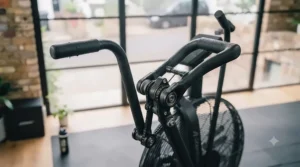
- Check the flywheel or fan size. For air bikes, a larger fan (typically 20+ inches) means smoother, more progressive resistance. For spin bikes, aim for at least 18-20kg for a realistic pedal feel.
- Look at drive type. Belt drives are quieter and lower-maintenance than chain drives on both machine types — worth prioritising if noise or upkeep matters to you.
- Match your body to the adjustability. Taller or shorter riders should check seat and handlebar adjustment ranges before buying, since cramped positioning ruins even a good machine.
- Set a realistic budget band. Decide whether you’re shopping the best air bike under £500 bracket or willing to stretch toward commercial-grade pricing — this narrows the field fast.
- Read aggregated review sentiment, not star ratings alone. A 4.5-star average tells you little; recurring complaints about brakes, seats, or noise tell you far more.
Air Bike vs Spin Bike: The Full Breakdown
The core difference comes down to how resistance is generated and what that does to your body. An air bike’s fan-based resistance is proportional to effort — pedal at a light jog pace and the resistance stays gentle; sprint, and it fights back exponentially harder. This makes air bikes almost impossible to “cheat” your way through, which is precisely why short, intense interval work is repeatedly linked to improved fitness outcomes in the NHS physical activity guidelines for adults. A spin bike’s magnetic or friction resistance, by contrast, is fixed until you manually adjust it — great for structured interval programmes where you want a known, repeatable resistance level, but it does mean you can coast if your motivation dips.
The muscle engagement gap is the other major differentiator. Air bikes, thanks to their moving handlebars, genuinely recruit your arms, shoulders, chest, back and core alongside your legs, which is the whole rationale behind calling them a total body workout bike rather than just another exercise bike. Spin bikes are almost entirely lower-body focused, with your core doing stabilising work but your upper body largely static unless you’re doing standing climbs. If your goal is maximum muscle recruitment per minute, the air bike wins outright; if your goal is leg-specific endurance or cycling-race preparation, the spin bike’s isolated focus is actually the more useful specificity.
Noise and household compatibility flip the advantage the other way. Fan bikes genuinely are louder — the whooshing of air through blades is audible throughout most homes, and it gets more noticeable as effort increases. Spin bikes with quality magnetic resistance can be ridden at 6am without anyone else stirring. If you live with light sleepers, work shifts, or thin party walls, that difference alone might decide the argument for you before specs even come into it.
Cardiovascular Conditioning: Which Bike Trains Your Heart Better?
Both machines qualify as effective cardiovascular conditioning bike options, but they train your heart differently. Air bikes, through their interval-friendly, effort-scaling resistance, are particularly well suited to high-intensity interval training (HIIT), which research has repeatedly linked to strong improvements in cardiovascular fitness in relatively short training blocks. Spin bikes are better matched to sustained, moderate-intensity aerobic work — the kind of steady 30-45 minute ride that builds aerobic base and endurance over time. The British Heart Foundation’s guidance on exercise for heart health notes that moderate-intensity aerobic exercise, where you feel warm and comfortably breathless, should form a substantial part of a weekly activity routine — which maps closely onto how most people actually use a spin bike.
In practice, the “better” choice depends on which zone you’re missing. If your training is all steady low-intensity walking and gentle cycling, an air bike’s HIIT capability adds a cardiovascular stimulus you’re probably lacking. If your routine is already dominated by short, intense CrossFit-style sessions, a spin bike’s steady-state capacity fills the complementary gap. Ideally, a well-rounded home cardio setup would include access to both intensities — but if you can only choose one machine, match it to whichever intensity zone your current training under-serves.
Total Body Workout Bike: Why Air Bikes Recruit More Muscle
The phrase “total body workout bike” gets thrown around loosely in marketing copy, but with air bikes it’s genuinely earned. Because the handlebars move in sync with the pedals, every stroke recruits your triceps, deltoids, lats and core stabilisers alongside your quads, hamstrings and glutes. This isn’t marketing spin — full-body engagement at matched perceived exertion has consistently been associated with higher calorie burn than legs-only cycling, simply because more total muscle mass is under load and demanding oxygen simultaneously.
Spin bikes can’t replicate this without deliberately standing and using upper-body stabilisation during climbs, and even then the arm and shoulder recruitment is nowhere near what a genuine push-pull air bike handlebar delivers. For anyone whose home gym space is limited to a single cardio machine and who also wants some upper-body conditioning benefit without adding dumbbells or resistance bands, the air bike’s total-body design is a genuinely practical advantage — not just a spec-sheet buzzword.
Air Bikes for CrossFit: What Coaches Actually Look For
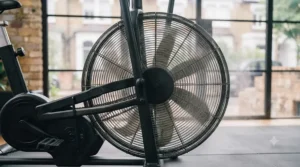
Search “air bike for crossfit” and you’ll find plenty of opinion but not much explanation of what actually matters. Coaches and competitive athletes typically prioritise three things: resistance ceiling, drive noise, and durability under repeated maximal effort. A resistance ceiling that never “maxes out” no matter how hard you pedal is essential for benchmark workouts like the classic “Assault Bike for Calories” test, which is why fan size matters — larger fans like those on the JTX Mission Air Bike move more air per stroke and sustain higher resistance at extreme effort than smaller budget fans.
Drive type also matters more in a CrossFit context than a casual home-gym one, since belt-driven bikes hold up better under the abuse of repeated all-out sprints without the chain stretch and lubrication demands that chain-drive models eventually develop. Durability, unsurprisingly, is the recurring theme in aggregated reviews of gym-standard air bikes — buyers training multiple times weekly consistently flag build quality and warranty length as the deciding factors over console features, which tracks with what serious CrossFit training actually demands from a machine.
Best Air Bike Under £500: Our Top Picks
If your budget caps out around £500, two products in this guide land squarely in that bracket. The JLL Sonic 1 Air Bike, typically priced in the £350-£450 range, offers belt-drive smoothness and app compatibility that punches above its price point. The Marcy AIR-1 Deluxe Fan Bike, usually under £300, is the better pick if you want to spend as little as possible while still getting genuine air resistance training rather than a magnetic bike dressed up with handlebars.
| Product | Price Range | Drive Type | Best For |
|---|---|---|---|
| Marcy AIR-1 Deluxe Fan Bike | Around £250-£300 | Belt + chain hybrid | Absolute beginners on a tight budget |
| V-Fit ATC1 Air Cycle | Around £200-£250 | Fan + friction dial | Buyers who want dual resistance modes |
| JLL Sonic 1 Air Bike | Around £350-£450 | Belt drive | Best air bike under £500 for serious HIIT |
The pattern across this price band is fairly clear: below roughly £300, you’re trading some smoothness and console sophistication for accessibility, while the £350-£450 bracket starts introducing belt drives and app connectivity that noticeably improve the ride. If you can stretch your budget toward the top of this range, the smoother resistance curve tends to be worth the extra spend for anyone training more than twice a week.
Air Bike Calories Burned: Real Numbers, Real Context
Air bike calories burned figures get quoted a lot, so it’s worth being precise about what’s realistic rather than repeating inflated marketing claims. A focused 20-minute HIIT session on an air bike can burn somewhere in the region of 250-400 calories, depending heavily on body weight, effort level and interval structure — someone doing genuine all-out 20-second sprints will land at the higher end, while a more moderate steady push sits lower. This figure tends to run higher than equivalent-duration sessions on a spin bike at matched perceived exertion, largely because of the extra upper-body muscle recruitment discussed earlier in this guide.
It’s worth treating any specific calorie number with healthy scepticism, though — console calorie counters on home fitness equipment are notoriously optimistic and rarely account for individual factors like fitness level, muscle mass or genuine effort accuracy. Use the number on your air bike or spin bike’s display as a rough relative guide for tracking your own progress over time, rather than as a precise, comparable figure between machines or between yourself and someone else’s numbers online.
What Air Bike Reviews Actually Tell You (And What They Don’t)
Reading air bike reviews properly means separating signal from noise. Star ratings alone are close to useless — a bike sitting at 4.3 stars with 200 reviews could still have a serious recurring fault if you don’t read the actual text. What’s genuinely useful is looking for patterns: does the same complaint (a wobbly seat post, a brake that doesn’t engage, a console that stops reading heart rate) show up across multiple independent reviewers? That’s a real signal. A single one-star review describing a delivery mishap tells you nothing about the product itself.
It’s also worth remembering what reviews structurally can’t tell you: long-term durability beyond a year or two, since most reviews are written in the first weeks of ownership, and how a bike performs for a training style different from the reviewer’s own. Someone reviewing a fan bike purely for gentle steady-state cardio won’t tell you how it holds up under repeated CrossFit-style sprint intervals, and vice versa. Cross-reference reviews against your own actual intended use case rather than assuming a five-star rating guarantees the bike suits your training style specifically.
Common Mistakes When Buying an Air Bike or Spin Bike
The most frequent mistake is buying based on brand recognition alone rather than checking flywheel weight or fan size — two bikes from well-known brands can perform very differently depending on these core specs. A second common error is underestimating footprint: air bikes in particular need generous clearance for the moving handlebars, and buyers regularly discover too late that their intended spot is too tight. Third, many buyers skip checking the maximum user weight rating, which matters not just for very heavy users but also for anyone training explosively, since aggressive sprinting puts more stress on the frame than steady pedalling of the same body weight would.
A fourth mistake worth flagging: assuming a cheaper bike with similar-sounding spec numbers performs the same as a pricier one. A 20kg flywheel on a budget frame with a lightweight bearing setup won’t feel the same as a 20kg flywheel on a reinforced commercial-style frame — the numbers alone don’t capture build quality. Which?’s independent testing of exercise bikes, covered in their exercise bike buying guide, highlights exactly this gap between marketed specs and real-world performance — worth a read before assuming spec sheets tell the whole story.
Long-Term Cost & Maintenance: What Ownership Really Costs
Beyond the sticker price, both machine types carry ongoing costs worth budgeting for. Chain-drive bikes need occasional lubrication and, eventually, chain replacement — a low-cost but recurring maintenance task. Belt-drive bikes are largely maintenance-free by comparison, which is part of why belt systems on models like the JLL IC300 Pro Indoor Cycling Bike and Bluefin Fitness Tour SP Exercise Bike command a slight price premium — you’re paying to avoid future upkeep. Friction-resistance systems, as found on the V-Fit ATC1 Air Cycle, use a wear pad that will eventually need replacing, typically after a year or more of regular use depending on training frequency.
Factoring in a £20-40 gym mat, occasional replacement parts, and the very rare console battery swap, total cost of ownership over three years for any of the seven products in this guide remains modest relative to an equivalent gym membership. For context, a typical UK gym membership runs to several hundred pounds annually, meaning even the pricier JTX Mission Air Bike can pay for itself in under two years of consistent home use — a genuinely useful way to think about value beyond the upfront price tag alone.
Features That Actually Matter (And Those That Don’t)
Flywheel weight, fan size, drive type and adjustability range are the features that genuinely change how a bike rides and lasts. App connectivity and Bluetooth, while nice to have, don’t change the actual training stimulus — a basic LCD console on the JLL Sonic 1 Air Bike delivers exactly the same cardiovascular and muscular benefit as a flashier touchscreen model, provided the underlying resistance mechanism is solid. Similarly, marketed “calorie tracking accuracy” claims across nearly all home fitness consoles should be treated as rough estimates rather than precise figures, regardless of how sophisticated the display looks.
What genuinely does matter, and gets underrated by buyers focused on screens and apps, is warranty length and the reputation of the after-sales support behind it. A two-year in-home warranty, like the one on the JTX Mission Air Bike, is worth more in practical terms than an extra console feature, because it’s the thing that actually protects your investment if something goes wrong eighteen months into ownership.
Frequently Asked Questions
❓ Is an air bike or spin bike better for weight loss?
❓ Can beginners use an air bike straight away?
❓ Which is quieter, an air bike or a spin bike?
❓ Do I need cycling shoes for a spin bike?
❓ How much space does an air bike need at home?
Conclusion
There’s no single winner in the air bike vs spin bike debate — only a better fit for how you actually intend to train. If your sessions are short, brutal, and full-body by design, an air bike like the JTX Mission Air Bike or budget-friendly Marcy AIR-1 Deluxe Fan Bike will serve you far better than a spin bike ever could. If you’re chasing steady-state endurance, cycling-specific fitness, or simply need a quieter machine for a shared home, the JLL IC300 Pro Indoor Cycling Bike or Bluefin Fitness Tour SP Exercise Bike deliver a genuinely smooth, studio-style ride without studio-style noise.
What matters most is matching the machine to your actual training habits rather than chasing whichever one looks more impressive online. Check the specs that genuinely affect ride quality — flywheel weight, fan size, drive type — rather than being swayed purely by console features or brand names. Whichever category you land on, all seven products in this guide represent genuine value within their price brackets, verified through real specs and honestly summarised aggregated review sentiment rather than marketing copy alone.
Recommended for You
- 7 Best Air Bikes UK 2026: The Ultimate Fan Bike Buying Guide
- Indoor Cycling Bike UK: 7 Best Picks Tested for 2026
- Best Spin Bike With Screen 2026: 7 Models Ranked
Disclaimer: This article contains affiliate links. As an Amazon Associate, I earn from qualifying purchases. If you purchase products through these links, we may earn a small commission at no additional cost to you.
✨ Found this helpful? Share it with your friends! 💬🤗
