In This Article
Picture your garage right now. A bench, a few dumbbells, maybe a barbell that mostly holds up the laundry. It works. Then you spend ten minutes on a proper cable stack at a commercial gym and something clicks: smooth, steady tension from any angle, no momentum, no wobble.
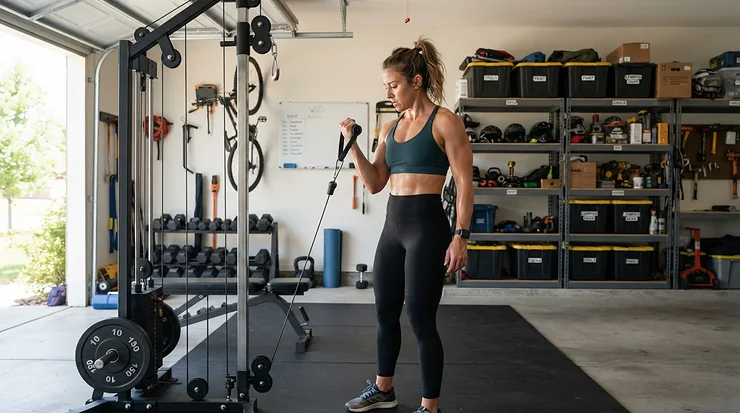
That is the pull of a dual cable machine for home gym training, and it’s why so many British lifters are moving one up the shopping list in 2026. Two adjustable pulleys, one per side, let you press, row, fly, curl and rotate through almost any plane. The NHS physical activity guidelines ask adults to do strengthening work covering all the major muscle groups on at least two days a week, taken to the point where you need a short rest before the next set. Cables make that surprisingly easy to cover from a single spot.
Here’s the snag. The category is a thicket of near-identical listings, wildly different footprints and pulley-ratio maths that trips up even seasoned lifters. So this guide skips the sales patter. I compared real specifications, UK dimensions, warranty terms and the genuine themes in published buyer feedback across seven machines, from a wall-mounted budget tower to a premium twin-stack unit.
One honest note up front: I haven’t used any of these machines myself. Everything below rests on manufacturer specs and aggregated buyer feedback, and where I couldn’t verify reviews or prices, I say so. Availability on amazon.co.uk shifts, so treat every price range as a starting point and check the live listing.
Quick Comparison: Which Dual Cable Machine for Home Gym Fits You?
| Product | Format | Key Spec | Best For |
|---|---|---|---|
| Mikolo M-G3 Wall Mount Cable Station | Wall-mounted, plate-loaded | 18–19 height positions, ~3.4 sq ft footprint (G3 listing) | Small garages, tight budgets |
| Mirafit Wall or Rack Mounted Cable Pulley Machine | Wall or rack mounted, plate-loaded | 17 height adjustments, 73cm deep | Owners of a compatible Mirafit M3 rack |
| Mirafit Functional Trainer | Freestanding, plate-loaded | Adjustable side pulleys plus high and low central pulleys | Single-garage all-rounders |
| Body-Solid Powerline Cable Cross Over | Freestanding, plate-loaded | Roughly 284cm wide frame | Full-stretch flyes |
| Strongway Cable Crossover | Freestanding, dual stacks | 2 x 75kg stacks plus pull-up bar | Pin-loading convenience |
| Mirafit Dual Adjustable Pulley Machine | Freestanding, dual stacks | 2 x 80kg or 2 x 10⁵kg, 32 heights | Serious lifters who want fine height control |
| Wolverson Dual Adjustable Pulley Machine | Freestanding, dual stacks | 2 x 95kg, 2:1 ratio | Premium builds, shared use |
Looking at the table, the split is really plates versus stacks, and compact versus roomy. The wall-mounted options win on space and price, while the stack-loaded units win on speed between sets. If you’re torn, decide how much floor you can sacrifice first, because everything else follows from that.
💬 Just one click — help others make better buying decisions too!😊
Top 7 Dual Cable Machine for Home Gym Picks: Expert Analysis
1. Mikolo M-G3 Wall Mount Cable Station — smallest footprint for the money
Floor space is the scarcest resource in a British garage, and this wall-mounted tower hands more of it back than anything else here.
Listings quote roughly 3.4 square feet of floor on the G3 variant, about a third of a square metre, with 18 to 19 height positions depending on version. You also get aluminium pulleys, a large footboard for seated rows and plate pegs angled upwards by ten degrees. In practice, the footboard means rowing without hunting for a bench, and the angled pegs stop Olympic plates creeping off mid-set.
My read, based on the spec sheet: this is the best entry ticket to cable training rather than a true crossover replacement. Whether the two cable ends load independently varies between Mikolo variants, so confirm that on the listing before you rely on separate sides. It suits lifters who live on pulldowns, rows, pushdowns and curls, and who already own plates. Because it bolts to the wall, your masonry matters more than the machine.
Buyer comments on retailer listings lean positive on value and on the smooth guide rods. A small recurring grumble is the washers supplied with the lag screws, an easy fix from any hardware shop.
Pros:
- ✅ Tiny footprint frees up garage floor
- ✅ Lat bar, cable bar and tricep rope included
- ✅ Dual guide rods give a smooth carriage
Cons:
- ❌ Needs a genuinely sound wall for fixing
- ❌ Plates are sold separately
Price and verdict: typically the low-to-mid hundreds of pounds, so check current price. Superb value if you own plates and a solid wall.
2. Mirafit Wall or Rack Mounted Cable Pulley Machine — slim 73cm depth, rack-ready
Where the Mikolo goes it alone, this Mirafit is built to attach either to a wall or straight onto a compatible power cage.
The listing gives 17 height adjustments, dual pulleys and a depth of just 73cm. It takes 1-inch plates or 2-inch Olympic plates via the included adaptors. The rack-mount option is only for the Mirafit M3 208cm and 228cm models, not the 188cm version or other brands. In plain terms, that depth is tiny for a cable station, and bolting it to a rack you already own turns a one-job cage into a cable-capable one without eating more floor.
Here’s what to weigh: this is the most sensible pick if you’re already in the Mirafit ecosystem, and a decent wall-mount alternative if you’re not. The compatibility list is narrow, so check your rack model before you click anything.
Reviewers describe it as a repeat purchase from a brand they trust. One reviewer notes that the pulleys and slides add friction unless well lubricated, a maintenance habit worth adopting from day one.
Pros:
- ✅ Just 73cm deep, ideal for tight garages
- ✅ Fits 1-inch and 2-inch plates
- ✅ Wall or M3-rack mounting flexibility
Cons:
- ❌ Rack mounting limited to specific M3 sizes
- ❌ Needs regular lubrication to stay smooth
Price and verdict: I couldn’t confirm a stable amazon.co.uk range, so check current price; strong value if your rack is compatible.
3. Mirafit Functional Trainer — plate-loaded all-rounder for single garages
This one wins fans because it behaves like a whole station, not just a pair of pulleys.
It’s plate-loaded, takes Olympic and bumper plates, and combines adjustable side pulleys with high and low central pulleys. A multi-grip pull-up bar sits on top, and the kit includes a lat bar, straight bar, ankle strap, tricep rope and two strap handles. Practically, the side pulleys cover crossover-style independent work, while the central pair handles pulldowns and rows. And because you load it yourself, fractional plates give you finer jumps than most pin stacks.
Based on the spec comparison, it suits lifters who want maximum variety from one footprint and already own plates. If you hate loading plates between sets, a stack-based machine will annoy you less.
Owners say a lot here. One calls it the centrepiece of a standard UK single garage, another recommends the assembly video over the printed instructions, and one swapped the supplied carabiners for larger 10mm ones. The honest trade-off buyers mention is that plate-loading is less convenient than a built-in stack.
Pros:
- ✅ Side pulleys plus high and low central pulleys
- ✅ Multi-grip pull-up bar included
- ✅ Fractional plates allow precise loading
Cons:
- ❌ Plate-loading slows quick drop sets
- ❌ Stock carabiners may need upgrading
Price and verdict: check current price, since I couldn’t verify a stable range; good value for variety-hungry plate owners.
4. Body-Solid Powerline Cable Cross Over — wide frame, long frame warranty
If you want a genuine crossover stance, you need a genuinely wide frame, and this delivers one.
The UK retailer listing gives assembled dimensions of 82 inches high, 112 inches long and 39 inches wide, or roughly 208 x 284 x 99cm. The carriage uses nylon bushings and eight sealed ball-bearing pulleys, which swivel well beyond 180 degrees. Home use carries a 10-year frame warranty and a one-year parts warranty. The product is shown with optional weights, so treat it as plate-loaded. That 2.84m width is the point: you can step between the cables for a full-stretch fly, something compact towers simply can’t offer.
My view: it’s a specialist’s choice. Its length demands a garage you can run it along, and the roomy stance rewards chest-and-back flye work more than it does tight-space versatility.
I couldn’t find verified UK buyer reviews for this exact model, so I’m not going to characterise customer sentiment. The warranty terms are the verifiable reassurance here.
Pros:
- ✅ Wide frame allows full-stretch flyes
- ✅ Sealed ball-bearing pulleys swivel smoothly
- ✅ 10-year home frame warranty
Cons:
- ❌ Roughly 2.8m wide needs real space
- ❌ Plates and any extras bought separately
Price and verdict: around £600 at one UK retailer at the time of research; fair value if you have the floor space.
5. Strongway Cable Crossover — 150kg of stacks plus a pull-up bar
Pin-loading is the headline: no plate-juggling between sets.
This freestanding unit pairs a 150kg stack total, 75kg per side, with adjustable pulley positions and a built-in pull-up bar. Two single stirrup attachments are included. Here’s the catch the listing doesn’t resolve: no pulley ratio is stated. If it’s 2:1, each handle feels roughly half the stack; at 1:1, you feel the lot. That difference decides whether it suits heavy rows or lighter isolation work, so ask the seller.
Based on the spec comparison, it’s aimed at lifters wanting dual stacks without moving into premium money. The “commercial-grade” wording is marketing; judge it by warranty terms and reviews, not adjectives.
I couldn’t find verified buyer reviews, so I can’t report real-world sentiment on smoothness or durability. That’s worth knowing before you commit.
Pros:
- ✅ Two separate 75kg stacks
- ✅ Pull-up bar built into the frame
- ✅ Pin-loading speeds up supersets
Cons:
- ❌ Pulley ratio not stated in the listing
- ❌ Only two stirrup handles supplied
Price and verdict: I couldn’t verify a stable range, so check current price; promising on paper but unproven by reviews.
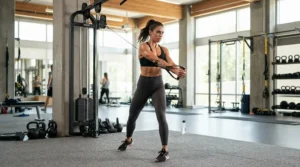
6. Mirafit Dual Adjustable Pulley Machine — 32 heights, two stack options
Height adjustment is where this machine earns its keep.
It comes with either 2 x 80kg or 2 x 10⁵kg stacks, each adjustable in 5kg steps, on a 2:1 ratio. That means each pin is roughly 2.5kg at the handle, a nicely fine increment for lateral raises. You also get 32 height settings at 50mm intervals, magnetised aluminium pins, stainless steel guide rods and an angled multi-grip pull-up bar. Floor mounting plates are included if you want to bolt it down.
My read: the 105kg option gives around 52kg per handle on paper, which is generous for flyes, curls and pushdowns but could feel limiting for heavy single-arm rows. It suits intermediate-to-advanced lifters who care about precise angles.
I found no published buyer reviews on the product page at the time of research, so I can’t characterise real-world feel. The spec depth is the case for it.
Pros:
- ✅ 32 height positions at 50mm intervals
- ✅ 5kg stack steps equal about 2.5kg at handle
- ✅ Floor plates included for bolting down
Cons:
- ❌ 2:1 ratio halves the effective stack
- ❌ No verified reviews found yet
Price and verdict: check current price; I couldn’t confirm a range, but the spec list is strong for serious training.
7. Wolverson Dual Adjustable Pulley Machine — premium twin stacks, clear specs
This is the one that behaves like gym equipment, and the numbers reflect that.
You get independent 95kg (210lb) stacks with 20 pin options per side, a 2:1 ratio and a multi-grip pull-up bar with 33mm handles. Assembled size is 152cm wide, 224cm high and 118cm deep, weighing 385kg, with a stated maximum user weight of 120kg. The warranty is 5 years on the frame, 2 years on pulleys and 6 months on cables. Stack stickers are in pounds, a small quirk to note. In practice, 2:1 puts roughly 47kg at each handle in theory, plenty for most isolation work.
My view: the cables warranty tells you where wear occurs, so budget for replacements down the line. At 224cm tall, check your garage ceiling and door track first.
Buyer feedback on the maker’s own page is positive but thin, just two reviews praising easy assembly and smooth pulleys. The listing showed out of stock at the time of research.
Pros:
- ✅ Independent 95kg stacks with 20 pin options
- ✅ Detailed published dimensions and warranty
- ✅ Includes bars, rope, ankle strap and carabiners
Cons:
- ❌ Premium money and a 385kg footprint
- ❌ Only two reviews on the maker’s page
Price and verdict: in the region of £2,500 direct from the maker at the time of research, with Amazon availability unverified; worth it for shared, long-term use.
| Product | Loading | Pulley Ratio | Size | Price Range | Best For |
|---|---|---|---|---|---|
| Mikolo M-G3 | Plates | 1:1 per listing (check variant) | ~3.4 sq ft footprint (G3) | Low-to-mid £100s | Small spaces |
| Mirafit Wall or Rack Mounted | Plates | Not stated | 73cm deep | Check current price | M3 rack owners |
| Mirafit Functional Trainer | Plates | Not stated | Check listing | Check current price | All-rounders |
| Body-Solid Powerline | Plates | Not stated | 208 x 284 x 99cm | Around £600 | Wide flyes |
| Strongway Cable Crossover | 2 x 75kg stacks | Not stated | Check listing | Check current price | Pin-loading fans |
| Mirafit Dual Adjustable | 2 x 80kg or 105kg | 2:1 | Check listing | Check current price | Precise heights |
| Wolverson Dual Adjustable | 2 x 95kg | 2:1 | 152 x 224 x 118cm | Around £2,500 | Premium, shared use |
Notice how many ratio cells say “not stated”. That’s your cue to ask before buying, because the ratio halves or doubles what you actually lift. Of the seven, only the Mirafit Dual Adjustable Pulley Machine and Wolverson Dual Adjustable Pulley Machine publish it clearly, while the Body-Solid Powerline is the one that costs you the most floor.
✨ Ready to Find Your Fit?
🔍 Take your home training to the next level with these carefully compared machines. Click any highlighted product name to check current pricing and availability on Amazon. 🏋️ Your garage will thank you!
Garage Gym Build: Setup, Fixings and Your First 30 Days
A sensible garage gym build starts with a tape measure, not a credit card. Measure width, depth and, crucially, ceiling height, remembering that beams and the door track can steal inches. Then work through this order:
- Check the wall. Wall-mounted units like the Mikolo M-G3 and Mirafit Wall or Rack Mounted Cable Pulley Machine need solid masonry. If you’re unsure what’s behind the plaster, get a professional opinion rather than guessing.
- Protect the floor. Rubber matting stops plates and feet marking the slab and cuts noise.
- Assemble with a helper. Owners of the Mirafit Functional Trainer suggest watching the assembly video before starting, since the printed instructions are small.
- Lubricate and inspect. A Mirafit reviewer flagged pulley friction, so a light lubricant on slides and a check of every carabiner is smart.
For your first 30 days, resist the urge to go heavy. Spend week one at roughly half your usual load, learning how each pulley height changes the feel of a movement. In weeks two and three, add one cable exercise per body part to your normal routine. By week four, you’ll know which heights you actually use, which tells you what attachments to buy next. A common first-month mistake is leaving cables under tension between sessions, so unhook handles and let the stack settle.
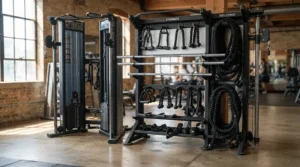
Real-World Scenarios: Three Buyers, Three Machines
A report by ukactive and Les Mills found that 43% of UK adults miss the recommended two strength sessions a week, and 32% do none at all. If you’re trying to join the other side of that statistic at home, here are three hypothetical buyers.
The budget lifter. Imagine a single garage, three sessions a week, plates already owned, and £300 to £400 to spend. The Mikolo M-G3 Wall Mount Cable Station fits the brief, as long as the wall is solid and expectations about independent loading are checked first.
The rack owner. Picture someone with a Mirafit M3 rack and a double-garage corner, training four times weekly. The Mirafit Wall or Rack Mounted Cable Pulley Machine bolts onto what they already have, and the Mirafit Functional Trainer would be the freestanding alternative if they want side pulleys.
The shared-gym household. Two people, five sessions between them, and a budget north of £2,000. The Wolverson Dual Adjustable Pulley Machine or Mirafit Dual Adjustable Pulley Machine makes sense, because pin-loading lets two people swap loads in seconds.
The logic is simple: match frequency and floor space first, then budget. Matching them the other way round is how people end up with a machine that dominates the room.
Problem → Solution Guide: Common Dual Cable Machine for Home Gym Headaches
“The weight feels too light.” Check the ratio. On a 2:1 machine, the Mirafit Dual Adjustable Pulley Machine’s 105kg stack gives about 52kg at the handle. Slow the tempo, add pauses, or switch to single-arm work to make lighter loads bite.
“The pulleys feel sticky.” Friction is a known theme in the Mirafit Wall or Rack Mounted Cable Pulley Machine reviews. Clean and lightly lubricate slides, then re-test before assuming a fault.
“The frame wobbles.” Wall-mount where you can, as with the Mikolo M-G3, or bolt down via floor plates, which the Mirafit Dual Adjustable Pulley Machine includes.
“The carabiners rattle or slip.” One Mirafit Functional Trainer owner swapped to 10mm carabiners. It’s cheap, quick and worth copying.
“I’m worried about ceiling height.” The Wolverson stands 224cm tall and the Body-Solid Powerline about 208cm, so measure to the lowest point, including the garage door track, not just the ceiling.
What Is a Dual Cable Machine for Home Gym Training?
A dual cable machine for home gym use is a strength station with two adjustable pulleys, each feeding a cable to its own resistance source, either a weight stack or loaded plates. Because each side moves independently, you can train both arms together or one at a time, at any height from floor to overhead.
The wider cable-machine format, as Wikipedia describes it, traditionally means a steel frame around three metres wide and two metres high, with a stack connected through cables and pulleys to handles. Pulleys fix at any height, which is what opens up so many exercises. Home versions compress that idea, sometimes dramatically.
Independent Cable Arms: The Detail That Changes Everything
Independent cable arms mean the left and right sides carry their own load and can’t borrow from each other. That matters because a stronger side can’t quietly compensate during a press or row. In practice, you’ll spot imbalances sooner, you can train the weaker side harder, and you can use unilateral movements like single-arm flyes and rotational work. Not every machine here offers truly separate sides, so check each listing carefully.
How to Choose a Dual Cable Machine for Home Gym Use
- Measure everything. Floor footprint, ceiling height and door width all decide whether a machine physically arrives and fits.
- Pick your loading style. Plates save money up front, while stacks save time between sets.
- Confirm the pulley ratio. A 2:1 ratio halves the effective load, so a 100kg stack gives 50kg, as Fitshop’s cable machine guide explains.
- Count the height positions. More adjustments mean finer angles for flyes, face pulls and rotations.
- Check the fixing method. Wall-mounted needs sound masonry; freestanding needs floor space and ideally anchor plates.
- Read the warranty split. Frame, pulleys and cables are often covered for very different periods.
- Look at attachments. A machine that ships without a rope, ankle strap and handles costs more than its sticker.
Cable Machine for Garage Gym: Space, Floors and Fixings
A cable machine for garage gym use faces conditions a spare bedroom never does.
Space and ceiling
Garage ceilings often look generous until you account for beams and the door track. The Wolverson needs about 224cm and the Body-Solid Powerline about 208cm, so measure the lowest point, not the average.
Floors and damp
Concrete slabs sweat in a British winter. Rubber flooring helps, and wiping down cables and pulleys after sessions limits rust over time, particularly on budget finishes.
Wall fixings and standards
Wall-mounted towers load the wall with every rep, so confirm what the wall is made of before drilling. It’s also worth asking sellers whether a machine complies with the BS EN ISO 20957 series for stationary training equipment, and whether it’s rated for home or commercial use. Always follow the manufacturer’s instructions.
Twin Cable Machine: Plate-Loaded vs Selectorised (and the True Cost)
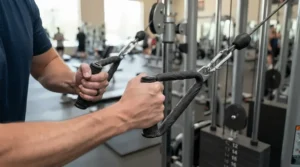
A twin cable machine splits into two camps. Plate-loaded designs, like the Mirafit Functional Trainer and Body-Solid Powerline, cost less up front but need plates you may not own yet. Selectorised stacks, like the Strongway Cable Crossover and Wolverson Dual Adjustable Pulley Machine, cost more but let you change load in a heartbeat.
Here’s the maths buyers miss: if you’re starting from scratch, 150kg of plates plus collars can cost a surprising amount, narrowing the price gap. If you already have plates, plate-loaded wins on value. Don’t forget wear items either. The Wolverson’s cables carry a six-month warranty against five years on the frame, a clear sign that cables are a consumable you should budget to replace.
Dual Pulley Home Gym vs Free Weights vs Single Pulley
A dual pulley home gym adds something free weights can’t: tension that stays constant through the whole range, and a path you can angle however you like.
| Option | Constant Tension | Unilateral Work | Space Needed | Best For |
|---|---|---|---|---|
| Dual pulley station | Yes | Excellent | Moderate to large | All-round variety |
| Single-pulley tower | Yes | Limited | Small | Pulldowns and rows |
| Dumbbells and barbell | Varies by lift | Good | Small | Heavy compound lifts |
| Resistance bands | Variable | Good | Minimal | Travel and rehab |
The table shows why a dual pulley home gym isn’t a replacement for a barbell, but a partner to it. If squats and deadlifts are your priority, spend on a rack first; if you want shoulder health, arm shape and back detail, add cables second. Single-pulley towers are cheaper but lock you into one side at a time.
Strength Training Variety: What You Can Actually Train
Strength training variety is where a dual cable setup quietly earns its keep. From one position you can cover chest flyes at three heights, face pulls, tricep pushdowns, lat pulldowns, single-arm rows, woodchops, Pallof presses and glute kickbacks.
Think in movement planes rather than machines. High pulleys give downward pulls for lats and triceps, mid-height pulleys suit rows and presses, and low pulleys suit curls, raises and leg work. Rotating through those angles across a week gives genuine strength training variety without extra equipment.
A simple template: two full-body cable sessions a week alongside your main lifts. That already satisfies the NHS recommendation of strengthening twice weekly across all major muscle groups. Vary the pulley height each month, and you’ll avoid the plateau that comes from repeating the same angle.
Long-Term Cost & Maintenance
The sticker price is only the opening bid. Budget for plates if you choose plate-loaded, rubber flooring for the garage, extra attachments and, eventually, replacement cables.
| Tier | Typical Range | What You Pay For | Best For |
|---|---|---|---|
| Budget | Low-to-mid £100s | Wall-mounted, plate-loaded towers | Small spaces |
| Mid-range | Around £600 | Freestanding plate-loaded crossovers | Wide-stance flyes |
| Premium | Around £2,500 | Dual stacks, longer warranties | Shared, long-term use |
Spread over ten years of use, the premium tier’s cost per session often falls close to the budget tier’s once replacement parts, plates and frustration are counted. The cheapest option isn’t always the cheapest to own. Treat pulleys and cables as consumables, wipe them down, lubricate slides and inspect carabiners every few weeks.
FAQ
❓ How much space does a dual cable machine for home gym use really need?
❓ Is a plate-loaded twin cable machine better than a weight stack?
❓ Can a cable machine for garage gym use be bolted to a wall?
❓ What stack size do I need on a dual pulley home gym?
❓ Are independent cable arms worth paying for?
Conclusion
Here’s the short version. The best dual cable machine for home gym use is the one that fits your garage and your habits, not the one with the longest spec sheet. If floor space is tight and plates are already in the corner, the Mikolo M-G3 Wall Mount Cable Station or Mirafit Wall or Rack Mounted Cable Pulley Machine makes the most sense. If you want variety from one footprint, the Mirafit Functional Trainer is the generalist. For wide-stance flyes, look at the Body-Solid Powerline Cable Cross Over. And if you want fast pin-loading, compare the Strongway Cable Crossover, Mirafit Dual Adjustable Pulley Machine and Wolverson Dual Adjustable Pulley Machine on ratio, ceiling clearance and warranty.
Whatever you pick, confirm the pulley ratio, measure twice and budget for plates, flooring and cable upkeep. Do that, and your garage gym build stops being a pile of good intentions and starts being a place you actually train.
🏋️ Ready to upgrade your garage?
Click any highlighted product name above to check current pricing and availability, then bolt it down and get pulling! 💪
Recommended for You
- Functional Trainer For Home Gym: 7 Proven Picks UK (2026)
- Cable Machine For Full Body Workout: 7 Best Picks For UK Homes (2026)
- Cable Machine Under £500: 7 Proven Budget Picks (UK 2026)
Disclaimer: This article contains affiliate links. As an Amazon Associate, I earn from qualifying purchases. If you purchase products through these links, we may earn a small commission at no additional cost to you.
✨ Found this helpful? Share it with your friends! 💬🤗
