In This Article
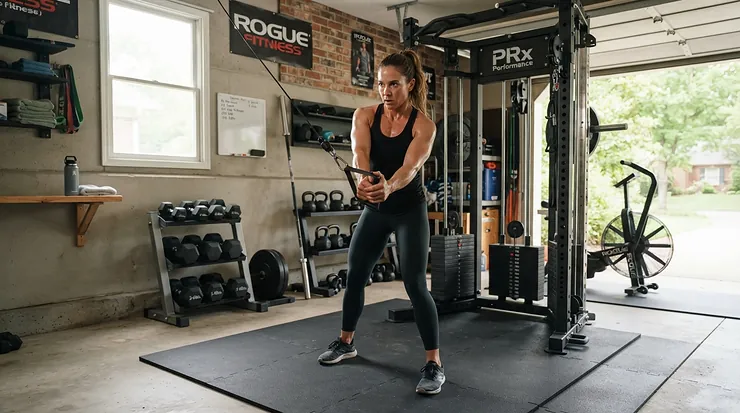
A cable machine for full body workout is a pulley-and-cable training station that lets you press, pull, row, squat, rotate and curl against smooth, constant resistance from adjustable handles. One frame replaces a rack of dumbbells, a lat tower and several fixed machines, which is why a well-chosen cable machine for full body workout can cover every major muscle group at home.

Most buyers find out the next part too late. Dumbbells are brilliant until you want a face pull. Barbells are glorious until you realise you also need a rack, a bench and a very understanding household. A cable machine sidesteps all that. You get chest flyes at shoulder height, lat pulldowns from overhead and woodchops from hip to shoulder, and the tension never drops out at the top of the rep.
The NHS physical activity guidelines for adults advise strengthening all the major muscle groups on at least two days a week. One well-chosen station can cover legs, hips, back, chest, shoulders, arms and core without a trip to the high street gym.
This guide compares seven real options UK buyers can look at in 2026. They range from a folding unit that tucks away in a flat to a premium cable machine that doubles as a complete gym. I’ve worked from published specifications, retailer listings and genuine review themes rather than guesswork, and I flag where something couldn’t be verified. After the product breakdowns, we’ll cover the cable machine with weight stack versus plate-loaded debate, why adjustable pulley height matters, and what separates a premium cable machine from the pack. We’ll finish with how to set one up without a meltdown.
Quick Comparison: 7 Cable Machines at a Glance
| Product | Type | Resistance | Pulley setup | Best For |
|---|---|---|---|---|
| GYM MASTER Cable Crossover | Freestanding, weight stack | 2 x 90kg stacks, 2:1 ratio | High and low pulleys on both towers | Most UK home gyms |
| Body-Solid Functional Trainer | Freestanding, weight stack | 2 x 160lb (about 73kg) stacks | Fully adjustable swivel pulleys | Buy-it-for-life buyers |
| XS Sports Crossover | Wall-mounted, built-in plate stack | 68kg (90kg XL also sold), 2:1 | 17 height positions | Garages and spare rooms |
| Strongway Wall Mounted Crossover | Wall-mounted, plate-loaded | Your own plates | 18 positions via knob | Tight budgets |
| TOUSAINS CR63 | Folding, plate-loaded | Rated to about 150kg of resistance | Lat pulldown and low row | Flats and box rooms |
| Force USA G20 V2 | All-in-one trainer | 2 x 130kg stacks, 2:1 | Dual adjustable pulleys | Serious premium buyers |
| Marcy MWM-990 | Single-stack home gym | 150lb stack | Lat bar and upper pulley | Moderate loads, accessory work |
Looking at the table, the GYM MASTER Cable Crossover delivers the most independent resistance for the least outlay. The Body-Solid Functional Trainer and Force USA G20 V2 are the two you buy when durability and range matter more than price. Space-pressed buyers should note the split: TOUSAINS CR63 needs no drilling, while XS Sports Crossover and Strongway Wall Mounted Crossover only work if you have solid brick or block to bolt into.
💬 Just one click — help others make better buying decisions too!😊
Top 7 Cable Machine for Full Body Workout Picks: Expert Analysis
1. GYM MASTER Cable Crossover — most cable machine for the money
The standout here is two independent towers, each with high and low pulley positions, so one frame behaves like two workstations. That independence lets you load each arm differently, which is how you spot and correct left-right strength gaps.
Two 90kg stacks (180kg in total) run at a 2:1 pulley ratio. On paper, 2:1 means the cable travels twice as far as the stack moves. Felt resistance is therefore roughly half the stack weight, around 45kg per side if the ratio works as listed. In exchange you get a longer, smoother stroke for flyes, pulldowns and cable squats. The uprights are 50x50mm 16-gauge steel, and the integrated pull-up bar plus the bundled bars, stirrup handles, triceps rope and chains cover 30-plus exercises.
Based on the spec comparison, this is the most sensible cable machine with weight stack for buyers who want variety without spending four figures. The geometry is the catch. It’s about 251cm wide but only 61cm deep, so you need a long clear wall. You also need roughly a 240cm ceiling to use the pull-up bar safely. The user limit is 120kg and it’s rated for home use only.
I couldn’t verify individual Amazon UK reviews at the time of research. A UK buying guide that weighed owner feedback flags assembly as the main pain point: a two-person job of two to three hours, with your own spanners. It also notes you must select at least the first two plates on each tower so the selector bar lines up.
Pros:
- ✅ Two independent 90kg stacks for unilateral work
- ✅ High and low pulleys on both towers
- ✅ Shallow 61cm depth suits long, narrow rooms
Cons:
- ❌ Needs about 251cm of clear wall width
- ❌ Home-use rating and 120kg user limit
Price: under £400 at the time of research (check current price), which is excellent value for dual stacks.

2. Body-Solid Functional Trainer — gym-grade smoothness for the long haul
This is the machine for people who value feel above everything else. Two independent 160lb (roughly 73kg) stacks change resistance with a pin in a second, and the swivelling pulleys let you pull from almost any angle. The cable ratio lengthens travel, which is what gives a premium cable machine that buttery, unhurried pull.
The frame uses 11-gauge, 2 x 3 inch steel, with optional stack shrouds for safety. That’s why it weighs about 287kg assembled. A chinning bar sits on top, and the box includes aluminium stirrup handles, a triceps rope, a chin and dip belt and a double swivel bar. Footprint is roughly 1.6m wide by 1.15m deep, standing about 2.1m tall.
Here’s what the spec sheet won’t tell you. That weight is the point. A heavy frame doesn’t rock during fast, explosive pulls, and it will outlast lighter builds that flex under repeated heavy use. The trade-off is obvious. You’ll want a ground-floor or garage position, and you’ll need help getting it into place.
Reviews for this exact Amazon UK listing weren’t verifiable in detail. At brand level, one independent US home-gym site’s owner survey put Body-Solid’s customer service at roughly 4.4 out of 5, and its reviewers describe older Body-Solid units staying smooth after years of use.
Pros:
- ✅ Independent 160lb stacks with pin-select changes
- ✅ Heavy steel frame stays rock-steady
- ✅ Chin bar and swivel pulleys add range
Cons:
- ❌ About 287kg assembled and hard to move
- ❌ Price runs comfortably into four figures
Price: well into four figures, so check current price. Value is strongest if you’ll genuinely use it for a decade.
3. XS Sports Crossover — wall-mounted space saver with its own stack
Wall mounting is the clever bit. The unit bolts to a solid wall and projects only about 50cm, so a garage keeps its car space or a spare room keeps its floor. Two pulleys move through 17 height positions at a 2:1 ratio, which makes for quiet, controlled resistance.
It ships with its own integrated plate stack (68kg, with a 90kg XL version also sold), plus a lat bar, handles and a rope. That means you aren’t hunting for plates before the first session. Seventeen positions is enough to cover low rows, mid-height presses and rotations, and high pulldowns, which is the full pattern a full body routine needs.
The wall is the real purchase decision. It must be solid brick or block, not plasterboard, and the supplied fixings are basic enough that many owners upgrade them. If your wall is questionable, this isn’t your machine.
A UK buying guide that summarised owner feedback reports that, once bolted to brick, the unit barely moves. That’s exactly what you want here. The recurring gripes are the basic fixings and weight plates labelled in pounds rather than kilograms. I couldn’t independently verify full Amazon UK review data.
Pros:
- ✅ Only about 50cm projection from the wall
- ✅ 17 pulley height positions for varied angles
- ✅ Built-in stack plus lat bar and handles
Cons:
- ❌ Needs solid brick or block, never plasterboard
- ❌ Basic fixings and plates labelled in pounds
Price: sits above the Strongway Wall Mounted Crossover, so check current price. Value is strong for garages that need floor space back.
4. Strongway Wall Mounted Crossover — cheapest way into cable training
If you already own plates, this is the smartest first cable purchase. You only pay for the frame and pulleys, and the machine takes both 25mm standard and 50mm Olympic discs. Plate-loaded designs trade convenience for cost, and this one leans hard into cost.
A double bar track gives 18 adjustable positions, set by a knob, and the arms adjust for width, so you get genuine crossover range. The footprint is compact, around 63cm by 74cm against the wall, standing about 201cm tall. Linear motion bushing carriages keep movement gliding rather than juddering, which matters more on a budget unit than any headline spec. It’s rated to 250kg for home use and includes four chromed Olympic bullhorns, stirrup handles and wall fixings.
It still covers the lifts that matter: pulldowns, rows, curls, extensions, presses and front raises. Treat it as a pulley station you hang your own plates on, and it’s an excellent bit of kit for the money. Treat it as a premium cable machine and you’ll be disappointed.
Verified review detail was limited. The UK guide I found characterises it as a no-fuss first machine, and the sensible caveat is the same as any wall unit: good wall, good fixings.
Pros:
- ✅ Lowest price on this list
- ✅ 18 positions set quickly by knob
- ✅ Uses plates you already own
Cons:
- ❌ Plates loaded by hand between sets
- ❌ Requires solid brick or block wall
Price: a little over £200 at the time of research (around £200-£250, check current price). It’s the best entry value here.
5. TOUSAINS CR63 — folds away to under three square feet
This is the answer when a cable machine can’t have a permanent home. It’s freestanding, so there’s no drilling, and it folds to about 2.92 square feet and rolls away on built-in wheels. Standing only 160cm tall, it clears a UK 7 foot ceiling with room to spare, unlike the tall towers elsewhere on this list.
Switching between lat pulldown and low row takes about three seconds, and the manufacturer counts 20-plus exercises across back, shoulders, arms and core. It takes 1 inch standard and 2 inch Olympic discs plus most dumbbell plates, holds two dumbbells at once, and is rated to roughly 150kg (330lb) of resistance. It doubles as a cable rowing machine, which is a real bonus in a flat.
Let’s be honest about the limits. There’s no barbell rack and no squat or press station, and TOUSAINS is upfront that it focuses on two cable moves rather than everything. For a full body routine you’d pair it with dumbbells or bodyweight work for legs and pressing. That honesty actually makes it easier to recommend. It does two jobs very well and doesn’t pretend otherwise.
I couldn’t verify a meaningful body of independent reviews, so treat the specifications here as manufacturer claims until you’ve read current buyer feedback on the listing.
Pros:
- ✅ Folds to about 2.92 square feet on wheels
- ✅ Only 160cm tall, so no ceiling worries
- ✅ Works as a cable rowing machine too
Cons:
- ❌ No rack, squat or press station
- ❌ Plate-loaded, with limited exercise breadth
Price: check current price at the time of purchase. Value is best for renters and small flats.

6. Force USA G20 V2 — all-in-one premium cable machine with a Smith machine
This is the premium cable machine on the list that does everything. It combines a Smith machine, power rack and functional trainer in a compact walkthrough frame. The Smith machine is listed with a 450kg capacity, which tells you who it’s built for.
The cable side uses dual adjustable pulleys at a 2:1 ratio with 130kg stacks, moving in 2.5kg steps. Small increments sound dull but they’re gold for progressive overload. You can add a sliver of resistance each week instead of jumping a full plate. Attachments include a multi-grip pull-up bar, suspension trainer hook, leg press footplate, triceps rope, lat pulldown bar and a swing arm. There are also ten plate holders and barbell storage.
As analysis, here’s what to weigh. The G20 V2 lets one person run a complete programme (squat, press, row, pulldown, leg press) in one footprint. The cost is price and assembly effort. It’s a serious, multi-hour build, and it makes sense only if you’d otherwise buy a rack, Smith machine and cable station separately.
Reviewers of the earlier G20 praised the 400-plus exercise options and 11-gauge tubing, while flagging the high price and heavy shipping weight. I couldn’t verify Amazon UK review data for the V2, so check availability and current stock before buying.
Pros:
- ✅ Cable, Smith machine and rack in one frame
- ✅ 2.5kg stack increments for precise progression
- ✅ Large attachment bundle included
Cons:
- ❌ Premium price, well into four figures
- ❌ Heavy, lengthy assembly
Price: firmly premium (check current price). Value holds only if you’d otherwise buy three machines.
7. Marcy MWM-990 — classic single-stack home gym with fixed stations
This is the traditional home gym many people picture. It’s a 150lb selectorised stack with pin changes and a secure stack lock, and it ships with a lat bar, upper pulley, padded butterfly arms, leg developer and preacher curl pad. The maker counts 30-plus exercises, which is plenty for a first full body routine.
The honest limit is the 150lb stack. That’s fine for curls, lateral raises and pulldowns for most beginners, but it runs out for heavier rows and presses as you progress. BarBend’s review makes the same point: it suits accessory work and moderate loads rather than heavy, progressive lifting. Fixed stations also mean less freedom than a true adjustable pulley height setup, so cable-style variety is narrower here.
Who’s it for? Beginners, returners and households who want a plug-and-play station without thinking about plates. If you plan to chase serious strength, aim higher.
One US buyer review I found describes a solid, sturdy build and easy exercise changes, but flags transit damage, confusing assembly diagrams (several hours of building) and limited range of motion for taller users. Treat that as a single data point. I couldn’t verify UK Amazon review data, and availability varies, so check the listing.
Pros:
- ✅ Selectorised 150lb stack with safety lock
- ✅ Lat bar, leg developer and butterfly arms included
- ✅ Simple pin-change resistance for beginners
Cons:
- ❌ 150lb cap limits long-term progression
- ❌ Fixed stations restrict cable-style variety
Price: check current price, as availability and cost vary. Value is decent for moderate-load training.
Specs and Price Bands Side by Side
| Product | Footprint | Price band | Best For |
|---|---|---|---|
| GYM MASTER Cable Crossover | About 251cm wide x 61cm deep | Under £400 | Best overall value |
| Body-Solid Functional Trainer | About 1.6m x 1.15m x 2.1m | Well into four figures | Longevity |
| XS Sports Crossover | About 50cm projection | Above the Strongway Wall Mounted Crossover | Compact garages |
| Strongway Wall Mounted Crossover | About 63cm x 74cm, 201cm tall | Around £200-£250 | Budget starters |
| TOUSAINS CR63 | About 2.92 sq ft folded, 160cm tall | Check current price | Small flats |
| Force USA G20 V2 | Rack-sized, G20 family around 1.7m x 1.9m x 2.3m | Premium, four figures plus | Complete one-machine gym |
| Marcy MWM-990 | Roughly 1.7m long (check listing) | Check current price | Moderate-load beginners |
The data shows a clear split. Wall-mounted and folding options such as XS Sports Crossover and TOUSAINS CR63 buy you floor space, while freestanding stacks buy you convenience and feel. If I had to rank on pure cost-per-capability, the GYM MASTER Cable Crossover wins, and the Body-Solid Functional Trainer wins on cost-per-year if it genuinely lasts a decade.
Your First 30 Days: Setup, Safety and Maintenance for a Home Cable Machine
The first month decides whether your new cable machine becomes a daily habit or a very expensive coat rack. Think of it as three phases.
Before assembly: Measure the room, then add a metre in front for movement. Mark the footprint on the floor with tape and test one full pulldown and one full row against that outline. Check the parts count before you start, and use a ratchet and socket set rather than the little supplied spanner. Two people make it faster and safer. If you’re building something like the Force USA G20 V2, Garage Gym Reviews has a candid G20 review covering assembly headaches that’s worth reading beforehand.
Week one: Go light. Run every pulley through full range with minimal load and watch for cable rub, wobble or noise. On any cable machine with weight stack, confirm the selector pin seats fully before each set. On plate-loaded units like the Strongway Wall Mounted Crossover, check plates sit flush and collars are secure.
Weeks two to four: Build a simple full-body template. Pull, push, hinge and rotate, two or three days a week. Log your pulley height and load so you can repeat it.
Maintenance rhythm: Monthly, re-check bolts, inspect cables for fraying and wipe guide rods. Use a silicone or dry lubricant on guide rods as the manufacturer recommends, and keep grease off the cables themselves.
Common first-month mistakes: loading too heavy before learning the line of pull, ignoring ceiling height, and skipping the pin check.

Real-World Scenarios: Which Machine Fits Which Home?
These are illustrative profiles rather than case studies of real customers, but they show how the decision plays out.
The flat-dweller: A renter with a box room, a limited budget and three 35-minute sessions a week. Drilling is off the table, and the ceiling is a standard 2.4m. The TOUSAINS CR63 fits, since it folds to under three square feet and stands only 160cm tall. Pair it with dumbbells for legs and presses.
The family garage: A shared garage with a brick wall, mixed abilities and a need for variety. The GYM MASTER Cable Crossover gives dual 90kg stacks so two people can switch loads in seconds. If floor space is the issue, the XS Sports Crossover frees up the floor.
The long-term lifter: Five sessions a week, a ground-floor room and no intention of upgrading again. The Body-Solid Functional Trainer is the buy-it-for-life option. If you also want a squat station and Smith machine, the Force USA G20 V2 consolidates three purchases.
The plate owner on a budget: Already has a rack’s worth of plates and a solid wall. The Strongway Wall Mounted Crossover adds cable work for around £200-£250. The Marcy MWM-990 suits someone who’d rather not touch plates at all.
Problem and Solution Guide: Fixing Common Cable Machine Headaches
“The pull feels jerky.” Check the cable seats properly in every pulley groove, then clean and lightly lubricate the guide rods. On plate-loaded units with bushing carriages, like the Strongway Wall Mounted Crossover, a wipe-down often restores the glide.
“It isn’t heavy enough.” Remember the 2:1 ratio. On a GYM MASTER Cable Crossover or Force USA G20 V2, felt resistance is roughly half the stack weight, so plan for that. For heavy lower-body work, consider a machine with heavier stacks or pair the cable with free weights.
“I’m worried about my wall.” If the XS Sports Crossover or Strongway Wall Mounted Crossover is on your list, only fit into solid brick or block with the right anchors. If in doubt, hire a tradesperson.
“My ceiling is too low.” Skip the pull-up bar or choose the 160cm TOUSAINS CR63.
“It’s too noisy for the neighbours.” Use thick rubber flooring. Stacks are generally quieter than plates clanking onto bars, so a Marcy MWM-990 or Body-Solid Functional Trainer is the calmer option.
How to Choose a Cable Machine for Full Body Workout
How do you choose a cable machine for full body workout? Match space, resistance type, pulley range and build quality to how often and how heavily you’ll train. These steps cover it.
- Measure your space first. Width, depth and ceiling height decide more than any brand does. The GYM MASTER Cable Crossover needs about 251cm of width, while the TOUSAINS CR63 needs almost none.
- Pick stack or plates. A cable machine with weight stack changes load in seconds, while plate-loaded saves money and weight.
- Understand the pulley ratio. At 2:1, felt resistance is roughly half the stack weight, so a 90kg stack feels like about 45kg.
- Check adjustable pulley height. More positions means more exercise angles, so count them.
- Inspect build quality. Look at steel gauge, cable rating and frame weight. Heavier usually means steadier.
- Review attachments and warranty. Bars, rope, stirrups and a pull-up bar add real value.
- Budget for extras. Plates, flooring, a bench and fixings all add to the bill.
Adjustable Pulley Height: Why It Decides What You Can Train
Adjustable pulley height is the feature that turns a cable stack into a full body workout tool. A low pulley suits curls, rows, pull-throughs and cable squats. A mid-height pulley handles chest presses, woodchops and rotational core work. A high pulley covers pulldowns, triceps pushdowns and face pulls. Without that range you’re stuck repeating the same few movements.
The numbers vary. The XS Sports Crossover offers 17 height positions, the Strongway Wall Mounted Crossover gives 18, and the Body-Solid Functional Trainer uses fully adjustable swivelling pulleys. The GYM MASTER Cable Crossover relies on high and low positions on both towers, which is still enough for 30-plus exercises. Fixed-station designs such as the Marcy MWM-990 give far less angle variety.
Why does angle matter? Because muscles are loaded differently depending on the line of pull. If you enjoy the research side, cable EMG research on PubMed is a good starting point for how pulley setup changes muscle demand. In practice, finer adjustable pulley height steps let you fine-tune shoulder-friendly angles for face pulls and flyes, and that’s something a basic two-position setup can’t match.
Cable Machine with Weight Stack vs Plate-Loaded: Which Wins?
A cable machine with weight stack wins on speed, safety and tidiness. You move a pin and carry on, which makes supersets, circuits and drop sets effortless. Stacks are also safer when training alone, because there are no loose plates to drop or rack.
Plate-loaded wins on price and weight. The Strongway Wall Mounted Crossover and TOUSAINS CR63 let you reuse plates you already own, which keeps the entry cost low. The trade-off is time: you load and unload between sets, and the rhythm of a circuit breaks.
Increments matter too. The Force USA G20 V2 moves in 2.5kg steps, ideal for steady progress, while plate-loaded setups can use fractional plates if you own them. The XS Sports Crossover sits in between, with its own integrated plate stack and no loose loading.
My rule of thumb: choose a cable machine with weight stack if you train in circuits, share the machine or value simplicity. Choose plate-loaded if you already own plates, have limited space or want the lowest cost. The GYM MASTER Cable Crossover, Body-Solid Functional Trainer, Force USA G20 V2 and Marcy MWM-990 all use stacks.

What Makes a Premium Cable Machine Worth It?
A premium cable machine earns its price in four places: frame, feel, adjustability and longevity. The Body-Solid Functional Trainer shows the frame argument clearly, with 11-gauge, 2 x 3 inch steel and a weight of about 287kg. That mass keeps the machine steady during fast pulls, and heavy steel resists flex under years of use.
Feel comes from smooth pulleys, independent stacks and cable travel. Adjustability comes from small stack increments and wide height range, as on the Force USA G20 V2 with its 2.5kg steps and dual adjustable pulleys. Longevity is the least visible but most valuable, and it shows in how the machine feels after years rather than weeks.
Here’s the honest filter. A premium cable machine solves problems you actually have. If you train three times a week with moderate loads, a GYM MASTER Cable Crossover probably covers you. If you train hard, share the machine, or want a rack, Smith machine and cables in one footprint, premium makes sense. Ask what the extra money buys that you’d use weekly. If the answer is “nothing specific”, save it.
Cable Machine vs Free Weights, Fixed Machines and Bands
| Option | Strengths | Weak spots | Best For |
|---|---|---|---|
| Cable machine | Constant tension, any angle, joint-friendly | Footprint, cost | GYM MASTER Cable Crossover or Body-Solid Functional Trainer |
| Free weights | Cheap, flexible, builds stability | Needs spotter or rack, tension drops | Dumbbell-first lifters |
| Fixed selectorised machines | Beginner-friendly, safe | Limited movement paths | Marcy MWM-990 |
| Resistance bands | Portable, cheap | Inconsistent load, wear out | Travel, warm-ups |
The table shows why cables sit in the sweet spot. They keep tension constant through the rep, which free weights can’t, and they allow angles that fixed machines lock out. A review of functional training research associates this kind of multi-direction, independent-limb work with better strength and movement performance. If your budget is tiny, bands or a Strongway Wall Mounted Crossover plus plates are the cheapest route, and TOUSAINS CR63 suits those who need storage.
Long-Term Cost and Maintenance
Purchase price is only the opening bid. A realistic budget includes flooring (rubber mats protect floors and reduce noise), a bench for pressing, spare handles, wall fixings or anchors for wall units, and plates if you buy plate-loaded.
| Product | Price band | Hidden costs | Value verdict |
|---|---|---|---|
| GYM MASTER Cable Crossover | Under £400 | Flooring, spanners | Excellent |
| Body-Solid Functional Trainer | Four figures | Delivery help, flooring | Strong if kept a decade |
| XS Sports Crossover | Above Strongway Wall Mounted Crossover | Upgraded fixings | Good for floor space |
| Strongway Wall Mounted Crossover | £200-£250 | Plates, anchors | Best entry value |
| TOUSAINS CR63 | Check current price | Plates | Good for flats |
| Force USA G20 V2 | Premium | Plates, bench | Worth it if replacing three machines |
| Marcy MWM-990 | Check current price | Replacement cables over time | Fair for moderate loads |
Value comes down to cost per year of use. A cheaper unit that lasts five years can cost more over time than a pricier one that lasts fifteen. Budget stacks with lighter hardware may need pulley or cable replacement sooner, so inspect parts regularly. Wall-mounted units add the cost of good fixings or a tradesperson, which people often forget.
✨ Don’t Miss These Exclusive Deals!
🔍 Take your home training to the next level with these carefully selected cable machines. Click on any highlighted item to check current pricing and availability. These machines will help you build a complete, balanced routine your whole household can enjoy!
UK Safety, Wall Fixings and Compliance Guide
Safety starts with checking the listing for UKCA or CE marking and for the stated use class. Stationary training equipment is generally covered by the BS EN ISO 20957 series, with home-use equipment typically classed differently from commercial equipment. The GYM MASTER Cable Crossover, for example, is listed as home use only, so don’t treat it as commercial kit.
Respect stated limits. That means the 120kg user weight on the GYM MASTER Cable Crossover and the 250kg rating on the Strongway Wall Mounted Crossover. Never exceed them.
For wall units like the XS Sports Crossover and Strongway Wall Mounted Crossover, fix only into solid brick or block, never hollow plasterboard, using anchors suited to your wall type. If you aren’t confident, get a tradesperson. Every rep pulls on those fixings.
Floors matter too. A heavy unit like the Body-Solid Functional Trainer (about 287kg) belongs on a firm, level ground floor or garage slab rather than a bouncy suspended timber floor. Keep clear space around the machine, check ceiling height before using any pull-up bar, and confirm the selector pin is fully seated before every set.

FAQ
❓ How much floor space does a cable machine for full body workout need in a UK garage?
❓ Can you build muscle with a cable machine with weight stack?
❓ Is a premium cable machine worth the extra money?
❓ How many positions of adjustable pulley height do I need?
❓ Do wall-mounted cable machines need professional fitting?
Conclusion
The best cable machine for full body workout is the one that matches your room, your wall and your training habits, not the one with the longest spec sheet. For most UK homes, the GYM MASTER Cable Crossover offers the most independent resistance for the money. The Body-Solid Functional Trainer is the buy-it-for-life choice, and the Force USA G20 V2 is the premium cable machine for people who want a whole gym in one frame.
If floor space is your constraint, the XS Sports Crossover and Strongway Wall Mounted Crossover reclaim it, provided your wall is solid. The TOUSAINS CR63 folds away for flats. The Marcy MWM-990 suits moderate-load beginners who want pin-select simplicity.
Whichever you choose, check current prices and availability, measure twice, fix to solid brick or block, and start light. A cable machine with weight stack or plate-loaded design will only pay off if you use it, so pick the one you’ll actually enjoy walking up to.
Recommended for You
- Cable Machine Under £500: 7 Proven Budget Picks (UK 2026)
- Olympic Weight Bench For Home Gym: 7 Best Rock-Solid Picks (2026)
- Folding Weight Bench For Small Spaces: 7 Brilliant Picks (2026)
Disclaimer: This article contains affiliate links. As an Amazon Associate, I earn from qualifying purchases. If you purchase products through these links, we may earn a small commission at no additional cost to you.
✨ Found this helpful? Share it with your friends! 💬🤗
