In This Article
A cable machine under £500 is a pulley-based strength station, whether wall-mounted, lat-tower or weight-stack style. It gives you smooth, adjustable resistance for rows, pulldowns, presses and curls without commercial-gym money. One compact frame replaces a whole row of single-purpose kit, which suits British spare rooms, garages and the occasional optimistic utility cupboard.
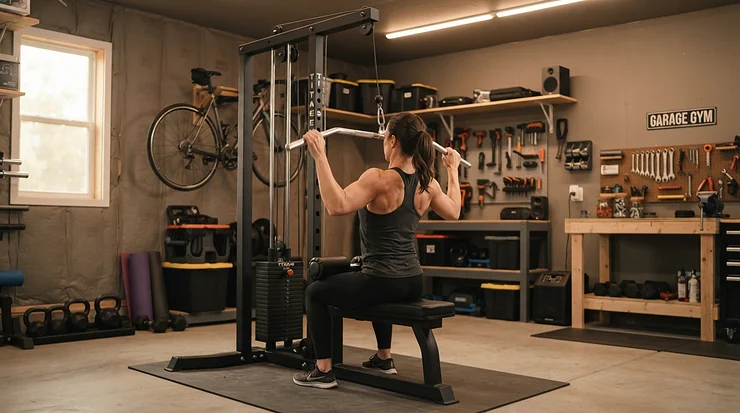
Most people build a home gym the same way. A bench, a few dumbbells, a mat. Then they wonder why their back training looks like a sad shrug. Cables fix that. They give you the pulldown, the seated row and the face pull, movements free weights struggle to mimic, in a footprint smaller than a wardrobe.
The timing is good, too. The NHS guidance for adults aged 19 to 64 asks for strengthening work across all the major muscle groups on at least two days a week. A decent cable station covers legs, back, chest, shoulders and arms from one spot. You hit the target at home, skip the commute, and nobody watches your form.
This guide covers seven real options, from a pulley kit that costs less than a family takeaway to a full weight-stack multi-g ym. I’ve worked from spec sheets, retailer listings and published review roundups rather than pretending I’ve wrestled with the Allen keys myself. You’ll get honest reasoning, not invented war stories. Along the way we’ll cover the cable machine for beginners question, the trade-offs of an affordable cable machine, how a budget functional trainer differs from a wall station, and where resistance cables fit into a sensible home gym budget.
Quick Comparison: Cable Machine Under £500 at a Glance
Short on time? This table sorts the seven picks by what they actually are. That matters, because “cable machine” covers everything from a £50 pulley kit to a full multi-gym.
| Product | Type | Resistance | Price band* | Best For |
|---|---|---|---|---|
| Mikolo Wall Mount Cable Station | Wall-mounted dual pulley | Your own plates | Roughly £180-£300 | All-round value |
| Goimu WM1 | Wall-mounted dual pulley | Your own plates | Under £250 | Tightest budgets |
| GMWD G7 Pro | Wall-mounted cable machine | Your own plates | £200-£350 range | Shortlist comparisons |
| GDLF Lat Pull Down & Low Row | Freestanding lat tower | Your own plates | £200-£350 range | Beginners, back training |
| Mikolo LAT Pulldown Machine | Compact lat tower | Your own plates | £250-£400 range | Small rooms |
| Mikolo LAT and Lift Pulley System | Pulley kit | Your rack and plates | Under £60 | Existing rack owners |
| Marcy MWM-989 | Weight-stack multi-gym | Built-in stack | £350-£500 range | No-plate simplicity |
*Price bands are indicative, based on listings seen during research. Amazon prices change constantly, so check the current price before buying.
Looking at the comparison above, the Mikolo Wall Mount Cable Station and Goimu WM1 deliver the most exercise variety per pound, but both assume you already own plates. If you don’t, the Marcy MWM-989 includes its resistance, which narrows the real-world cost gap. Beginners who mainly want a stronger back should note that the lat towers trade versatility for simplicity.
💬 Just one click — help others make better buying decisions too!😊
Top 7 Cable Machine Under £500 Picks: Expert Analysis
1. Mikolo Wall Mount Cable Station — best all-round dual-pulley value
The headline feature is adjustability: roughly nineteen pulley heights per side. Listings vary between 18, 19 and 27 depending on the version, so read yours carefully. That means low-pulley curls, mid-height flyes and high-pulley pushdowns without restringing anything.
The spec sheet gets interesting once you translate it. The aluminium pulleys (one listing counts 21) spin freely, so light isolation work feels smooth rather than grabby. A large footboard lets you sit on the floor for seated rows. The 10° upward-angled plate pegs stop plates sliding off mid-set, a tiny detail that prevents a very loud mistake. The detachable sleeves take both 1-inch and 2-inch plates, so you can raid your existing collection. A lat bar, cable bar and tricep rope come included. They’re basic, but enough to start.
Based on the spec comparison, this is the one I’d shortlist first if you have a solid masonry or timber-stud wall and a few plates. The catch is that resistance is only as heavy as the plates you own.
Published roundups repeatedly rank it their best-value wall-mounted pick, and one US retailer listing showed a high average across more than a hundred reviews. I couldn’t verify amazon.co.uk review counts, so check those before buying.
Pros:
- ✅ Nineteen-ish pulley positions for real exercise variety
- ✅ Smooth aluminium pulleys and angled plate pegs
- ✅ Accepts both 1-inch and 2-inch plates
Cons:
- ❌ Plate-loaded, so you must buy weights
- ❌ Needs a properly solid wall to mount
Expect roughly £180-£300 at the time of research, and check the current price. It’s the strongest all-rounder of the seven.

2. Goimu WM1 — most affordable dual-pulley entry point
Seventeen positions, high and low pulleys, and a removable footplate make this the cheapest route into proper two-pulley training that I found. Wall mounting means no bulky floor frame and no floor anchors.
Seventeen heights is fewer than the Mikolo Wall Mount Cable Station. In practice it still covers the key trio: low for curls and rows, mid for presses, high for pushdowns and pulldown-style work. The removable footplate is more useful than it sounds. Pop it off for standing work, leave it on for seated rows.
Here’s what to weigh. This is a “you already own plates” purchase. If you don’t, the sticker price flatters it, because plates will add a meaningful chunk to the bill. It also suits a garage or outbuilding with a sturdy block or brick wall better than a flimsy partition wall.
Roundups tend to label it the best budget pick or the most affordable cable entry point. The review base is thinner than the big sellers, so treat that praise as encouraging rather than conclusive.
Pros:
- ✅ Lowest entry cost among true dual-pulley stations
- ✅ Removable footplate adds flexibility
- ✅ Wall-mounted, so it saves floor space
Cons:
- ❌ Fewer height positions than pricier rivals
- ❌ Plates and a solid wall are non-negotiable
Budget around £250 or less, and check the current price. It’s an excellent affordable cable machine if you already own plates.
3. GMWD G7 Pro — frequent shortlist contender, spec-check essential
The GMWD G7 Pro keeps turning up on wall-mounted shortlists alongside the Mikolo and Goimu stations. It’s a plate-loaded wall unit in the same broad class.
Published detail on it is thinner than for its rivals, and that’s worth knowing. Spec transparency is itself a buying signal. Before you commit, verify four things on the current listing: the number of pulley positions, whether the pulleys are aluminium or plastic, the plate sleeve diameter, and whether a footplate is included. Any one of those can swing your decision.
My honest take is that this is a comparison-shopping pick, not a blind-buy pick. Put it next to the Mikolo Wall Mount Cable Station and the Goimu WM1, then choose on the listing’s actual specs, delivery timing and returns terms. If a listing can’t tell you those basics clearly, that tells you something too.
I couldn’t verify a meaningful body of amazon.co.uk reviews for this model, so rather than guess at user sentiment, read the most recent buyer comments yourself. Look specifically for mentions of wobble, pulley noise and missing hardware.
Pros:
- ✅ Wall-mounted design saves floor space
- ✅ Plate-loaded, so you control the resistance
- ✅ Regularly shortlisted alongside better-known rivals
Cons:
- ❌ Published specs are thinner than competitors’
- ❌ Needs a sturdy wall and your own plates
Expect the £200-£350 range, and check the current price. Good value only if the listing’s specs check out.
4. GDLF Lat Pull Down & Low Row — best beginner-friendly lat tower
This is a lat tower, not a functional trainer, and the best roundups are upfront about that. It gives you lat pulldowns and low rows on a freestanding frame.
Why does that matter? The pulldown and seated row are the two movements most home gyms lack. Master them and your pulling strength and posture improve quickly, which is useful if your job involves a laptop and a chair. Reviewers praise the room it leaves to progress, and the budget nature shows up mainly in the finishing details rather than the core function.
For anyone choosing a cable machine for beginners, this is a sensible first step. It’s easier to understand than a dual-pulley wall station, needs no drilling, and teaches the movement patterns you’ll reuse on bigger kit later.
Roundups repeatedly call it their editor’s choice for budget buyers. The common caveat is that it won’t do chest flyes or high-pulley triceps work, so don’t buy it expecting a full cable crossover.
Pros:
- ✅ Freestanding, so no wall drilling needed
- ✅ Covers the two most-missed movements: pulldown and row
- ✅ Beginner-friendly and simple to understand
Cons:
- ❌ Not a true functional trainer
- ❌ Budget finishing details, per roundups
Roughly £200-£350 at the time of research, and check the current price. Excellent value for back-focused training.
5. Mikolo LAT Pulldown Machine — compact tower with a leg hold-down
The standout is the leg hold-down attachment. Add a cable row attachment and you get a lat tower that’s genuinely usable for heavier pulling.
Here’s why the hold-down matters. On heavy pulldowns, your hips lift off the seat before your lats finish the job. A thigh pad anchors you, so you can train the back harder with the same plates. That’s a real-world benefit the spec line “leg hold-down” doesn’t explain.
Compared with the GDLF Lat Pull Down & Low Row, this one is positioned as the compact option, which helps in a box room or a corner of a garage. Think about ceiling height before you buy, though, because a tower plus a tall lifter needs clearance.
Roundups describe it as the best compact lat tower. As with most budget towers, the sensible questions to ask are about stability under load and seat comfort, so skim recent buyer comments for those themes.
Pros:
- ✅ Leg hold-down anchors you during heavier pulls
- ✅ Compact footprint for small rooms
- ✅ Includes cable row attachment
Cons:
- ❌ Lat tower only, with no pressing or flye options
- ❌ Check ceiling clearance for taller users
Roughly £250-£400, and check the current price. Strong value if your goal is a bigger, stronger back.

6. Mikolo LAT and Lift Pulley System — cheapest way to add cables
This is the wildcard: a pulley system, not a machine. Roundups call it the single best-value upgrade you can make for the price, aimed at people who already own a power rack and weight plates.
That framing is the whole story. If you have a rack, a few quid adds lat pulldowns, curls and triceps work without the space cost of a new machine. If you don’t have a rack, this product is the wrong choice, and no amount of enthusiasm will fix that.
On paper the saving is enormous. A full machine could cost five or ten times as much, yet you get the movement patterns that matter most. The trade-off is convenience: no padded seat, no footplate, and fewer adjustment options than a dedicated station.
Review sentiment in roundups is positive but conditional. It’s praised as a bargain for the right buyer, which is another way of saying it punishes the wrong one.
Pros:
- ✅ By far the lowest cost way to add cables
- ✅ Uses plates and a rack you already own
- ✅ Tiny storage footprint
Cons:
- ❌ Useless without a compatible rack and plates
- ❌ No seat, footplate or built-in adjustability
Expect under £60 at the time of research, and check the current price. Unbeatable value, but only for existing rack owners.
7. Marcy MWM-989 — weight-stack simplicity with no plates needed
This classic steel multi-gym comes with its resistance built in. No plates, no sleeves, no maths. Roundups say it looks like a 1990s multi-gym, and in some ways it is, but Marcy has refined the formula over decades. The removable preacher curl pad is a small touch that makes the station feel finished rather than compromised.
The practical meaning is that the whole setup cost is the sticker price. Compare that with the plate-loaded wall stations above, where weights add to your total. Pin-select stacks are also fiddle-free, so changing resistance mid-circuit takes seconds.
My view is that it suits households sharing the kit, or anyone who finds loading plates a faff. Before buying, check the stack size on the current listing, plus the full exercise list, so you know it matches your goals.
A roundup puts its review base at around 280 ratings, noticeably smaller than some rival stations (about 1,400 in the same comparison). Fewer reviews means less certainty, so read recent comments.
Pros:
- ✅ Resistance is built in, so no plates required
- ✅ Quick pin-select changes between exercises
- ✅ Removable preacher curl pad adds versatility
Cons:
- ❌ Bulkier than wall-mounted stations
- ❌ Smaller review base means less certainty
Expect roughly £350-£500 at the time of research, and check the current price. Fair value, especially if you’d otherwise have to buy plates.
Top 7 Compared: Specs, Price Bands and Best For
Here’s the fuller side-by-side. Notice how the resistance source, not the headline price, changes the real cost.
| Product | Cable setup | Floor or wall | Plates needed? | Best For |
|---|---|---|---|---|
| Mikolo Wall Mount Cable Station | Dual pulley, roughly 19 positions | Wall | Yes | Versatile home gyms |
| Goimu WM1 | Dual pulley, 17 positions | Wall | Yes | Lowest-cost dual pulley |
| GMWD G7 Pro | Wall-mounted unit (verify specs) | Wall | Yes | Comparison shoppers |
| GDLF Lat Pull Down & Low Row | Lat pulldown and low row | Freestanding | Yes | Beginners, back training |
| Mikolo LAT Pulldown Machine | Lat tower with hold-down | Freestanding | Yes | Compact rooms |
| Mikolo LAT and Lift Pulley System | Pulley kit | Needs rack | Yes | Existing rack owners |
| Marcy MWM-989 | Fixed multi-gym stations | Freestanding | No | Plate-free simplicity |
Read this carefully: the cheapest sticker price is not always the cheapest outcome. A Goimu WM1 looks bargain-priced until you add plates, whereas the Marcy MWM-989 already includes its resistance. If you own plates and have a solid wall, the Mikolo and Goimu wall stations give you the most movement variety for the money.
Strength Training Basics: Your First Four Weeks on a Cable Machine Under £500
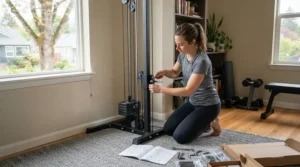
Unboxing is the easy part. Making the kit earn its floor space is harder. Here’s a simple four-week structure built around strength training basics.
Week 1: learn the movements. Do two full-body sessions, matching the NHS two-day guideline. Pick weights you could lift 12 times while leaving two reps in the tank. Try lat pulldown or low row, a standing cable press, a face pull, a tricep pushdown, and a cable curl.
Week 2: tidy the technique. Slow the lowering phase to about three seconds. Cables reward control, because the tension never switches off.
Week 3: add load. When you hit 12 clean reps on every set, add the smallest increment you can. Small steps beat heroic jumps.
Week 4: add one challenge. A single-arm row or a standing core press will tell you where your gaps are.
Maintenance matters. Every month, check bolts and fixings, inspect cables for fraying, and wipe down pulleys and handles. Stop using any cable that looks damaged. Common first-month mistakes include setting the pulley too high for rows, skipping warm-ups, and adding weight before the form is clean.
Real-World Scenarios: Which Cable Machine Under £500 Fits Your Life?
Specs only matter in context. Three realistic buyer profiles show how the picks play out.
The renter with no drilling rights. You need freestanding kit, a modest budget, and a goal of building a stronger back. A tower like the GDLF Lat Pull Down & Low Row or the Mikolo LAT Pulldown Machine suits you. Train twice weekly and you get the two pulling movements most commonly missing from small-flat setups.
The garage owner with spare plates. You’ve got a block wall, a bench and a pile of plates from a previous obsession. Wall-mounted stations like the Mikolo Wall Mount Cable Station or Goimu WM1 deliver the most variety per pound. Anchor to solid masonry and follow the manufacturer’s instructions.
The parent in their sixties. Joint-friendly, controlled resistance matters more than variety. A Marcy MWM-989 keeps resistance changes simple, with no plates to lift and load. A Public Health England evidence review found that poor muscle strength raises fall risk in older adults, which is a good reason to build strength steadily. Anyone with health conditions should check with a GP or physiotherapist before starting.
How to Choose a Cable Machine Under £500
The short answer: choose the machine type first, then check space, resistance source and build quality. Here are the steps in order.
- Decide on a machine type. Pick a wall station for variety, a lat tower for back-focused training, or a weight-stack multi-gym for convenience.
- Measure everything. Check floor area, ceiling height, and wall type before you add to basket.
- Choose your resistance source. Plate-loaded kit needs weights. Stack-based kit includes them but takes more room.
- Check the cable ratio. A 2:1 ratio roughly halves the load felt at the handle, so a “heavy” stack may feel lighter than expected.
- Count the positions. Seventeen to nineteen heights is plenty. Beyond that, you’re paying for numbers.
- Inspect pulleys and attachments. Smooth pulleys and sturdy attachments matter more than a long accessory list.
- Read UK-specific terms. Look at delivery times, returns, and warranty details on the current amazon.co.uk listing.
Common Mistakes When Buying a Cable Machine Under £500
Most regrets fall into a handful of repeat offenders. Spotting them early saves money and hassle.
Buying a lat tower and expecting a functional trainer. A tower does pulldowns and rows brilliantly. It won’t do flyes or high-pulley work, so check the exercise list before you commit.
Forgetting the plates. A plate-loaded station can look like a bargain until the weights, collars and delivery arrive. Add a realistic plate budget to your total.
Ignoring wall construction. A wall-mounted unit loads the wall every time you pull. Plasterboard alone is not a suitable base. If you’re unsure, ask a qualified tradesperson.
Chasing position counts. Seventeen positions and nineteen positions feel nearly identical in daily use. Build quality and wall fit matter more.
Underestimating space. Standing clearance, seat room and cable travel all take up space. Mark it out on the floor with tape before ordering.
Stretching the budget at the wrong end. A slightly pricier machine rarely transforms your results. Consistency does.
Cable Machine for Beginners: What to Expect in Real-World Performance
If you’re choosing a cable machine for beginners, the first thing to know is that cables feel different from free weights. The constant tension means there’s no resting point at the top or bottom of a rep. Expect sets to feel harder than the number suggests.
Plate-loaded designs help here. Wikipedia’s overview of cable machines notes that many stack-based machines start with a meaningful minimum load to offset the attachment. With plates, you can start much lighter, which suits true beginners.
Soreness is normal in the first week, especially in the back and shoulders. Keep the first sessions simple: learn the movement, control the weight, and stop a couple of reps short of failure. Cables are also forgiving without a spotter, because you can simply let go of the handle.
One more expectation to set: smooth is not the same as easy. Cheaper pulleys can feel slightly less fluid than commercial kit at very light loads. For most home users, that’s a trade worth making.

Budget Functional Trainer vs Wall-Mounted Station vs Lat Tower
A true budget functional trainer, meaning dual independent weight stacks and adjustable pulleys, usually costs far more than £500. As a benchmark, UK retailer listings for the Marcy SM-6500, a dual 68 kg stack trainer with 34 positions and a 2:1 ratio, ran from around £1,000 to £1,650 depending on seller. BodyMax cable machines at one UK retailer ranged from roughly £300 up to well over £1,000.
That’s why the wall-mounted stations here are often the closest thing to a budget functional trainer under £500. They deliver two adjustable pulleys, but you supply the resistance and the wall. The Mikolo Wall Mount Cable Station is the clearest example.
A lat tower is a different tool. It’s narrower in what it trains, but easier to learn and doesn’t require drilling.
My practical rule is simple. If you want variety and own plates, choose a wall station. If you want back strength and zero drilling, choose a tower. If you want to spend four figures and skip compromises, that’s a different guide.
Resistance Cables vs a Cable Machine Under £500
Resistance cables, meaning tube-style bands with handles, are the obvious budget alternative. They cost a fraction of a machine, pack away in a drawer, and travel well. But they behave differently: tension rises as the band stretches, rather than staying steady.
| Feature | Resistance cables | Cable machine under £500 | Best For |
|---|---|---|---|
| Cost | Typically a small fraction | Several times higher | Tight budgets |
| Space | Fits in a drawer | Needs floor or wall space | Small flats |
| Load progression | Limited steps | Fine-grained with plates | Long-term progress |
| Resistance feel | Rises through the rep | Constant tension | Smooth, even training |
| Portability | Excellent | Fixed in place | Travel, rentals |
The table shows resistance cables winning on cost and portability, and a machine winning on progression. For true beginners testing the water, a set of resistance cables is a cheap experiment. Once you’re training twice a week and outgrowing the bands, a cable machine under £500 is the natural upgrade.
Home Gym Budget: Where the Rest of Your Money Should Go
A sensible home gym budget doesn’t stop at the machine. Plate-loaded kit needs plates, and plates are priced per kilogram, so a starter set adds up. Add a bench, flooring, and delivery for heavier items, and the true cost can climb well past the sticker price.
Run the cost-per-use maths. Train twice a week for three years and that’s roughly 312 sessions. Even a machine at the top of this guide’s range works out at a modest cost per session before plates. Compare that with the monthly fee at a local gym, which varies widely, and the long-term case is strong, provided you actually train.
Running costs are minimal. Wipe-downs, occasional bolt checks and the odd replacement attachment cover most of it. The sensible approach is to buy the machine first, add plates gradually, and delay accessories until you know what you actually use.
Features That Actually Matter (And Those That Don’t)
When shopping for an affordable cable machine, marketing copy does its best to blur the important and the trivial. Here’s the filter.
What matters: smooth pulleys, a stable frame, a sensible number of height positions, plate sleeves that fit your plates, and clear instructions. These shape every single rep.
What doesn’t: an enormous list of included attachments, flashy colours, and “commercial-grade” claims with no specifics. A lat bar, cable bar and tricep rope cover most beginners’ needs.
What to question: any listing that gives a rating but no clear specs. Plain details such as steel gauge, pulley material and weight capacity are signs of a seller who knows the product.
The sneaky one is position count. Seventeen versus nineteen is a rounding error in real training. Go for the machine whose wall fit, footprint and plate compatibility match your space.
Safety, Space and Wall-Fixing Guide
Safe setup is part of the purchase. Wall-mounted units load the wall under tension on every rep, so fixings and wall type matter. Solid masonry or properly secured timber studs are generally what manufacturers call for. Follow the supplied instructions exactly, and use a qualified tradesperson if you’re not confident.
On the compliance side, UK consumer law expects products on sale to be safe. Strength equipment is often built to standards in the EN ISO 20957 family, so it’s worth checking whether the manufacturer mentions one. Silence isn’t proof of a problem, but it’s a prompt to ask the seller.
Day to day, inspect cables for fraying, check fixings regularly, never exceed the stated load, and keep a clear zone around the machine. If children or pets are about, keep plates and attachments stored away.
FAQ: Cable Machine Under £500
❓ Can a cable machine under £500 replace a gym membership?
❓ Is a budget functional trainer better than a lat tower?
❓ Do I need to drill into the wall for a wall-mounted cable station?
❓ How much should I budget for plates alongside my machine?
❓ Are resistance cables enough for strength training basics?
Conclusion: Your Cable Machine Under £500 Roadmap
Building a capable home gym doesn’t require a four-figure cheque. A well-chosen cable machine under £500 gives you pulling, pressing and arm work from one compact setup, and it nudges you towards the twice-weekly strength routine the NHS recommends.
Here’s the short version. If you own plates and have a solid wall, the Mikolo Wall Mount Cable Station is the all-round value pick, with the Goimu WM1 as the leaner alternative. If you’d rather not drill, the GDLF Lat Pull Down & Low Row and Mikolo LAT Pulldown Machine cover the pulling movements brilliantly. If you already own a rack, the Mikolo LAT and Lift Pulley System is almost unfairly cheap. And if you want resistance built in, the Marcy MWM-989 keeps things simple. Treat the GMWD G7 Pro as a spec-check candidate rather than a blind buy.
Whichever you choose, check the current price, read recent amazon.co.uk reviews, confirm your wall and space, and start light. The best machine is the one you’ll use twice a week for years.
✨ Ready to build your home gym? Pick your favourite, check current availability, and start training with confidence! 💪
Recommended for You
- Olympic Weight Bench For Home Gym: 7 Best Rock-Solid Picks (2026)
- Folding Weight Bench For Small Spaces: 7 Brilliant Picks (2026)
- Flat Weight Bench: 7 Best Rock-Solid Picks For UK Lifters (2026)
Disclaimer: This article contains affiliate links. As an Amazon Associate, I earn from qualifying purchases. If you purchase products through these links, we may earn a small commission at no additional cost to you.
✨ Found this helpful? Share it with your friends! 💬🤗
