In This Article
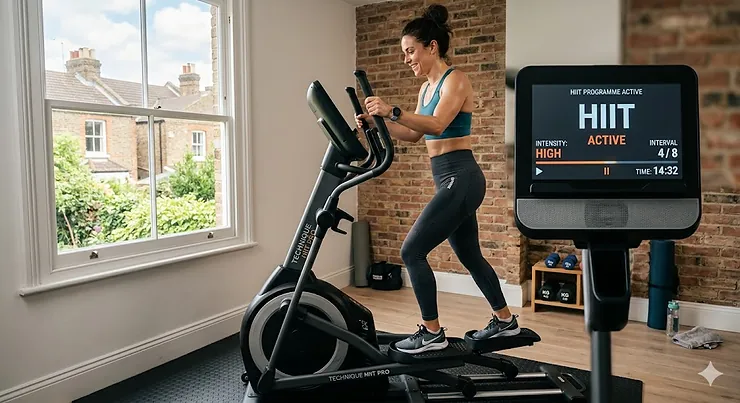
If you’ve been scrolling through fitness forums or chatting with mates at the gym, you’ll have noticed the HIIT revolution is in full swing across Britain. What most people overlook, though, is that having pre-programmed HIIT workouts built into your cross trainer transforms a good machine into a genuinely effective training partner — rather like the difference between following a vague “get fit” goal and having an actual coach barking intervals at you.
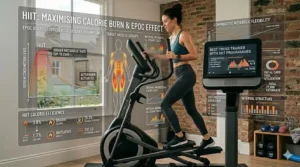
Cross trainers with HIIT programmes take the guesswork out of high intensity interval training. Instead of faffing about with timers on your phone whilst trying to maintain proper form, these machines automatically adjust resistance levels, guide you through work-and-rest intervals, and track your progress. For UK buyers specifically, this matters even more than you’d think: our unpredictable weather means home fitness equipment needs to justify its floor space in typically compact British homes, and a machine that delivers gym-quality interval training in 20 minutes does exactly that.
The beauty of a properly programmed cross trainer lies in its ability to switch between cardiovascular endurance building and fat-burning HIIT sessions without requiring you to become a fitness expert. According to research highlighted by NHS services across the UK, HIIT training can be more effective for weight loss than longer, moderate-intensity sessions. The UK Chief Medical Officers’ physical activity guidelines now explicitly recognise HIIT as an effective alternative to traditional moderate-intensity exercise — making these machines particularly valuable for time-pressed professionals, parents juggling school runs, or anyone who simply wants maximum results from minimal time investment. The key is choosing a model with genuinely useful programmes rather than gimmicky settings that sound impressive in the specs but prove useless in practice.
Quick Comparison: Top HIIT Cross Trainers at a Glance
| Model | HIIT Programmes | Resistance Levels | Flywheel | Price Range | Best For |
|---|---|---|---|---|---|
| ProForm Cardio HIIT HL | 7 dedicated HIIT + 32 total | 22 digital levels | N/A | £800-£1,200 | Serious interval training |
| Bowflex Max Trainer M6 | JRNY adaptive HIIT | 16 levels | Stepper/elliptical hybrid | £1,000-£1,400 | Compact UK homes |
| BH Fitness i.Cross 3000 | 12 + dedicated HIIT mode | 24 levels (air + magnetic) | Dual system | £1,200-£1,600 | Semi-professional use |
| NordicTrack FS14i FreeStride | iFIT trainer-led HIIT | 26 digital levels | Adjustable stride | £1,800-£2,500 | Premium interactive training |
| THERUN 3-in-1 Cardio Climber | Manual HIIT setup | 16 magnetic levels | 8kg | £300-£500 | Budget-conscious beginners |
From this comparison, the ProForm Cardio HIIT HL offers the most dedicated interval programmes for its price point, making it rather good value if HIIT is your primary goal. However, if space is your main constraint — and let’s be honest, most British homes aren’t exactly sprawling — the Bowflex Max Trainer series justifies its premium with a footprint half the size of traditional ellipticals whilst delivering arguably superior HIIT-specific training. Budget buyers should note that whilst the THERUN lacks pre-set programmes, its 16 resistance levels allow manual interval creation, though you’ll need more self-discipline to maintain proper work-rest ratios.
💬 Just one click — help others make better buying decisions too! 😊
Top 7 Cross Trainers with HIIT Programmes: Expert Analysis
1. ProForm Cardio HIIT HL Elliptical Cross Trainer
The ProForm Cardio HIIT HL doesn’t mess about — it’s engineered specifically for high-intensity interval training with seven dedicated HIIT programmes plus 25 additional workout options. The vertical climbing path (10 inches vertical, 5 inches horizontal) engages more muscle groups than standard ellipticals, which translates to roughly 30% more calorie burn according to the manufacturer’s testing.
Key specifications with real-world context: The 22 resistance levels provide genuine progression — beginners start comfortably at level 4-6, whilst advanced users find levels 18-22 genuinely challenging even during 30-second sprint intervals. The 5-inch backlit display shows simultaneous metrics (resistance, speed, time, distance, calories, RPM), eliminating the annoying button-cycling you get on cheaper models. Compatible with iFIT Coach (subscription required, typically £12.99/month), though the built-in programmes work perfectly well without it.
Expert commentary: What sets this apart for UK buyers is the vertical path design, which proves particularly effective for HIIT work — your legs burn faster, your heart rate climbs quicker, and you genuinely can’t slack off during high-intensity intervals the way you might on a traditional horizontal elliptical. The downside? It’s rather large (approximately 160cm L × 72cm W × 175cm H), so measure your space carefully. British buyers with period properties and lower ceilings should check clearances — you’ll need about 2 metres vertical space when factoring in your height plus the arm movement.
Customer feedback: UK reviewers consistently praise the smoothness of motion and genuine muscle engagement, though several note the iFIT subscription feels like an ongoing expense on top of the initial outlay. One Birmingham buyer mentioned the resistance adjustment occasionally lags during auto-programmes, which proved frustrating during HIIT sessions requiring quick changes.
✅ Genuine vertical climbing motion targets more muscles
✅ Seven dedicated HIIT programmes plus 25 additional options
✅ Smooth, silent electromagnetic resistance
❌ Large footprint unsuitable for compact flats
❌ iFIT subscription adds ongoing cost for full functionality
Price verdict: Around £800-£1,200 depending on retailer and current offers — check Amazon.co.uk for latest pricing and Prime delivery options.
2. Bowflex Max Trainer M6
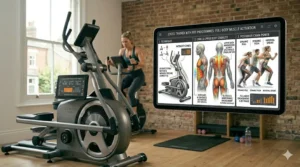
If floor space is your nemesis — and let’s face it, most British homes treat spare square metres like rare gems — the Bowflex Max Trainer M6 solves that problem whilst delivering exceptional HIIT capability. This hybrid stepper-elliptical occupies roughly half the footprint of traditional cross trainers (117cm L × 66cm W × 163cm H) yet provides arguably superior interval training through its unique vertical stepping motion.
Key specifications with practical interpretation: The 16 resistance levels specifically target HIIT training patterns, with each level representing a noticeable jump in difficulty rather than the tiny increments you sometimes get on basic models. The multi-grip handlebars engage upper body muscles throughout the movement, whilst the vertical stepping motion forces continuous core engagement — you simply cannot slouch through a workout on this machine. JRNY app compatibility (subscription around £11.99/month) provides adaptive HIIT workouts that adjust based on your performance, though the built-in programmes work independently.
Who this suits and why (UK context): Perfect for flat dwellers, terraced house owners, or anyone working with limited space. The compact design doesn’t compromise on workout quality — studies suggest the Max Trainer’s combined motion burns 2.5 times more calories per minute than traditional ellipticals at equivalent effort. For time-pressed UK professionals, the signature “Max Interval” 14-minute workout delivers legitimate cardiovascular benefits, scientifically validated through excess post-exercise oxygen consumption (EPOC). Worth noting: at 67kg, it’s hefty enough to feel stable during intense intervals but includes transport wheels for moving between rooms.
Customer feedback from UK buyers: Reviews from British users consistently highlight the space-saving design and genuine calorie burn. An Edinburgh reviewer noted achieving measurable weight loss within six weeks of consistent use. However, several mention the stepping motion takes 2-3 sessions to feel natural, particularly for those accustomed to traditional elliptical glide patterns. One London buyer praised the whisper-quiet operation, crucial for flat living where downstairs neighbours might object to early-morning cardio.
✅ Compact footprint ideal for British homes
✅ Vertical motion forces genuine intensity
✅ Exceptionally quiet operation
❌ Stepping motion requires adaptation period
❌ Premium pricing for the size category
Price verdict: Typically £1,000-£1,400 on Amazon.co.uk with Prime delivery. Argos occasionally stocks this model with similar pricing — worth checking both for availability.
3. BH Fitness i.Cross 3000 HIIT Cross Trainer
The BH Fitness i.Cross 3000 HIIT bridges the gap between home and commercial equipment, built to withstand over 20 hours weekly use (light commercial classification). The standout feature? A dual resistance system combining air and magnetic resistance (A+M2 system) that delivers exceptionally smooth transitions during HIIT intervals — no jerky jumps between resistance levels that disrupt your rhythm mid-sprint.
Technical specifications with UK buyer context: The 24 resistance levels span a genuinely useful range — level 1 works for warm-ups or recovery days, whilst level 24 challenges even fit individuals during peak intervals. The 53cm stride length accommodates most heights comfortably (approximately 152cm to 195cm user height range), important for mixed-household use. The M6 CrossHIIT console features dual displays: blue backlit metrics plus a chromatic HIIT guide that colour-codes your work zones (green for recovery, yellow for moderate, red for peak). This visual feedback proves surprisingly effective at maintaining proper interval intensity without constantly checking heart rate numbers.
Expert analysis for British buyers: This machine shines for semi-serious fitness enthusiasts who’ve outgrown basic home equipment but aren’t quite ready for full commercial pricing. The 95kg weight ensures rock-solid stability during intense intervals — crucial when you’re genuinely sprinting, as cheaper machines tend to wobble discouragingly. Bluetooth connectivity allows telemetric heart rate monitoring (chest strap separate purchase, typically £30-50), whilst the iConcept system provides access to fitness apps for varied training. UK electrical requirements? Standard 230V mains power, UK plug included. Assembly requires two people and roughly 90 minutes — not trivial, but manageable.
UK customer insights: Reviewers from Manchester, Bristol, and Glasgow praise the build quality and smooth operation. One Sheffield buyer mentioned using it throughout winter as a reliable alternative to outdoor running in typically grim British weather. The main criticism? At approximately 158cm L × 67cm W × 175cm H, it demands dedicated space. Several UK buyers note it’s too large for spare bedrooms in standard new-builds — measure carefully before purchasing. Also, being semi-commercial grade means it arrives in substantial packaging; one Surrey reviewer mentioned needing help just getting the boxes upstairs.
✅ Semi-commercial build quality for longevity
✅ Dual resistance system exceptional for smooth HIIT transitions
✅ Colour-coded HIIT guidance simplifies interval training
❌ Large footprint requires dedicated floor space
❌ Heavy (95kg) makes repositioning impractical
Price verdict: Around £1,200-£1,600 depending on retailer — Fitness Superstore UK often stocks this with delivery included. Worth noting: ex-display and customer returns occasionally available at substantial discounts if you’re comfortable collecting from Northampton warehouse.
4. NordicTrack FS14i FreeStride Trainer
The NordicTrack FS14i FreeStride Trainer sits firmly in premium territory but justifies the investment through genuine versatility: adjustable stride length (from stepper mode up to 38-inch stride), -10% to +10% incline/decline range, and 26 resistance levels. The 14-inch HD touchscreen provides access to iFIT’s library of over 10,000 trainer-led workouts, including studio HIIT classes, global route explorations, and Tabata programmes.
Technical capabilities with practical UK application: The stride adjustment transforms this from compact stepper motion (useful for HIIT bursts) to extended elliptical glide (better for steady-state cardio or cool-downs). During HIIT intervals, the automatic resistance and incline adjustments follow the trainer’s instructions — so when the coach says “sprint uphill,” the machine complies immediately. The AutoBreeze fan adjusts intensity based on workout effort, particularly welcome during British summer when even modest temperatures make HIIT sessions sweltering. UK plug included, connects to home WiFi for streaming content.
Who should invest (and who shouldn’t): This makes sense for committed fitness enthusiasts who’ll genuinely use the iFIT subscription (included for 30 days, then approximately £34.99/month for family access). If you prefer solo workouts with pre-set programmes rather than trainer-led classes, you’re paying £1,000+ extra versus mid-range competitors for features you won’t exploit. British buyers with dedicated home gyms in garages or converted loft spaces appreciate the Netflix/Prime Video compatibility — turning HIIT sessions into entertainment rather than pure suffer-fests. Size consideration: approximately 178cm L × 81cm W × 185cm H means this demands serious floor space.
UK customer perspective: Reviews from Oxford, Edinburgh, and Cardiff highlight the immersive training experience and build quality. Several mention the machine justifying its premium through consistent use — one Cambridge buyer noted tracking 150+ workouts over eight months, making the per-session cost reasonable. Criticisms centre on the ongoing subscription model (£420 annually for full features) and initial cost. One Yorkshire reviewer suggested buying during Black Friday or January sales for 15-20% discounts, though availability in UK warehouses can be patchy.
✅ Adjustable stride accommodates multiple training styles
✅ Incline/decline functionality rare in this category
✅ Streaming entertainment makes HIIT sessions more tolerable
❌ Premium pricing (£1,800-£2,500) limits appeal
❌ Ongoing subscription essential for key features
Price verdict: Around £1,800-£2,500 depending on model and offers. Check NordicTrack UK direct website for occasional promotions including extended warranties or bundled accessories.
5. THERUN 3-in-1 Elliptical Cross Trainer Cardio Climber
For budget-conscious UK buyers who understand they’ll need to create their own HIIT protocols, the THERUN 3-in-1 Cardio Climber delivers surprising value in the £300-£500 range. The three-in-one design combines elliptical motion, climbing action, and traditional stepping, with 16 magnetic resistance levels providing adequate range for interval training.
Practical specifications for UK context: The 8kg flywheel creates reasonably smooth motion — not whisper-quiet like premium models, but acceptable for most UK households (you’ll hear a soft whirring rather than clunking). The LCD monitor tracks basics: time, speed, distance, calories, pulse. No fancy programmes or connectivity, which keeps costs down but means you’ll need your own timer for HIIT intervals. The footprint (approximately 110cm L × 55cm W × 155cm H) suits smaller British homes well, and at around 30kg, it’s light enough for one person to shift when hoovering underneath.
Who benefits from this approach: First-time buyers testing whether they’ll actually use home cardio equipment, renters who can’t invest heavily in furniture they’ll need to move, or anyone who prefers self-directed training over following preset programmes. The adjustable resistance allows manual interval creation: warm up at level 3-4, sprint intervals at level 12-14, recovery at level 5-6. This demands more discipline than machines that automatically adjust, but also provides complete flexibility. Particularly suitable for UK buyers in flats where budgets prioritise other essentials.
UK buyer experiences: Amazon UK reviews skew positive for the price point, with Manchester and Birmingham buyers noting decent build quality given the cost. The most common criticism? The pulse sensors in handlebars prove unreliable — invest £25-35 in a basic chest strap heart rate monitor for accurate tracking during HIIT. Several reviewers mention assembly straightforward but time-consuming (roughly 60-90 minutes solo). One Brighton buyer praised the 16 resistance levels as genuinely useful rather than token offerings, noting level 16 provides legitimate challenge during 30-second sprints.
✅ Budget-friendly entry to HIIT training
✅ Compact enough for smaller British homes
✅ 16 resistance levels adequate for progression
❌ No pre-set HIIT programmes requires self-discipline
❌ Build quality acceptable but not premium
Price verdict: Around £300-£500 on Amazon.co.uk with regular lightning deals. Prime members benefit from free delivery, important given the 30kg+ shipping weight.
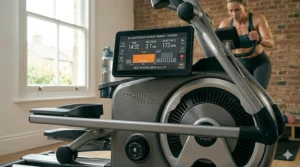
6. Dripex Elliptical Cross Trainer for Home
The Dripex Elliptical Cross Trainer occupies middle ground between budget and premium segments, offering 16 magnetic resistance levels and a 6kg flywheel in the £400-£700 range. Whilst lacking dedicated HIIT programmes, the magnetic system provides smooth, quiet resistance changes suitable for self-directed interval work.
Technical assessment for UK buyers: The LCD monitor displays eight metrics simultaneously (time, speed, distance, calories, pulse, scan, odometer, RPM), useful for tracking HIIT performance without cycling through screens mid-workout. The 16 resistance levels provide approximately 4-5 meaningful difficulty zones: easy (1-4), moderate (5-8), challenging (9-12), intense (13-16). During HIIT protocols, you’ll typically alternate between zones 2-3 for recovery and 12-15 for sprints. The pulse sensors work adequately for rough estimates, though serious HIIT enthusiasts should add a chest strap (£25-40).
Practical UK considerations: Assembly requires two people for easier handling, though solo completion is possible with patience (approximately 90 minutes). The machine measures roughly 135cm L × 60cm W × 160cm H, fitting reasonably well in spare bedrooms of newer British builds. Transport wheels allow one-person repositioning when needed. The 6kg flywheel creates momentum sufficient for natural motion, though not quite matching the buttery-smooth feel of premium models with heavier flywheels. Noise level acceptable for flats — a gentle whooshing rather than mechanical clanking.
UK customer feedback patterns: Reviews from London, Leeds, and Glasgow buyers emphasise value for money, with many noting it meets expectations for the price. The most frequent complaint concerns the instruction manual’s translation quality (Dripex is Chinese-manufactured), making assembly unnecessarily confusing. One Liverpool buyer suggested ignoring the manual and following YouTube assembly videos instead. Several mention the machine wobbles slightly during genuinely intense sprints unless positioned on a mat — adding a 6mm rubber gym mat (£20-30) solves this. One Cardiff reviewer praised the customer service responsiveness when replacement parts were needed.
✅ Mid-range pricing with reasonable build quality
✅ 16 resistance levels support progression
✅ Quiet magnetic system suitable for UK flats
❌ No pre-set HIIT programmes
❌ Assembly instructions poorly translated
Price verdict: Typically £400-£700 on Amazon.co.uk. Watch for seasonal discounts (January, Black Friday) that often knock 15-20% off list price.
7. Viavito SE1 Magnetic Elliptical Cross Trainer
The Viavito SE1 brings European design sensibility to the sub-£500 market, featuring a 6kg flywheel, 19-inch stride length, and 16 resistance levels. The LED display shows comprehensive metrics, whilst the built-in programmes (12 pre-sets) don’t include dedicated HIIT modes but work for manual interval creation.
Specifications with UK buyer relevance: The 19-inch stride suits most adults comfortably (approximately 160cm-185cm height range), important for households where multiple people use the equipment. The 16 resistance levels progress logically rather than bunching difficulty at either extreme. Electromagnetic resistance ensures quiet operation — crucial for British terraced housing where shared walls make noise a concern. Maximum user weight 110kg (approximately 17 stone 4 pounds), suitable for most but worth checking if you’re heavier.
Where this model fits in the UK market: Viavito, whilst less known than American brands, actually specialises in European fitness equipment design. For UK buyers, this means sensible sizing for typical British homes rather than equipment sized for American suburbia. The SE1’s footprint (approximately 125cm L × 58cm W × 157cm H) fits through standard UK doorways without disassembly — underrated convenience when you’re setting up. Assembly straightforward for two people, manageable solo (60-75 minutes). The transport wheels and 35kg weight allow repositioning when needed.
British buyer insights: Amazon UK reviews from Southampton, Newcastle, and Belfast note solid construction for the price bracket. One Manchester buyer mentioned using it throughout autumn and winter as reliable alternative to outdoor cycling in reliably dreadful British weather. Common criticisms include the LED display being less intuitive than touchscreen alternatives and the pulse sensors requiring firm, consistent grip for accurate readings. For HIIT work, several reviewers recommend using the 12 pre-set programmes creatively: programme 4 (intervals) and programme 8 (hills) can simulate interval training when you manually adjust pace rather than waiting for programme transitions.
✅ European sizing suits UK homes better
✅ Quiet operation ideal for terraced housing
✅ 19-inch stride accommodates most adults
❌ No dedicated HIIT programmes
❌ LED display less sophisticated than touchscreen models
Price verdict: Generally £400-£600 on Amazon.co.uk. JD Sports UK and Decathlon occasionally stock this with similar pricing and in-store collection options.
Creating Your Perfect HIIT Routine: Practical Guide for UK Users
Even the most sophisticated cross trainer with pre-programmed HIIT won’t deliver results if you’re not clear on proper interval structure. Here’s what actually works, stripped of the usual fitness magazine fluff.
Understanding Work-to-Rest Ratios
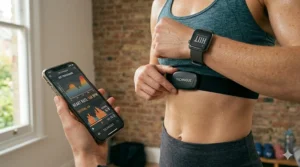
The cornerstone of effective HIIT is the work-to-rest ratio, which determines both intensity and sustainability. Beginners typically start with 1:3 ratios (20 seconds hard work, 60 seconds recovery), progressing to 1:2 (30 seconds work, 60 seconds rest), then 1:1 (30 seconds work, 30 seconds rest). Advanced users might push 2:1 ratios, though this borders on unsustainable for most people outside professional athletics.
Practical UK application: A 20-minute HIIT session on your cross trainer might follow this structure: 5-minute warm-up at resistance level 4-5, then 6 rounds of 30 seconds maximum effort at level 12-14 with 90 seconds recovery at level 5-6, finishing with a 5-minute cool-down. This aligns with NHS physical activity guidelines for adults, which recognise that 75 minutes of vigorous activity weekly (like HIIT) provides similar health benefits to 150 minutes of moderate activity. This fits perfectly into lunch breaks or before work — particularly valuable during British winter when outdoor exercise means darkness and rain.
Progressive Overload for Cross Trainer HIIT
Your body adapts quickly to HIIT stimulus, so progression matters. Week 1 might involve 4 intervals at moderate resistance. Week 2 could increase to 6 intervals at same resistance. Week 3 maintains 6 intervals but bumps resistance up two levels. Week 4 might add a third HIIT session to your weekly schedule. This systematic progression, rather than random variation, drives genuine fitness improvements.
British Weather Advantage
For UK readers, home HIIT equipment solves the perpetual problem of inconsistent weather. That morning you’d planned an outdoor run but wake to horizontal rain? Twenty minutes on the cross trainer delivers equivalent cardiovascular benefit without the soaking. The consistency possible with home equipment — training regardless of whether it’s bucketing down outside — often proves more valuable than having perfect equipment you only use when conditions permit.
Common Mistakes When Buying Cross Trainers with HIIT Programmes
Mistake 1: Prioritising Programme Quantity Over Quality
Marketing departments love touting “50 built-in programmes!” as though more automatically means better. In reality, most users cycle through 3-4 favourites and ignore the rest. What matters is whether the HIIT programmes genuinely vary intensity appropriately. A machine with three well-designed HIIT protocols (beginner, intermediate, advanced) beats one with 20 generic variations. Check reviews specifically mentioning whether resistance changes feel deliberate or arbitrary.
Mistake 2: Ignoring UK Electrical Compatibility
Sounds obvious, but American imports occasionally appear on third-party listings without proper UK plugs or voltage conversion. Always verify equipment runs on 230V/50Hz (UK standard) with included UK three-pin plug. International models requiring adapters introduce unnecessary complexity and potential safety issues. Major brands like NordicTrack, Bowflex, and ProForm now provide proper UK versions — confirm before purchasing.
Mistake 3: Underestimating Space Requirements
Measured machine dimensions don’t account for your own body dimensions during use. A cross trainer might be 160cm long, but you need an additional 30-40cm clearance behind for comfortable motion, plus 50cm either side for arm movement. Which? consumer experts emphasise that British homes, particularly flats and terraced houses, rarely have excess space — measure your available area including clearances before falling in love with specifications.
Mistake 4: Assuming Subscription Services Are Optional
Several premium cross trainers (NordicTrack, Bowflex) function at basic levels without subscriptions but lock key HIIT features behind paywalls. That £15/month subscription becomes £180 annually — £900 over five years. Factor this into total ownership cost. If you’re disciplined enough to follow your own HIIT protocols using a timer, machines with manual resistance control cost less upfront and nothing ongoing.
HIIT Cross Trainer vs Traditional Elliptical: What British Buyers Should Know
The fundamental difference between HIIT-specific cross trainers and traditional ellipticals lies in resistance responsiveness and programme design. Traditional ellipticals favour steady-state cardio at consistent resistance — imagine a 45-minute Zone 2 plod. HIIT-focused machines prioritise rapid resistance changes, handling the violent swings between recovery and sprint intervals that characterise effective interval training.
Resistance system implications: HIIT demands electromagnetic or sophisticated magnetic resistance systems that adjust smoothly and quickly. Belt-driven or basic magnetic systems often lag 2-3 seconds during resistance changes — not catastrophic for steady cardio but distinctly annoying during HIIT when you’re trying to hit peak intensity immediately. This technical difference explains part of the price gap between £300 basic ellipticals and £1,000+ HIIT-ready models.
British home context: For UK buyers in smaller properties, a HIIT-focused machine often makes more sense because you achieve equivalent cardiovascular benefits in 15-20 minute sessions rather than requiring 45-60 minutes. This time efficiency means the equipment justifies its floor space better — crucial when you’re weighing whether to sacrifice a spare bedroom or dining area. Additionally, shorter workout durations reduce the boredom factor that causes many traditional ellipticals to become expensive clothes racks within six months.
Recovery considerations: HIIT’s intensity demands adequate recovery between sessions — typically 48 hours between high-intensity workouts. This actually works well with British work schedules: Monday/Wednesday/Friday HIIT sessions with weekend activities (walking, cycling, swimming) provide balanced fitness without overtraining. Traditional steady-state elliptical work can be done daily if desired, though most find this tediously repetitive.
Long-Term Cost Analysis: HIIT Cross Trainers in the UK Market
Beyond sticker price, understanding total cost of ownership helps avoid nasty surprises. Here’s what British buyers actually spend over a typical five-year ownership period:
Initial purchase: £500-£2,000 depending on model tier. Budget machines (£300-£600) typically last 2-3 years with regular HIIT use. Mid-range (£700-£1,200) generally survive 4-5 years. Premium (£1,300+) should deliver 7-10 years, though technological obsolescence (outdated connectivity, incompatible apps) might prompt earlier replacement.
Subscription services: iFIT, JRNY, and similar platforms cost £12-£35 monthly (£144-£420 annually). Over five years, that’s £720-£2,100 — potentially more than the machine itself. Annual subscriptions sometimes offer discounts (roughly 15-20% cheaper than monthly). Consider whether you’ll genuinely use these services or simply follow YouTube HIIT videos (free).
Maintenance and repairs: Mechanical wear includes drive belts (£30-60 replacement every 2-3 years), bearings (£40-80), and electronics failures. Budget £50-100 annually for minor maintenance or eventual repairs. Premium brands typically offer 2-5 year parts warranties; cheap machines often provide minimal coverage. Extended warranties (additional £100-200) rarely prove worthwhile unless you’re genuinely hammering the equipment with multiple daily users.
Electricity costs: Electromagnetic resistance systems draw power during use. At average UK electricity rates (approximately 34p per kWh as of 2026), a 45-minute session might cost 8-12p. Used three times weekly, that’s roughly £20-30 annually — negligible compared to gym memberships (£25-60 monthly = £300-£720 annually) but worth noting for comprehensive budgeting.
True cost comparison: A £1,000 cross trainer with £15/month subscription costs £1,900 over five years (machine + subscriptions). A budget gym membership at £30/month costs £1,800 over five years. The equipment wins slightly on cost, but significantly on convenience — no travel time, no waiting for equipment, no January crowds. For British families, one machine serving multiple household members amplifies the value proposition.
Safety Standards and UK Regulations for Home Fitness Equipment
British buyers should verify equipment meets UK safety standards, particularly post-Brexit when UKCA marking has replaced CE marking for many products. Reputable brands selling through Amazon.co.uk or established UK retailers handle this compliance, but parallel imports or grey-market equipment might not.
UKCA certification: As of January 2023, fitness equipment sold in Great Britain (England, Scotland, Wales) requires UKCA marking demonstrating compliance with UK safety regulations. Northern Ireland operates differently due to the Northern Ireland Protocol, still accepting CE marking. When purchasing from UK-based retailers (Amazon.co.uk warehouses, JD Sports, Argos, Decathlon), this compliance is generally assured. Third-party sellers shipping from outside the UK might not meet these standards.
Electrical safety: Home fitness equipment must comply with UK electrical safety standards (BS EN 60335 series). This ensures proper grounding, overload protection, and emergency stop functionality. UK plugs should be properly fused (typically 3A or 5A for cross trainers). Equipment arriving with European Schuko plugs or American plugs plus cheap adapters should raise concerns — return it and purchase from proper UK distributors instead.
Weight and stability requirements: No official UK regulations specifically govern cross trainer stability, but the Advertising Standards Authority (ASA) mandates that maximum user weight claims must be accurate. If a machine claims 150kg maximum user weight, it should safely accommodate that without wobbling or structural issues. Reviews mentioning instability at claimed weight limits suggest either design flaws or exaggerated specifications.
Consumer rights: The Consumer Rights Act 2015 protects UK buyers, requiring products to be of satisfactory quality, fit for purpose, and as described. You have 30 days to reject faulty goods for full refund, then up to six months where the retailer must prove faults weren’t present at purchase. Distance Selling Regulations provide 14-day cooling-off periods for online purchases, though you’ll likely pay return shipping (potentially £50-100 for large fitness equipment). Amazon’s return policies typically exceed legal minimums, another reason to purchase through established channels.
Frequently Asked Questions
❓ How long should HIIT cross trainer sessions last for effective fat burning?
❓ Are cross trainers with HIIT programmes suitable for beginners in the UK?
❓ What's the minimum resistance levels needed for effective HIIT training on cross trainers?
❓ Do I need iFIT or JRNY subscriptions to use HIIT programmes on premium cross trainers?
❓ How much space do cross trainers with HIIT programmes actually require in UK homes?
Conclusion: Choosing Your Perfect HIIT Cross Trainer
The cross trainer with HIIT programmes you choose should align with three factors: your space constraints (particularly relevant in typical British homes), your budget including ongoing subscriptions, and your actual training style. If you’re the sort who needs structured guidance and entertainment, premium machines with iFIT or JRNY might justify their cost through consistent use. If you’re disciplined enough to follow self-directed HIIT protocols, excellent mid-range machines deliver equivalent results without subscriptions.
For most UK buyers, the sweet spot lives in the £700-£1,200 range — machines like the ProForm Cardio HIIT HL or mid-tier BH Fitness models provide dedicated HIIT functionality, quality construction, and reasonable footprints without requiring ongoing subscription commitments. Space-constrained flat dwellers in cities like London, Manchester, or Edinburgh benefit enormously from compact designs like the Bowflex Max Trainer series, despite premium pricing, because they actually fit in spare bedrooms or living areas.
The weather-independence these machines provide proves invaluable throughout British seasons — no more cancelled cardio sessions because it’s bucketing down or pitch-black at 6 PM. That consistency, combined with time-efficient HIIT protocols delivering gym-quality results in 20 minutes, makes these machines particularly valuable investments for UK households juggling work, family, and fitness goals.
Whatever you choose, prioritise machines with genuine resistance range (16+ levels), smooth adjustment mechanisms, and build quality that’ll survive regular intense use. The initial investment might seem substantial, but compared to annual gym memberships (£300-£700) or boutique fitness classes (£15-25 per session), a quality home cross trainer pays for itself within 18-24 months whilst providing unmatched convenience.
Recommended for You
- 7 Best Smart Cross Trainer with Apps UK 2026
- 7 Best Programmable Cross Trainers UK (2026)
- 7 Best Lifetime Warranty Cross Trainers UK 2026
Disclaimer: This article contains affiliate links. As an Amazon Associate, I earn from qualifying purchases. If you purchase products through these links, we may earn a small commission at no additional cost to you.
✨ Found this helpful? Share it with your mates! 💬🤗
