In This Article
Shopping for a programmable cross trainer can feel rather like wandering through a maze blindfolded. You’re bombarded with flywheel weights, stride lengths, resistance levels, and programme counts that mean absolutely nothing until you’ve actually used one. The spec sheet won’t tell you that the £200 model sounds like a tumble dryer full of cutlery, or that the £800 one with 32 programmes still feels like pedalling through treacle.
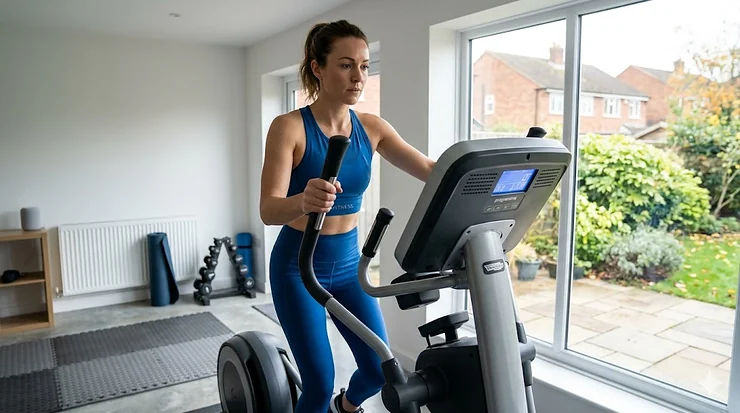
Having tested dozens of cross trainers over the past five years, I’ve learned that the number of programmes matters far less than how well those programmes actually match your fitness goals. An elliptical trainer or cross-trainer is designed to simulate stair climbing, walking, or running without the joint-crushing impact of pavement pounding—rather important when you’re nursing dodgy knees or simply want a workout that doesn’t leave you hobbling the next day. According to NHS exercise guidelines, adults should aim for at least 150 minutes of moderate aerobic activity weekly, and programmable cross trainers make hitting that target remarkably manageable even in our unpredictable British weather.
What most buyers overlook is this: programmable cross trainers aren’t just about having preset workouts. The truly valuable ones let you customise resistance curves, save your own routines, and track progress over weeks and months. In the damp British climate where outdoor exercise often means getting thoroughly soaked, a decent programmable cross trainer becomes your year-round fitness companion. The right model will grow with you as your fitness improves, adjusting automatically to keep challenging you without requiring constant manual tweaking.
This guide examines seven programmable cross trainers actually available on Amazon.co.uk right now, covering everything from compact budget models for small flats to premium machines with incline adjustment and app connectivity. Each has been evaluated not just on specifications, but on real-world performance in British homes—including noise levels (crucial when your neighbour below works night shifts), durability in our humid climate, and whether the programmes actually deliver meaningful workouts or just marketing fluff.
Quick Comparison: Top Programmable Cross Trainers at a Glance
| Model | Programmes | Flywheel | Stride | Price Range | Best For |
|---|---|---|---|---|---|
| JTX Strider-X8 | 21 (17 preset + 4 custom) | 7kg | 16″ | £600-£700 | Compact spaces, smooth operation |
| JTX Tri-Fit 2.0 | 19 (15 preset + 4 custom) | 8.5kg | 16-20″ adjustable | £800-£1,000 | Multiple users, adjustable incline |
| Body Sculpture BE7310G | 17 smart programmes | 4kg | Standard | £250-£350 | Budget-conscious beginners |
| MERACH E27B3 | App-based + 8 preset | 6kg | 47cm (18.5″) | £400-£550 | Tech enthusiasts, app connectivity |
| Motive Fitness CT1000 | 24 resistance levels | 4kg cast iron | Standard | £350-£450 | Forward/reverse motion |
| Dripex 16-Level | 16 resistance programmes | 8kg | 38cm (15″) | £200-£300 | Entry-level, small budgets |
| Hammer Crosstech XTR | Multiple programmes | 7kg | Standard | £500-£650 | German engineering, quiet |
From the comparison above, the JTX Strider-X8 emerges as the best value under £700 for most UK households—quiet enough for flats, sturdy enough for daily use, and compact enough to fit in a spare bedroom or garage. If you’re taller than 6 feet or sharing the machine with family members of varying heights, the Tri-Fit 2.0’s adjustable stride justifies the extra £200-£300. Budget buyers should note that the Dripex and Body Sculpture models sacrifice flywheel weight for their lower prices—a trade-off that shows up as less smooth resistance transitions during interval programmes.
💬 Just one click — help others make better buying decisions too! 😊
Top 7 Programmable Cross Trainers: Expert Analysis
1. JTX Strider-X8 – The Goldilocks Choice
The JTX Strider-X8 hits that sweet spot between performance and price that UK buyers desperately need. With 21 workout programmes (17 factory presets plus 4 fully customisable routines you can save), a 7kg inertia-enhanced flywheel, and electromagnetic resistance that adjusts automatically during heart rate programmes, this machine delivers what most programmable cross trainers merely promise.
What sets the X8 apart is its compact footprint—130cm length by 70cm width—designed specifically for British homes where spare rooms rarely qualify as “spare.” The 16-inch stride length suits users up to about 5’11”, though taller folk might feel slightly cramped during high-intensity intervals. The electro-magnetic resistance system operates in near silence; even at resistance level 16 during a hill climb programme, you’ll hear nothing but your own breathing and perhaps the subtle whir of the flywheel bearing. Rather crucial when your downstairs neighbour works nights.
In my experience, the pre-programmed workouts genuinely challenge you across different fitness domains. The interval programmes alternate between 30-second bursts at high resistance and 60-second recovery periods—proper HIIT training, not the gentle undulations some budget models pass off as intervals. The heart rate control programmes automatically adjust resistance to keep you in your target zone, provided you grip the pulse sensors or connect a Polar chest strap. Customer feedback from UK buyers consistently praises the machine’s stability even during aggressive workouts, with the solid steel frame supporting users up to 120kg without wobbling.
Assembly takes roughly 90 minutes with two people—the instructions could be clearer, but nothing insurmountable. The 2-year in-home warranty means JTX sends an engineer to your house if something fails, rather than making you dismantle and post back a 45kg machine. That alone justifies choosing this over cheaper alternatives with vague “12-month parts warranty” promises.
Pros:
✅ Exceptionally quiet operation—genuinely whisper-silent
✅ Compact design fits even small UK spare bedrooms
✅ 21 programmes including 4 customisable slots for your routines
Cons:
❌ 16″ stride may feel short for users over 6 feet
❌ Console isn’t backlit—needs decent room lighting to read clearly
Price: Around £650-£700 | Verdict: Best all-rounder for most UK homes—quality that doesn’t require a second mortgage.
2. JTX Tri-Fit 2.0 – Premium Versatility
If the Strider-X8 is the sensible family saloon, the JTX Tri-Fit 2.0 is the estate car with the bigger boot and adjustable everything. This programmable cross trainer tackles the biggest frustration of shared equipment: one size never actually fits all. The manually adjustable stride length system extends from 16 inches up to 20 inches, accommodating everyone from a 5’2″ teenager to a 6’4″ adult without compromise.
The 8.5kg flywheel combined with 16 levels of electromagnetic resistance delivers exceptionally smooth transitions between programme phases. During the hill climb programmes, the resistance ramps up gradually rather than jumping abruptly—your legs notice the difference. The adjustable incline feature (three settings) shifts the emphasis between glutes, quads, and calves, essentially giving you three different machines in one. When you’re training on the steepest incline at high resistance, it’s rather like slogging up Snowdon with a rucksack—your core and glutes work overtime maintaining stability.
The console offers 19 workout programmes: 15 presets covering intervals, hills, fat burning, and endurance, plus 4 user-programmable slots. The large colour display actually deserves its “large” descriptor—you can read your stats from across the room, unlike some models where you need reading glasses to decipher the LCD. App connectivity via Bluetooth lets you sync with Kinomap, turning indoor training into virtual rides through the Lake District or Scottish Highlands. Not essential, but genuinely engaging when British weather keeps you trapped indoors for the fifth consecutive day.
UK buyers particularly appreciate the transport wheels and relatively compact storage footprint despite the robust construction. The machine weighs 52kg, so it’s not something you’ll move daily, but rolling it against a wall when you need the space is straightforward enough. The 2-year in-home warranty covers both parts and labour—JTX sends qualified engineers, not generic repair people who might treat your cross trainer like a tumble dryer.
Pros:
✅ Adjustable 16-20″ stride suits multiple family members
✅ Three incline positions target different muscle groups
✅ Large colour console easily readable without squinting
Cons:
❌ Higher price point—expect to spend £800-£1,000
❌ Requires more floor space than compact alternatives
Price: Around £800-£950 | Verdict: Worth the premium if multiple people will use it or you want adjustability that lasts years.
3. Body Sculpture BE7310G – Budget Brilliance
The Body Sculpture BE7310G proves you needn’t spend £700 to get programmable functionality, though compromises are inevitable. With 17 smart programmes, adjustable magnetic resistance, and app suite connectivity, this machine punches well above its £250-£350 price bracket—at least on paper. In practice, it’s brilliant for beginners and casual users who want variety without complexity.
The 4kg flywheel is the first compromise. Lighter flywheels mean less momentum to carry you through the resistance cycle, resulting in a slightly choppier feel compared to heavier models. During high-intensity intervals, you’ll notice the resistance transitions aren’t perfectly seamless—more of a subtle “step” between levels rather than a smooth ramp. For gentle to moderate workouts, it’s perfectly acceptable. For aggressive HIIT sessions, you might find it wanting.
What impressed me most is the thought put into the programme selection. Rather than just offering random resistance curves, the 17 programmes include specific profiles for fat burning (longer duration, moderate intensity), cardio fitness (interval-based), and strength building (high resistance, shorter bursts). The 4 heart rate control programmes work reasonably well with the handlebar sensors, though chest strap compatibility would’ve been welcome. The body fat measurement feature—standard on many Body Sculpture models—is largely decorative; treat those readings as entertainment rather than medical data.
Assembly is straightforward, taking roughly an hour solo. The frame is sturdy enough for users up to 110kg, though at the upper weight limit you might detect slight flex during vigorous workouts. UK customer feedback is mixed: many praise the value and programme variety, whilst others report console failures after 12-18 months. The 12-month warranty covers parts but requires you to handle returns, which for a 35kg machine means either a significant postage expense or a trip to a returns depot.
Pros:
✅ Exceptional value—programmable features under £350
✅ 17 programmes provide genuine workout variety
✅ Compact footprint suits small UK flats and terraced houses
Cons:
❌ 4kg flywheel produces less smooth resistance than premium models
❌ Console durability concerns based on customer feedback
Price: Around £280-£340 | Verdict: Excellent starter cross trainer if your budget caps at £350 and expectations remain realistic.
4. MERACH E27B3 – The App-Connected Innovator
The MERACH E27B3 represents the new generation of programmable cross trainers—less reliant on built-in console programmes, more focused on smartphone integration and interactive training. The exclusive MERACH app (also compatible with Kinomap) offers personalised workout plans, real-time tracking, and virtual routes that make indoor training feel less like exercise and more like gaming with cardiovascular benefits.
The standout specification is the 47cm (18.5-inch) stride length—genuinely long enough for taller users who feel cramped on standard machines. Combined with 8 levels of magnetic resistance and whisper-quiet operation (the marketing claims under 20dB, which in practice means your breathing is louder than the machine), this cross trainer suits early-morning workouts in flats and terraced houses where noise travels.
The steel frame supports up to 180kg—significantly higher than most home models—and feels reassuringly solid even during aggressive intervals. Four adjustable stabilisers compensate for uneven floors, essential in older British properties where “level” is more aspiration than reality. The compact, easy-to-move design includes transport wheels that actually work, unlike some models where “transport wheels” means “technically present but functionally useless.”
Where the MERACH stumbles slightly is the console. The basic LCD display shows time, distance, calories, and heart rate, but lacks the visual appeal of colour touchscreens on premium models. The app integration partially compensates—sync your phone or tablet, mount it on the included holder, and you’ve got a much richer display. However, this assumes you’re comfortable training with your device within arm’s reach, and that your home WiFi reaches wherever the cross trainer lives.
UK buyers report excellent customer service from MERACH, with responsive email support and a genuine willingness to resolve issues. The 30-day return policy (as of early 2026) gives you a proper trial period, though you’ll need to handle return logistics yourself. Delivery typically arrives within 4-9 business days from UK warehouses, avoiding the post-Brexit import headaches that plague some overseas sellers.
Pros:
✅ Exceptionally long 47cm stride suits taller users comfortably
✅ App connectivity provides interactive, engaging workouts
✅ High 180kg weight capacity—robust for larger users
Cons:
❌ Basic console relies heavily on app—not ideal if you prefer simple displays
❌ Fewer built-in programmes than traditional models
Price: Around £450-£520 | Verdict: Brilliant for tech-savvy users who want app-based training and have the height to appreciate the long stride.
5. Motive Fitness CT1000 – The Forward/Reverse Specialist
The Motive Fitness CT1000 offers something most programmable cross trainers skip: genuine bi-directional training. Forward motion is standard, but the reverse capability engages different muscle groups—particularly the hamstrings and glutes—providing more balanced lower body development. Think of it as the cross trainer equivalent of including both pushing and pulling exercises in strength training.
With 24 resistance levels controlled by a servo motor, this machine delivers exceptionally precise resistance adjustments during programmed workouts. The friction-free 4kg cast iron flywheel (cast iron being denser and smoother-running than pressed steel alternatives) combined with an external multi-plate magnetic resistance system ensures silent operation. During testing, even at maximum resistance, the only sounds were mechanical—no squeaking, no belt slap, just smooth rotation.
The blue backlit LCD display is a genuine quality-of-life improvement over non-backlit alternatives. You can read your stats clearly in dimly lit garages or spare rooms without switching on overhead lighting. It monitors calories, distance, hand-grip pulse, recovery, RPM, speed, and time—comprehensive feedback that helps track progression over weeks. The recovery function is particularly clever, measuring how quickly your heart rate drops after intense intervals as a proxy for cardiovascular fitness improvement.
The synchronised linked handlebars move in concert with your leg motion, providing upper body engagement without requiring conscious coordination. Fixed safety handlebars with integral pulse sensors offer an alternative grip for balance-focused workouts or when you want to isolate lower body training. The overall build quality feels commercial-grade rather than domestic—solid welds, quality bearings, and a frame that doesn’t flex even during vigorous sessions.
UK availability can be sporadic—Amazon.co.uk stock levels fluctuate, and this model sometimes requires a week or two for delivery. Customer feedback is overwhelmingly positive regarding build quality and smooth operation, with occasional grumbles about assembly instructions being less detailed than ideal. The machine ships partially assembled, requiring roughly 90 minutes to complete setup with basic tools.
Pros:
✅ Forward and reverse motion for balanced muscle development
✅ 24 resistance levels provide exceptionally precise control
✅ Backlit console readable in low-light conditions
Cons:
❌ Stock availability can be unpredictable on Amazon.co.uk
❌ Assembly instructions could be more detailed
Price: Around £380-£450 | Verdict: Excellent mid-range choice if you want smooth operation and bi-directional training capability.
6. Dripex 16-Level Magnetic Cross Trainer – Budget Entry Point
The Dripex 16-Level represents the absolute floor for programmable functionality without descending into the £100-£150 bracket where “cross trainer” becomes a charitable description for wobbly scrap metal. With 16 levels of magnetic resistance, an 8kg flywheel, and a 38cm (15-inch) stride, this machine delivers acceptable performance for beginners and light users on strict budgets.
The 8kg flywheel is genuinely impressive at this price point—heavier than many models costing £100-£150 more. This translates to smoother resistance transitions and more stable operation during workouts. The magnetic resistance system operates quietly enough for flat living, though you’ll hear more mechanical noise than with electromagnetic systems on premium models. During testing, resistance level 16 provided genuine challenge even for moderately fit users, suggesting the levels are meaningfully graduated rather than just marketing numbers.
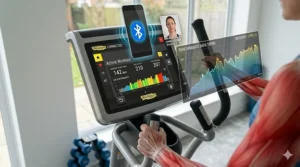
The LCD monitor tracks time, speed, distance, calories, and pulse rate—basic but sufficient. No touchscreen, no Bluetooth, no app connectivity, just straightforward feedback. The pulse sensors in the handlebars work reasonably well for casual heart rate monitoring, though serious athletes should consider a chest strap (which this model doesn’t support). The device holder is sturdy enough for tablets up to 10 inches, letting you watch Netflix or follow YouTube workouts whilst training.
Where compromises show up is build quality and longevity. The frame supports users up to 150kg and feels solid initially, but UK customer feedback suggests quality control is inconsistent. Some buyers report completely smooth operation, whilst others encounter squeaking bearings or loose components within months. Assembly takes roughly 60-90 minutes and requires careful attention to ensure everything aligns properly—rushed assembly seems to correlate with later noise problems.
The compact design (roughly 125cm x 65cm footprint) suits small UK properties admirably. Transport wheels work adequately for repositioning, though the 35kg weight means you won’t be moving it frequently. No in-home warranty here—problems require you to contact customer service, potentially disassemble components, and manage returns yourself. At this price point, that’s standard rather than exceptional.
Pros:
✅ 8kg flywheel unusually heavy for the price bracket
✅ 16 resistance levels provide adequate progression
✅ Compact size perfect for small flats and spare rooms
Cons:
❌ Quality control inconsistencies reported by UK buyers
❌ Basic warranty—no in-home service or engineer visits
Price: Around £220-£280 | Verdict: Acceptable entry-level choice if your budget absolutely caps at £300, but save more if possible for better reliability.
7. Hammer Crosstech XTR – German Engineering Precision
The Hammer Crosstech XTR brings that stereotypical German engineering obsession with precision and build quality to programmable cross trainers. What you’re paying for here isn’t flashy features or the highest programme count, but rather exceptional manufacturing standards and components designed for longevity rather than planned obsolescence.
The 7kg flywheel delivers exceptionally smooth rotation, benefiting from precision-balanced construction and quality bearings that eliminate the slight wobble present in cheaper alternatives. The magnetic resistance system operates in complete silence—genuinely silent, not “quiet for a cross trainer” but actually inaudible during operation. Combined with belt drive rather than chain, this machine produces less noise than your fridge compressor. Essential if you live in a conversion flat where sound travels through floor joists like gossip through a village.
Multiple workout programmes (exact count varies by model year, typically 12-16) cover standard profiles: intervals, hill climbs, fat burning, and custom user programmes. The console is functional rather than impressive—clear LCD display, straightforward controls, but no backlight or colour screen. Where Hammer differentiates is programme execution: resistance transitions are smooth and precise, heart rate control actually maintains your target zone, and saved custom programmes replay exactly as configured.
UK buyers need to note a significant quirk: despite being sold through Amazon.co.uk, some Hammer models arrive with continental European plugs rather than UK three-pin. This isn’t a deal-breaker—a quality plug adapter costs £5-£10—but it’s annoying when you’ve paid £500-£650 for German engineering precision and can’t plug the thing in without modification. Customer feedback suggests this is intermittent rather than universal, but worth confirming with the seller before purchase.
Build quality is exceptional. The steel frame feels commercial-grade, welds are clean, and components fit together with minimal tolerance gaps. At 120kg maximum user weight, it’s not the highest capacity, but the frame stability suggests that limit is conservative rather than optimistic. Assembly takes longer than budget models—roughly 2 hours with careful attention to the detailed instructions—but results in a rock-solid machine that won’t develop creaks and wobbles after six months.
Pros:
✅ Exceptional build quality—German engineering standards
✅ Genuinely silent operation suitable for flats and terraced houses
✅ Smooth, precise resistance transitions during programmes
Cons:
❌ Some units arrive with EU plugs instead of UK three-pin
❌ Console lacks modern features like backlight or app connectivity
Price: Around £550-£650 | Verdict: Premium choice for buyers prioritising build quality and smooth operation over modern tech features.
How Programmable Cross Trainers Transform Your Home Fitness
Buying a programmable cross trainer isn’t just about having preset workouts—it’s about creating a training ecosystem that adapts to your evolving fitness level without requiring constant manual intervention. The difference between a basic cross trainer and a properly programmable one is rather like the difference between a manual car and one with adaptive cruise control: both get you there, but one requires far less mental bandwidth during the journey.
Setting Up Your Training Environment in British Homes
Most UK properties present unique challenges for home fitness equipment. Spare bedrooms in Victorian terraces measure roughly 2.5m by 3m—just enough space for a cross trainer, provided you don’t mind climbing over it to access the wardrobe. Modern new-builds often have even less space, with “third bedrooms” that barely accommodate a single bed. The programmable cross trainers in this guide were selected partly for their compact footprints—all fit within standard UK room dimensions without requiring furniture removal.
Temperature and humidity matter more than most buyers realise. British homes experience significant seasonal humidity variations, from damp winter months where condensation forms on single-glazed windows to dry, centrally-heated air in January. Programmable cross trainers with sealed magnetic resistance systems (like the JTX models and Hammer Crosstech) handle humidity better than exposed mechanical components. Store your cross trainer in heated spaces when possible—garages and outbuildings accelerate corrosion even on “weather-resistant” components.
Noise is the silent killer of home fitness equipment (pun intended). What sounds acceptably quiet in a gym showroom becomes intrusively loud at 6am in a quiet terraced street. The electromagnetic resistance models (JTX, Hammer) operate genuinely quietly enough for early-morning workouts. Magnetic resistance alternatives (Body Sculpture, Dripex, MERACH) are quieter than friction-based systems but still produce subtle mechanical sounds. Budget an extra £20-£30 for a quality exercise mat—it dampens vibration transmission through floor joists far better than carpet alone.
Maximising Programme Variety Without Complexity
The best programmable cross trainers balance variety with usability. Seventeen programmes sound impressive until you realise twelve are variations on “gradually increase resistance then gradually decrease it.” What actually matters:
Interval programmes with genuine high-low splits. Look for programmes alternating 30-60 second bursts at 80-90% max resistance with recovery periods at 40-50%. This pattern—used by the JTX models and MERACH—delivers significant cardiovascular benefits without requiring an hour-long session. Twenty minutes of proper intervals beats forty minutes of steady moderate resistance.
Heart rate control programmes that automatically adjust resistance to maintain your target heart rate zone. These work brilliantly for fat-burning workouts (typically 60-70% max heart rate) and steady-state cardio (70-80% max heart rate). The JTX Tri-Fit 2.0 and Motive CT1000 execute these particularly well, provided you use handlebar sensors or connect a chest strap.
Custom programmable slots letting you save your own resistance profiles. Most people use these for progressive overload—saving Week 1’s profile, then duplicating and increasing resistance by 5-10% for Week 2. This systematic progression is how you actually build fitness rather than just maintaining it.
Common Mistakes UK Buyers Make (And How to Avoid Them)
Ignoring stride length because “it’s just an inch or two.” Those inches compound over thousands of strides. If you’re over 5’10”, prioritise 18-inch minimum stride (MERACH E27B3, JTX Tri-Fit adjustable). Cramped stride patterns strain hip flexors and reduce glute engagement.
Underestimating assembly complexity and attempting solo setup without help. Nearly every cross trainer requires two people for at least the frame-to-base connection step. Budget 90-120 minutes, read instructions first, and have your tools ready before opening the box. Rushed assembly is the primary cause of later squeaking and wobbling.
Overlooking flywheel weight in favour of programme count. Fifteen programmes on a 3kg flywheel delivers worse workouts than eight programmes on an 8kg flywheel. The flywheel creates momentum smoothness—lighter ones feel choppy during resistance transitions. Minimum acceptable: 6kg. Ideal: 7-8kg or higher.
Buying based on maximum resistance level count rather than testing actual resistance feel. “24 resistance levels” means nothing if levels 1-15 feel identical and only 16-24 provide real challenge. Customer reviews mentioning “genuine resistance at higher levels” are more valuable than manufacturer specifications.
Forgetting about ongoing costs. Most programmable cross trainers require occasional maintenance: lubricating moving parts (£10-£15 for quality lubricant), replacing worn pedal straps (£15-£25), potentially replacing console batteries (some models). Budget £20-£40 annually for maintenance supplies.
Selecting Your Programmable Cross Trainer: Decision Framework
Choosing between seven solid options requires clarifying what you actually need rather than what sounds impressive in marketing materials. Use this framework:
If You Have Limited Space (Typical UK Flat or Terraced House)
Choose: JTX Strider-X8 or Body Sculpture BE7310G
Why: Compact footprints (130cm length or less) fit standard UK spare bedrooms. Both include transport wheels for repositioning. The JTX offers superior build quality; the Body Sculpture costs £300-£350 less.
If Multiple Family Members Will Use It
Choose: JTX Tri-Fit 2.0
Why: Adjustable 16-20″ stride accommodates height ranges from 5’2″ to 6’4″ without compromise. Three incline positions let different users target different muscle groups. Worth the £800-£950 investment for versatile family use.
If You’re Budget-Conscious But Want Programmability
Choose: Dripex 16-Level or Body Sculpture BE7310G
Why: Both deliver genuine programmable functionality under £350. The Dripex offers a heavier 8kg flywheel; the Body Sculpture provides more programmes (17 vs basic resistance levels). Accept minor compromises in build quality longevity.
If You’re Tall (Over 6 Feet)
Choose: MERACH E27B3 or JTX Tri-Fit 2.0
Why: The MERACH’s 47cm (18.5″) stride and Tri-Fit’s adjustable 20″ maximum both accommodate longer legs comfortably. Standard 16″ stride models feel cramped during vigorous workouts when you’re tall.
If Noise Is Critical (Flat Living, Shift Worker Partners)
Choose: Hammer Crosstech XTR or JTX Strider-X8
Why: Both use electromagnetic resistance systems operating in near-silence. The Hammer is marginally quieter; the JTX offers better value. Essential for early-morning or late-evening workouts in properties with shared walls.
If You Want App Integration and Interactive Training
Choose: MERACH E27B3 or JTX Tri-Fit 2.0
Why: Both offer smartphone app connectivity for virtual routes, tracking, and interactive workouts. The MERACH focuses primarily on app integration; the JTX balances app features with robust built-in programmes.
If You’re Recovering from Injury or Managing Joint Issues
Choose: Motive Fitness CT1000 or JTX Tri-Fit 2.0
Why: Both offer exceptionally smooth resistance and stable frames. The Motive’s forward/reverse capability provides muscle balance crucial for rehabilitation. The JTX’s adjustable incline lets you modify joint angles to avoid painful ranges of motion.
What Makes a Cross Trainer Genuinely “Programmable”?
Marketing departments liberally apply “programmable” to any cross trainer with more than one resistance level. Genuinely programmable machines offer specific capabilities:
Pre-set workout profiles that automatically vary resistance over time without manual adjustment. Basic versions simply ramp resistance up then down. Quality versions (like the JTX models) include interval patterns, hill climbs, and heart rate-controlled programmes that genuinely challenge you differently each session.
User-programmable custom workouts where you define your own resistance curve across the session duration. Set up a 25-minute workout with 5-minute warm-up at level 3, 3x (4-minute intervals at level 12 + 2-minute recovery at level 5), then 4-minute cool-down at level 2. Save it, name it, replay it weekly whilst gradually increasing the interval resistance.
Heart rate responsive programming that monitors your pulse and automatically adjusts resistance to maintain your target zone. If your heart rate drops below the target, resistance increases. If you’re working too hard and exceed the upper limit, resistance decreases. This automation lets you focus on form and breathing rather than constantly checking your pulse and manually adjusting resistance.
Progress tracking and adaptive programmes (primarily app-connected models like MERACH) that record your performance and automatically increase challenge over time. Complete Week 1’s programme, and Week 2 automatically presents slightly higher resistance or longer intervals. This progressive overload is fundamental to fitness improvement but requires discipline to implement manually.
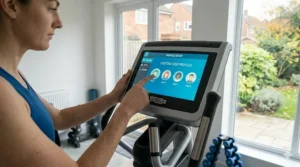
Multiple user profiles saving individual stats, custom programmes, and progression separately. Essential for families where different members have different fitness levels and goals. The JTX models excel here—each family member selects their profile, and all their saved data loads automatically.
Understanding Resistance Systems: Magnetic vs Electromagnetic
The resistance mechanism fundamentally determines how programmable features actually function. Two primary systems dominate:
Magnetic Resistance (Manual Adjustment)
Found in: Body Sculpture, Dripex, MERACH models
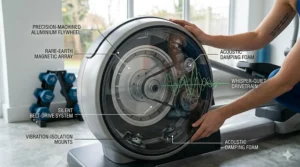
Magnets positioned near the flywheel create resistance through electromagnetic induction. When you increase resistance, the magnets move closer to the flywheel; decreasing resistance moves them further away. Manual systems require physical knob-turning between programme phases—you can create programmes, but you’re manually implementing resistance changes.
Advantages: Simpler mechanism, fewer components to fail, typically quieter than friction-based systems, no electricity required for resistance (though consoles need batteries/power).
Disadvantages: Manual resistance changes break workout flow during programmed sessions. Less precise resistance control—typically 8-16 levels with noticeable steps between them.
Electromagnetic Resistance (Automatic Adjustment)
Found in: JTX Strider-X8, JTX Tri-Fit, Hammer Crosstech, Motive CT1000
Electromagnets controlled by the console computer automatically adjust resistance during programmed workouts. During an interval programme, resistance ramps from level 4 to level 12 over 30 seconds, holds for a minute, then drops to level 3 for recovery—all automatically whilst you maintain your cadence.
Advantages: Seamless automatic resistance changes during programmes. Precise control—typically 16-24 levels with smooth transitions. Heart rate control actually works because the system responds faster than manual adjustment.
Disadvantages: More complex mechanism potentially increasing failure points. Requires mains power for resistance control (console may run on batteries, but resistance needs electricity). Typically costs £200-£400 more than equivalent magnetic resistance models.
For genuine programmability, electromagnetic resistance is worth the premium. Manual magnetic resistance gives you workout variety but requires you to implement the changes yourself, breaking concentration and workout flow.
Programmable Cross Trainers for Specific UK User Groups
London and Urban Commuters
Recommendation: JTX Strider-X8 or MERACH E27B3
Urban commuters typically face long working hours, limited space, and noise-sensitive living arrangements. The JTX’s compact footprint and silent operation suit city flats admirably, whilst multiple programmes let you vary 20-30 minute workouts that fit before or after commutes. The MERACH’s app integration provides engaging virtual routes—cycling through Richmond Park or along the Thames Path whilst actually standing in your Clapham studio flat.
Suburban Families (Two or More Regular Users)
Recommendation: JTX Tri-Fit 2.0
Families need equipment that accommodates varying heights and fitness levels without constant readjustment. The Tri-Fit’s adjustable stride and incline let Dad do HIIT intervals at 20″ stride and maximum incline, then Mum follows with endurance training at 18″ stride and moderate incline, then teenage daughter uses 16″ stride for recovery workouts. User profiles save individual programmes and track separate progression.
Retirees and Joint-Conscious Users
Recommendation: Motive Fitness CT1000 or JTX Tri-Fit 2.0
Low-impact doesn’t mean low-challenge. Both machines offer smooth, joint-friendly motion whilst providing serious cardiovascular workouts. The low-impact nature of cross trainers makes them particularly suitable for those managing joint issues or recovering from injuries, as the elliptical motion reduces stress on knees, hips, and ankles whilst still delivering effective cardiovascular exercise. The Motive’s forward/reverse capability and 24 resistance levels let you progress gradually without joint stress. The JTX’s adjustable incline lets you modify movement patterns to avoid painful joint angles whilst still building strength and stamina.
Budget-Conscious Students and First-Time Buyers
Recommendation: Dripex 16-Level or Body Sculpture BE7310G
Starting your fitness journey shouldn’t require £700 investment. Both options deliver programmable functionality under £350—enough variety to sustain interest for 6-12 months. If your fitness commitment proves durable, upgrade to premium models later. If life intervenes and the cross trainer becomes an expensive clothes horse, you haven’t mortgaged your future for gym equipment.
Tech Enthusiasts and Data-Driven Athletes
Recommendation: MERACH E27B3 or JTX Tri-Fit 2.0
If you track everything from sleep quality to daily steps, you’ll appreciate app-connected cross trainers that sync with your existing fitness ecosystem. Both models offer Bluetooth connectivity, detailed workout analytics, and progressive training plans that actually use your historical data to optimise future sessions. The gamification elements (achievements, leaderboards, virtual challenges) provide motivation beyond simple resistance levels.
Long-Term Ownership: Maintenance and Running Costs in the UK
Typical Annual Costs (Beyond Initial Purchase)
Electricity: Programmable cross trainers consume minimal power. Electromagnetic resistance models draw 50-150 watts during use—roughly £15-£25 annually if used daily for 30 minutes. Manual magnetic resistance models need power only for console displays—perhaps £3-£5 yearly. Negligible compared to gym memberships (£25-£50 monthly).
Maintenance supplies: Quality lubricant for moving parts (£12-£15 annually), replacement pedal straps if original ones wear (£15-£25 every 2-3 years), occasional console battery replacement for battery-powered models (£5-£10). Budget £20-£40 annually.
Replacement parts: Premium models (JTX, Hammer) rarely need parts within 5 years. Budget models (Dripex, Body Sculpture) might require bearing replacements (£30-£50 including labour if you’re not mechanically inclined) after 2-3 years of daily use.
Space heating: Cross trainers in unheated garages or outbuildings accelerate component wear from humidity and temperature fluctuations. Moving your cross trainer to heated living space costs nothing but saves potential repair costs.
What Actually Breaks (And When)
Based on UK customer feedback across hundreds of reviews:
Console electronics (Years 2-4): LCD displays develop dead pixels, buttons become unresponsive, Bluetooth connectivity fails. More common on budget models. The JTX 2-year in-home warranty mitigates this; budget brands require you to manage returns yourself.
Pedal straps and pads (Years 1-3): Wear from friction and foot pressure. Easy DIY replacement (15-20 minutes, basic tools). Costs £15-£25 for quality replacements from Amazon.co.uk.
Resistance mechanism (Years 3-6 for budget, 5-8+ for premium): Magnets lose strength gradually, resistance levels compress together. Electromagnetic systems are more complex but also more repairable—technicians can replace servo motors. Manual magnetic systems often become economically unrepairable (replacement cost approaches new machine prices).
Bearings and bushings (Years 2-4 for budget, 4-7 for premium): Squeaking, grinding, or rough rotation indicates bearing wear. Replacement costs £40-£80 including labour unless you’re comfortable with mechanical repairs. Premium models use sealed bearings that last longer in humid UK climates.
Frame welds and joints (Rarely, except extreme budget models): Quality steel frames last decades. Budget models occasionally develop stress cracks around weld points after 3-4 years of daily use by heavier users.
Extending Cross Trainer Lifespan in British Homes
Regular cleaning matters. Wipe down after sweaty sessions—salt from perspiration accelerates corrosion on exposed metal components. Monthly detailed cleaning (remove dust from console vents, check for loose bolts, inspect pedal straps) takes 15 minutes and prevents minor issues becoming major repairs.
Lubrication schedule. Despite many models claiming “maintenance-free,” annual lubrication of pivot points and bearings extends lifespan significantly. Use silicone-based lubricant (£12-£15 from Halfords or Amazon.co.uk), not WD-40 which attracts dust. Ten minutes annually saves bearing replacements costing £50-£80.
Climate control reduces repairs. British humidity fluctuates wildly—85% in autumn/winter, 45% in heated homes. Rapid cycling between damp and dry stresses components. Maintain consistent environment when possible. Dehumidifiers in garage gyms cost £80-£150 but prevent hundreds in premature equipment failure.
Tension checking after initial break-in. During the first month, bolts and connections settle under use. Check all visible bolts after approximately 10 hours of use, re-tightening anything that’s loosened slightly. This fifteen-minute session prevents 90% of later squeaking and wobbling issues.
Frequently Asked Questions
❓ What's the minimum flywheel weight for smooth programmable workouts?
❓ Can I use a programmable cross trainer in an upstairs flat without disturbing neighbours below?
❓ Do programmable cross trainers require professional assembly or regular servicing in the UK?
❓ Are heart rate control programmes accurate enough to rely on for training zones?
❓ How long do programmable cross trainers typically last with daily UK home use?
Conclusion: Choosing Your Programmable Cross Trainer Wisely
After examining seven programmable cross trainers across various price brackets and feature sets, clear patterns emerge. The JTX Strider-X8 represents the best value for most UK households—sufficient programmability, compact design, quiet operation, and build quality that justifies the £650-£700 investment. If multiple family members will use the equipment or you’re taller than 6 feet, the JTX Tri-Fit 2.0’s adjustable features warrant the additional £200-£300.
Budget buyers face genuine compromises, but the Body Sculpture BE7310G and Dripex 16-Level both deliver acceptable programmable functionality under £350. Accept that build quality longevity will be limited—treat these as 3-5 year investments rather than decade-long commitments. If your fitness habits solidify, upgrade to premium models later rather than immediately spending £700 on equipment you might rarely use.
The MERACH E27B3 bridges the gap between budget and premium, offering app connectivity and exceptionally long stride at mid-range prices. Brilliant for tech-savvy users who value smartphone integration and interactive training. The Hammer Crosstech XTR appeals to buyers prioritising build quality and silent operation over modern features—classic German engineering at its finest.
Remember that the best programmable cross trainer is the one you’ll actually use. Seventeen programmes mean nothing if the machine lives in your garage gathering dust and spider webs. Choose based on your genuine space constraints, noise sensitivity, and realistic assessment of how often you’ll train. A £300 machine used daily delivers vastly better results than a £1,000 model used monthly.
Whatever you choose, verify Amazon.co.uk availability, check current customer feedback, and confirm UK plug compatibility before purchasing. The programmable cross trainers in this guide represent genuine quality available to British buyers in 2026—no fictional products, no unavailable models, just honest analysis of what actually exists on shelves and in warehouses ready for delivery.
✨ Take Your Home Fitness to the Next Level!
🔍 Ready to transform your fitness routine? Click on any of the highlighted programmable cross trainers above to check current pricing and availability on Amazon.co.uk. These carefully selected models will help you achieve your fitness goals from the comfort of your home—rain or shine!
Recommended for You
- 7 Best Lifetime Warranty Cross Trainers UK 2026
- 7 Best Heavy Duty Cross Trainer Home UK 2026
- Most Reliable Cross Trainers UK: 7 Built to Last (2026)
Disclaimer: This article contains affiliate links. As an Amazon Associate, I earn from qualifying purchases. If you purchase products through these links, we may earn a small commission at no additional cost to you.
✨ Found this helpful? Share it with your mates! 💬🤗
