In This Article
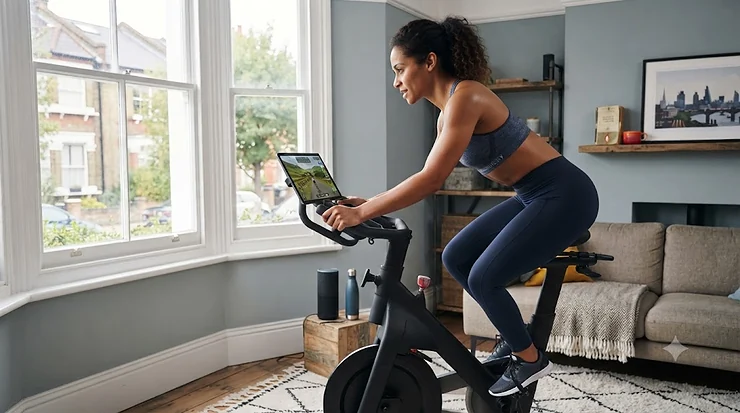
There’s a particular kind of optimism that comes with clearing a corner of the spare room for a spin bike. You picture yourself thirty minutes in, glowing with effort, Radio 1 blaring, all those January promises actually kept for once. Then reality intrudes: which spin bike for home use actually deserves that corner, and which one will become a very expensive coat rack by March?
We hear you. The market is stuffed with bikes that all claim to be “gym quality,” “whisper quiet,” and “professional grade,” and after a while the words stop meaning anything at all. So here’s what this guide actually is: a researched comparison of seven real, currently available spin bikes, built from manufacturer specifications, verified owner feedback, and independent expert reviews, not a rewritten product listing. We’ve deliberately avoided pretending we’ve personally clocked up hundreds of hours on each one — instead, we’ve done the less glamorous but more honest work of cross-checking specs, digging through real user complaints, and figuring out who each bike genuinely suits.
What is a spin bike for home? It’s a stationary indoor cycling machine built around a weighted flywheel and adjustable resistance, designed to replicate the feel and intensity of a studio spin class from your own living room, without the studio fees, awkward small talk, or 6am alarm. Some models even borrow their drivetrain logic from the fixed-gear bicycle, where the pedals stay directly coupled to the wheel with no freewheel, which is exactly what gives chain-driven spin bikes that distinctive road-bike resistance. The best ones balance flywheel weight, frame stability and resistance type against your budget, your space, and how seriously you plan to ride.
Quick Comparison: 7 Spin Bikes For Home At A Glance
| Bike | Flywheel | Drive Type | Weight Capacity | Price Range | Best For |
|---|---|---|---|---|---|
| JOROTO X2 | 16kg | Belt | 136kg | £300-£350 range | All-round value pick |
| Sunny Health & Fitness SF-B1805 | 20kg | Belt | 136kg | £350-£450 range | Heaviest flywheel feel |
| JLL IC300 Pro | 18kg | Chain | 130kg | £180-£230 range | Fixed-gear road feel on a budget |
| YOSUDA L-007 | 16kg | Belt | 122kg | Under £250 | Tightest budget |
| DMASUN Magnetic Pro | 18kg | Belt | 150kg | £220-£280 range | Heavy-duty, larger riders |
| Echelon Connect EX3 | 15kg | Belt | 136kg | £700-£900 range | App-based studio classes |
| Schwinn IC4 | 18kg | Belt | 150kg | £700-£850 range | Bluetooth training data |
A glance at that table tells its own story: flywheel weight climbs steadily as you move from budget to mid-range, then the premium picks trade a slightly lighter flywheel for smart connectivity and data tracking instead. If your priority is pure pedalling feel for the least outlay, the Sunny Health & Fitness SF-B1805 and JLL IC300 Pro punch well above their price with genuinely heavy or chain-driven mechanics. If you want your effort logged, ranked, and gamified, the Echelon Connect EX3 and Schwinn IC4 justify their higher price tags through software rather than steel.
💬 Just one click — help others make better buying decisions too!😊
Top 7 Spin Bikes For Home: Expert Analysis
1. JOROTO X2 — best all-round value for everyday riders
The JOROTO X2 has built its reputation the unglamorous way: by simply getting the fundamentals right, over and over, for thousands of buyers. It pairs a 16kg belt-driven flywheel with magnetic resistance, which in practice means you get a smooth, momentum-carried pedal stroke without the periodic oiling and tightening a chain drive demands.
The magnetic resistance dial offers a genuinely wide 0-100% range, so warm-up spins and max-effort intervals sit on the same bike without feeling like two different machines. Its 4-way adjustable seat and handlebars, plus a 136kg (300lb) user weight limit, mean the JOROTO X2 comfortably fits a household of mixed heights rather than being tuned to one rider. Based on the spec comparison against similarly priced rivals, the belt drive and magnetic system together are what push this bike above budget friction-pad alternatives, even though the price sits solidly mid-range rather than rock bottom.
Reviewers consistently note that assembly is quicker than expected — most report under an hour with the supplied tools — and that the ride feels notably smoother than the reviewer’s previous budget bike. A recurring theme in owner feedback is that the standard X2 lacks Bluetooth, so anyone wanting to pair with Zwift or Kinomap should look at the X2 Pro variant instead, which adds connectivity for a modest premium.
Pros:
- ✅ Heavy-for-price 16kg flywheel gives smooth momentum
- ✅ Whisper-quiet belt drive needs no lubrication
- ✅ Fully 4-way adjustable for mixed-height households
Cons:
- ❌ No built-in Bluetooth on the standard model
- ❌ Fairly heavy at around 42kg to reposition
At around £300-£350, the JOROTO X2 sits at a genuine value sweet spot: heavier flywheel and better build than sub-£200 bikes, without paying premium prices for a screen you may not use.
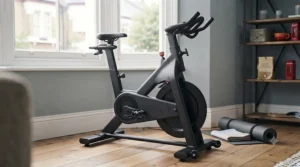
2. Sunny Health & Fitness SF-B1805 — heaviest flywheel for road-like momentum
If flywheel weight is the single spec you care about most, the Sunny Health & Fitness SF-B1805 currently tops this list at 20kg. What most buyers overlook about flywheel weight is that it isn’t really about resistance at all — it’s about momentum consistency. A heavier wheel smooths out the “dead spots” at the top and bottom of each pedal stroke, so the ride feels continuous rather than choppy, particularly noticeable during standing climbs.
The Sunny Health & Fitness SF-B1805 drives that flywheel through a belt rather than a chain, and uses manual magnetic resistance rather than fixed levels, which means you can nudge intensity by tiny, precise increments instead of jumping a whole level at a time. It’s rated to 136kg, has 4-way adjustable seat and handlebar posts with gym-style quick-release locks, and includes a stepping pad between the frame’s main bar and seat post so you can dismount and remount mid-workout the way spin instructors demonstrate in class.
Aggregated review sentiment is unusually consistent here: owners repeatedly praise the near-silent operation and the “gym-like” ride quality, and one detailed long-term review noted the bike held up well even under repeated standing-climb stress testing, with no frame flex or creaking reported. The main criticism that surfaces is that resistance is fully manual, so it won’t auto-adjust for apps like Zwift unless you add a separate third-party smart resistance accessory.
Pros:
- ✅ Class-leading 20kg flywheel for the price bracket
- ✅ Micro-adjustable resistance, not stepped levels
- ✅ Gym-style quick-release seat and handlebar locks
Cons:
- ❌ Manual resistance only, no app auto-adjust
- ❌ Two people recommended for moving it upstairs
Expect to pay in the £350-£450 range. For anyone who’s ridden a proper studio spin class and missed that weighty, unhurried momentum, this is the closest home equivalent on this list.
3. JLL IC300 Pro — the fixed-gear feel without the studio price tag
Most home spin bikes have quietly abandoned chain drive in favour of belts, and for good reason — belts need no maintenance. But there’s a reason serious cyclists sometimes seek out a chain-driven machine anyway: it replicates the direct, fixed-gear connection of an actual bicycle drivetrain far more convincingly than a belt ever will. The JLL IC300 Pro is one of the few widely available UK bikes that still offers this, pairing an 18kg bi-directional flywheel with a genuine three-piece crank and direct chain drive.
Here’s what to weigh: chain drive means very slightly more noise and the occasional need to check tension or add a drop of oil, but in exchange you get pedal feedback that’s noticeably closer to riding a real fixed-gear bike outdoors, including the ability to resist the pedals with your legs the way you would on the road. That’s precisely the “fixed gear indoor bike” experience some riders are specifically hunting for, and it’s rare to find at this price point.
The bike’s bi-directional flywheel accommodates both forward and reverse pedalling for varied muscle engagement, and a 130kg weight capacity covers most home users. Reviewers highlight the flywheel-to-price ratio as the standout feature — an 18kg flywheel is typically reserved for bikes costing considerably more. The spec sheet won’t tell you this, but user reports suggest the seat is on the firmer side out of the box, so budgeting for a gel seat cover is a sensible first purchase.
Pros:
- ✅ Genuine chain drive for authentic road-bike feel
- ✅ 18kg flywheel rare at this budget tier
- ✅ Bi-directional pedalling for varied training
Cons:
- ❌ Requires occasional chain tension checks
- ❌ Stock saddle reported as firm by several owners
Typically found in the £180-£230 range, the JLL IC300 Pro is arguably the best-value entry point on this entire list for anyone who wants that specific fixed gear indoor bike sensation.
4. YOSUDA L-007 — the tightest budget without feeling flimsy
Not every household needs — or can justify — a bike with Bluetooth and a companion app. The YOSUDA L-007 exists for exactly that reality: a genuinely solid, no-frills spin bike that keeps the essentials intact while trimming everything else. It uses a 16kg belt-driven flywheel combined with a wool-felt friction brake pad rather than magnetic resistance, adjusted via a simple twist knob for effectively infinite resistance control rather than fixed steps.
Reviewers consistently note the ride is far quieter than the friction-pad mechanism might suggest, and the belt-drive flywheel keeps spinning smoothly even once you stop pedalling, mimicking outdoor momentum. Practically speaking, this means the YOSUDA L-007 suits beginners who want to ease into cycling intensity gradually, since there’s no jump between preset resistance levels, just a smooth dial from barely-there to brutal.
Build quality punches above the price point too: a heavy-duty steel frame, cage pedals to keep feet secure during hard efforts, and a reported assembly time of around 20 minutes. The trade-off, based on aggregated owner feedback, is that felt brake pads wear down over time and need occasional replacement, and several buyers reported missing parts on arrival, so it’s worth inventorying the box against the included checklist before starting assembly.
Pros:
- ✅ Lowest price point on this list
- ✅ Infinitely adjustable friction resistance
- ✅ Quick roughly 20-minute assembly
Cons:
- ❌ Felt brake pads wear and need replacing
- ❌ No digital display beyond basic LCD
Usually under £250, the YOSUDA L-007 is the pragmatic choice for anyone who wants to try indoor cycling seriously without committing serious money to it first.
5. DMASUN Magnetic Resistance Pro — heavy duty build for bigger riders
Weight capacity rarely gets the attention flywheel weight does, but for taller or heavier riders it’s arguably the more important spec. The DMASUN Magnetic Resistance Pro stands out here with a 150kg (330lb) capacity, well above most bikes in its price bracket, built around a thickened alloy steel frame measuring over 2mm — noticeably sturdier gauge steel than typical budget competitors.
Its 18kg flywheel pairs with fully sealed magnetic resistance, meaning there’s no brake pad contact at all, so there’s nothing to wear down or replace over the bike’s lifetime. Reviewers frequently compare it directly against the JOROTO X2, noting the DMASUN Magnetic Resistance Pro‘s higher weight rating as the clear differentiator for larger households, while acknowledging the JOROTO’s slightly more established brand reputation.
What most buyers overlook about “heavy duty” claims is that frame thickness matters more than total bike weight for actual stability during standing efforts — a heavy bike with thin tubing can still flex. The DMASUN Magnetic Resistance Pro‘s reinforced frame is specifically built to resist that flex during out-of-the-saddle climbing, which aggregated reviews confirm holds up well even under sustained hard use. Reported minor gripes include a learning curve for the twist-knob resistance system and a heavier-than-average shipping weight that makes solo unboxing awkward.
Pros:
- ✅ Class-leading 150kg weight capacity
- ✅ Sealed magnetic resistance, zero pad wear
- ✅ Reinforced 2mm+ steel frame resists flex
Cons:
- ❌ Heavy shipping weight complicates solo setup
- ❌ Resistance knob takes practice to fine-tune
Priced around £220-£280, the DMASUN Magnetic Resistance Pro earns its place as the heavy duty spin bike pick for taller, heavier, or multi-person households.
6. Echelon Connect EX3 — best for studio-style classes at home
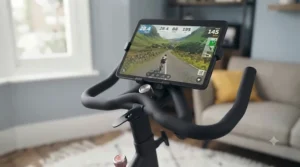
Everything so far has been a self-contained mechanical bike. The Echelon Connect EX3 flips that formula: it’s built around app connectivity from the ground up, using a rear-mounted 15kg flywheel and 32 levels of magnetic resistance, controlled through the EchelonFit app on your own tablet or phone rather than a built-in touchscreen.
Here’s the trade-off framed honestly: you’re paying a considerable premium not for a heavier flywheel — several budget bikes on this list actually have more flywheel mass — but for live and on-demand instructor-led classes, Bluetooth pairing, and a genuinely small footprint thanks to the rear flywheel design. Reviewers consistently describe the Bluetooth connection as occasionally glitchy, with intermittent drop-outs during a session, though most report reconnection is quick.
Dual-function pedals accepting both trainers and SPD cycling shoes are a genuine practical touch, and the USB charging port keeps your streaming device powered through longer sessions. Based on the spec comparison against Peloton’s flagship bike, the Echelon Connect EX3 delivers a broadly comparable studio experience for meaningfully less upfront cost, though it still requires an ongoing EchelonFit subscription to unlock the full class library — factor that recurring cost into your total budget, not just the sticker price.
Pros:
- ✅ Live and on-demand instructor classes via app
- ✅ Compact rear-flywheel footprint
- ✅ Dual-compatible cage and SPD pedals
Cons:
- ❌ Requires ongoing subscription for full class access
- ❌ Bluetooth connection occasionally drops mid-ride
Expect to pay in the £700-£900 range plus a monthly subscription. This is the pick for anyone who knows they need instructor-led structure to stay consistent, not just a bike sitting in the corner.
7. Schwinn IC4 — best for data-driven training without a subscription
The Schwinn IC4 occupies an interesting middle ground: a genuinely premium 18kg flywheel and 100 levels of micro-adjustable magnetic resistance, but without locking core functionality behind a mandatory subscription. Dual-sided pedals — SPD clip-in on one side, cage on the other — and Bluetooth FTMS connectivity mean it talks directly to third-party apps like Zwift, Peloton App, and TrainerRoad without needing Schwinn’s own ecosystem at all.
Long-term testing referenced in independent reviews found the frame held up well even under sustained high-wattage sprint efforts from heavier riders, with the 150kg weight rating proving realistic rather than optimistic marketing. What most buyers overlook is that the Schwinn IC4 and the similarly specced Bowflex C6 are built by the same parent company and are functionally near-identical, so shoppers cross-referencing prices between the two brands are essentially choosing on price and styling rather than substance.
Reviewers highlight the backlit console as a meaningful advantage over screen-free rivals like the Echelon line, since it displays cadence, resistance level, and heart rate without needing a paired device propped up nearby. One recurring minor complaint across long-term owners is an occasional creak from the bottom bracket area after heavy use, though most reported this was resolved with a simple bolt re-tightening rather than a structural fault.
Pros:
- ✅ Works with third-party apps, no subscription required
- ✅ Backlit console shows live metrics without a phone
- ✅ 150kg rating holds up under sprint-effort testing
Cons:
- ❌ Higher upfront price than mechanical-only bikes
- ❌ Occasional bottom-bracket creak reported long-term
Typically priced £700-£850, the Schwinn IC4 suits data-focused riders who want serious training metrics without being locked into one app forever.
Practical Setup & First 30 Days Guide
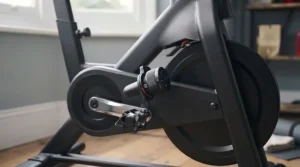
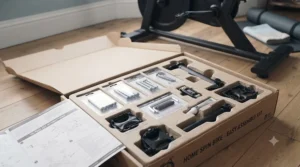
Getting a spin bike for home right starts before you’ve pedalled a single revolution. Most flat-pack indoor bikes arrive around 70-95% pre-assembled, so budget 30-60 minutes for final assembly rather than a full afternoon — attaching stabiliser bars, seat post, handlebars and pedals is usually all that’s left. Take care with pedals specifically: the left pedal threads counter-clockwise, and forcing it the wrong way is one of the most common first-day mistakes reported across owner reviews.
Positioning matters more than people expect. Place the bike on a proper equipment mat rather than directly on carpet or laminate — this protects flooring from sweat and vibration, and stops the bike creeping forward during hard standing efforts. Seat height should sit roughly level with your hip bone when standing beside the bike; from the saddle, your knee should have a slight bend at the bottom of the pedal stroke, never locking out straight.
In the first 30 days, resist the urge to crank resistance to maximum immediately. New riders commonly report knee discomfort in week one, almost always traceable to seat height or over-tightened resistance rather than the bike itself. A weekly maintenance habit — wiping down the frame after sweaty sessions, checking that stabiliser feet are still level, and for chain-drive models like the JLL IC300 Pro, a monthly check of chain tension — will meaningfully extend the bike’s working life. For the electrical side of things, Electrical Safety First’s home gym guidance recommends never running powered fitness equipment through an extension lead, plugging directly into a wall socket instead to avoid overheating risk.
Real-World Scenarios: Which Bike Actually Suits You
Specs only tell half the story, so here are three realistic buyer profiles matched against the lineup above.
The first-time exerciser on a tight budget, riding three times a week for 20-30 minutes, doesn’t need a 20kg flywheel or app subscription — the YOSUDA L-007 or JLL IC300 Pro cover this use case comfortably, and the money saved is better spent on decent trainers or a heart rate strap. The busy parent squeezing in early-morning sessions before the house wakes up needs quiet operation above almost everything else, which points firmly toward belt-driven, magnetic-resistance bikes like the JOROTO X2 or Sunny Health & Fitness SF-B1805, both of which reviewers consistently describe as close to silent.
The former gym-goer who misses structured spin classes and needs external accountability to stay consistent is the clearest case for the Echelon Connect EX3 — the instructor-led format replaces exactly what they’re missing, and the subscription cost is arguably cheaper than a studio membership over a year. Meanwhile, a household of two adults with different fitness levels and a taller or heavier rider among them should prioritise weight capacity and adjustability range over flywheel weight alone, making the DMASUN Magnetic Resistance Pro or Schwinn IC4 the more sensible fit.
How To Choose A Spin Bike For Home
- Start with flywheel weight, not price. Anything from 13kg upward gives a reasonably smooth ride; 18-22kg starts to feel genuinely road-like. Very light flywheels under 10kg can feel jerky, particularly during intervals.
- Decide belt or chain drive early. Belt drive is near-silent and maintenance-free; chain drive, as on the JLL IC300 Pro, gives a more authentic fixed-gear feel but needs occasional tension checks and lubrication.
- Check the weight capacity against your household, not just yourself. If multiple people or a heavier rider will use the bike, prioritise models like the DMASUN Magnetic Resistance Pro rated well above your actual weight.
- Be honest about whether you’ll use an app. Subscription-based bikes like the Echelon Connect EX3 only deliver value if you’ll actually attend the classes; otherwise you’re paying ongoing fees for software you’ll ignore.
- Measure your space before ordering. Most spin bikes need a footprint of roughly 1.2m by 0.6m, plus clearance front and back for mounting and dismounting safely.
- Factor in assembly and floor protection. A dedicated equipment mat and a spare hour for setup should be part of the budget, not an afterthought.
- Read the resistance type carefully. Magnetic systems (most bikes here) need no pad replacement; friction felt-pad systems like the YOSUDA L-007 are cheaper upfront but the pad wears and eventually needs swapping.
Common Mistakes When Buying A Spin Bike For Home
The single most common mistake is chasing the heaviest flywheel number without checking drive type or weight capacity — a 20kg flywheel means little if the frame can’t handle standing sprints from a heavier rider without flexing. A close second is underestimating subscription costs: an app-connected bike that looks competitively priced upfront can end up costing considerably more than a mechanical rival once twelve months of membership fees are added.
Buyers also frequently skip checking their own space against the bike’s footprint, only to discover the handlebars clip a doorframe or the pedals nearly touch a wall during a full stroke. Another overlooked detail is seat comfort: stock saddles across almost every price bracket, including several bikes reviewed here, are reported as firmer than expected, and budgeting an extra £15-£25 for a gel cover from the outset avoids an unpleasant surprise in week one.
Finally, some buyers assume “spin bike” and “exercise bike” are interchangeable, when they’re meaningfully different categories — a true spin bike uses a weighted flywheel and forward-leaning riding position designed for intense interval work, while a general exercise bike often prioritises upright comfort over performance. If your goal is genuinely challenging cardio rather than gentle daily movement, make sure you’re comparing like for like.
Spin Bike vs Traditional Exercise Bike
| Factor | Spin Bike | Traditional Upright Exercise Bike |
|---|---|---|
| Flywheel | Heavy (13-22kg typical) | Light or none |
| Riding position | Forward-leaning, road-bike style | Upright, relaxed |
| Resistance intensity | High, built for intervals | Moderate, steady-state |
| Best for | Weight loss, HIIT, cycling fitness | Gentle daily cardio, rehab |
| Typical price | £180-£900+ | £100-£400 |
The core difference comes down to intent. A spin bike’s heavy flywheel and aggressive geometry exist specifically to replicate the demands of real road cycling and studio classes, which is precisely why models like the Sunny Health & Fitness SF-B1805 and Schwinn IC4 feel dramatically different to pedal than a supermarket exercise bike, even at a glance they look similar. If your priority is genuinely challenging cardio for weight loss or cycling-specific fitness, a proper spin bike from this list will get you there faster than a traditional upright model, though the trade-off is a less forgiving saddle and riding position for longer, gentler sessions.
Best Spin Bike For Home Use For Weight Loss
Weight loss ultimately comes down to sustained calorie deficit, and the British Heart Foundation is clear that consistency matters more than intensity alone when it comes to sustainable results. That said, a heavier flywheel does make a practical difference here: bikes like the Sunny Health & Fitness SF-B1805 and JLL IC300 Pro sustain higher effort levels for longer without the jerky, dead-spot pedalling that makes lighter-flywheel bikes feel harder to push through, which in turn makes consistent, longer sessions more achievable.
For weight-loss-focused training, interval work tends to outperform steady, gentle pedalling for calorie burn per minute, which is exactly where a spin bike’s high resistance range matters. The JOROTO X2 and DMASUN Magnetic Resistance Pro‘s 0-100% magnetic resistance dials make it straightforward to alternate between near-maximum effort and recovery spins without manually swapping resistance settings mid-session. If external accountability helps you stay consistent, the Echelon Connect EX3‘s instructor-led interval classes remove the guesswork of programming your own HIIT sessions entirely.
Long-Term Cost & Maintenance
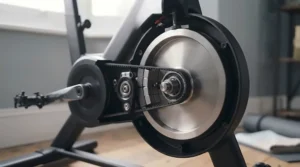
Upfront price only tells part of the financial story. Belt-driven, magnetic-resistance bikes like the JOROTO X2, Sunny Health & Fitness SF-B1805, and DMASUN Magnetic Resistance Pro carry effectively zero ongoing running cost — no pads to replace, no chain to lubricate, no subscription. Over three years of regular use, that makes their genuine total cost of ownership considerably lower than the sticker price alone suggests.
Chain-driven bikes like the JLL IC300 Pro add a small ongoing cost in the form of occasional chain oil, though this amounts to a few pounds a year at most. Friction-pad bikes like the YOSUDA L-007 will eventually need a replacement felt pad, typically costing under £15 and lasting a year or more of regular use depending on how hard the resistance knob gets cranked.
The real long-term cost divide is between mechanical bikes and app-connected ones. A Schwinn IC4 requires no subscription at all if you’re happy using third-party apps or riding without data tracking, making its total cost roughly equal to its purchase price. The Echelon Connect EX3, by contrast, needs an ongoing EchelonFit membership to access its full class library — multiply the monthly fee by however many years you expect to own the bike, and compare that running total against a mechanical alternative before deciding value for money.
What To Expect: Real-World Performance
On paper, flywheel weight and resistance levels are just numbers. In practice, the first thing most new riders notice is how much smoother a heavier flywheel feels within the first few sessions — the pedal stroke stops feeling like four distinct pushes and starts feeling like one continuous motion, particularly noticeable on bikes like the Sunny Health & Fitness SF-B1805 and Schwinn IC4.
Noise is the second surprise, usually a pleasant one. Belt-driven magnetic bikes genuinely are close to silent in practice, which matters more than it sounds if you’re riding early mornings or evenings in a shared house or flat. Reviewers across nearly every bike on this list mention being surprised by how quiet the ride actually is compared to expectations set by budget gym equipment years ago.
The less pleasant reality: saddle discomfort is close to universal in week one, regardless of price point, simply because most riders haven’t sat on a narrow performance saddle before. This settles for most people within two to three weeks as you adapt, though padded cycling shorts or a gel seat cover can meaningfully speed that adjustment period along.
Features That Actually Matter (And Those That Don’t)
Flywheel weight, drive type, and weight capacity genuinely affect your day-to-day experience and are worth prioritising in your budget. Adjustability range for seat and handlebars matters enormously if more than one person will ride the bike. A stepping pad, as found on the Sunny Health & Fitness SF-B1805, is a small but genuinely useful detail for anyone following structured spin-style workouts that involve dismounting mid-session.
What matters far less than marketing suggests: built-in speaker systems, which are almost universally reported as tinny and inferior to a phone or Bluetooth speaker; branded water bottles included in the box, which add nothing functional; and headline resistance level counts like “100 levels,” since the practical difference between 32 and 100 levels is often marginal in actual riding feel once you’re past roughly 20 distinct increments.
Spin Bike Safety & Setup Considerations
Following the UK Chief Medical Officers’ guidance, referenced by the NHS physical activity guidelines for adults, aiming for at least 150 minutes of moderate activity a week, or 75 minutes of vigorous activity, is a sensible baseline target when building a spin bike routine, and it’s worth checking with a GP first if you haven’t exercised in some time or have an existing medical condition.
From an equipment safety standpoint, always plug powered bikes with digital consoles directly into a wall socket rather than an extension lead to avoid overheating risk, and periodically check stabiliser feet, pedal bolts and, for chain-drive models, chain tension. Most bikes on this list include an emergency stop or resistance cut-off feature; familiarising yourself with it before your first hard interval session is a sensible five-minute investment.
Buyer’s Decision Framework
If your budget sits under £250 and you’re new to indoor cycling, choose the YOSUDA L-007 or JLL IC300 Pro because they deliver genuinely usable specs without unnecessary extras. If you want the smoothest possible ride for the money and don’t need an app, choose the Sunny Health & Fitness SF-B1805 because its 20kg flywheel outperforms most bikes costing considerably more. If multiple people of varying sizes will share the bike, choose the DMASUN Magnetic Resistance Pro for its 150kg capacity and reinforced frame. If you need external accountability and instructor-led structure to actually stick with a routine, choose the Echelon Connect EX3 and budget for the subscription. If you want serious training data without being locked into one ecosystem, choose the Schwinn IC4.
FAQ
❓ What flywheel weight is best for a spin bike at home?
❓ Is a chain drive or belt drive better for a home spin bike?
❓ How much does a good spin bike for home cost in the UK?
❓ Can a spin bike really help with weight loss?
❓ Do I need a subscription to use a spin bike at home?
Conclusion
There’s no single “best” spin bike for home use, only the one that matches how you’ll actually train. If you want maximum flywheel feel for minimum spend, the Sunny Health & Fitness SF-B1805 and JLL IC300 Pro are hard to beat. If budget is the overriding priority, the YOSUDA L-007 gets the fundamentals right without excess. Larger households should lean toward the DMASUN Magnetic Resistance Pro‘s generous weight rating, while anyone craving studio-class structure or serious training data should look toward the Echelon Connect EX3 or Schwinn IC4.
Whichever you choose, the honest truth is that the bike matters less than the habit you build around it. A heavier flywheel makes consistency easier, but it won’t create consistency on its own — that part’s still down to you, ideally with British Heart Foundation sustainable weight loss guidance keeping the bigger picture in view alongside your riding.
Recommended for You
- Best Recumbent Bike for Back Pain: 7 Top UK Picks for 2026
- Recumbent Exercise Bike UK: 7 Best Picks for 2026
- Upright vs Recumbent Exercise Bike: 7 Best Picks Compared (2026)
Disclaimer: This article contains affiliate links. As an Amazon Associate, I earn from qualifying purchases. If you purchase products through these links, we may earn a small commission at no additional cost to you.
✨ Found this helpful? Share it with your friends! 💬🤗
