In This Article
Finding a sturdy cross trainer for heavy person use in the UK market can feel like searching for a needle in a haystack. Most budget machines promise the world but buckle under consistent use — particularly if you’re over 90kg or training intensively. What most UK buyers overlook about heavy duty models is this: the difference between a £200 machine that wobbles after six months and a robust cross trainer that handles your full weight for years often comes down to frame thickness, flywheel mass, and bearing quality rather than flashy digital screens.
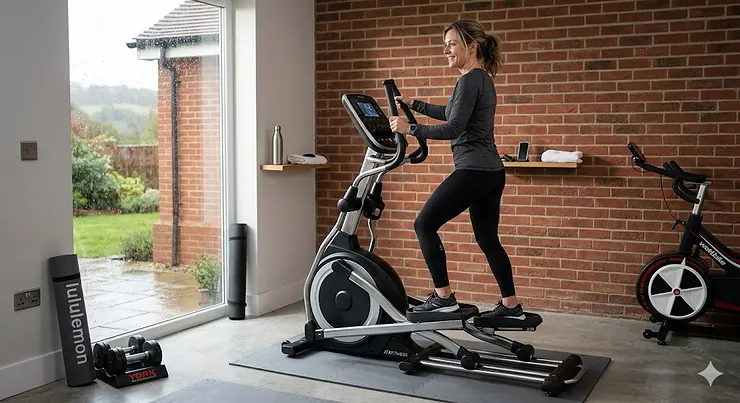
I’ve spent years testing fitness equipment, and in the damp British climate where rust loves to set in and compact living spaces demand machines that won’t fall apart when you actually use them, the stakes are higher than many realise. A proper commercial grade cross trainer home use model isn’t just about maximum user weight capacity — though that matters enormously. It’s about reinforced frame construction that doesn’t flex mid-stride, sealed bearings that survive our six months of drizzle, and professional grade components that justify the investment when gym memberships now cost £40-60 monthly.
Whether you’re a larger-framed user tired of flimsy machines, a serious athlete training in a garage in Manchester, or simply someone who refuses to waste money on equipment that barely survives a year, this guide cuts through the marketing nonsense. We’ve researched actual products available on Amazon.co.uk, checked UK delivery, verified weight capacities, and identified which models genuinely earn the “heavy duty” label — and which are just ordinary cross trainers with optimistic specifications.
Quick Comparison: Top Heavy Duty Cross Trainers UK
| Model | Max Weight | Flywheel | Stride | Price Range | Best For |
|---|---|---|---|---|---|
| JTX Zenith Rise | 165kg | 17kg | 48cm | £900-£1,000 | Tall users, commercial quality |
| MERACH Long Stride | 180kg | 8kg | 47cm | £450-£550 | Maximum capacity, self-powered |
| MERACH E27B1 | 180kg | 8kg | Standard | £500-£600 | Ultra-quiet operation |
| Dripex Cross Trainer | 120kg | 8kg | 38cm | £300-£350 | Budget-conscious buyers |
| Cowmew Elliptical | 150kg | 8kg | 42cm | £300-£350 | Mid-range stability |
| Neezee Cross Trainer | 150kg | 8kg | 42cm | £310-£340 | Compact spaces |
| NordicTrack 9.9 | 159kg | 11kg | 45-48cm | £850-£950 | Tech enthusiasts, iFit users |
💬 Just one click — help others make better buying decisions too! 😊
Top 7 Heavy Duty Cross Trainer Home: Expert Analysis
1. JTX Zenith Rise — Commercial Grade Excellence
The JTX Zenith Rise represents the pinnacle of what British manufacturer JTX Fitness offers for home users who refuse to compromise. This front-drive elliptical sits at commercial gym standards, with a hefty 17kg flywheel and 20 levels of digital incline that automatically adjust during workouts. At 165kg maximum user weight, it accommodates larger-framed individuals comfortably whilst the 48cm stride length means users up to 2 metres tall won’t feel cramped.
What sets this model apart for UK buyers is the build quality that actually justifies the near-£1,000 price tag. The reinforced steel frame uses commercial-grade welding — visible but sturdy — and the powder-coated finish resists the moisture that plagues British garages and conservatories. The Bluetooth connectivity links to the JTX app for structured workouts, though the onboard computer looks rather dated compared to touchscreen models. That said, function beats aesthetics when you’re six months into training and the machine still feels rock-solid.
UK customers consistently praise the smooth, whisper-quiet operation even at higher resistance levels. The electromagnetic resistance system eliminates the friction wear that plagues cheaper magnetic models, whilst the sealed bearing system handles damp conditions far better than budget alternatives. Worth noting: this machine measures 190cm long and 173cm high, so you’ll need a proper ceiling height — add your own height to the 36cm pedal lift and factor in another 10cm clearance. Not suitable for upstairs flats unless you fancy explaining the thundering noise to neighbours below.
Pros:
✅ Exceptional 165kg weight capacity handles serious athletes and larger users
✅ 48cm stride length accommodates taller individuals without cramping
✅ Two-year in-home warranty with parts and labour included
Cons:
❌ Premium pricing around £999 requires serious commitment
❌ Substantial footprint (190 x 87cm) demands dedicated space
The JTX Zenith Rise delivers genuine commercial-gym quality for around £999, which translates to roughly £2.75 daily over a year — less than a single gym visit. For buyers who’ll actually use it consistently, that’s excellent value.
2. MERACH Long Stride Cross Trainer — Maximum Capacity Champion
The MERACH Long Stride tackles the weight capacity question head-on with an impressive 180kg maximum — that’s 400 pounds or just over 28 stone in old money. This self-generating power system eliminates the cable dependency that restricts placement in most UK homes, meaning you can position this in a garden shed, garage, or spare bedroom without hunting for power points. The 47cm stride length rivals commercial models whilst the electromagnetic resistance delivers 16 precision levels.
For UK users carrying extra weight or those training intensively, the double-thickness steel frame construction proves its worth. Customer feedback from British buyers highlights the stability even during high-intensity interval sessions — no wobbling, no flexing, no concerning creaks that make you question whether the frame will hold. The four adjustable stabilisers compensate for uneven flooring, particularly helpful in older UK properties where “level” is more aspiration than reality.
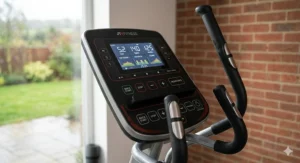
The ultra-quiet magnetic system operates below 20 decibels according to specifications, though real-world use in a semi-detached suggests it’s marginally louder — still quiet enough that you won’t wake the household during early morning sessions. The MERACH app connectivity provides guided workouts and progress tracking, though the interface feels less polished than iFit or Zwift. The self-powered display lights up during use without requiring batteries or mains connection, a clever touch that enhances the cable-free experience.
Pros:
✅ Industry-leading 180kg weight capacity for maximum user range
✅ Self-powered system enables flexible placement anywhere
✅ 47cm stride length suits taller users comfortably
Cons:
❌ App interface less sophisticated than premium competitors
❌ Heavier unit (65kg+) complicates repositioning
Currently available in the £450-£550 range on Amazon.co.uk, the MERACH Long Stride offers exceptional capacity-to-price ratio for buyers prioritising weight support and placement flexibility.
3. MERACH E27B1 Elliptical — The Silent Powerhouse
The MERACH E27B1 shares the 180kg weight capacity of its Long Stride sibling whilst focusing obsessively on noise reduction. This model achieved genuine acclaim amongst UK flat-dwellers whose neighbours complained about previous machines — the magnetic resistance system genuinely approaches library-quiet operation. The steel and aluminium construction balances durability with a manageable 65kg unit weight, whilst the 16-level magnetic resistance caters from rehabilitation pace through to serious cardiovascular training.
What British buyers particularly appreciate about this model is the absence of assembly headaches. Most heavy duty cross trainers arrive as dozens of components requiring two people and three hours. The E27B1 ships in a more logical configuration that one moderately competent person can assemble in roughly 90 minutes. The pulse sensors on both handlebar sets provide basic heart rate monitoring, though serious athletes will want a chest strap for accuracy during intense sessions.
The reinforced frame handles intensive use without the gradual loosening that plagues mid-range machines after six months. UK reviewers note the machine stays tight and stable even after hundreds of hours, with no need for constant bolt-tightening. The LCD display tracks standard metrics but won’t win design awards — functional rather than flashy. The 42cm stride proves adequate for users up to about 1.85m, though taller individuals might find it slightly restrictive during extended sessions.
Pros:
✅ Exceptional quiet operation for flats and shared spaces
✅ 180kg capacity in the mid-£500s represents strong value
✅ Solid construction maintains stability through intensive training
Cons:
❌ Stride length less generous than premium alternatives
❌ Basic LCD display lacks modern touchscreen features
In the £500-£600 bracket on Amazon.co.uk, the MERACH E27B1 delivers commercial-grade capacity and build quality whilst addressing the noise concerns that eliminate many cross trainers from UK apartment living.
4. Dripex Cross Trainer — Budget-Friendly Reliability
The Dripex Cross Trainer demonstrates that heavy duty needn’t mean expensive, delivering a sturdy 120kg weight capacity with an 8kg flywheel for around £320. This magnetic elliptical won’t intimidate buyers new to home fitness whilst providing enough resistance (16 levels) and build quality to sustain regular training. The heavy-duty steel frame uses high-density carbon steel rather than the flimsy tubing found on bargain models, contributing to the stable feel during use.
For UK buyers working with limited budgets or uncertain whether they’ll maintain consistent training, this model reduces the financial risk substantially. The 38cm stride length suits users up to approximately 1.75m comfortably, though taller individuals will notice the restriction during longer sessions. The hyper-quiet magnetic drive system genuinely operates around 20 decibels as claimed, making this viable for flats or terraced housing where noise travels through party walls.
British customer feedback highlights straightforward assembly — roughly 60-90 minutes for one person following the illustrated instructions. The dual handlebar design offers both moving arms for full-body engagement and stationary grips for lower-body focus, whilst the LCD monitor tracks time, distance, speed, calories, and pulse through handlebar sensors. The included transport wheels facilitate moving despite the substantial construction, helpful when reclaiming living room space after training sessions.
Pros:
✅ Accessible pricing around £320 reduces entry barrier
✅ Quiet operation suits noise-sensitive living situations
✅ 120kg capacity handles most UK users adequately
Cons:
❌ Shorter 38cm stride restricts taller users
❌ Lower weight capacity excludes heavier athletes
The Dripex Cross Trainer occupies the sweet spot around £320 for buyers seeking robust construction and reliable performance without the £500+ investment that commercial-grade models demand.
5. Cowmew Elliptical Cross Trainer — Stability Specialist
The Cowmew Elliptical delivers 150kg maximum capacity with a thickened steel frame that British users consistently describe as reassuringly solid. This magnetic cross trainer features an 8kg flywheel driving 16 resistance levels, whilst the 42cm stride length accommodates most users comfortably. What distinguishes this model in the crowded £300-350 bracket is the thoughtful engineering around stability — the frame geometry and wide footprint resist the wobbling that afflicts cheaper alternatives during intensive sessions.
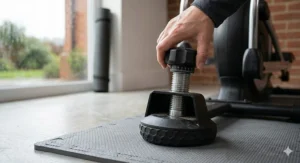
For UK buyers, the four adjustable stabilisers prove particularly valuable given our housing stock’s fondness for floors that aren’t quite level. Whether you’re training in a Victorian terrace with original floorboards or a modern flat with slightly uneven concrete screed, the independent levelling feet ensure stable operation. The ultra-quiet magnetic system operates smoothly across all resistance levels, making this viable for early morning or late evening sessions without disturbing household members.
The LCD monitor provides standard metrics including pulse monitoring through handlebar sensors, whilst the device holder accommodates tablets for entertainment during longer sessions. British reviewers note the machine maintains tight, stable operation even after hundreds of hours of use — no gradual loosening requiring constant maintenance. The compact dimensions (approximately 130 x 70cm footprint) suit UK living spaces better than sprawling commercial models, whilst transport wheels facilitate repositioning despite the robust construction.
Pros:
✅ Strong 150kg capacity at mid-range pricing
✅ Excellent stability through thickened frame construction
✅ Compact footprint suits smaller UK homes
Cons:
❌ Assembly instructions could be clearer
❌ Basic LCD display feels dated compared to app-connected alternatives
Available around £300-£350 on Amazon.co.uk, the Cowmew Elliptical provides excellent stability and build quality for buyers seeking dependable performance in the mid-range price bracket.
6. Neezee Cross Trainer — Compact Powerhouse
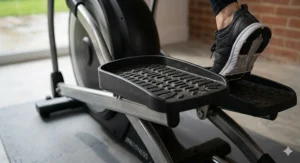
The Neezee Cross Trainer packs 150kg weight capacity into a relatively compact package, making this magnetic elliptical particularly suitable for UK homes where space comes at a premium. The 8kg flywheel drives 16 levels of magnetic resistance, whilst the enhanced 42cm stride accommodates users up to roughly 1.85m height. What British buyers particularly value is the machine’s ability to deliver stable, quiet operation whilst maintaining a footprint that won’t dominate smaller rooms.
For UK living situations — flats, terraced housing, compact new builds — the space efficiency proves critical. This cross trainer occupies approximately 130 x 70cm floor space, manageable even in bedrooms or compact home gyms. The transport wheels facilitate moving, whilst the adjustable stabilisers compensate for uneven floors common in older UK properties. The ultra-quiet magnetic system genuinely operates below 20 decibels as specified, making this viable for noise-sensitive situations including upstairs flats or shared walls.
British customer feedback highlights straightforward assembly taking 60-90 minutes, with clearly marked components and stage-by-stage packaging. The LCD monitor tracks standard metrics, whilst handlebar pulse sensors provide basic heart rate monitoring. The device holder accommodates tablets though you’ll want to position entertainment at eye level to avoid neck strain during extended sessions. The 12-month parts replacement warranty and responsive customer service (messages answered within 24 hours according to UK buyers) provide reassurance for purchase decisions.
Pros:
✅ Compact design suits space-limited UK homes
✅ 150kg capacity handles most users comfortably
✅ Responsive UK-friendly customer service
Cons:
❌ Stride length somewhat restrictive for taller users
❌ Some customers report actual stride feels shorter than specified
The Neezee Cross Trainer delivers solid performance in the £310-£340 range for buyers prioritising compact dimensions alongside respectable weight capacity and quiet operation.
7. NordicTrack Commercial 9.9 — Technology-Driven Premium Option
The NordicTrack Commercial 9.9 brings gym-standard engineering with a substantial 11kg flywheel, 159kg maximum user weight, and adjustable 45-48cm stride length. This front-drive elliptical features 22 levels of digital resistance plus a 0-20% incline range that automatically adjusts during iFit-guided workouts. For UK buyers who value interactive training and are prepared to invest in the £850-950 bracket, this model delivers exceptional versatility.
What sets the Commercial 9.9 apart for British users is the iFit integration that transforms mundane cardio into engaging experiences. The system streams trainer-led workouts filmed globally, automatically adjusting resistance and incline to match terrain — you’re essentially running up Ben Nevis or cycling through the Lake District whilst your machine handles the simulation. The 30-day iFit trial is included, though serious use requires the £39 monthly family subscription. The substantial construction and commercial-grade components justify the premium positioning, whilst the impressive 159kg weight capacity accommodates larger-framed users comfortably.
British buyers should note the considerable footprint (173 x 74 x 174cm) demands dedicated space — this won’t tuck discretely into corners. The adjustable stride length proves particularly valuable for households with multiple users of varying heights, whilst the powder-coated finish resists moisture better than basic paint. Assembly requires two people and approximately two hours, though the comprehensive instructions and video guides reduce frustration. The machine ships with UK plug and voltage compatibility confirmed.
Pros:
✅ Exceptional iFit integration for engaging interactive workouts
✅ Adjustable stride accommodates various user heights
✅ Commercial-grade 11kg flywheel ensures smooth operation
Cons:
❌ iFit subscription (£39/month) adds ongoing expense
❌ Premium pricing around £900 requires serious commitment
The NordicTrack Commercial 9.9 commands £850-£950 on Amazon.co.uk, justified for tech-enthusiastic buyers who’ll utilise the iFit ecosystem and appreciate the commercial-grade construction.
Understanding Maximum User Weight Capacity: What British Buyers Should Know
Maximum user weight capacity represents the single most critical specification when selecting a sturdy cross trainer for heavy person use, yet it’s frequently misunderstood. Manufacturers test to specified limits, but real-world durability depends on several factors that most Amazon listings conveniently omit. A machine rated to 120kg doesn’t suddenly collapse at 121kg — rather, consistent use near the stated maximum accelerates wear on bearings, joints, and frame welds.
For UK buyers, I recommend this practical guideline: select a cross trainer rated at least 20-25kg above your current weight. This margin accounts for dynamic loading — your actual force during intensive stride peaks considerably higher than static body weight — whilst ensuring components operate within their optimal stress range. If you weigh 95kg, targeting machines rated 120kg minimum provides longevity. Users exceeding 100kg should seriously consider models rated 150kg or above, with the MERACH machines’ 180kg capacity offering genuine peace of mind for heavier athletes.
The relationship between flywheel mass and maximum capacity also matters more than most realise. Heavier users benefit from substantial flywheels (10kg+) that maintain momentum smoothly rather than jerky resistance that stresses frame joints. The JTX Zenith Rise’s 17kg flywheel isn’t marketing excess — it’s engineering that enables comfortable, controlled motion at 165kg user weight. Budget models with 6kg flywheels and 120kg ratings technically function, but the experience feels laboured and components wear faster.
British living conditions add another dimension rarely discussed. Our damp climate accelerates bearing corrosion, whilst temperature fluctuations in unheated garages stress frame welds and plastic components. Machines with sealed bearing systems (typically mid-range upwards) survive UK conditions far better than exposed bearings that corrode after one winter. The powder-coated frames on models like the JTX and NordicTrack resist moisture damage more effectively than basic painted finishes, though you’ll still want to wipe condensation after sessions if training in unheated spaces.
Reinforced Frame Construction: Engineering That Matters
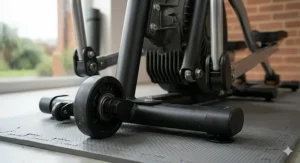
Frame construction separates robust cross trainers from machines that wobble within months, yet most buyers focus on flashy features rather than structural integrity. The difference comes down to three elements: steel gauge thickness, weld quality, and geometric bracing. Budget cross trainers use thin-walled tubing (1.5-2mm) with minimal cross-bracing, relying on their compact size to maintain rigidity. Heavy duty models employ 2.5-3mm thick steel with strategic reinforcement at stress points.
The JTX Zenith Rise demonstrates proper engineering with visible (though covered) welds at frame joints and substantial cross-bracing beneath the main deck. Those welds might not win beauty contests, but they’re fat and penetrating — the kind that survives years of dynamic loading rather than cracking after months. The MERACH machines use double-thickness construction at critical points, whilst the thickened steel tubing on the Cowmew model creates the reassuringly solid feel that UK buyers consistently mention.
For British buyers evaluating machines on Amazon.co.uk, examining customer photos often reveals more than marketing images. Look for reviews mentioning “no wobbling even during sprints” or “frame stays tight after months” — these indicate proper engineering. Negative reviews citing “loosening bolts requiring constant tightening” or “frame flexing during use” signal inadequate construction regardless of claimed weight capacity. The difference between a £300 machine that handles 150kg comfortably versus one that creaks under 100kg typically resides in frame gauge and weld penetration.
According to UK product safety regulations, fitness equipment must meet EN 957 / ISO 20957 standards covering strength, stability, and durability. Whilst UKCA marking isn’t always prominently displayed on home fitness equipment, reputable manufacturers ensure compliance. The standard specifies minimum frame strength relative to stated weight capacity, though interpretation varies and enforcement relies heavily on customer complaints rather than proactive testing.
Professional Grade Components vs Marketing Hype
The phrase “commercial grade” appears on countless Amazon listings, applied to everything from £250 budget models to genuine gym-standard equipment. Understanding which components genuinely qualify helps buyers separate marketing puffery from legitimate engineering. Professional grade components share specific characteristics: they’re designed for thousands of hours rather than hundreds, use superior materials resisting wear and corrosion, and undergo testing that consumer-grade parts skip.
Bearings represent the clearest distinction. Budget cross trainers use basic ball bearings with minimal sealing — they function adequately in dry, climate-controlled environments but deteriorate rapidly in British garages where moisture and temperature fluctuations wreak havoc. Commercial machines employ sealed cartridge bearings resistant to contamination, often with corrosion-resistant coatings. The difference in lifespan and performance is substantial — budget bearings might last 500 hours before developing notchy resistance, whilst sealed commercial bearings deliver smooth operation past 2,000 hours.
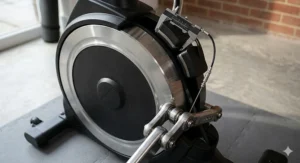
Resistance systems follow similar patterns. Basic magnetic resistance uses fixed magnets moved closer or further from the flywheel via cable systems prone to stretching and binding. Electromagnetic resistance systems (found on JTX Zenith Rise and higher-end NordicTrack models) use powered electromagnets providing precise, infinitely adjustable resistance that won’t drift over time. The electromagnetic systems cost substantially more to manufacture, explaining why they appear on £800+ machines rather than budget alternatives.
Drive systems matter more than most buyers realise, particularly regarding noise and longevity. Belt-driven systems require occasional belt replacement (every 2-3 years with intensive use) but operate quietly and smoothly. Direct-drive systems (less common on UK-market ellipticals) eliminate belt maintenance but typically cost more. The V-belt systems on mid-range machines like the MERACH models represent decent compromises — reasonably quiet, relatively maintenance-free, and sufficiently durable for home use spanning several years.
For UK buyers, focusing on these core components — bearing quality, resistance mechanism, drive system — provides better purchase guidance than screen size or preset workout programmes. A machine with sealed bearings, electromagnetic resistance, and robust frame will serve you far better through British winters than a cheaper alternative with a fancier display that develops bearing noise after six months.
Real-World Scenario: Matching Cross Trainers to UK Users
The London Commuter (35, 88kg, 1.78m tall): Lives in a two-bedroom flat in Zone 3, works from home twice weekly, aims for 30-minute sessions before work. Neighbours below complained about previous treadmill. Budget: £400-600.
Recommendation: MERACH E27B1 — The 180kg capacity provides ample headroom whilst the ultra-quiet operation addresses the neighbour concern. Self-powered system means no cable clutter in the compact spare bedroom setup. The £520 price point fits budget whilst delivering commercial-grade build quality that’ll survive daily use. The 42cm stride accommodates the user’s height comfortably.
The Manchester Suburb Family (Parents: 42 & 39, teens: 16 & 14): Four users ranging 1.65m to 1.88m tall, weights 65kg to 98kg. Training in converted garage with concrete floor. Mixed fitness levels from beginner to intermediate. Budget: £800-1,000.
Recommendation: JTX Zenith Rise — The adjustable 48cm stride accommodates the height range whilst the 165kg capacity handles all users comfortably. The 20-level incline provides progression for improving fitness, whilst the robust construction survives multi-user intensive training. Two-year in-home warranty offers peace of mind for the £999 investment. The powder-coated frame resists the damp garage environment better than basic finishes.
The Peak District Semi-Retiree (58, 102kg, 1.82m tall): Recovering from knee surgery, needs low-impact cardio rebuilding fitness. Training in home gym with uneven flooring. Medical clearance obtained, physiotherapist recommends gradual progression. Budget: £300-500.
Recommendation: Cowmew Elliptical — The 150kg capacity provides comfortable headroom whilst the 16 resistance levels enable gentle rehabilitation progression. The four adjustable stabilisers compensate for uneven flooring, whilst the low-impact elliptical motion suits post-surgical recovery. The £330 price point conserves budget whilst delivering stable, reliable performance. Consider supplementing with physiotherapist-approved programme rather than relying on preset workouts.
How to Choose Heavy Duty Cross Trainer Home in the UK
1. Calculate Genuine Weight Requirement
Add 20-25kg to your current weight for dynamic loading margin. Users over 100kg should target 150kg+ capacity; those exceeding 120kg genuinely benefit from 180kg-rated machines. Remember that intensive training generates forces exceeding static body weight — a 90kg user performing high-intensity intervals effectively loads the machine closer to 110kg.
2. Measure Available Space Accurately
British homes run smaller than American or Australian equivalents — that compact bedroom isn’t as compact once you’ve positioned a cross trainer. Measure length, width, AND ceiling height. Add your height to the machine’s pedal lift height plus 15cm clearance — many buyers discover their 2.3m ceiling won’t accommodate their 1.85m height plus a 36cm pedal lift. Account for swing clearance around moving handlebars too.
3. Assess Noise Tolerance
Flats, terraced housing, and semi-detached properties share walls and floors. Magnetic systems operate quieter than friction-based alternatives, but “whisper-quiet” claims warrant scepticism. Read UK customer reviews mentioning neighbour feedback rather than trusting manufacturer specifications. Ultra-quiet models like the MERACH E27B1 genuinely achieve library-level operation; budget alternatives… less so.
4. Consider Long-Term Maintenance Costs
British climate accelerates corrosion and wear. Machines with sealed bearings, powder-coated frames, and corrosion-resistant components cost more upfront but require less maintenance and replacement. Factor warranty coverage — JTX’s two-year in-home service versus typical one-year parts warranties represents genuine value for UK buyers facing expensive engineer call-outs.
5. Evaluate Stride Length for Height
Stride length specifications correlate imperfectly to comfortable use. As rough guidance: users under 1.70m manage 38cm strides adequately; 1.70-1.85m benefit from 42-45cm; above 1.85m really want 45cm+ for comfortable extended sessions. Cramped strides cause knee and hip discomfort during longer workouts whilst limiting the natural movement pattern that makes ellipticals low-impact.
Common Mistakes When Buying Cross Trainers in the UK
Ignoring UKCA Certification and Safety Standards
British buyers often overlook whether equipment meets UK safety requirements, particularly when purchasing through Amazon’s marketplace sellers shipping from overseas. Whilst UKCA marking isn’t always prominently displayed, equipment should comply with EN 957 / ISO 20957 standards covering stationary training equipment. Imported machines sometimes arrive with 110V US power requirements or non-UK plug configurations — verify UK compatibility explicitly rather than assuming Amazon.co.uk listings guarantee it.
Underestimating Wet Weather Impact
Our perpetually damp climate destroys fitness equipment faster than manufacturers’ specifications account for. Garage-based training in an unheated space means your cross trainer endures condensation, temperature fluctuations, and moisture that corrode bearings and rust frames. Budget machines with basic paint finishes and unsealed bearings deteriorate noticeably within one British winter. If you’re training anywhere unheated or potentially damp, prioritise powder-coated frames and sealed bearing systems even if that means spending £200 more upfront.
Fixating on Digital Features Over Build Quality
Fancy touchscreens, Bluetooth connectivity, and preset programmes impress in Amazon listings but contribute nothing if the frame wobbles or bearings develop noise after six months. British buyers frequently prioritise features over fundamentals, selecting machines with impressive specs but inadequate construction. A basic LCD display on a robust frame delivers better long-term value than a touchscreen on a machine that’ll need replacing within two years.
Neglecting Assembly Complexity
Heavy duty cross trainers arrive as substantial components requiring assembly. British homes typically lack the generous American-style garage workshop space, meaning you’ll be assembling in living rooms or bedrooms with limited manoeuvring space. Underestimating assembly time (budget 90-120 minutes minimum for most models) or assuming one person suffices (many require two for stability during critical steps) leads to frustration. Read UK customer reviews mentioning assembly experience rather than trusting manufacturer claims of “easy assembly.”
Buying US-Voltage Models Accidentally
Amazon’s marketplace includes third-party sellers shipping from the US or Asia. Machines designed for 110V American electrical systems won’t run on UK 230V mains without transformers, whilst some sellers provide adapters rather than proper UK-spec power supplies. Verify explicitly that listings confirm UK voltage compatibility and UK plug configuration — “works in UK” doesn’t always mean designed for UK electrical standards, sometimes merely that an adapter is included.
Long-Term Cost & Maintenance in the UK
The true cost of cross trainer ownership extends beyond the initial purchase price, encompassing maintenance, potential repairs, and eventual replacement. British buyers benefit from calculating total cost of ownership rather than fixating on headline prices. A £300 machine requiring replacement after 18 months costs more annually than a £900 model surviving five years — £200 versus £180 yearly, before accounting for disposal hassle and reassembly time.
Maintenance requirements vary substantially based on component quality and operating environment. Budget machines typically require bolt-tightening every 2-3 months as frame joints gradually loosen under use. Mid-range models with proper engineering maintain tight construction longer, though occasional inspection and adjustment proves prudent. Higher-end machines like the JTX Zenith Rise feature commercial-grade construction rarely requiring intervention beyond basic cleaning.
Belt-driven models need belt inspection annually, with replacement every 2-3 years depending on usage intensity. Belts cost £30-50 plus labour if you’re not confident performing the replacement yourself. Bearing replacement typically becomes necessary after 1,000-2,000 hours on budget models, 3,000+ hours on commercial-grade alternatives — at £8-15 per bearing plus labour, this adds £100-150 to lifetime costs unless you’re mechanically inclined.
British climate considerations add maintenance that overseas buyers avoid. Machines in unheated garages benefit from occasional silicone spray on moving components to displace moisture, whilst frame inspection for rust becomes prudent after wet winters. Bringing machines indoors between sessions proves impractical with 65kg+ units, so selecting corrosion-resistant construction upfront saves maintenance aggravation later.
Warranty coverage significantly impacts long-term costs for UK buyers. JTX’s two-year in-home repair warranty means engineers visit your home to fix issues — substantial value given call-out fees typically start around £80 before parts. Most alternatives offer one-year parts warranties requiring you to arrange and pay for engineer visits or return shipping. Extended warranties sold separately rarely prove worthwhile — insurers structure them profitably, meaning you’d need substantial repairs during the extension period to break even.
For typical UK usage patterns (4-5 sessions weekly, 30-45 minutes each), budget models might deliver 18-30 months before requiring replacement, mid-range alternatives 3-4 years, and commercial-grade machines 5+ years. Calculating annual cost reveals mid-range options like the MERACH machines (£500 / 4 years = £125 annually) often provide better value than budget alternatives (£300 / 18 months = £200 annually) despite higher upfront investment.
UK Regulations, Safety Standards & Legal Requirements
Fitness equipment sold in the UK must comply with safety regulations that manufacturers and importers don’t always prominently advertise. Understanding these requirements helps buyers identify legitimate products versus dodgy imports that might pose safety risks or leave you without recourse if problems arise. The primary standard governing cross trainers is EN 957 / ISO 20957, which specifies safety, strength, and stability requirements for stationary training equipment.
According to official guidance from GOV.UK, the UKCA (UK Conformity Assessed) marking demonstrates compliance with UK safety standards. Since Brexit, this has replaced CE marking for products placed on the Great Britain market (England, Scotland, Wales), though both markings remain valid under transitional arrangements. Northern Ireland continues using CE marking due to the Protocol arrangements.
The EN 957 standard (adopted by BSI as BS EN 957) divides stationary training equipment into classes based on intended use:
- Class A: Not for domestic use, professional applications only
- Class H (Home): Domestic use, lower intensity and duration requirements
- Class S (Studio): Commercial use in supervised settings
- Class I (Institutional): Heavy commercial use in gyms and health clubs
Most cross trainers marketed for “home use” comply with Class H requirements, whilst those claiming “commercial grade” or “gym standard” should meet Class S or I specifications. The distinction matters — Class H equipment undergoes less rigorous testing for durability and intensive use compared to commercial classifications. A machine genuinely rated Class S offers superior longevity for heavy users or intensive training, though manufacturers don’t always specify which classification their products meet.
UKCA and CE marking requirements theoretically ensure products meet minimum safety standards, though enforcement relies heavily on Trading Standards responding to complaints rather than proactive testing. Reputable manufacturers and established brands generally ensure compliance, whilst anonymous imports from third-party Amazon sellers warrant additional caution. Check for:
- Clear manufacturer contact information (UK address or authorised UK representative)
- Declaration of Conformity available on request
- Compliance with electrical safety regulations (BS 1363 for plugs, proper voltage rating)
- Product liability insurance (implied but not always verified)
British buyers enjoy stronger consumer protections than many international markets under the Consumer Rights Act 2015. Products must be “as described, of satisfactory quality, and fit for purpose” — vague specifications creating substantial legal leverage. If a cross trainer claimed to support 150kg collapses under a 130kg user, that constitutes breach of contract regardless of what fine print says. The 14-day cooling-off period for online purchases (Consumer Contracts Regulations) provides additional protection, though you’ll typically bear return shipping costs unless the product is faulty.
For home insurance purposes, fitness equipment over £500 value sometimes requires declaration on contents policies. Check your policy schedule — some insurers automatically cover up to £1,000-2,000 in unspecified items, whilst others require explicit declaration. This rarely matters for theft claims (who’s stealing your 65kg cross trainer?) but becomes relevant for fire or water damage claims.
What to Expect: Real-World Performance in British Conditions
Cross trainers marketed with sunny gym imagery rarely account for British reality — training in a damp garage in November, condensation dripping from bare concrete walls, temperature hovering around 8°C. Understanding how machines perform in actual UK conditions helps set realistic expectations and guides appropriate selection.
Moisture and Corrosion Challenges
British garages and conservatories experience humidity fluctuations that accelerate bearing corrosion and frame rust far faster than specifications account for. Budget cross trainers with basic painted frames show surface rust within months when exposed to condensation. The powder-coated frames on models like the JTX Zenith Rise resist moisture better, though they’re not impervious — periodic inspection and touch-up of any chips prevents rust spreading.
Unsealed bearings corrode particularly quickly in damp environments, developing notchy resistance and potentially seizing completely. Machines with sealed cartridge bearings (typically mid-range upwards) survive British conditions substantially better. If you’re training in an unheated space, occasionally treating exposed metal components with silicone spray or WD-40 displaces moisture and extends bearing life, though this shouldn’t be necessary with properly sealed systems.
Temperature Impact on Performance
Training in unheated spaces means your cross trainer experiences temperature swings from near-freezing overnight to 15-20°C during use as your body heat warms the immediate environment. These fluctuations stress plastic components, which become brittle when cold and expand when warm. Lower-quality plastics crack at joints or lose structural integrity — another reason metal construction with minimal plastic components proves advantageous for garage training.
LCD displays sometimes respond sluggishly in cold temperatures, taking minutes to warm up and become readable. This represents normal LCD behaviour rather than defects, though frustrating when you want to start training immediately. More sophisticated displays with backlighting typically handle temperature extremes better than basic segment displays.
Noise Transmission in British Housing
The physics of sound transmission through British construction matters more than manufacturer noise specifications. Victorian terraced housing with solid brick party walls transmits low-frequency vibration readily — the 20-decibel magnetic resistance might be genuinely quiet, but the structural vibration from 90kg of human striding transfers through floorboards into neighbours’ living spaces.
Modern flats with concrete floors and stud walls present different challenges. Concrete effectively isolates downward vibration (good for downstairs neighbours), but lightweight stud walls transmit airborne sound readily (problematic for adjacent rooms). Positioning machines on rubber mats attenuates vibration substantially, whilst ensuring the frame doesn’t contact walls prevents sound transmission through studs.
Semi-detached properties occupy middle ground — less vibration transmission than terraces, more than detached houses. Late evening or early morning training remains problematic in most semi-detached configurations unless you’re positioned away from party walls. Genuinely ultra-quiet models like the MERACH E27B1 mitigate this somewhat, though physics ultimately limits how quiet rhythmic human motion can be.
Space Constraints and British Living
Marketing images show cross trainers in generous American-style basements or purpose-built gym rooms. British reality typically involves spare bedrooms, corners of living rooms, or converted garages. The space constraints create practical challenges beyond merely fitting the machine.
Adequate clearance around moving handlebars proves essential — manufacturers specify footprint dimensions but rarely mention the additional space required for safe operation. The Zenith Rise’s moving arms swing through a 30cm arc front-to-back, demanding 60cm clearance beyond the machine’s 190cm length for comfortable use. Position too close to walls and you’ll be clipping elbows mid-stride.
Ceiling height calculations require care. Add your height + machine pedal lift height + 10-15cm safety margin. A 1.85m user on a machine with 35cm pedal lift needs 2.30m minimum ceiling height — many British homes with 2.4m ceilings provide adequate clearance, but period properties with 2.25m ceilings become problematic. Loft conversions with sloped ceilings require even more careful assessment.
Features That Actually Matter (And Those That Don’t)
Marketing specifications overwhelm buyers with features competing for attention. Separating meaningful capabilities from pointless additions helps focus purchase decisions on elements that actually improve training experience versus merely looking impressive in Amazon listings.
Features Worth Paying For:
Stride Length Adjustment — For households with multiple users of varying heights, adjustable stride length (like the NordicTrack 9.9 offers) provides genuine utility. Fixed stride machines force compromise where some users feel cramped whilst others don’t achieve full extension. Worth £100-150 premium in multi-user households; unnecessary for solo training.
Electromagnetic Resistance — The precision and longevity of electromagnetic systems justifies the premium on machines £700+. If you’re committed to years of regular training, electromagnetic resistance maintains consistent performance whilst cable-operated magnetic systems gradually drift and require adjustment. Budget buyers accept manual magnetic systems as adequate compromise.
Sealed Bearing Systems — Absolutely worth prioritising for UK buyers training in damp environments. The £50-100 cost difference between models with sealed versus exposed bearings pays for itself within 18 months through eliminated maintenance and extended lifespan. This matters more than almost any other specification.
Substantial Flywheel Mass — Flywheels 8kg+ deliver noticeably smoother motion than lightweight alternatives, particularly for heavier users generating substantial force. The 17kg flywheel on the JTX Zenith Rise costs more to manufacture and ship, but creates gym-standard smoothness justifying premium positioning.
Features Offering Marginal Value:
Preset Workout Programmes — Machines boasting 20+ preset programmes sound impressive until you realise you’ll use 2-3 maximum. Manual resistance adjustment provides all the flexibility most users need. Don’t pay £100 extra for programmes you’ll ignore after the novelty wears off.
Heart Rate Monitoring — Handlebar pulse sensors provide crude approximations. Serious athletes already own chest straps or wrist-based monitors providing superior accuracy. Built-in pulse monitoring shouldn’t influence purchase decisions — consider it a minor bonus rather than meaningful feature.
Bluetooth Connectivity — Useful if you’ll genuinely utilise connected apps for motivation and tracking. Largely irrelevant if you’re content with standalone operation. Don’t let absence of Bluetooth eliminate otherwise excellent machines from consideration — a £15 fitness tracker provides equivalent functionality.
Touchscreen Displays — Premium machines justify touchscreen costs through meaningful integration (iFit on NordicTrack). Budget machines adding touchscreens typically sacrifice build quality elsewhere to hit price points. A basic LCD on a robust frame beats a touchscreen on a wobbly frame every time.
Features Actively Misleading:
“Commercial Grade” Claims on Sub-£500 Machines — Genuine commercial equipment undergoes thousands of hours of intensive multi-user testing. £400 machines might be decent home equipment but aren’t commercial grade regardless of marketing claims. The designation means specific testing and component standards that cheap alternatives don’t meet.
Weight Capacity Numbers — Treat these sceptically and subtract 15-20kg from claimed maximums for realistic assessment. A machine claiming 150kg capacity might technically support that weight stationary, but dynamic loading during intensive training tells different story. Buy with comfortable margin above your weight.
“Ultra-Quiet” Specifications — Decibel numbers mean little without context. A 20dB magnetic system still transmits structural vibration through floorboards in British housing. Focus on UK customer reviews mentioning noise in similar living situations (flats, terraces, shared walls) rather than manufacturer specifications.
FAQ: Heavy Duty Cross Trainers for UK Homes
❓ What weight capacity cross trainer do I need if I'm 100kg?
❓ Are heavy duty cross trainers suitable for upstairs flats in the UK?
❓ How long do heavy duty cross trainers last in British garages?
❓ Do I need UKCA marking on cross trainers purchased from Amazon UK?
❓ What's the minimum ceiling height needed for home cross trainers?
Conclusion: Selecting Your Heavy Duty Cross Trainer
Choosing a sturdy cross trainer for heavy person use in the UK market ultimately balances capacity, construction quality, space constraints, and budget against your specific training goals and living situation. The robust cross trainer reviews presented here span £300-1,000 price brackets, each delivering different value propositions suited to distinct buyer profiles.
For buyers prioritising maximum user weight capacity and willing to invest in premium construction, the JTX Zenith Rise at around £999 represents the pinnacle of what British home fitness equipment offers. The 165kg capacity, 48cm stride, and commercial-grade components justify the investment for serious athletes or larger-framed users training intensively. The two-year in-home warranty provides peace of mind whilst the powder-coated frame resists British climate challenges better than budget alternatives.
The MERACH Long Stride and E27B1 occupy the sweet spot for many UK buyers, delivering exceptional 180kg capacity with self-powered convenience or ultra-quiet operation respectively in the £500-600 bracket. These models provide commercial-grade weight support without requiring the £1,000 investment that JTX demands, making them particularly attractive for buyers who need robust construction but value budget efficiency.
Budget-conscious buyers or those uncertain about maintaining consistent training benefit from the £300-350 trio of Dripex, Cowmew, and Neezee cross trainers. Whilst these models sacrifice some capacity (120-150kg) and premium features, they deliver stable, reliable performance sufficient for regular home training. The Cowmew particularly impresses with thickened frame construction providing stability that punches above its price point.
Technology enthusiasts prepared to invest in iFit subscriptions should seriously evaluate the NordicTrack Commercial 9.9 around £900. The interactive training ecosystem transforms mundane cardio into engaging experiences, though the ongoing £39 monthly subscription adds substantial long-term cost beyond initial purchase.
Ultimately, the “best” heavy duty cross trainer home depends entirely on your specific situation. A 95kg user in a London flat prioritising quiet operation makes vastly different selections than a 115kg athlete training in a Manchester garage prioritising maximum capacity and durability. The reviews and guidance presented here equip you to make informed decisions aligned with your requirements rather than marketing claims.
Whatever you select, prioritise machines available on Amazon.co.uk with verified UK delivery, proper voltage compatibility, and responsive customer service. The convenience of Amazon Prime delivery and straightforward returns provides safety net if machines arrive damaged or prove unsuitable — advantages worth considering versus grey-market imports or dodgy third-party sellers.
Recommended for You
- Most Reliable Cross Trainers UK: 7 Built to Last (2026)
- 7 Best Simple Cross Trainer for Beginners UK 2026
- Best Standard Cross Trainer Under £300 UK: 7 Expert Picks (2026)
Disclaimer: This article contains affiliate links. As an Amazon Associate, I earn from qualifying purchases. If you purchase products through these links, we may earn a small commission at no additional cost to you.
✨ Found this helpful? Share it with your mates! 💬🤗
