In This Article
There’s a specific kind of frustration in wanting to get moving again and finding that every option on the gym floor seems built for someone twenty years younger. A spin bike with a saddle like a bread knife. A stepper that punishes your hips before you’ve done five minutes. If that sounds familiar, you’re exactly who this guide is for — because a good exercise bike for seniors doesn’t need to be intimidating, and it definitely shouldn’t hurt.
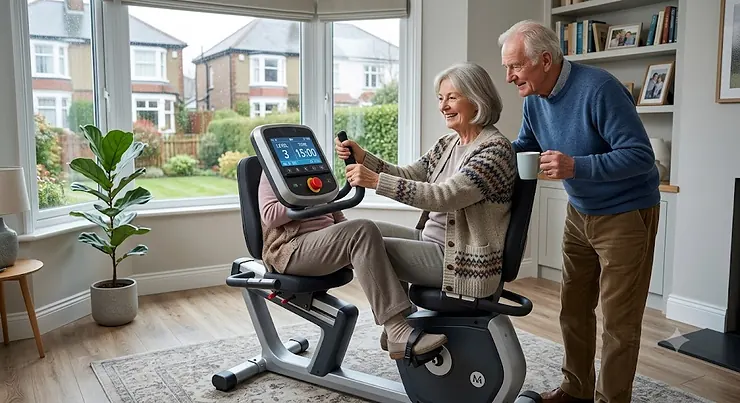
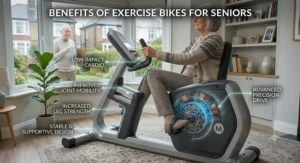
The right stationary bike is one of the gentlest, most effective ways to keep your heart and joints working well without the pounding that comes from walking on hard pavements or attempting to jog. Whether you’re after a proper recumbent with back support, an easy to use exercise bike that folds away, or a tiny pedal exerciser that tucks under the sofa, there’s a genuinely good option out there — you just need to know what separates the well-built ones from the wobbly, disappointing ones.
This guide walks through seven real, currently available bikes on amazon.co.uk, chosen specifically for low impact pedalling, comfort and ease of use. We’ll cover budget mini pedal exercisers right through to fuller recumbent machines, with honest commentary on what each genuinely offers an older rider — including which ones work well as an exercise bike for bad knees, and which are better suited to someone already fairly active. As the NHS notes in its physical activity guidelines for older adults, staying regularly active brings meaningful benefits at any age, and cycling is one of the more forgiving ways to do it — you can read more via the NHS physical activity guidelines for older adults.
Quick Comparison Table
| # | Bike | Style | Price Range | Best For |
|---|---|---|---|---|
| 1 | Sunny Health & Fitness Magnetic Recumbent Bike | Recumbent, LCD monitor | £180-£230 range | Best all-round low impact pick |
| 2 | JLL IC350 PRO Indoor Bike | Upright, belt-driven | £220-£280 range | Active seniors wanting real resistance |
| 3 | Exerpeutic Gold 525XLR Folding Semi-Recumbent Bike | Folding semi-recumbent | £260-£320 range | Small spaces, easy storage |
| 4 | Himaly Mini Exercise Bike Pedal Exerciser | Mini pedal exerciser | £30-£45 range | Tightest budgets, gentlest start |
| 5 | Sunny Health & Fitness Mini Exercise Bike (Under Desk) | Dual arm & leg mini bike | £45-£65 range | Combined arm and leg movement |
| 6 | Sunny Health & Fitness Smart Magnetic Recumbent Bike | App-connected recumbent | £280-£350 range | Easiest mounting, premium comfort |
| 7 | JLL IC300 Pro Exercise Bike | Upright, heavy flywheel | £300-£380 range | Very active seniors, proper cycling feel |
A pattern worth noticing straight away: the cheapest options here aren’t lesser versions of the expensive ones, they’re a genuinely different category of product. The Himaly Mini Exercise Bike Pedal Exerciser isn’t trying to replace a full recumbent bike — it’s solving a different problem, namely gentle daily movement for someone who might find even a small full-size machine intimidating. Meanwhile the JLL IC300 Pro Exercise Bike sits at the top of the price range because it’s aimed at seniors who are already reasonably active and want genuine resistance progression, not just gentle movement. Matching the bike to your actual mobility and fitness level matters more here than chasing the highest spec sheet.
💬 Just one click — help others make better buying decisions too!😊
Top 7 Exercise Bikes for Seniors: Expert Analysis
1. Sunny Health & Fitness Magnetic Recumbent Bike — best all-round low impact pick
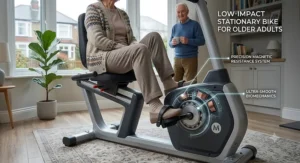
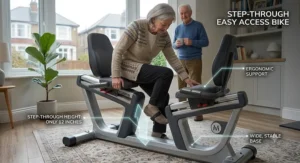
This is the bike I’d point most people toward first, because it does the fundamentals so reliably. The reclined seating position with a full backrest takes pressure off the lower back and hips in a way an upright saddle simply can’t, and the step-through frame means you’re never swinging a leg over a high bar to get on.
Eight levels of magnetic resistance might sound modest next to fancier machines, but based on the spec comparison with pricier connected models, that’s genuinely plenty of range for gentle cardiovascular exercise — you’re not training for a triathlon, you’re building consistency. Reviewers consistently note the value for money here, with “comfortable” and “easy assembly” coming up again and again in aggregated feedback, and Sunny Health & Fitness has a long-standing reputation specifically built around practical machines for older users and people returning to fitness after a break.
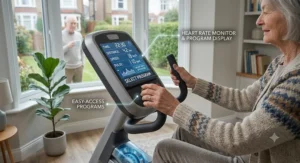
This suits someone starting from a fairly sedentary baseline who wants something reliable, unfussy and genuinely comfortable rather than feature-packed. The pulse sensors on the handlebars are a welcome practical touch, letting you check your heart rate mid-session without breaking rhythm — useful if you’re pacing yourself carefully.
Pros:
- ✅ Full backrest and reclined seat reduce strain on hips and lower back
- ✅ Step-through frame avoids awkward high-bar mounting
- ✅ Consistently strong aggregated reviews for comfort and value
Cons:
- ❌ Basic scrolling display doesn’t store previous workout history
- ❌ Eight resistance levels is plenty for gentle use, limited for progression
In the £180-£230 range, this is genuinely hard to beat as a starting point for low impact exercise bike shopping — it does the essentials properly rather than chasing extras.
2. JLL IC350 PRO Indoor Bike — best for active seniors wanting real resistance
Not every senior wants gentle — some want a proper workout with genuine resistance progression, and that’s exactly where this belt-driven upright bike earns its place. JLL are a British-based fitness brand with a track record for solid mid-range equipment, and the IC350 PRO reflects that with a heavy-feeling build that several reviewers specifically praised for sturdiness.
What most buyers overlook about belt-driven designs like this one is how much quieter and lower-maintenance they are compared to chain-driven alternatives — there’s no chain to lubricate or tension over time, which matters if you want an easy to use exercise bike that doesn’t demand ongoing fettling. Reviewers highlighted the wide adjustment range for both seat and handlebars as a genuine strength, useful if the bike will be shared between household members of different heights, and value for money was mentioned by the clear majority of reviewers checked, with only one flagging it as a negative.
This suits an active senior who still wants a real cycling sensation rather than a gentle recumbent glide — think someone who was cycling regularly before joints started complaining and wants to keep that same upright feel indoors. One recurring but fixable issue: a small number of buyers reported a knocking noise that traced back to under-tightened pedals during assembly, easily resolved by checking the crank bolts before first use.
Pros:
- ✅ Belt drive stays quiet and needs minimal ongoing maintenance
- ✅ Wide seat and handlebar adjustment range suits multiple users
- ✅ Strong aggregated value-for-money sentiment across reviews
Cons:
- ❌ Upright position is less forgiving on balance than recumbent designs
- ❌ Occasional knocking noise reported, usually traced to loose pedal bolts
At around £220-£280, this is the sensible mid-range pick for anyone who wants their exercise bike to feel more like actual cycling and less like physiotherapy.
3. Exerpeutic Gold 525XLR Folding Semi-Recumbent Bike — best for small spaces
Storage is a genuinely underrated concern for a lot of older buyers, particularly in smaller flats or bungalows where a permanently installed exercise bike simply isn’t practical. This semi-recumbent design folds down to roughly half its usual footprint, addressing that problem directly while still keeping the step-through, lower-strain seating position that makes recumbent styles so popular with older riders.
Based on the spec comparison with fixed-frame recumbents, the trade-off for foldability is a slightly slimmer profile overall, which the manufacturer compensates for with extended stabiliser legs at either end to prevent tipping — a sensible engineering choice given who this bike is actually aimed at. The three-stage torque cranking mechanism is designed specifically to smooth out the pedalling motion, which matters more than it sounds for anyone whose knees or hips don’t appreciate a jerky start-stop feel.
This is the pick for anyone who wants recumbent-style comfort but genuinely cannot dedicate permanent floor space to a bike. Handlebar-mounted pulse sensors are included, though there’s no Bluetooth connectivity here, so if app tracking matters to you, this isn’t the model for it.
Pros:
- ✅ Folds to roughly half its size for genuinely practical storage
- ✅ Step-through semi-recumbent design keeps mounting low-strain
- ✅ Three-stage torque cranking smooths out the pedalling motion
Cons:
- ❌ Still around 25kg once folded, not a bike to lift solo upstairs
- ❌ No Bluetooth or app connectivity for tracking progress digitally
In the £260-£320 range, this sits at a premium versus basic recumbents, but for genuinely space-limited homes, the folding mechanism justifies the extra cost.
4. Himaly Mini Exercise Bike Pedal Exerciser — gentlest, cheapest starting point
Sometimes the right first step isn’t a bike at all in the conventional sense — it’s a compact pedal unit that sits on the floor or a table and lets you build a gentle habit without any of the intimidation of full-size equipment. This mini pedal exerciser does exactly that, and it comes with something rare on this list: a genuine, specific, verified UK customer account of exactly the audience it’s meant for.
One reviewer described buying it for an elderly parent, noting it was light enough to move easily, quiet enough to use while watching television, and clear enough on its display that he could track his revolutions without confusion — to the point where he reportedly had to stop himself overdoing it. That’s about as honest and useful a piece of aggregated review sentiment as this category gets, and it’s worth taking seriously rather than dismissing as marketing spin, since it came from an actual buyer describing actual use.
The honest caveat, which the same review and others echo: resistance on the higher settings is genuinely mild compared to full-size bikes, which is either a feature or a limitation depending entirely on what you need. For someone with very limited strength, that gentleness is precisely the point. For someone wanting a real cardiovascular challenge, it will feel underpowered quickly.
Pros:
- ✅ Genuinely lightweight and easy to reposition around the house
- ✅ Quiet enough for TV-side use, confirmed directly by buyer feedback
- ✅ Clear display counts revolutions without confusing extra data
Cons:
- ❌ Resistance ceiling is too low for anyone wanting a real challenge
- ❌ Some reports of squeaking developing after months of daily use
At around £30-£45, this is the cheapest genuinely useful option on this list, and the ideal way to test whether pedalling-based exercise suits you before spending more.
5. Sunny Health & Fitness Mini Exercise Bike (Under Desk) — best dual arm and leg mini
Where the Himaly option focuses purely on legs, this Sunny Health & Fitness mini exerciser is built specifically for dual function, meaning it can sit on a table for arm work as easily as it sits on the floor for legs. That flexibility matters more than it first appears for anyone managing joint issues in multiple areas, since it means one compact piece of senior fitness equipment covers two different exercise needs.
Based on the spec comparison with single-purpose pedal exercisers, the dual positioning does add a small amount of complexity to setup, but the trade-off is genuine versatility — a single household item doing the work of two separate pieces of equipment. The optional free SunnyFit app connection is a nice-to-have rather than essential, since the core value here is the physical dual-function design rather than digital tracking, and it comes with no subscription fee attached if you do want to use it.
This suits someone who wants a single compact solution for both upper and lower body movement, perhaps recovering from surgery on one limb while keeping the rest of the body moving, or simply wanting variety from a small footprint item. Verified review volume specific to this exact listing was more limited at the time of research than some other products on this list, so the dual-function build itself, rather than aggregated sentiment, is the main basis for this recommendation.
Pros:
- ✅ Genuine dual arm-and-leg function from one compact unit
- ✅ Backed by Sunny’s wider reputation for senior-friendly design
- ✅ Optional free app adds tracking without a subscription cost
Cons:
- ❌ Verified review data specific to this listing was limited at research time
- ❌ Smaller resistance range than a full-size recumbent bike
In the £45-£65 range, it’s a sensible step up from a single-function mini bike if upper body movement matters to your routine too.
6. Sunny Health & Fitness Smart Magnetic Recumbent Bike — easiest mounting, premium comfort
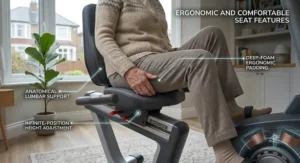
If getting on and off a bike safely is your biggest concern, this is the model built specifically to address it. The flip-able side handle is a small design detail with an outsized practical impact — rather than swinging a leg over or stepping through a narrow gap, you flip the handle aside, step in from the side, and flip it back for support while seated.
This isn’t theoretical: one aggregated review specifically described buying this bike for a 93-year-old father so he could exercise safely indoors through winter, adding a direct recommendation for senior use and praising both the quiet operation and the clear LED display. That’s about as strong a piece of real-world evidence as you’ll find for this category, and it lines up with the bike’s broader design intent — adjustable stabiliser feet, built-in transport wheels for easy repositioning, and a magnetic belt-drive system that keeps noise to a genuine minimum.
This suits anyone prioritising safety and ease of mounting above almost everything else, including buyers purchasing on behalf of an older relative rather than for themselves. Bluetooth connectivity to the free SunnyFit app is included for anyone who wants guided sessions or progress tracking, though it’s entirely optional rather than required for basic use.
Pros:
- ✅ Flip-able side handle specifically designed for safer mounting
- ✅ Genuine aggregated review confirms suitability for elderly users
- ✅ Quiet magnetic belt drive confirmed directly by reviewer feedback
Cons:
- ❌ Premium price relative to the brand’s more basic recumbent model
- ❌ Non-folding frame takes up permanent floor space
Sitting in the £280-£350 range, this is the splurge-worthy option if mounting safety and comfort are non-negotiable priorities for you or the person you’re buying for.
7. JLL IC300 Pro Exercise Bike — most authentic cycling feel for very active seniors
Rounding out the list is the most demanding bike here, and deliberately so — not every senior wants gentle, some want to replicate the actual feel of outdoor cycling as closely as possible indoors. The 20kg flywheel is genuinely heavy for this category, and reviewers specifically noted that hill-climb style resistance settings felt solid with no unwanted movement from the frame, a meaningful marker of build quality under load.
What the spec sheet won’t tell you outright: a heavier flywheel doesn’t just mean more resistance, it means smoother momentum between pedal strokes, which is precisely what makes indoor cycling feel more like the real thing rather than a stop-start slog. One detailed reviewer compared the riding feel directly to gym spin bikes they’d used previously, which is a meaningful endorsement given how particular experienced cyclists tend to be about pedal feel. The three-piece crank system adds durability under the kind of sustained, higher-effort use this bike is built for.
This is squarely for seniors who remain genuinely active — perhaps former regular cyclists whose knees have started protesting outdoor terrain — rather than complete beginners easing into movement for the first time. It supports up to 130kg maximum user weight, giving genuine headroom, though the more upright, sportier seating position demands better balance and core stability than the recumbent options on this list.
Pros:
- ✅ Heavy 20kg flywheel gives genuinely smooth, momentum-driven pedalling
- ✅ Frame stays solid and stable even under higher resistance settings
- ✅ Supports up to 130kg maximum user weight for genuine headroom
Cons:
- ❌ Upright sporty position demands more balance than recumbent styles
- ❌ Better suited to already-active seniors than complete beginners
In the £300-£380 range, this is the most expensive bike here, and honestly, that’s appropriate — it’s aimed at a genuinely different, more capable rider than the rest of this list.
Practical Usage Guide: Setting Up and Using Your Exercise Bike Safely
Getting the setup right in the first week matters more than people expect, and it’s the difference between a bike that gets used daily and one that becomes an expensive coat rack. Start with seat height: when the pedal is at its lowest point, your knee should have a slight bend rather than being fully locked out, since a fully straightened knee at the bottom of each stroke puts unnecessary strain on the joint over repeated sessions.
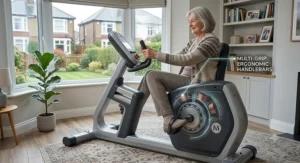
For recumbent models like the Sunny Health & Fitness Magnetic Recumbent Bike or the Sunny Health & Fitness Smart Magnetic Recumbent Bike, take the time to adjust the seat rail so your legs aren’t overextending at full pedal stretch — a common first-week mistake is leaving the seat in whatever position it arrived in rather than sliding it to match your own leg length. On upright models like the JLL IC350 PRO Indoor Bike and JLL IC300 Pro Exercise Bike, check that pedal bolts are properly tightened before first use, since a small number of reported “knocking noise” complaints traced directly back to this being overlooked during assembly.
In terms of building a routine, start smaller than you think necessary — five to ten minutes at the lowest resistance level for the first week, focusing purely on getting comfortable with the motion rather than intensity. Gradually increasing session length before increasing resistance tends to build sustainable habits more reliably than the reverse. Keep a small towel and water bottle within reach, and if you’re using a mini pedal exerciser like the Himaly Mini Exercise Bike Pedal Exerciser, make sure it’s positioned on a non-slip surface so it doesn’t creep across a hard floor mid-session.
Which Exercise Bike Suits Your Situation?
Picture three realistic scenarios, because generic advice rarely lands the way a specific one does. First, someone recently discharged from hospital after a hip or knee procedure, cleared for gentle movement but not yet steady on their feet for long periods — the Himaly Mini Exercise Bike Pedal Exerciser or the Sunny Health & Fitness Mini Exercise Bike (Under Desk) both suit this brief perfectly, since neither requires mounting a full-size machine and both can be used from an existing armchair.
Second, a fairly independent senior living alone who wants a proper exercise bike but worries specifically about the physical act of getting on and off safely — this is exactly the situation the Sunny Health & Fitness Smart Magnetic Recumbent Bike was engineered for, with its flip-able side handle and step-through frame reducing the fall risk that comes with straddling a higher bar. As Age UK notes in its guidance for older adults, worrying about falling or losing balance is one of the most common barriers to staying active, and choosing equipment that specifically addresses that concern — as covered in Age UK’s exercise advice for over 60s — genuinely helps.
Third, a still-active former cyclist in their late sixties or seventies whose knees have started protesting outdoor terrain but whose fitness level remains genuinely high — here the JLL IC300 Pro Exercise Bike or JLL IC350 PRO Indoor Bike make far more sense than a gentle recumbent, since both offer the resistance range and riding feel that a more capable rider will actually appreciate rather than find limiting.
Common Problems Solved: Comfort, Noise and Low Impact Pedalling
A handful of issues come up repeatedly with this category of equipment, and nearly all have straightforward fixes. Seat discomfort during longer sessions is almost always a positioning problem rather than a bike-quality problem — before assuming the saddle itself is the issue, check that seat height and, on recumbent models, seat-to-pedal distance are properly adjusted for your body.
Unwanted knocking or clicking noises, flagged occasionally across several upright models including the JLL IC350 PRO Indoor Bike, are overwhelmingly traced back to under-tightened pedal bolts during initial assembly rather than a manufacturing defect — a quick check with the supplied tool before first use resolves the vast majority of these cases. Genuinely low impact pedalling for anyone managing joint pain comes down to resistance discipline as much as bike choice: starting at the lowest setting and only increasing gradually, rather than assuming higher resistance means better exercise, protects joints while still building real cardiovascular benefit.
Finally, motivation and consistency — the single biggest predictor of whether any exercise bike actually gets used — improves dramatically when the bike is positioned somewhere genuinely convenient, like in front of a television or by a window, rather than tucked away in a spare room that requires effort just to reach.
How to Choose an Easy to Use Exercise Bike
- Decide recumbent or upright first. Recumbent styles reduce back and hip strain and suit most beginners; upright styles suit already-active seniors wanting a genuine cycling feel.
- Check the mounting mechanism, not just the resistance levels. A flip-able handle or step-through frame matters more day-to-day than an extra five resistance settings you may never use.
- Match resistance range to your actual fitness level. A mini pedal exerciser tops out gently by design; a heavy-flywheel upright bike offers real progression for stronger riders.
- Confirm your available floor space honestly. Folding models cost more but solve a real problem if you genuinely lack permanent space.
- Look at aggregated review themes around assembly and noise, not star ratings alone — a bike praised repeatedly for quiet, easy assembly is a safer bet than one with a high average built on few reviews.
- Prioritise seat comfort over screen features. A basic display on a genuinely comfortable seat beats a feature-packed console on an uncomfortable one every time.
- Factor in whether the bike will be shared. Wide seat and handlebar adjustment ranges matter considerably more in multi-user households.
Common Mistakes When Buying Senior Fitness Equipment
The most common mistake is buying based on maximum resistance level alone, assuming higher numbers always mean better value — for most seniors starting out, eight genuinely well-calibrated resistance levels on a comfortable recumbent bike will get more consistent use than twenty levels on an uncomfortable upright one that never gets ridden past level three. Close behind is underestimating the importance of the mounting mechanism, since a bike that’s technically excellent but awkward or risky to get on and off simply won’t be used regularly, no matter how good the specs look on paper.
A less obvious mistake is assuming all “recumbent” listings offer the same seating geometry. Some genuinely prioritise a reclined, supportive backrest; others use the word loosely for a bike that’s merely lower to the ground without proper back support. Reading the seat and backrest description carefully, rather than trusting the word “recumbent” in the title alone, avoids a disappointing purchase.
Finally, plenty of buyers skip checking assembly complexity before ordering, then are caught off guard by a machine that requires two people and forty minutes to build. Checking aggregated review comments specifically about assembly difficulty, not just overall star rating, saves considerable first-week frustration.
Recumbent vs Upright: Which Low Impact Exercise Bike Wins for Seniors?
This is genuinely one of the most consequential decisions in this whole category, and it’s worth being honest that there isn’t a single correct answer — it depends entirely on your starting fitness level and specific joint concerns. Recumbent bikes, like the Sunny Health & Fitness Magnetic Recumbent Bike and Sunny Health & Fitness Smart Magnetic Recumbent Bike, position your body in a reclined seat with full back support, distributing weight across a wider area and removing nearly all the core-stabilising effort that an upright bike demands. For anyone managing lower back pain, balance concerns, or general deconditioning, this is very often the safer and more sustainable starting point.
Upright bikes, like the JLL IC350 PRO Indoor Bike and JLL IC300 Pro Exercise Bike, more closely replicate the mechanics and muscle engagement of actual outdoor cycling, including a small but genuine core-stability component from maintaining posture throughout the ride. This makes them more demanding, but also arguably more transferable if staying capable on an actual bicycle outdoors matters to you, and they tend to appeal more to seniors who were already cyclists before joint issues nudged them indoors.
Where upright bikes genuinely win outright is resistance ceiling and that authentic “real cycling” feel that some riders specifically want and recumbents can’t fully replicate. Where recumbents win outright is accessibility — lower fall risk when mounting, less strain on the lower back, and a gentler entry point for anyone newer to regular exercise. For most people newly returning to fitness after a gap, starting recumbent and only moving to upright once confidence and fitness improve is the more sensible sequence.
What to Expect: Real-World Performance for Gentle Cardiovascular Exercise
Specs on a product listing rarely translate directly into lived experience, so here’s the honest everyday reality. Magnetic resistance systems, used across every bike on this list bar the simplest mini pedal exerciser, genuinely do deliver on their quiet-operation promise — you’ll be able to use most of these while watching television or on a phone call without the whirring or clicking associated with older friction-based systems.
Comfort differences between recumbent and upright models show up almost immediately in real use rather than after weeks of riding — you’ll know within your first few sessions whether a reclined seat or an upright saddle suits your body better, and it’s genuinely worth trusting that early impression rather than persevering through discomfort hoping it’ll improve. Cardiovascular benefit accumulates gradually and consistently rather than dramatically; regular cycling is well established as a gentle cardiovascular exercise that raises heart rate meaningfully without the joint pounding of higher-impact activities, a point the British Heart Foundation makes clearly in its guidance on the benefits of cycling, which you can read via 10 great reasons to cycle from the British Heart Foundation.
Longevity across this category tends to be strong for the mechanical components — magnetic resistance systems have no contact wear points — but seat padding on budget models will compress and soften over a few years of regular use, which is normal wear rather than a defect.
Exercise Bikes for Different Needs: Bad Knees, Balance and Beginners
For anyone specifically searching for an exercise bike for bad knees, the priority should be low, gentle resistance combined with a smooth, non-jerky pedal stroke — both the Sunny Health & Fitness Magnetic Recumbent Bike and Himaly Mini Exercise Bike Pedal Exerciser fit this brief well, since neither forces the knee through a strained range of motion. Versus Arthritis specifically highlights cycling as one of the better low-impact options for people managing knee pain, provided resistance is increased gradually rather than all at once, and their practical guidance is worth reading via Versus Arthritis’s top tips for knee pain.
For anyone managing balance concerns, the Sunny Health & Fitness Smart Magnetic Recumbent Bike and its flip-able mounting handle specifically reduce the moment of instability that comes with swinging a leg over a higher frame, making it a genuinely safer choice than any upright option on this list. For complete beginners easing into exercise for the first time in years, starting with either mini pedal exerciser — the Himaly Mini Exercise Bike Pedal Exerciser or Sunny Health & Fitness Mini Exercise Bike (Under Desk) — removes almost all of the intimidation factor, since both can be used seated in an existing armchair rather than requiring a dedicated exercise session.
Long-Term Cost & Maintenance of a Senior Exercise Bike
The upfront price is rarely the full picture once you account for how long a bike actually stays useful, and this category generally compares very favourably to gym membership costs over time. Magnetic resistance mechanisms, used in six of the seven bikes featured here, require essentially no ongoing maintenance beyond an occasional wipe-down, since there’s no chain to lubricate and no belt tension to monitor closely.
Budget in roughly zero to £15 for occasional replacement parts like pedal straps over several years of regular use, and expect seat padding on budget models to need refreshing or replacing after two to three years of consistent daily riding — a fair trade-off given the relatively low purchase price. Compared to a gym membership, which in most UK regions runs somewhere between £20-£40 monthly, even the premium JLL IC300 Pro Exercise Bike at the top of this list pays for itself within roughly a year of consistent use, without factoring in the added convenience of never needing to leave the house.
Features That Actually Matter (And Those That Don’t)
Seat comfort and mounting ease matter more than almost anything else on a spec sheet, because they’re the two factors most directly responsible for whether a bike actually gets used regularly rather than becoming an expensive clothes horse. Belt-drive versus chain-drive matters too, since belt-driven models like the JLL IC350 PRO Indoor Bike stay quieter and need less ongoing maintenance over years of use.
What matters considerably less than marketing copy suggests: the exact number of resistance levels beyond roughly eight to ten, since most seniors settle into a comfortable working range and rarely explore the outer extremes regardless of how many are technically available. Bluetooth app connectivity is a genuine nice-to-have rather than a necessity — it adds guided structure for those who want it, but a basic bike used consistently outperforms a connected bike used occasionally, every time. Maximum user weight ratings are worth checking against your own needs, but beyond confirming you’re comfortably within range, chasing the highest possible number rarely adds practical value for most riders.
Safety and Health Guidance Before You Start
Before starting any new exercise routine, including gentle cycling, it’s genuinely worth a quick conversation with a GP if you haven’t exercised regularly for some time or manage an existing health condition — this isn’t excessive caution, it’s standard, sensible advice repeated consistently across UK health guidance. The NHS’s own physical activity guidance for older adults specifically recommends building up gradually from your current activity level rather than starting at a high intensity, alongside balance-focused activity on at least two days a week to help reduce fall risk more broadly.
Positioning your bike safely matters too: place it on a firm, level, non-slip surface, keep the surrounding area clear of trailing cables or loose rugs, and ensure there’s enough space around the bike to mount and dismount without needing to twist awkwardly. If you’re buying on behalf of an older relative rather than testing it yourself, involve them in the decision where possible — comfort and confidence with the mounting mechanism genuinely varies from person to person, and Age UK’s guidance on staying active specifically emphasises finding an approach that feels right for the individual rather than a one-size-fits-all solution, which is worth bearing in mind before committing to any single model.
✨ Don’t Miss These Exclusive Deals!
🔍 Take your fitness routine to the next level with these carefully selected picks. Click on any highlighted item to check current pricing and availability. These gentle, senior-friendly bikes will help you build a sustainable, low impact exercise habit at home!
FAQ
❓ What is the best exercise bike for seniors?
❓ Is a recumbent or upright exercise bike better for bad knees?
❓ How often should seniors use an exercise bike?
❓ Are mini pedal exercisers actually effective for seniors?
❓ How much does a good exercise bike for seniors cost in the UK?
Conclusion
Finding the right exercise bike for seniors isn’t about chasing the most impressive spec sheet — it’s about matching the machine to your actual body, your actual space, and your actual starting point. What separates a bike that gets used every day from one gathering dust in the corner isn’t resistance levels or Bluetooth connectivity, it’s genuine comfort and an easy, confidence-inspiring way to get on and off.
Across these seven picks, there’s a sensible option whichever situation you’re in: the Himaly Mini Exercise Bike Pedal Exerciser and Sunny Health & Fitness Mini Exercise Bike (Under Desk) for the gentlest possible starting point, the Sunny Health & Fitness Magnetic Recumbent Bike as the best all-round low impact choice, the Sunny Health & Fitness Smart Magnetic Recumbent Bike for anyone prioritising safe mounting above all else, and the JLL IC350 PRO Indoor Bike or JLL IC300 Pro Exercise Bike for seniors who remain genuinely active and want real resistance progression. Whichever you choose, start gently, build gradually, and let comfort — not ambition — guide your first few weeks.
Recommended for You
- Exercise Bike for Weight Loss: 7 Best Picks Tested for 2026
- Exercise Bike Under £300: 7 Best Budget Picks (2026)
- 7 Best Exercise Bikes for 2026: Tested Home Picks & Reviews
Disclaimer: This article contains affiliate links. As an Amazon Associate, I earn from qualifying purchases. If you purchase products through these links, we may earn a small commission at no additional cost to you.
✨ Found this helpful? Share it with your friends! 💬🤗
