In This Article
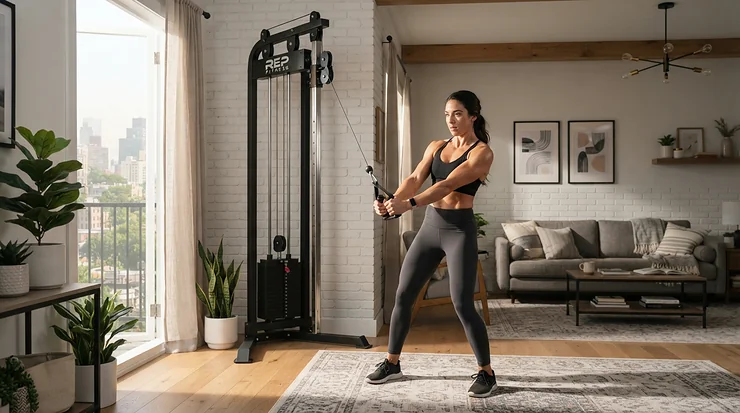
Picture the typical spare-room gym. A bench doubles as a laundry chair, two dumbbells gather dust, and a resistance band hangs off a door handle with misplaced optimism. Now picture one machine that turns that corner into something closer to a commercial gym floor, with a cable handle at every height from ankle to overhead. That is the promise of a functional trainer for home gym use, and it explains why these machines have gone from niche kit to home-gym headline act.
The catch is that buying the wrong functional trainer for home gym training is an expensive, 250-kilo mistake. UK ceilings often sit between 2.2m and 2.4m. Some “dual pulley” machines are really a plate-loaded frame rather than a selectorised trainer. And weight stacks feel lighter than they read, thanks to pulley ratios. This guide untangles all of it.
I compared seven real machines on published specifications and genuine review themes, then translated each number into what it means in your garage, spare room or conservatory. Along the way you’ll see why functional training, which grew out of rehabilitation (see Wikipedia’s overview of functional training), suits cable machines so well. You’ll also see how a dual adjustable pulley system differs from a basic dual pulley system, and which home functional trainer machine suits which kind of home. One housekeeping note: this post contains affiliate links, explained in the disclaimer at the end.
Quick Comparison: Functional Trainer for Home Gym Options at a Glance
| Product | Type | Resistance | Pulley Setup | Price Range | Best For |
|---|---|---|---|---|---|
| Inspire Fitness FTX | Selectorised, freestanding | Two stacks (about 73–75kg each), 2:1 | 30 positions per side | Premium (well above £1,500) | Small rooms, couples, rehab-minded training |
| MuscleSquad Dual Action Pulley | Selectorised, freestanding | 2 x 90kg, 2:1 | 16 positions | £1,500–£1,800 range | Stronger lifters wanting heavier stacks |
| Strongway Cable Crossover 150kg | Freestanding crossover | 150kg total (75kg per side) | Adjustable positions | Check current price | Garages with generous ceilings |
| POWA Gym Freestanding Cable Pulley Machine | Freestanding multi-station | 90kg stack, 2:1 | Adjustable high/low | Check current price | Variety: cables, pull-ups, dips, rows |
| RIP X 180kg Cable Crossover | Freestanding crossover | 180kg total (90kg per side), 2:1 | Fixed high/low swivel pulleys | Around £350–£450 | Tight budgets |
| SPORTNOW Power Cage with Adjustable Cable Pulley System | Rack hybrid | Plate-loaded | 19 positions, 29–173cm | Check current price | Barbell and cable work in one frame |
| SPORTNOW Wall Mount Cable Machine | Wall-mounted | Check listing | 15 positions | Check current price | Compact rooms with solid walls |
Looking at the comparison above, the Inspire Fitness FTX is the only machine that pairs a true selectorised dual adjustable pulley system with a genuinely small footprint. The MuscleSquad Dual Action Pulley gives you heavier stacks for stronger lifters. Budget buyers should notice that the RIP X 180kg Cable Crossover trades adjustability for sheer load per pound spent, and that is a real compromise, not a rounding error.
💬 Just one click — help others make better buying decisions too!😊
Top 7 Functional Trainer for Home Gym Picks: Expert Analysis
I’ve ordered these from premium to budget. For every machine, I explain what the spec sheet means in real life, and I only summarise review sentiment that genuinely exists. Where reliable buyer reviews weren’t available, I say so. Always check the live listing, because stock, bundles and prices change.
1. Inspire Fitness FTX — compact premium with 30 pulley heights
The standout feature is how little floor it eats. UK retailer listings give roughly 137cm wide, 102cm deep and 208cm tall, which is tiny for a machine with two full weight stacks.
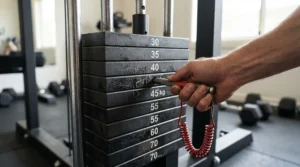
Each stack is listed at about 73–75kg depending on the retailer, and the 2:1 ratio means the handle feels like roughly half that. In practice, that suits flyes, face pulls, rows and woodchops, but strong lifters will outgrow it on lat pulldowns. The 30 height positions per side matter more than the stack size, because switching from a low-pulley curl to a high-pulley press takes seconds.
Based on the spec comparison, this is a machine for couples, rehab-minded trainees and anyone who values a tidy room over big numbers. Five attachments ship in the box: two D-handles, a chin/dip belt, a triceps rope and an EZ dual-hook bar.
Reviewers consistently praise the attachment kit, the smooth glide and the home-use parts warranty. The recurring complaints are the cost and the modest per-side load, and one tester noted the top pulley may feel low for taller users.
Pros:
- ✅ Smallest footprint among true dual-stack trainers
- ✅ 30 pulley heights per side
- ✅ Five useful attachments included
Cons:
- ❌ Around 37kg felt resistance per side at 2:1
- ❌ Premium price tag
Expect to pay well above £1,500; check current price. It is good value if floor space, not budget, is your tightest constraint.
2. MuscleSquad Dual Action Pulley — heavier 2 x 90kg stacks for stronger lifters
This is the machine for people who read “73kg per side” and winced. It carries two 90kg stacks behind full-length steel enclosures, a nice touch if children or pets share your house.
The 16-position high-to-low pulleys run at 2:1, so each 90kg stack feels like roughly 45kg at the handle. That is a meaningful step up for cable rows, pulldowns and standing presses. A wide-grip pull-up bar sits on the front, and the box adds nylon D-handles, a triceps rope, short and long bars and storage hooks.
What the spec sheet won’t tell you is how the 282kg net weight affects your room. This is a ground-floor, solid-floor machine, not something to wedge into a bedroom above the kitchen. Compared with the Inspire Fitness FTX, you gain load but lose adjustment range.
I couldn’t find enough independent buyer reviews to summarise honestly. The brand lists the unit for viewing in its Preston showroom, which is useful if you want to try the cable feel first. Check whether an Amazon UK listing is currently active.
Pros:
- ✅ Two 90kg stacks for heavier cable work
- ✅ Enclosed stacks with exercise chart
- ✅ Pull-up bar and attachments included
Cons:
- ❌ Only 16 pulley positions per side
- ❌ Heavy, so floor choice needs care
The listed range sits around £1,500–£1,800. It is fair value for stack-loaded cables at this weight, provided the showroom-led buying route suits you.
3. Strongway Cable Crossover 150kg — widest frame for garages with headroom
Think of this as the barn door of cable crossovers. The listing gives dimensions of roughly 254cm wide, 63cm deep and 223.5cm tall, with 150kg in total (75kg per side) and a built-in pull-up bar.
Here is where measuring tape beats marketing. A height of 223.5cm clears a 2.4m ceiling comfortably, but it is tight against a 2.2m one, and you also need room to reach overhead on the pull-up bar. At that width, the machine effectively claims a whole wall. Only two single stirrup attachments are listed, so budget for a rope, a bar and a lat attachment.
For garage owners who want a freestanding dual pulley system without a rack, the shallow 63cm depth is a genuine plus. Adjustable pulley positions are listed, but the number of positions isn’t clear from the listing I found, so confirm it.
I couldn’t verify enough independent reviews to report a reliable consensus, so treat the headline specs as the maker’s claims until you’ve read recent buyer feedback.
Pros:
- ✅ 75kg per side included
- ✅ Built-in pull-up bar
- ✅ Shallow 63cm depth for its width
Cons:
- ❌ Height of 223.5cm rules out low ceilings
- ❌ Only two stirrup attachments supplied
I couldn’t confirm a stable current figure, so check current price. It is worth considering only if your garage dimensions suit it.
4. POWA Gym Freestanding Cable Pulley Machine — pull-up, dip and low row in one frame
The hook here is variety. One frame offers a cable station, a pull-up bar, an adjustable dip bar and a low-row station with a footplate, which is a lot of exercise range for a modest footprint.
The listing quotes a 90kg weight stack and a 2:1 ratio, so expect roughly 45kg of felt resistance. The maker’s own page labels it both a “weight stack” and “90kg plate loaded”, and doesn’t say whether the 90kg is a combined total or per side. Ask before buying, because it changes what you can train.
Honest analysis: this is a “good enough for most people, most days” machine rather than a precision instrument. The low-row station is the sleeper feature. Seated rows are the movement home lifters most often miss, and a footplate makes them far more comfortable. Two handle attachments are included, so a rope and a bar are your first purchases.
I couldn’t verify enough independent buyer reviews to summarise fairly. The brand rebranded from XS Sports, so older reviews may sit under the previous name.
Pros:
- ✅ Cable, pull-up, dip and low-row stations
- ✅ 2:1 ratio for smoother control
- ✅ Low-row footplate for comfortable rows
Cons:
- ❌ Stack arrangement isn’t clear from the listing
- ❌ Limited independent review evidence
Check current price. It is strong value if you’ll use all four stations, and mediocre if you only want cables.
5. RIP X 180kg Cable Crossover — the cheapest route to two-sided cable work
The standout is headline load per pound spent. Listings quote 180kg in total (90kg per side), a 2:1 cable ratio, swivel pulleys at the top and bottom, and a pull-up bar.
Do the sums at 2:1 and each side feels like roughly 45kg, which is plenty for most home trainees. The important detail is that the pulleys sit at fixed high and low positions, so this is a dual pulley system rather than a true dual adjustable pulley system. You won’t get a mid-height pulley for woodchops or standing presses. A matching-spec listing sold under the GYM MASTER name gives 251 x 61 x 212cm assembled and flags non-commercial use only.
Buyers on a retailer page called it easy to assemble, solid and excellent value. One reported only nine of ten boxes arriving. On the matching-spec GYM MASTER listing, reviewers described a build of about three hours for two people, noted that the pulleys don’t move vertically, and one doubted the advertised plate weight.
Pros:
- ✅ Big headline load for the price
- ✅ Swivel pulleys top and bottom
- ✅ Built-in pull-up bar
Cons:
- ❌ Fixed pulley heights limit exercise variety
- ❌ Long two-person assembly
The price sits around £350–£450. It is outstanding value for a first cable machine, provided you accept the fixed heights.
6. SPORTNOW Power Cage with Adjustable Cable Pulley System — rack and cables in one frame
The stand-out advantage is consolidation. A power rack and dual cable setup share one frame, with a pull-up bar, dip handles, safety catches, J-hooks and cable accessories.
The listing quotes 19 pulley height positions from 29cm to 173cm and a 900kg capacity. The pulley range is wide enough for ankle work and overhead pushdowns. The 900kg figure refers to the frame’s rated capacity, not the cable resistance. Because the cables are plate-loaded, you’ll need to confirm which plates fit and whether any are included.
On paper, this suits lifters who want squats, bench and cables but only have space for one footprint. The trade-off is convenience. Moving a pin on a stack takes a second, while loading plates on both sides takes longer, which matters in supersets.
I couldn’t verify enough independent reviews to report a consensus. Read recent buyer feedback on assembly and cable smoothness before committing.
Pros:
- ✅ 19 pulley heights across 29–173cm
- ✅ J-hooks and safety catches included
- ✅ Rack, pull-up and dip stations in one frame
Cons:
- ❌ You will likely need to buy plates
- ❌ Plate loading is slower than pin selection
I couldn’t confirm a reliable current figure, so check current price. It is good value if the rack is the main event and the cables are a bonus.
7. SPORTNOW Wall Mount Cable Machine — 15 positions without a floor-hogging frame
The hook is floor space. Mounting the dual pulley system on a wall leaves the room free for the rest of your equipment, with 15 adjustable positions for varied exercises.
For a small room, that is a clever trade. Walls, though, are where wall-mounted units succeed or fail. A solid masonry wall suits this kind of load, whereas a stud partition may not, so follow the manufacturer’s wall guidance and consider a professional fitter. Also confirm what weights or plates the unit takes, as the snippets I found didn’t make the loading setup clear.
This is best seen as a space-saving cable station for isolation work: tricep pushdowns, curls, face pulls and lateral raises. It won’t replace a freestanding dual adjustable pulley system for big compound cable movements, but it solves a very real small-room problem.
I couldn’t verify enough independent reviews to summarise honestly, so read current feedback on wall-fixing and pulley smoothness.
Pros:
- ✅ Minimal floor footprint
- ✅ 15 adjustable pulley positions
- ✅ Dual pulleys allow one-arm-at-a-time training
Cons:
- ❌ Needs a suitable wall and drilling
- ❌ Limited independent review evidence
Check current price. It is excellent value if wall space is free and floor space isn’t.
What Is a Functional Trainer for Home Gym Use?
A functional trainer for home gym use is a freestanding or wall-mounted cable station with two independently adjustable pulleys, each linked to its own weight stack or plate-loaded resistance. You set the handle height, clip on a bar, rope or grip, and pull, push or rotate in any direction, so one compact machine replaces a rack of single-purpose equipment.
The “functional” label matters. Unlike a fixed-path chest press, cables let your hands, hips and shoulders move through natural arcs, so stabiliser muscles work alongside the prime movers. A good home functional trainer machine therefore suits everything from a first-time exerciser to a runner doing rotational work.
There are three broad flavours. Selectorised machines like the Inspire Fitness FTX use a pin and a stack. Plate-loaded crossovers like the RIP X 180kg Cable Crossover use plates you load by hand. Rack hybrids like the SPORTNOW Power Cage with Adjustable Cable Pulley System fold cables into a lifting frame. The sections below show which suits which room and training style.
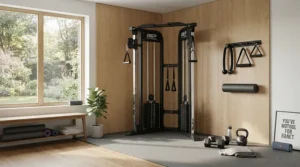
How to Choose a Functional Trainer for Home Gym Spaces
- Measure your ceiling first. UK homes often have ceilings of 2.2m–2.4m, and several of these machines stand over 2.08m tall. Add pull-up clearance if you plan to use the bar.
- Decide between stack and plate loading. Stacks are faster and safer to adjust mid-set, while plates are cheaper and easier to upgrade.
- Check the pulley ratio. At 2:1, a 90kg stack feels like roughly 45kg, which means smoother, longer cable travel but less maximum resistance.
- Count the pulley positions. More positions mean more exercise variety, and 15–30 per side is a sweet spot for most users.
- Audit the attachments. A rope, straight bar, D-handles and an ankle strap cover most exercises, and missing items add to the real cost.
- Check stability and rated capacity. Look for a wide base, a stated maximum user weight and a frame that doesn’t walk across the floor under load.
- Plan delivery and assembly. Heavy machines arrive in many boxes, so check stair access, door widths and whether you’ll need a second pair of hands for several hours.
Dual Adjustable Pulley System vs Dual Pulley System: What’s the Difference?
These terms get used interchangeably in listings, and that costs buyers money. A dual pulley system simply means two cable stations. A dual adjustable pulley system means each station’s pulley can slide up and down a column and lock at many heights.
That difference decides what you can train. A fixed high/low dual pulley system, like the RIP X 180kg Cable Crossover, handles flyes, pushdowns and curls well. A true dual adjustable pulley system, like the Inspire Fitness FTX or the MuscleSquad Dual Action Pulley, adds chest-height rotations, standing presses and anything needing a mid-height line of pull.
Based on the spec comparison, buyers who want rotational and sport-style training should prioritise adjustability. Buyers who mostly want bodybuilding-style isolation work can happily save money with fixed heights. Look for the number of positions, the swivel range and how quickly you can move the pulley, because a clunky adjustment mechanism means you’ll skip variety.
Functional Training at Home: What Cables Do Better Than Dumbbells
Functional training has no single universal definition, and researchers openly disagree about it. A summary of published definitions of functional training shows the idea ranging from training for daily-life tasks to sport-general conditioning. The common thread is purposeful movement that carries over to real life.
Cables suit that philosophy because resistance stays constant through the whole range. A dumbbell lateral raise is easy at the bottom and hard at the top. A cable version keeps tension steady, and you can set the line of pull to match the movement you actually want to improve, such as lifting a suitcase into a boot or hauling a rucksack overhead.
For a home setup, there are three practical advantages. First, unilateral work with separate pulleys exposes left-right imbalances that barbells hide. Second, standing cable work trains balance and core bracing without a bench. Third, you can scale resistance in small steps, which beginners and rehab-minded trainees appreciate. The best functional trainer for home gym use makes these things easy rather than fiddly, which is why adjustment speed deserves as much attention as stack weight.
Functional Trainer for Full Body Workout: A Practical Weekly Plan
Here’s the transformation that Amazon listings never give you: how to turn a machine into a routine. The NHS recommends strength exercises on at least two days a week that work all the major muscle groups (legs, hips, back, abdomen, chest, shoulders and arms). A functional trainer for full body workout sessions can cover that in two or three short visits.
Session A (push and core): cable chest press, standing single-arm shoulder press, triceps pushdown, cable woodchop. Do three sets of 8–12 reps, resting about 60–90 seconds.
Session B (pull and legs): lat pulldown or pull-up, seated or standing cable row, cable pull-through, goblet-style cable squat, face pull.
Session C (full body): pick one exercise from each pattern and superset them. Add single-leg work and an anti-rotation press (the Pallof press) to challenge your trunk.
A few honest tips. Start lighter than you think, because 2:1 ratios make the handle feel lighter and your stabilisers will fatigue first. Progress by adding a small increment once you can complete all sets cleanly. For a functional trainer for full body workout use, note that machines with only fixed heights, like the RIP X 180kg Cable Crossover, can cover most of this plan but not every movement. If you have a health condition, check with a GP or physio before starting.
Home Functional Trainer Machine Setup and Maintenance Guide
Setup is where many first-time buyers lose a weekend. The first job is choosing the spot. Pick a ground-floor, level, solid floor, leave at least a metre of clear space in front for cable travel, and measure the doorways before delivery day.
Assembly: unpack every box and check the parts list against the manual before touching a spanner. Expect two people and several hours for the larger machines, as buyers of crossovers like the RIP X 180kg Cable Crossover report. Leave the main bolts finger-tight until the frame is square, then fully tighten everything at the end.
First 30 days: re-check bolts after your first week, because frames settle. Watch cable routing, and make sure the cable sits in each pulley groove.
Maintenance routine: wipe guide rods and pulleys with a dry cloth monthly, and use only the lubricant the manufacturer recommends. Inspect cables and attachment clips for fraying, and replace them at the first sign of wear. For plate-loaded options like the SPORTNOW Power Cage with Adjustable Cable Pulley System, check collars and safety catches before every heavy session. For a wall-mounted unit like the SPORTNOW Wall Mount Cable Machine, re-check wall fixings periodically.
Common first-month mistakes: loading too heavy on 2:1 machines, skipping the pin-lock check, and ignoring squeaks. A squeak is information, and it usually means dry guide rods or a misrouted cable.
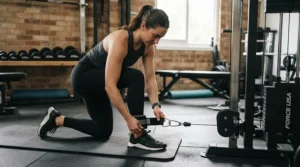
Real-World Scenarios: Which Home Functional Trainer Machine Fits Which Home?
Scenario 1: the couple in a two-bed flat. Space is tight, budgets are moderate and both people train at different strengths. The independent stacks and 30 positions on the Inspire Fitness FTX make it the best fit on paper, and the compact footprint helps. Train on the ground floor if possible.
Scenario 2: the garage lifter with a rack. You already own a barbell and plates, you have headroom and you want cables without losing floor space. The SPORTNOW Power Cage with Adjustable Cable Pulley System folds a rack and cables into one frame. If you already own a rack, the Strongway Cable Crossover 150kg makes sense, provided your ceiling clears 2.24m.
Scenario 3: the budget-conscious beginner. You’re spending a few hundred pounds, you train three times a week and you mostly want to build general strength. The RIP X 180kg Cable Crossover gives you two-sided cables for the least money, and you accept fixed pulley heights.
Scenario 4: the small-room renter. If your landlord allows fixings and you have a solid wall, the SPORTNOW Wall Mount Cable Machine frees the floor. If you rent and can’t drill, skip it and choose a freestanding unit.
✨ Ready to Find Your Match!
🔍 Take your home training to the next level with these carefully selected machines. Click on any highlighted product to check current pricing and availability. These tools will help you build the strength and confidence your whole household will notice!
Functional Trainer vs Traditional Home Gym Options
| Option | Strength | Weakness | Best For |
|---|---|---|---|
| Functional trainer (e.g. Inspire Fitness FTX) | Huge exercise range, constant tension, compact | Lower top-end load than barbells | Variety, rehab, general fitness |
| Power rack plus barbell | Heavy compound lifts, cheapest per kilo | Limited cable-style movements | Strength and powerlifting goals |
| Rack hybrid (e.g. SPORTNOW Power Cage with Adjustable Cable Pulley System) | Barbell and cables in one frame | Plate loading slows changes | Lifters wanting both |
| Gym membership | No equipment to store, plenty of variety | Travel time and recurring cost | People with a gym nearby |
The table shows why a functional trainer for home gym use isn’t a replacement for everything. It excels at movement variety and unilateral work, while a barbell rack still wins for maximal squats and deadlifts. The sweet spot for many households is a trainer plus adjustable dumbbells, or a rack hybrid like the SPORTNOW Power Cage with Adjustable Cable Pulley System if you want both in one footprint.
If you currently pay for a gym membership but mostly use cable stations, the maths tilts quickly towards owning a machine. If you love heavy barbell squats, keep the rack and add cables.
Long-Term Cost and Value Analysis
| Tier | Example | Typical Spend | Value Verdict |
|---|---|---|---|
| Budget plate-loaded | RIP X 180kg Cable Crossover | Around £350–£450 | Best entry cost, fixed pulley heights |
| Rack hybrid / wall station | SPORTNOW Power Cage with Adjustable Cable Pulley System, SPORTNOW Wall Mount Cable Machine | Check current price; plates extra | Good if you already own plates |
| Selectorised mid-premium | MuscleSquad Dual Action Pulley | £1,500–£1,800 range | Heavier stacks, fewer positions |
| Selectorised compact premium | Inspire Fitness FTX | Well above £1,500 | Best adjustment range and footprint |
Total cost of ownership is more than the sticker price. Plate-loaded machines need plates, and pin-selected machines usually don’t. Delivery, assembly time, extra attachments and flooring all add up. Selectorised machines also tend to last for years with basic upkeep, since there’s less to load and unload.
So the cheapest machine isn’t always the cheapest to live with. A cost-per-session view helps. If you train three times a week for five years, even a premium machine breaks down to a modest cost per workout, while a machine you stop using costs the whole price. Choose what you’ll actually enjoy using.
Common Mistakes When Buying a Functional Trainer for Home Gym Use
Ignoring ceiling height. Several machines stand taller than 2.08m, and one listing quotes 223.5cm. Measure the room, including any beams or light fittings.
Confusing “dual pulley” with “dual adjustable”. If you want mid-height pulley work, fixed high/low machines won’t deliver.
Chasing the biggest stack. At 2:1, a 90kg stack feels like roughly 45kg. Most home trainees rarely need more, and a smooth feel beats a bigger number.
Forgetting the floor. These machines are heavy. Weights quoted in listings run from about 247kg to 282kg, so a solid ground floor is the sensible choice.
Skipping attachments. If the box contains only two stirrup handles, as with the Strongway Cable Crossover 150kg, budget for a rope, bars and an ankle strap.
Buying on headline specs alone. Check the recent reviews and the return terms, because heavy items are painful to send back.
Safety, Standards and UK Compliance for a Home Functional Trainer Machine
Home gym kit is heavy, tensioned and used close to your face, so standards matter. The UK reference for stack-loaded strength machines is BS EN ISO 20957-2, which sets additional safety requirements and test methods. It covers machines with stacked or other resistance and includes stability and endurance tests.
What does that mean for you? Ask the seller whether the machine is designed or tested to relevant standards, and read the manual for a maximum user weight. Be cautious if a listing is vague on both. Selling language like “commercial grade” isn’t proof, and one listing I reviewed explicitly says its machine is not for commercial use.
A few practical rules. Never remove guards or shrouds from weight stacks. Check cables and attachments for wear before each session. Keep children and pets away, and don’t leave a loaded pin out of the stack. If you plan to use a wall-mounted unit, check the wall type with a qualified fitter. And if you have a health condition, speak to your GP before starting a new programme.
FAQ
❓ Is a functional trainer for home gym use worth the money in the UK?
❓ Can a functional trainer for full body workout training really build muscle?
❓ How heavy should the stacks on a dual pulley system be?
❓ Do I need a power rack as well as a home functional trainer machine?
❓ Can I put a dual adjustable pulley system upstairs in a house?
Conclusion
Here’s the short version. If you want the best adjustment range in the smallest footprint, the Inspire Fitness FTX is the polished choice. If you need heavier stacks and have the floor for them, the MuscleSquad Dual Action Pulley deserves a look. If your garage has headroom, the Strongway Cable Crossover 150kg and the POWA Gym Freestanding Cable Pulley Machine offer big frames with plenty of stations, though you should confirm their loading details first.
On a tight budget, the RIP X 180kg Cable Crossover is the cheapest route to two-sided cables, as long as you accept fixed pulley heights. If you already lift barbells, the SPORTNOW Power Cage with Adjustable Cable Pulley System folds cables into your rack. And if floor space is the problem, the SPORTNOW Wall Mount Cable Machine is the space-saver.
Whichever you pick, measure your ceiling, check the loading type, read recent reviews and plan the delivery. A good functional trainer for home gym training rewards consistency rather than size, so choose the one you’ll actually use three times a week for years.
Recommended for You
- Cable Machine For Full Body Workout: 7 Best Picks For UK Homes (2026)
- Cable Machine Under £500: 7 Proven Budget Picks (UK 2026)
- Olympic Weight Bench For Home Gym: 7 Best Rock-Solid Picks (2026)
Disclaimer: This article contains affiliate links. As an Amazon Associate, I earn from qualifying purchases. If you purchase products through these links, we may earn a small commission at no additional cost to you.
✨ Found this helpful? Share it with your friends! 💬🤗
