
In This Article
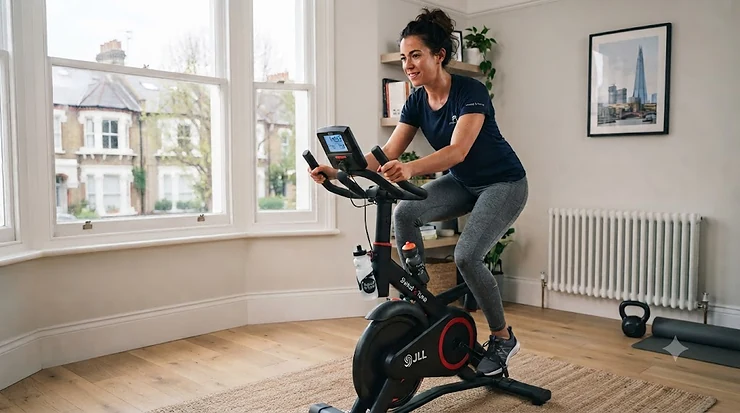
There’s a particular kind of dread that sets in every January when the gym car park fills up and the treadmills grow a queue. An exercise bike under £300 solves that problem rather neatly: no commute, no waiting for equipment, no awkward small talk by the water fountain. What is an exercise bike, at its simplest? It’s a stationary cycling machine that recreates the pedalling resistance of outdoor riding using either a weighted flywheel and magnets, or a friction pad pressed against a spinning disc — all without a single mile of actual tarmac involved. The good news for anyone shopping on a tight budget is that this category has genuinely improved over the last couple of years. Where £250 used to buy a wobbly, creaky friction bike that sounded like a shopping trolley, it now regularly buys magnetic resistance, belt drives, and companion apps that would have seemed premium not long ago.
This guide rounds up seven real, currently available bikes that sit at or under £300, spanning proper entry-level machines through to the best you can get before the price ceiling forces you into a different category entirely. We’ll look at genuine specifications, aggregated reviewer sentiment, and honest trade-offs rather than marketing fluff, because 150 minutes of moderate activity a week is a genuinely achievable target once a bike is sitting in your spare room rather than a fifteen-minute drive away. Whether you’re after the best budget exercise bike full stop, or specifically hunting in the sub-£200 bracket, there’s a sensible pick in this list for you.
Quick Comparison Table
| Product | Best For | Flywheel | Resistance | Price Range |
|---|---|---|---|---|
| JLL IC300 Pro | Best overall build quality | 20kg | Magnetic | £280-£300 |
| Bluefin Fitness Tour 5.0 | Most tech features for the money | 12kg | Magnetic, 24 levels | £180-£250 |
| YOSUDA YB001R | Smoothest ride from a heavy flywheel | 16kg | Magnetic | £200-£260 |
| JLL IC200 Pro | Lightest footprint from a trusted UK brand | 7kg | Magnetic | £200-£230 |
| Davina McCall Folding Bike | Most versatile for tiny spaces | 2.5kg | Magnetic, 8 levels | £130-£180 |
| Ultrasport F-Bike | Best-selling folding bike in Europe | N/A (compact) | Magnetic, 8 levels | £90-£120 |
| HOMCOM 8kg Flywheel Bike | Lowest genuine entry price | 8kg | Adjustable knob | Under £120 |
Scanning the table, the split is really about flywheel weight and what that buys you. Heavier flywheels like those on the JLL IC300 Pro and YOSUDA YB001R smooth out the pedal stroke and feel closer to an outdoor bike, while lighter, foldable options like the Davina McCall Folding Bike and Ultrasport F-Bike trade some of that smoothness for a footprint that disappears into a cupboard. Nobody here is getting a bad deal — it’s simply a question of which trade-off suits your space and your training goals.
💬 Just one click — help others make better buying decisions too!😊
Top 7 Exercise Bike Under £300: Expert Analysis
1. JLL IC300 Pro — best overall build quality this side of £300
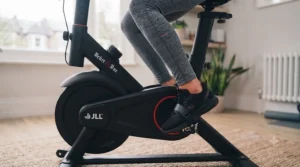
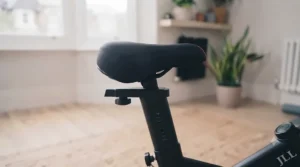
The standout feature is a genuinely substantial 20kg bi-directional flywheel, heavier than anything else on this list and the main reason reviewers consistently describe the ride as feeling closer to a proper spin studio bike than a home compromise. What this means in practice: momentum stays consistent through the pedal stroke, so you’re not fighting jerky resistance changes when you stand up to climb. The belt-drive system paired with magnetic resistance keeps things quiet enough for early-morning sessions without waking the household, and the seat and handlebars each offer multiple adjustment points, making it realistic for a household where more than one person will ride it. Based on the spec comparison with lighter budget bikes, this is the pick for anyone who plans to ride hard and often rather than gently a couple of times a week. Reviewers from several independent UK fitness sites, including Home Gym Supply and Cycling Indoor, consistently praise the sturdy frame and note that assembly, while requiring around 30 minutes, is straightforward with the included tools. A recurring criticism across reviews is the standard seat, which several testers describe as adequate rather than genuinely comfortable over long sessions, and the resistance dial has no numbered levels, so you’re adjusting by feel rather than a fixed scale.
Pros:
- ✅ Heaviest flywheel on this list for a smooth, stable ride
- ✅ Belt drive and magnetic resistance keep noise to a minimum
- ✅ Extensive seat and handlebar adjustability for shared households
Cons:
- ❌ Standard seat is described as basic by multiple reviewers
- ❌ No numbered resistance levels, just a manual dial
Typically found at the very top of the £280-£300 range, this is the “spend once, don’t look back” option if your budget genuinely stretches that far.
2. Bluefin Fitness Tour 5.0 — most tech features for the money
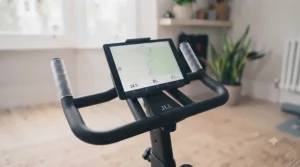
The headline feature is Kinomap app compatibility, giving you access to filmed cycling routes, live coaching sessions and structured workouts rather than just a static number on a screen. On paper this means the Tour 5.0 punches well above its price bracket for anyone who gets bored pedalling in silence, backed by 24 manual resistance levels and 12 pre-loaded automatic programs so you’re never stuck with just one intensity curve. The 12kg flywheel is lighter than the JLL IC300 Pro’s, but Bluefin’s “silent drive” magnetic braking system still delivers a notably quiet ride, and Bluetooth connectivity means your stats sync automatically rather than requiring manual logging. What most buyers overlook is that full Kinomap functionality requires its own subscription on top of the bike’s purchase price, so the headline feature carries an ongoing cost if you want to use it fully. Reviewers highlight the backlit LCD display and transport wheels as thoughtful touches, though feedback also flags that the bike doesn’t fold, which matters if floor space is genuinely tight rather than just limited.
Pros:
- ✅ Kinomap compatibility for filmed routes and coaching
- ✅ 24 resistance levels plus 12 built-in programs
- ✅ Bluetooth connectivity for automatic stat syncing
Cons:
- ❌ Full app functionality needs a separate subscription
- ❌ No folding mechanism despite the compact frame
Sitting in the £180-£250 range depending on retailer offers, this is the strongest pick for anyone who wants their indoor rides to feel like an actual event rather than background cardio.
3. YOSUDA YB001R Magnetic Indoor Cycling Bike — smoothest ride from a heavy flywheel
The standout advantage is a 16kg magnetic flywheel that, unlike YOSUDA’s cheaper friction-based models, delivers a noticeably quieter and smoother pedal stroke without the whooshing sound that brake-pad resistance produces. In practice this means you can genuinely watch television or take a phone call mid-ride without competing with mechanical noise. Reviewers at Garage Gym Reviews specifically praise how smooth and durable the magnetic resistance feels compared with YOSUDA’s friction-based YB001, though the same testers note the bike may feel slightly small for taller riders above roughly six foot two. Based on the spec comparison with the JLL models, the YB001R trades a little top-end flywheel weight for a lighter overall bike that’s genuinely easy to reposition around a room thanks to its lower total weight. What most buyers overlook is that YOSUDA backs its bikes with a year of free replacement parts, which several reviewers highlight as reassuring given some early units have reported flywheel noise developing after a few months of heavy use.
Pros:
- ✅ Quiet, smooth magnetic resistance versus friction rivals
- ✅ Lighter overall bike, easier to reposition at home
- ✅ Year of free replacement parts if issues develop
Cons:
- ❌ Can feel undersized for riders above 6’2″
- ❌ Basic display with no programmed workouts
Usually priced in the £200-£260 range, this is a strong middle-ground pick between the featherweight budget bikes and the heavyweight JLL IC300 Pro.
4. JLL IC200 Pro — lightest footprint from a trusted UK brand
The standout feature here is compactness paired with genuine Shokz-style brand trust — JLL is a UK-based fitness company with a long track record, and the IC200 Pro is its entry point into that ecosystem. What that means practically is a 7kg flywheel, noticeably lighter than its IC300 Pro sibling, which keeps the bike easier to shift around a small room but does mean a slightly less smooth pedal stroke during hard efforts. The magnetic resistance system still delivers the quiet operation JLL’s range is known for, and covered edges make it a genuinely safer option in households with young children compared with exposed-flywheel budget bikes. Here’s what to weigh: reviewers consistently describe the console as basic — monochrome, with no RPM readout — which matters if you like tracking cadence precisely, but matters less if you mainly want a straightforward way to get your heart rate up. Cycling Indoor’s testing team specifically recommends the IC200 Pro for beginners and anyone tight on space, while noting heavier or more serious riders should budget for the IC300 Pro or IC400 Pro instead.
Pros:
- ✅ Compact frame suits smaller rooms and lighter riders
- ✅ Covered flywheel edges, genuinely safer around children
- ✅ Backed by JLL’s established UK customer service reputation
Cons:
- ❌ Basic monochrome console with no RPM readout
- ❌ Lighter flywheel means less momentum on hard efforts
Typically priced in the £200-£230 range, this is the sensible choice for beginners who want a trusted brand without paying for features they won’t use yet.
5. Davina McCall Folding Exercise Bike with Resistance Bands — most versatile for tiny spaces
The standout feature is genuine multi-position versatility: this bike converts between upright, recline and recumbent riding positions, plus it includes resistance bands for upper-body work, effectively turning one machine into a small home gym. In practice this means you can start a session pedalling upright, switch to a more supported recumbent position if your lower back needs a break, and finish with a few sets of band rows without leaving the seat. The 2.5kg flywheel is deliberately light, prioritising foldability and an under-20kg overall weight over outright pedalling momentum, and the battery-powered LCD console tracks the essentials without needing mains power nearby. Reviewers consistently note the bike folds down small enough to slide behind a sofa or into a cupboard, and the eight-level magnetic resistance system, while modest compared with heavier bikes, is enough for steady cardio and gentle rehabilitation-style riding. What most buyers overlook is that the light flywheel means this isn’t the bike for serious interval training — it’s built for accessibility and convenience first.
Pros:
- ✅ Three riding positions plus included resistance bands
- ✅ Folds small enough for genuinely tight living spaces
- ✅ Battery-powered console needs no nearby power socket
Cons:
- ❌ Light 2.5kg flywheel limits intensity for serious training
- ❌ Resistance ceiling is lower than heavier flywheel rivals
Found in the £130-£180 range, this is the strongest pick for anyone prioritising flexibility, storage and gentle full-body movement over raw cycling intensity.
6. Ultrasport F-Bike — best-selling folding bike in Europe
The headline claim to fame is scale: with more than 5 million units sold and over 34,000 verified Amazon reviews, the F-Bike is arguably the reference point every other budget folding bike gets measured against. What that popularity translates to practically is a compact, foldable frame that pops out and back into shape in seconds, eight levels of magnetic resistance, and a battery-powered LCD tracking time, speed, distance, calories and pulse via built-in hand sensors. Reviewers consistently highlight how quiet the bike runs thanks to its maintenance-free magnetic system, and Ultrasport’s customer service track record for supplying replacement drive belts free of charge, even outside warranty, comes up repeatedly in aggregated feedback. Based on the spec comparison with pricier bikes on this list, the trade-off is a lighter overall build rated to 100kg user weight as standard, with a heavier-capacity variant available for users up to 130kg. What most buyers overlook is that this bike genuinely doesn’t need a nearby plug socket, since the console runs on batteries alone, making it one of the few bikes here you can position absolutely anywhere in a room.
Pros:
- ✅ Enormous track record with over 5 million units sold
- ✅ Genuinely quiet magnetic resistance across 8 levels
- ✅ Folds flat and needs no power socket nearby
Cons:
- ❌ 100kg standard weight limit, lower than most rivals
- ❌ Basic screen lacks the app connectivity of pricier bikes
Typically priced in the £90-£120 range, this is the safest bet if you want proven reliability at the lowest realistic entry cost.
7. HOMCOM 8kg Flywheel Exercise Bike — lowest genuine entry price
The standout advantage is straightforward value: an 8kg flywheel, belt-driven mechanism and adjustable resistance knob for a price that regularly undercuts every other bike on this list. What this means day to day is a stable steel triangular frame rated to a genuinely useful 100-150kg depending on the exact model variant, with a heavier maximum capacity than several pricier folding alternatives here. The LCD display covers the essentials — pulse, time, speed, distance and calories — and a two-way adjustable handlebar plus four-way seat adjustment means it accommodates a wider range of rider heights than its budget positioning might suggest. Reviewers on retailer sites consistently praise the ease of assembly and describe the resistance as smooth and quiet for the price, though feedback is mixed, with a handful of buyers reporting inconsistent build quality between units. Here’s what to weigh: at this price point you’re getting genuine core functionality rather than any smart features, so this suits someone who wants to test whether they’ll actually stick with home cycling before spending more.
Pros:
- ✅ Lowest genuine entry price in this round-up
- ✅ Higher weight capacity than several pricier folding rivals
- ✅ Simple assembly with all tools included
Cons:
- ❌ Reviewer feedback on build consistency is mixed
- ❌ No app connectivity or programmed workouts
Usually found under £120, this is the honest starting point for anyone who wants to trial home cycling before committing serious money to the category.
Practical Usage Guide: Setting Up Your Exercise Bike Under £300
Getting the most from a budget bike starts with positioning, not pedalling. Place the bike on a flat, stable surface, ideally with a protective mat underneath to catch sweat and stop the base sliding on hard flooring. Before your first ride, set saddle height so your knee retains a slight bend at full pedal extension — too high strains your hips, too low strains your knees, and both are common first-week mistakes. In your first 30 days, resist cranking resistance up too aggressively; most bikes in this bracket reward a gradual build-up as the belt or flywheel beds in, and several manufacturers, including JLL and Ultrasport, note that new belts can develop a slight squeak in the first few sessions that settles with use. Wipe down the frame and seat after every ride, since sweat left on exposed steel components is the single biggest cause of premature rust on budget bikes. Finally, check bolts monthly rather than yearly; the vibration from regular pedalling gradually loosens fixings faster than most owners expect.
Real-World Scenarios: Who Should Buy Which Bike
Picture a flat-sharing student with genuinely no spare floor space, squeezing in 20-minute sessions between lectures — for them, the Davina McCall Folding Exercise Bike or Ultrasport F-Bike makes far more sense than a heavier machine that permanently occupies a corner. Compare that with a parent training for a half marathon who wants indoor cross-training on wet days without sacrificing intensity; the JLL IC300 Pro‘s heavy flywheel and belt drive suit that higher-effort, higher-frequency use case far better. A third scenario: someone returning to exercise after a knee injury, prioritising low-impact movement and multiple riding positions over raw resistance — here the Davina McCall bike’s recumbent option genuinely earns its keep, echoing the kind of low-impact approach the NHS recommends when building back up to regular activity. In every case, the “best” bike genuinely depends on the person riding it rather than any single spec sheet winner.
Problem → Solution: Common Budget Exercise Bike Issues
Wobbling during hard efforts is the most frequent early complaint, and the fix is usually as simple as re-checking the levelling feet and re-tightening the base bolts, since most budget bikes ship slightly under-torqued from the factory. A second common issue is a squeaking belt or flywheel in the first few weeks; this typically settles with use, but a drop of the manufacturer’s recommended lubricant on the belt track resolves persistent cases. Third, some riders find the standard seat genuinely uncomfortable after 20-30 minutes; a padded gel seat cover, widely available and inexpensive, solves this far more cheaply than upgrading the whole bike. Fourth, resistance that feels inconsistent is often a sign the magnet arm needs recalibrating, something most manufacturers cover in their setup guides rather than requiring a replacement part. Finally, if the console display stops responding, check the batteries before assuming a fault — battery-powered consoles on folding bikes like the Ultrasport F-Bike are a far more common culprit than the bike itself.
Best Budget Exercise Bike: How to Choose
- Decide your primary goal first — steady low-impact cardio needs less flywheel weight than serious interval training.
- Check the flywheel weight against your ambitions; anything from 12kg upward starts to feel genuinely smooth under hard effort.
- Weigh magnetic resistance against friction systems, since magnetic setups need less ongoing maintenance and run quieter over years of use.
- Confirm the maximum user weight rating against your actual weight with margin to spare, not right up to the limit.
- Consider foldability only if you genuinely need it, since folding bikes generally sacrifice some flywheel mass and stability for storage.
- Factor in console features realistically — RPM and app connectivity matter for structured training, less so for casual riding.
- Set a genuine ceiling rather than chasing the flagship by default, since the Which? exercise bike buying guide consistently finds comfort and stability matter more to long-term use than headline spec numbers.
Cheap Exercise Bike vs Premium Models: What You Actually Lose
It’s a fair question, and the honest answer is: less than you might assume, provided you’re comparing a genuinely good cheap exercise bike rather than the worst option available. The core mechanism, a spinning flywheel providing pedalling resistance, works essentially the same way whether you spend £90 or £900 — what changes is flywheel weight, resistance range, build tolerances and extra features like app connectivity. Compared with a genuine premium machine costing £600-plus, budget bikes in this list generally sacrifice smart connectivity, structured coaching content and sometimes long-term durability under very heavy daily use. What most buyers overlook is that for the average person doing three or four sessions a week, a well-reviewed £250-£300 bike like the JLL IC300 Pro delivers the vast majority of the cardio benefit a £900 smart bike would, minus the subscription fees and the touchscreen.
Best Exercise Bike Under £200: Is It Worth Dropping Your Budget Further
Dropping under £200 genuinely changes what you’re choosing between, since it rules out the heaviest-flywheel options on this list, including the JLL IC300 Pro and YOSUDA YB001R. Within that tighter budget, the JLL IC200 Pro, Davina McCall Folding Exercise Bike, Ultrasport F-Bike and HOMCOM 8kg Flywheel Bike remain genuinely solid choices, particularly for beginners or anyone unsure whether home cycling will actually stick as a habit. Based on the spec comparison across this list, the main trade-off under £200 is flywheel mass and momentum rather than outright reliability — several of these budget picks carry strong long-term review track records despite their lighter build. If your training ambitions are casual to moderate, best exercise bike under £200 shopping isn’t a compromise so much as a sensible starting point that leaves room to upgrade later if your habit sticks.
Affordable Stationary Bike Safety and Setup
Safety on an affordable stationary bike comes down to three fundamentals: stable footing, correct saddle height and sensible resistance progression. Always position the bike on a level, non-slip surface, and check that all four base feet make solid contact before your first ride, since an uneven floor is the leading cause of the wobble complaints that show up in budget bike reviews. Saddle height should let your leg extend to roughly 25-35 degrees of knee bend at the bottom of the pedal stroke; too straight a leg strains the knee joint over repeated sessions. If you’re newer to structured exercise or returning after a break, building up activity gradually rather than starting at maximum intensity applies just as much to a £100 bike as an outdoor ride — the British Heart Foundation notes that regular, moderate cycling brings genuine cardiovascular benefit without needing to chase intensity from day one. Finally, keep resistance knobs and magnetic dials away from small children when the bike isn’t in use, and always engage the emergency brake mechanism, where fitted, before dismounting from a fixed-gear model like the JLL range.
Entry Level Exercise Bike: What to Expect vs What to Skip
An entry level exercise bike genuinely delivers on the basics: a working flywheel, adjustable resistance, a seat and handlebars that move enough to fit most adult riders, and a simple console tracking time, distance and calories. What you should expect to skip at this price point includes app connectivity, structured coaching programs, precise cadence tracking and, in most cases, a truly premium-feeling saddle. Reviewers consistently note that entry-level bikes like the HOMCOM 8kg Flywheel Bike and Ultrasport F-Bike deliver genuinely effective cardio without any of those extras, since the fundamental exercise benefit comes from consistent pedalling effort rather than app gamification. What most buyers overlook is that skipping features you won’t actually use is smart shopping, not settling — plenty of riders never open a companion app even on bikes that offer one.
Value For Money Bike: Long-Term Cost & Maintenance
A genuine value for money bike balances upfront price against how long it realistically lasts under your specific usage pattern. Magnetic resistance systems, found on most bikes in this list, need essentially no ongoing maintenance beyond occasional cleaning, unlike friction-brake systems that gradually wear down pads requiring periodic replacement. Total cost of ownership tends to favour mid-range picks like the JLL IC200 Pro or YOSUDA YB001R over the very cheapest options, since reviewers consistently report longer service life from bikes with heavier steel frames and established manufacturer support networks. Battery costs for folding bikes like the Ultrasport F-Bike and Davina McCall model are genuinely negligible, typically needing replacement only once or twice a year. Expect a well-maintained budget bike to deliver 3-5 years of regular use before major components need attention, which works out to a genuinely low cost per session compared with an equivalent gym membership over the same period.
Common Mistakes When Buying an Exercise Bike Under £300
The most frequent misstep is buying based on price alone without checking flywheel weight, which is the single biggest factor separating a smooth ride from a jerky one. A second mistake is ignoring maximum user weight ratings, then finding the bike feels unstable or voiding warranty terms through overuse. Third, buyers often skip checking whether a bike folds when they genuinely need the storage flexibility, or pay extra for folding mechanisms they’ll never actually use. Fourth, some shoppers overlook noise levels entirely, then discover a friction-resistance bike is too loud for early morning or late evening sessions in a shared home. Finally, assuming all magnetic resistance systems are equal is a common error — resistance range and consistency genuinely vary between the budget and premium options covered in this guide.
✨ Don’t Miss These Exclusive Deals!
🔍 Take your home cardio to the next level with these carefully selected exercise bike under £300 picks. Click through to check current pricing and availability on amazon.co.uk, and find the ride that keeps your training consistent all year round! 🚴
Features That Actually Matter (And Those That Don’t)
Flywheel weight, resistance type and maximum user weight genuinely matter for anyone buying an exercise bike under £300, since these directly affect ride quality and long-term comfort. Build quality and brand reputation matter more than marketing copy suggests, given how much variation exists between similarly priced budget bikes. On the other hand, some heavily marketed features add little real value at this price point: elaborate program libraries rarely get used beyond the first few sessions, and Bluetooth heart-rate syncing, while handy, isn’t essential if you’re happy glancing at a chest-strap monitor instead. App compatibility like Kinomap on the Bluefin Fitness Tour 5.0 is genuinely useful — but only if you’re prepared to pay for the ongoing subscription that unlocks its full library.
FAQ
❓ Is an exercise bike under £300 worth buying?
❓ What flywheel weight should I look for?
❓ Do cheap exercise bikes wear out quickly?
❓ Are folding exercise bikes less stable?
❓ Can I lose weight with a budget exercise bike?
Conclusion
Choosing between these seven picks really comes down to matching flywheel weight and features to your actual training habits rather than chasing the highest price tag your budget allows. If you want the smoothest, most capable ride and your budget genuinely stretches to the ceiling, the JLL IC300 Pro remains the safest recommendation on this list. Riders who want structured coaching and app-driven motivation should look seriously at the Bluefin Fitness Tour 5.0, while anyone short on space needs the folding flexibility of the Davina McCall Folding Exercise Bike or Ultrasport F-Bike. Budget-conscious first-timers shouldn’t feel like they’re settling either — both the HOMCOM 8kg Flywheel Bike and JLL IC200 Pro deliver genuine value at a fraction of flagship pricing. Whichever you choose, remember that consistency beats specification every time; the best exercise bike under £300 is the one you’ll actually get on regularly.
✨ Ready to Find Your Perfect Bike?
🔍 Compare current prices on all seven exercise bike under £300 picks above and choose the one that matches your space, your budget, and your training goals! 🚴♀️
Recommended for You
- Best Smart Treadmill UK 2026: 7 Top Picks Tested & Compared
- 7 Best Incline Treadmill Picks for 2026 (Steep to Budget, UK)
- Walking Pad vs Under Desk Treadmill: 7 Real Picks for 2026
Disclaimer: This article contains affiliate links. As an Amazon Associate, I earn from qualifying purchases. If you purchase products through these links, we may earn a small commission at no additional cost to you.
✨ Found this helpful? Share it with your friends! 💬🤗
